
Medical Disclaimer: This content is for educational purposes only. It is not medical advice. Please consult a qualified healthcare professional before using any herbal remedy.
Safety Overview
1.Berberine Barberry — Plant Snapshot
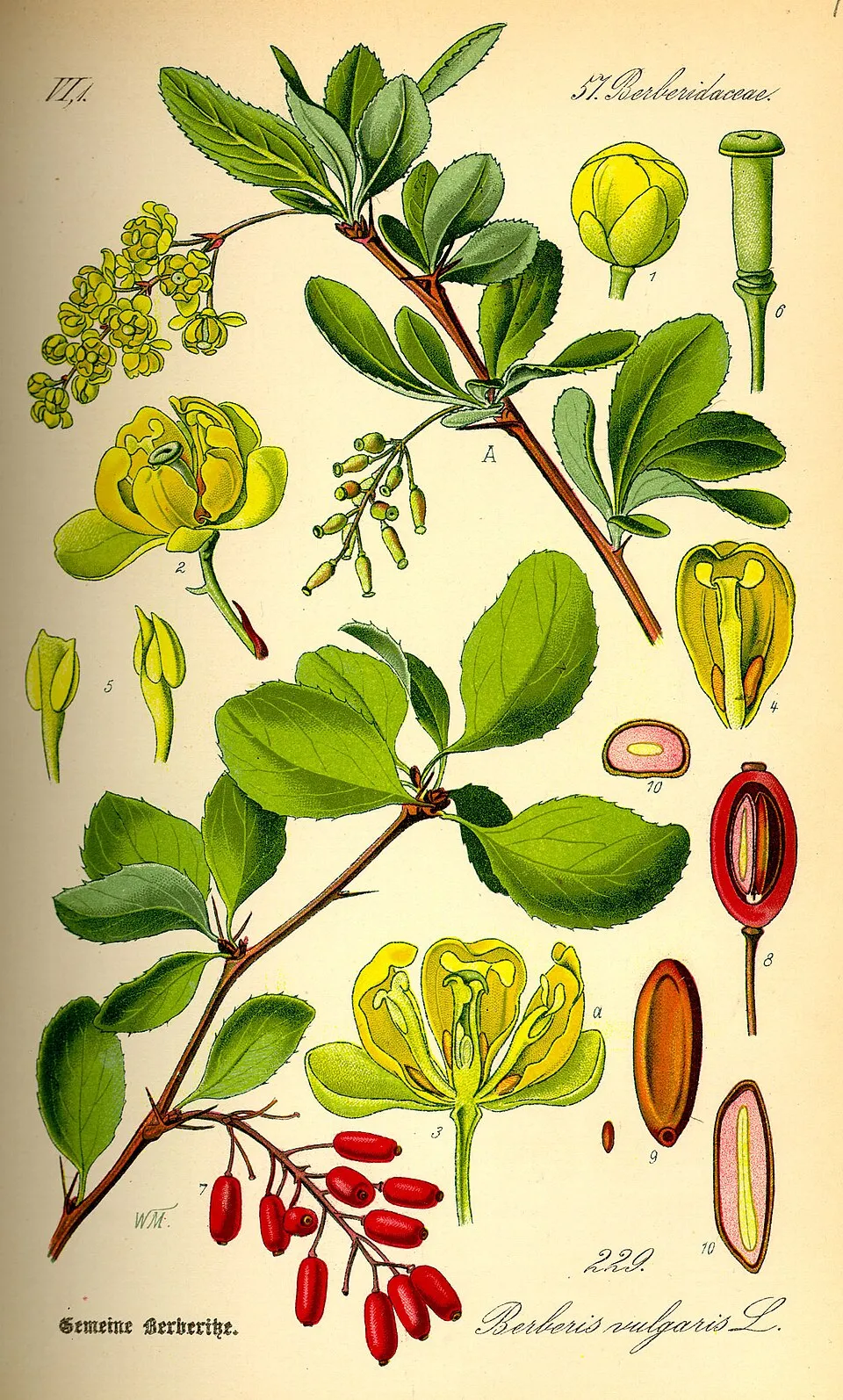
Berberis vulgaris, commonly known as European barberry or simply barberry, is a resilient deciduous shrub belonging to the family Berberidaceae. It is native to a broad geographical expanse, stretching across central and southern Europe, northwest Africa, and western Asia, where it thrives in diverse natural habitats. This plant is morphologically distinct, characterized by its dense, thorny stems that can reach heights of up to 3 meters (10 feet), often forming impenetrable thickets. Its leaves are small, oval-shaped, and arranged in characteristic clusters, typically exhibiting finely serrated margins. In the spring, the European barberry transforms with an abundance of small, bright yellow, six-petaled flowers, which are highly attractive to various pollinators, especially bees.
These vibrant flowers subsequently mature into distinctive, tart, ellipsoid red berries, which usually ripen in late summer and autumn, offering both visual appeal and culinary utility. The plant’s robust root system is fibrous and extensive, enabling its adaptation to a wide range of soil types and contributing significantly to its overall hardiness and drought tolerance. A notable feature is the bark, particularly of the roots and lower stems, which reveals a vibrant yellow interior due to the concentrated presence of berberine, a potent isoquinoline alkaloid. Taxonomically, Berberis vulgaris is a prominent member of the genus Berberis, a diverse group comprising over 450 species of both deciduous and evergreen shrubs. The genus name 'Berberis' is widely believed to derive from the Arabic word 'berberys,' a descriptor of the fruit's characteristic tartness, highlighting its ancient recognition.
Historically, its significance is profound, with archaeological evidence indicating its medicinal use by ancient civilizations such as the Egyptians and Assyrians. The renowned Persian physician Avicenna thoroughly documented its therapeutic applications in his seminal work, 'The Canon of Medicine.' Beyond its well-documented medicinal value, the berries have been a culinary staple for centuries, particularly in Middle Eastern and Iranian cuisines, where their distinctive sour flavor is prized for enhancing dishes like pilafs, jams, and marmalades, offering a unique zest. The plant's aesthetic appeal, with its striking yellow flowers and vibrant red berries, has also made it a popular ornamental shrub in gardens. Trusted Scientific References Authoritative external sources for Berberis ...[CURRENT TEXT EXISTS: 2659 chars]
1.1.Berberine Barberry — Key Features
- ✓Rich in Berberine — Contains potent isoquinoline alkaloid berberine.
- ✓Metabolic Health Support — Excellent for blood sugar and cholesterol management.
- ✓Broad — Spectrum Antimicrobial — Effective against various pathogens.
- ✓Anti — inflammatory Properties — Helps reduce systemic inflammation.
- ✓Antioxidant Powerhouse — Protects against oxidative stress.
- ✓Traditional Medicinal Plant — Long history of use in diverse cultures.
- ✓Edible Tart Berries — Used culinarily in many regions.
- ✓Hardy Deciduous Shrub — Adaptable to various climates and soils.
- ✓Distinctive Yellow Wood — Characteristic color from berberine content.
- ✓Supports Cardiovascular Health — Improves endothelial function and blood pressure.
1.2.Berberine Barberry — Quick Summary
- ✓Berberis vulgaris, or European barberry, is a shrub rich in the alkaloid berberine.
- ✓Berberine is extensively researched for its benefits in blood sugar and lipid regulation.
- ✓It offers significant antimicrobial, anti-inflammatory, and antioxidant properties.
- ✓Traditional uses span digestive health, infections, and metabolic support.
- ✓Key considerations include potential drug interactions and contraindications in pregnancy and infancy.
- ✓Berberine is a powerful nutraceutical with low toxicity at usual doses, but medical guidance is recommended.
2.Berberine Barberry — Taxonomic Classification
3.Berberine Barberry — Quick Facts
4.Berberine Barberry — Morphological Account
5.Berberine Barberry — Habitat & Distribution
6.Berberine Barberry — Cultural & Traditional Roles
7.Berberine Barberry — Secondary Metabolites
- ✓Isoquinoline Alkaloids — Berberine is the most prominent, responsible for the plant's yellow color and a wide array of pharmacological actions including antimicrobial, anti-diabetic, lipid-lowering, and anti-inflammatory effects. Other notable alkaloids include palmatine, jatrorrhizine, and berberrubine, which also contribute to its therapeutic profile.
- ✓Flavonoids — Compounds like quercetin, kaempferol, and their glycosides are present, offering significant antioxidant, anti-inflammatory, and potentially anticarcinogenic activities, supporting cellular protection.
- ✓Organic Acids — Malic acid, tartaric acid, and citric acid are found in the berries, contributing to their characteristic tart flavor and acting as natural preservatives and antioxidants.
- ✓Tannins — These polyphenolic compounds provide astringent properties, contributing to the plant's traditional use in treating gastrointestinal ailments and offering antioxidant benefits.
- ✓Saponins — Found in various parts of the plant, saponins may contribute to its anti-inflammatory and cholesterol-lowering effects, though their specific role in Berberis vulgaris is less studied than berberine.
- ✓Polysaccharides — The berries and other parts contain various complex carbohydrates that can offer immunomodulatory and prebiotic effects, supporting gut health.
- ✓Vitamins — The ripe berries are a good source of Vitamin C (ascorbic acid), an essential antioxidant important for immune function and collagen synthesis.
- ✓Minerals — European barberry contains essential minerals such as potassium, calcium, and iron, contributing to its nutritional value and overall health benefits.
8.Berberine Barberry — Modern Studies
- ✓Blood Sugar Regulation — Berberine, the primary active compound in Berberis vulgaris, significantly improves insulin sensitivity and reduces glucose production in the liver, making it highly effective for managing type 2 diabetes and insulin resistance.
- ✓Cholesterol and Lipid Lowering — Clinical trials suggest berberine can lower total cholesterol, LDL ('bad') cholesterol, and triglycerides while modestly increasing HDL ('good') cholesterol, supporting cardiovascular health.
- ✓Cardiovascular Support — Beyond lipid management, Berberis vulgaris contributes to heart health by improving endothelial function, reducing inflammation, and potentially lowering blood pressure, offering a comprehensive approach to cardiovascular well-being.
- ✓Antimicrobial and Antiparasitic Actions — Traditionally used for infections, berberine exhibits broad-spectrum antimicrobial activity against bacteria, viruses, fungi, and parasites, making it valuable for various infectious conditions.
- ✓Gastrointestinal Health — European barberry has been historically utilized to alleviate digestive issues such as diarrhea, dysentery, and irritable bowel syndrome, by modulating gut microbiota and reducing inflammation in the digestive tract.
- ✓Anti-inflammatory Effects — The alkaloids in Berberis vulgaris possess potent anti-inflammatory properties, which can help mitigate chronic inflammatory conditions throughout the body.
- ✓Antioxidant Protection — Berberine and other constituents act as powerful antioxidants, neutralizing free radicals and reducing oxidative stress, thereby protecting cells from damage and supporting overall cellular health.
- ✓Liver Health — Research indicates potential benefits for non-alcoholic fatty liver disease (NAFLD) by reducing liver fat accumulation and improving liver enzyme levels, contributing to hepatic detoxification and function.
- ✓Weight Management — By influencing metabolic pathways and improving insulin sensitivity, Berberis vulgaris may support healthy weight management and combat obesity, especially when linked to metabolic dysfunction.
- ✓Neurological Protection — Emerging studies suggest berberine may offer neuroprotective effects, potentially benefiting conditions related to cognitive decline and central nervous system disorders through its anti-inflammatory and antioxidant actions.
- ✓Bone Health — Some preliminary research points to berberine's potential role in supporting bone density and health, although more studies are needed to confirm these effects.
- ✓Anticancer Potential — In vitro and in vivo studies have explored berberine's ability to inhibit cancer cell growth, induce apoptosis, and prevent metastasis in various cancer types, positioning it as a promising area for further oncological research.
8.1.Berberine Barberry — Reported Uses
9.Berberine Barberry — Adverse Effects
9.1.Berberine Barberry — Warnings
- ✓Gastrointestinal Upset — Common side effects include nausea, vomiting, diarrhea, constipation, and abdominal cramping, especially with high doses.
- ✓Hypoglycemia — May significantly lower blood sugar; caution is advised for individuals on anti-diabetic medications, requiring careful monitoring.
- ✓Hypotension — Can lower blood pressure; individuals on antihypertensive drugs should use with caution and medical supervision.
- ✓Drug Interactions — Berberine can inhibit cytochrome P450 enzymes, potentially affecting the metabolism of numerous medications, leading to increased or decreased drug levels.
- ✓Jaundice in Infants — Berberine can displace bilirubin, posing a risk of kernicterus in newborns; therefore, it is contraindicated in infants.
- ✓Uterine Contractions — Has uterotonic effects and is contraindicated during pregnancy due to the risk of inducing contractions and miscarriage.
9.2.Berberine Barberry — Clinical Safety Notes
- ✓Pregnancy and Lactation — Absolutely contraindicated due to uterotonic effects and the risk of kernicterus in infants; avoid use.
- ✓Infants and Young Children — Contraindicated due to the risk of bilirubin displacement and kernicterus.
- ✓Liver and Kidney Conditions — Use with caution and medical supervision in individuals with pre-existing liver or kidney disease.
- ✓Drug Interactions — Consult a healthcare professional if taking medications, especially anticoagulants, anti-diabetics, antihypertensives, or immunosuppressants, due to potential pharmacokinetic interactions.
- ✓Dosage Adherence — Adhere strictly to recommended dosages; high doses increase the risk of adverse effects.
- ✓Long-term Use — Long-term safety data is still evolving; periodic breaks or medical supervision may be advisable for extended use.
- ✓Allergic Reactions — Discontinue use if signs of allergic reaction, such as rash or difficulty breathing, occur.
10.Berberine Barberry — How to Use
- ✓Decoction (Root/Bark) — Prepare by simmering dried root or bark pieces in water for 15-20 minutes, then straining; traditionally used for digestive issues and liver support.
- ✓Tincture — A concentrated alcoholic extract of the root or bark, taken in small doses, often used for systemic effects like blood sugar management or antimicrobial action.
- ✓Capsules/Tablets — Standardized berberine extracts are widely available in supplement form, offering precise dosing for metabolic and cardiovascular benefits.
- ✓Tea (Leaves/Berries) — Dried leaves can be steeped for a mild tea, while dried berries can be infused for a tart, vitamin-rich beverage.
- ✓Culinary Use (Berries) — Fresh or dried berries are incorporated into Middle Eastern dishes like pilafs, stews, jams, and compotes for their sour flavor.
- ✓Topical Application — Less common, but diluted extracts or poultices could be considered for minor skin irritations or infections, though caution is advised due to potential staining.
- ✓Syrups/Extracts — Berries can be processed into syrups or non-alcoholic extracts, often used for their vitamin C content and pleasant taste.
11.Berberine Barberry — Growth Requirements
- ✓Soil Preference — Berberis vulgaris thrives in well-drained loamy or sandy soils, tolerating a wide pH range from acidic to slightly alkaline.
- ✓Sunlight Exposure — It prefers full sun to partial shade, with optimal berry production occurring in sunnier locations.
- ✓Watering Needs — Once established, European barberry is drought-tolerant, requiring moderate watering only during prolonged dry spells.
- ✓Propagation — Can be propagated from seeds (requiring stratification), semi-hardwood cuttings taken in summer, or by division of suckers.
- ✓Pruning — Prune annually in late winter or early spring to remove dead or diseased wood, maintain shape, and encourage new growth.
- ✓Hardiness Zones — Highly adaptable, it is hardy in USDA zones 4-8, tolerating cold winters and hot summers.
- ✓Pest and Disease Resistance — Generally resistant to most pests and diseases, though it can be susceptible to powdery mildew in humid conditions or barberry aphids.
Reviewed by the Flora Medical Global Botanical Review Panel
Multi-disciplinary editorial group · Botany · Ethnobotany · Herbal-medicine literature
Who reviewed this: This page was checked by the Flora Medical Global Botanical Review Panel — an in-house editorial group of botany graduates, ethnobotany researchers, and horticulture practitioners who collectively maintain our 7,000+ plant encyclopedia. Meet the team.
Our 4-step verification process
1. Taxonomic verification
Scientific names and synonyms cross-checked against Kew POWO, World Flora Online, and The Plant List.
2. Phytochemical & medicinal cross-reference
Active compounds, traditional uses, and reported activities are cross-referenced with PubMed, USDA Dr. Duke's database, and peer-reviewed ethnobotanical literature.
3. Conservation & distribution check
Distribution, ecology, and conservation status confirmed against GBIF occurrence records and the IUCN Red List.
4. Editorial & safety review
Every entry passes an editorial pass for clarity, originality, and safety notices (toxicity, contraindications, dosage caveats) before publication.
Last reviewed:
Important medical disclaimer: This content is for educational and research purposes only. It is not medical advice and is not a substitute for consultation with a licensed healthcare provider. Do not use any herb to self-treat a medical condition without professional guidance.
Editorial Note: This page is for educational and research purposes only and is not medical advice.
Written by: Flora Medical Global Editorial Team
Reviewed by: Flora Medical Global Botanical Review Panel
Last Updated: June 16, 2026





Berberine Barberry — Comments & Community Reviews
Rate this plant