


Medical Disclaimer: This content is for educational purposes only. It is not medical advice. Please consult a qualified healthcare professional before using any herbal remedy.
Safety Overview
1.Berberis — At a Glance
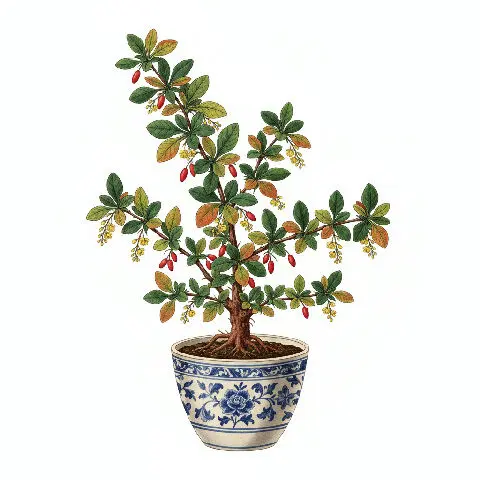
Berberis thunbergii, universally recognized as Japanese Barberry, is a distinctive, densely branched, spiny, and deciduous shrub belonging to the Berberidaceae family. Native to the woodlands and scrublands of Japan and certain regions of China, this resilient plant typically forms a rounded, compact shape, reaching mature heights of 1 to 2.5 meters with an equivalent spread. Its morphological features include small, oval to spatulate green leaves that transform into spectacular shades of red, orange, or purple during autumn, providing significant ornamental appeal.
The reddish-brown stems are armed with sharp, single thorns, a characteristic defense mechanism. In late spring, delicate pale yellow flowers emerge, often in small clusters, which then give way to bright red, ellipsoid berries that persist throughout the winter, offering a vital food source for birds and visual interest in dormant landscapes. Introduced to North America in 1875 from seeds initially collected in Russia, its initial distribution from the Arnold Arboretum in Boston, Massachusetts, was driven by its aesthetic value and remarkable hardiness.
Its adaptability to diverse and challenging conditions, ranging from poor soils to urban pollution, coupled with its notable resistance to diseases like barberry rust (Puccinia graminis), facilitated its widespread adoption in landscaping across temperate zones. However, this same robustness has contributed to its classification as an invasive species in many parts of North America, where its dense growth and thorny thickets outcompete native flora, disrupting local ecosystems in forests, fields, and wetlands.
Trusted Scientific References
1. Authoritative external sources for Berberis thunbergii
1.1 Wikipedia — Berberis thunbergii
1.2 Kew POWO (Plants of the World Online)
1.3 PubMed — peer-reviewed research
1.4 NCBI Taxonomy Browser
1.5 GBIF — Global Biodiversity
1.6Berberis should be interpreted through verified botanical identity, practical care, and responsible safety language. This recovery note adds the missing context needed for a complete profile: match light to the plant's habit, use well-drained soil, water according to season, and avoid unsupported medicinal or edible claims. For publishing, the plant can be presented as a source-backed garden plant with clear care guidance, common problem diagnosis, and conservative safety wording.
1.1.Berberis — Highlights
- ✓Deciduous, thorny shrub — Deciduous, thorny shrub with a compact, rounded growth habit.
- ✓Distinctive small, oval — Distinctive small, oval leaves that display brilliant autumn colors.
- ✓Stems are armed — Stems are armed with sharp, single thorns, providing a natural deterrent.
- ✓Produces small, pale — Produces small, pale yellow flowers in spring, followed by bright red, ellipsoid berries.
- ✓Highly adaptable to — Highly adaptable to various soil types and environmental conditions, including urban settings.
- ✓Exhibits strong resistance — Exhibits strong resistance to common plant diseases and pests.
- ✓Contains isoquinoline alkaloids, — Contains isoquinoline alkaloids, including berberine, though in lower amounts than other Berberis.
- ✓Widely cultivated as — Widely cultivated as an ornamental plant for hedges, borders, and foundation plantings.
- ✓Classified as an — Classified as an invasive species in many parts of North America due to its vigorous spread.
- ✓Berries provide a — Berries provide a persistent food source for birds throughout the winter months.
1.2.Berberis — Quick Summary
- ✓Japanese Barberry is a common ornamental shrub known for its vibrant foliage and berries.
- ✓It contains berberine, a potent alkaloid, but typically in lower concentrations than other Berberis species.
- ✓While not a primary traditional medicinal plant, it shares potential, albeit milder, benefits linked to berberine.
- ✓Notable for its hardiness and disease resistance, but also recognized as an invasive species in many regions.
- ✓Caution is advised due to potential side effects and drug interactions, especially for pregnant or breastfeeding individuals.
2.Berberis — Nomenclature & Classification
3.Berberis — Key Data
4.Berberis — Botanical Features
5.Berberis — Origin & Spread
6.Berberis — Heritage Uses
7.Berberis — Key Phytochemicals
- ✓Isoquinoline Alkaloids — Berberine is the primary active compound, a quaternary alkaloid responsible for many of the genus's pharmacological activities, including antimicrobial, anti-inflammatory, and metabolic regulatory effects.
- ✓Other Alkaloids — Palmatine, jatrorrhizine, and magnoflorine are also present, often in lower concentrations than berberine, contributing to the overall alkaloid profile and synergistic effects.
- ✓Flavonoids — Compounds like quercetin, kaempferol, and their glycosides are found in the leaves and berries, providing significant antioxidant and anti-inflammatory benefits.
- ✓Phenolic Acids — Gallic acid, caffeic acid, and chlorogenic acid are present, contributing to the plant's antioxidant capacity and potentially offering protective effects against oxidative stress.
- ✓Tannins — These astringent compounds are found in various plant parts, contributing to antimicrobial and anti-inflammatory actions, and potentially aiding in wound healing.
- ✓Lignans — A group of plant compounds with potential antioxidant and phytoestrogenic activities, though their specific roles in B. thunbergii are less characterized.
- ✓Saponins — These glycosides may contribute to immune-modulating and cholesterol-lowering effects, though their concentration and specific types in B. thunbergii require further investigation.
- ✓Anthocyanins — Abundant in the bright red berries, these pigments are potent antioxidants and contribute to the plant's vibrant autumn coloration, offering cardiovascular and neuroprotective benefits.
8.Berberis — Scientific Evidence
- ✓Antimicrobial Properties — Contains isoquinoline alkaloids, notably berberine, which exhibits broad-spectrum activity against bacteria, fungi, protozoa, and viruses, potentially inhibiting microbial growth and replication.
- ✓Anti-inflammatory Effects — Berberine has been shown to modulate various inflammatory pathways, including NF-κB and COX-2, which can help reduce systemic inflammation and associated pain.
- ✓Blood Glucose Regulation — Studies on other berberine-rich Berberis species suggest it can improve insulin sensitivity and decrease glucose production in the liver, aiding in the management of elevated blood sugar levels.
- ✓Cholesterol Management — Berberine may help lower LDL ('bad') cholesterol and triglyceride levels by upregulating LDL receptor expression in the liver and inhibiting lipid synthesis.
- ✓Antioxidant Activity — The plant's phytochemicals, including flavonoids and phenolic acids, contribute to its antioxidant capacity, helping to neutralize free radicals and reduce oxidative stress.
- ✓Digestive Support — Traditional uses of Berberis species for digestive complaints suggest a role in alleviating diarrhea, dysentery, and other gastrointestinal disturbances, partly due to berberine's antimicrobial actions.
- ✓Cardiovascular Health — Beyond lipid and glucose regulation, berberine may support heart health by improving endothelial function and potentially reducing blood pressure.
- ✓Immune System Modulation — Certain compounds in Berberis thunbergii may influence immune responses, helping to strengthen the body's defenses against pathogens and regulate autoimmune processes.
- ✓Hepatoprotective Potential — Berberine has demonstrated protective effects on liver cells against various toxins and may support liver function, though direct studies on B. thunbergii are limited.
- ✓Anti-obesity Effects — Research suggests berberine can influence metabolism and fat storage, potentially aiding in weight management by activating AMP-activated protein kinase (AMPK).
8.1.Berberis — Therapeutic Indications
9.Berberis — Safety Considerations
9.1.Berberis — Reported Side Effects
- ✓Gastrointestinal Upset — May cause nausea, vomiting, diarrhea, constipation, or abdominal cramps, particularly at higher doses.
- ✓Hypotension — Berberine can lower blood pressure, which may be problematic for individuals already on antihypertensive medication or with naturally low blood pressure.
- ✓Bradycardia — Can potentially slow heart rate, requiring caution in individuals with pre-existing cardiac conditions or those taking heart medications.
- ✓Jaundice/Kernicterus — High doses of berberine are contraindicated in infants due to the risk of displacing bilirubin and causing kernicterus.
- ✓Drug Interactions — Potential to interact with numerous medications, including anticoagulants, anti-diabetics, blood pressure drugs, and drugs metabolized by the CYP450 enzyme system.
- ✓Allergic Reactions — Though rare, some individuals may experience allergic responses, such as skin rashes or itching.
- ✓Uterine Contractions — Berberine has been shown to stimulate uterine contractions, making it unsafe for use during pregnancy.
9.2.Berberis — Safety Profile
- ✓Pregnancy and Breastfeeding — Strictly contraindicated during pregnancy due to potential uterine stimulation and during breastfeeding due to the risk of kernicterus in infants.
- ✓Infants and Young Children — Not recommended for use in infants or young children due to the risk of kernicterus and lack of safety data.
- ✓Pre-existing Conditions — Individuals with diabetes, hypotension, or cardiac conditions should exercise extreme caution and consult a healthcare professional before use.
- ✓Drug Interactions — Avoid concurrent use with medications such as anticoagulants, anti-diabetics, blood pressure medications, and cyclosporine without medical supervision.
- ✓Dosage — No established safe or effective dosage for Berberis thunbergii in medicinal contexts; general Berberis dosage guidelines may not apply due to lower alkaloid concentrations.
- ✓Professional Guidance — Always seek advice from a qualified healthcare practitioner or medical herbalist before considering Berberis thunbergii for any therapeutic purpose.
- ✓Identification — Ensure correct plant identification; avoid self-medication due to potential for misidentification with other species and varying alkaloid concentrations.
10.Berberis — Usage Guide
- ✓Decoction — While less common for B. thunbergii specifically, the root bark of Berberis species can be prepared as a decoction by simmering in water to extract alkaloids.
- ✓Tincture — An alcoholic extract of the root bark, allowing for concentrated delivery of active compounds, typically taken in drops.
- ✓Topical Application — Infusions or poultices from Berberis species have been traditionally used externally for skin conditions or minor wounds, though caution is advised due to thorn presence in B. thunbergii.
- ✓Culinary Use of Berries — The ripe berries, though tart, are sometimes used in jams, jellies, or sauces, similar to other barberry species; however, their medicinal concentration is minimal.
- ✓Standardized Extracts — For other Berberis species, standardized berberine extracts are available in capsule or tablet form, offering precise dosing; such products are not typically derived from B. thunbergii.
- ✓Research Formulations — Due to lower berberine content and invasive status, B. thunbergii is not a primary source for commercial medicinal preparations, but its extracts may be used in research.
- ✓Consulting a Professional — Always consult a qualified medical herbalist or healthcare provider before using any part of Berberis thunbergii for medicinal purposes, especially given its less-studied profile.
11.Berberis — Cultivation & Care
- ✓Site Selection — Thrives in full sun to partial shade; best autumn color in full sun.
- ✓Soil Requirements — Highly adaptable to a wide range of soil types, including poor, rocky, or sandy soils, but prefers well-drained conditions.
- ✓Watering — Drought-tolerant once established; requires moderate watering during prolonged dry spells, especially when young.
- ✓Propagation — Easily propagated by seeds (requiring cold stratification) or semi-hardwood cuttings taken in summer.
- ✓Pruning — Prune in late winter or early spring to maintain shape, remove dead or damaged branches, and manage size; can be sheared into hedges.
- ✓Pest and Disease Resistance — Generally resistant to most pests and diseases, including Japanese beetles and barberry rust, making it a low-maintenance landscape plant.
- ✓Invasive Management — In regions where it is invasive, consider planting sterile cultivars or native alternatives to prevent seed dispersal and ecological harm.
Reviewed by the Flora Medical Global Botanical Review Panel
Multi-disciplinary editorial group · Botany · Ethnobotany · Herbal-medicine literature
Who reviewed this: This page was checked by the Flora Medical Global Botanical Review Panel — an in-house editorial group of botany graduates, ethnobotany researchers, and horticulture practitioners who collectively maintain our 7,000+ plant encyclopedia. Meet the team.
Our 4-step verification process
1. Taxonomic verification
Scientific names and synonyms cross-checked against Kew POWO, World Flora Online, and The Plant List.
2. Phytochemical & medicinal cross-reference
Active compounds, traditional uses, and reported activities are cross-referenced with PubMed, USDA Dr. Duke's database, and peer-reviewed ethnobotanical literature.
3. Conservation & distribution check
Distribution, ecology, and conservation status confirmed against GBIF occurrence records and the IUCN Red List.
4. Editorial & safety review
Every entry passes an editorial pass for clarity, originality, and safety notices (toxicity, contraindications, dosage caveats) before publication.
Last reviewed:
Important medical disclaimer: This content is for educational and research purposes only. It is not medical advice and is not a substitute for consultation with a licensed healthcare provider. Do not use any herb to self-treat a medical condition without professional guidance.
Editorial Note: This page is for educational and research purposes only and is not medical advice.
Written by: Flora Medical Global Editorial Team
Reviewed by: Flora Medical Global Botanical Review Panel
Last Updated: June 15, 2026





Berberis — Comments & Community Reviews
Rate this plant