


Medical Disclaimer: This content is for educational purposes only. It is not medical advice. Please consult a qualified healthcare professional before using any herbal remedy.
Safety Overview
1.Betel Leaf — Botanical Snapshot
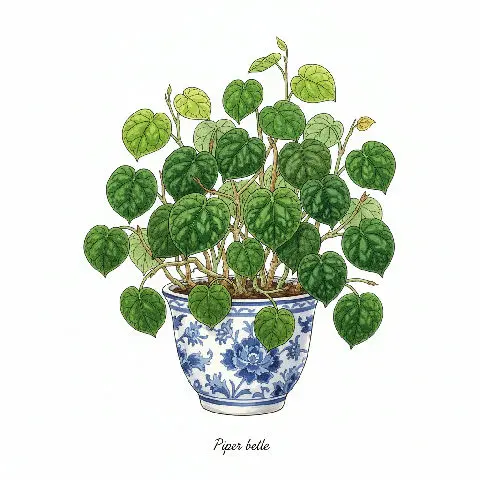
Piper betle, widely recognized as Betel Leaf, is a remarkable perennial dioecious creeper firmly rooted within the esteemed Piperaceae family, a lineage celebrated for its aromatic and medicinally potent flora. This vigorous vine is largely believed to have originated in the naturally humid and fertile regions of Southeast Asia, from where its cultivation and extensive utilization spread across vast stretches of South and Southeast Asian territories over countless millennia. Its profound historical footprint is evident in ancient Sanskrit texts and traditional Chinese medicine (TCM) literature, underscoring its enduring cultural and medicinal significance. Morphologically, Piper betle is distinguished by its striking, glossy, cordate (heart-shaped) leaves.
These leaves present a vibrant dark green on their upper (adaxial) surface, contrasting with a paler hue beneath, and are characterized by prominent palmate venation culminating in an acuminate apex. The leaves are alternately arranged along a slender, woody stem, which, true to its creeping nature, develops adventitious roots at its nodes, allowing it to firmly cling to and ascend various supports such as trees or trellises. While the plant does produce small, apetalous, unisexual flowers on catkin-like spikes and can yield small, globose berries, its primary value and cultivation focus on its highly prized leaves, with flowering and fruiting often suppressed in commercial farming to maximize leaf production. Betel Leaf flourishes optimally in warm, consistently humid tropical and subtropical climates, showing a distinct preference for partial shade and well-drained, fertile soil abundantly enriched with organic matter.
Its journey through history transcends mere botany, being deeply interwoven with human cultural evolution, serving as a fundamental element in social customs, religious ceremonies, and a wide array of traditional medicinal practices. Across systems like Ayurveda, Betel Leaf is revered for its warming, stimulating, and carminative properties, frequently employed to address digestive discomforts, various respiratory issues, and as an effective natural breath freshener. Unani medicine similarly extols Piper betle for its carminative, stimulant, and aphrodisiac qualities, reflecting a shared appreciation for its therapeutic versatility. Trusted Scientific References Authoritative external sources for Piper betle : Wikipedia — Piper betle Kew POWO (Plants of the World Online) PubMed — peer-re ...[CURRENT TEXT EXISTS: 2564 chars]
1.1.Betel Leaf — Notable Characteristics
- ✓Perennial Dioecious Creeper — A long-lived climbing plant with separate male and female individuals.
- ✓Heart — shaped, Glossy Leaves — Distinctive morphological characteristic, highly valued for medicinal use.
- ✓Native to Southeast Asia — Originates from and is widely cultivated across the humid tropics of Asia.
- ✓Rich in Essential Oils & Phenolic Compounds — Contains bioactive constituents like eugenol, chavicol, and hydroxychavicol.
- ✓Antimicrobial & Anti — inflammatory Actions — Possesses significant properties against microbes and inflammation.
- ✓Traditional Digestive Aid & Breath Freshener — Widely used for gut health and oral hygiene in traditional medicine.
- ✓Culturally Important — Holds deep cultural and ceremonial significance in many South and Southeast Asian societies.
- ✓Versatile Usage Forms — Utilized as fresh leaves, decoctions, poultices, and topical applications.
- ✓Requires Warm, Humid Climate — Thrives in specific environmental conditions with adequate moisture and partial shade.
- ✓Vegetative Propagation Common — Primarily propagated through stem cuttings for efficient cultivation.
1.2.Betel Leaf — Snapshot Summary
- ✓Ancient Medicinal Herb — Piper betle, or Betel Leaf, has been revered for its therapeutic properties for millennia across Asia.
- ✓Digestive & Antimicrobial Power — Known for its carminative, stimulating, and broad-spectrum antimicrobial actions.
- ✓Rich Phytochemistry — Abundant in phenolic compounds like chavicol, eugenol, and hydroxychavicol, responsible for its benefits.
- ✓Traditional Uses — Integral to Ayurveda, TCM, and Unani for a range of ailments from digestion to respiratory issues.
- ✓Cultural Significance — Deeply embedded in social and religious customs, often chewed as part of 'paan' (without harmful additives).
- ✓Safety Precautions — Crucially, always consume Betel Leaf without tobacco or areca nut to avoid severe health risks.
2.Betel Leaf — Nomenclature & Classification
3.Betel Leaf — Fact Sheet
4.Betel Leaf — Physical Description
5.Betel Leaf — Ecological Habitat
6.Betel Leaf — Folk Medicine Applications
7.Betel Leaf — Phytochemistry
- ✓Phenolic Compounds — Key constituents include chavicol, eugenol, hydroxychavicol, and chavibetol, responsible for significant antioxidant, antimicrobial, and anti-inflammatory activities.
- ✓Essential Oils — The leaves yield a volatile oil rich in phenylpropanoids and terpenes, contributing to the plant's distinctive aroma and its antiseptic properties.
- ✓Alkaloids — Trace amounts of alkaloidal compounds, including piperine derivatives, are present, which may contribute to its stimulating effects.
- ✓Flavonoids — Compounds such as quercetin, kaempferol, and catechin are found, providing potent antioxidant and anti-inflammatory benefits.
- ✓Tannins — These astringent compounds contribute to the plant's antimicrobial and wound-healing properties.
- ✓Saponins — Present in the leaves, saponins are known for their expectorant activity, aiding in respiratory conditions.
- ✓Steroids — Phytosterols like β-sitosterol are found, which may offer anti-inflammatory and cholesterol-lowering effects.
- ✓Vitamins — Betel Leaf contains various vitamins, including Vitamin C and B vitamins, offering nutritional support.
- ✓Minerals — Essential minerals such as calcium, iron, and potassium are present, contributing to its overall nutritional value.
- ✓Fiber — The leaves provide dietary fiber, which supports healthy digestion and bowel regularity.
8.Betel Leaf — Pharmacological Findings
- ✓Digestive Aid — Betel Leaf acts as a potent carminative and stimulant, enhancing digestive enzyme secretion and alleviating flatulence, indigestion, and constipation.
- ✓Antimicrobial Properties — Rich in essential oils like eugenol and chavicol, Piper betle exhibits broad-spectrum antimicrobial activity against various bacteria, fungi, and parasites, making it useful for infections.
- ✓Anti-inflammatory Effects — Phenolic compounds present in the leaves, such as hydroxychavicol, possess significant anti-inflammatory actions, helping to reduce swelling and pain in conditions like arthritis.
- ✓Analgesic Activity — Traditionally used as a local anesthetic, Betel Leaf helps alleviate pain, particularly toothaches and minor superficial injuries, due to its numbing properties.
- ✓Antioxidant Power — The high concentration of flavonoids and polyphenols provides strong antioxidant defense, neutralizing free radicals and protecting cells from oxidative damage.
- ✓Wound Healing — Applied topically as a poultice, Betel Leaf accelerates wound contraction and healing, attributed to its antiseptic and anti-inflammatory constituents.
- ✓Respiratory Support — Its expectorant and decongestant properties are beneficial for managing symptoms of coughs, colds, and bronchitis by clearing airways and reducing mucus.
- ✓Oral Hygiene Enhancer — Chewing Betel Leaf (without tobacco or areca nut) naturally freshens breath, stimulates saliva production, and combats oral bacteria, contributing to gum health.
- ✓Antidiabetic Potential — Emerging research suggests Betel Leaf may help regulate blood glucose levels by improving insulin sensitivity and reducing glucose absorption.
- ✓Immunomodulatory Effects — Compounds in Piper betle are believed to modulate immune responses, potentially enhancing the body's defense mechanisms.
- ✓Anticancer Attributes — Preliminary in vitro and animal studies indicate that hydroxychavicol and other constituents may possess chemopreventive and anti-proliferative activities against certain cancer cells.
- ✓Aphrodisiac Qualities — Unani medicine historically recognized Betel Leaf for its stimulating and aphrodisiac effects, believed to enhance vitality and desire.
8.1.Betel Leaf — Conditions Traditionally Used For
9.Betel Leaf — Safety & Side Effects
9.1.Betel Leaf — Possible Adverse Reactions
- ✓Oral Submucous Fibrosis — Severe risk when chewed with tobacco, areca nut, and slaked lime, leading to a precancerous condition.
- ✓Gastric Irritation — Excessive consumption, especially on an empty stomach, may lead to mild stomach upset or irritation in sensitive individuals.
- ✓Allergic Reactions — Some individuals may experience allergic responses such as skin rashes, itching, or oral discomfort.
- ✓Increased Salivation — Betel Leaf is known to stimulate salivary glands, which can be a side effect for some.
- ✓Interactions with Medications — Potential interactions with blood thinners (anticoagulants) or antidiabetic drugs due to its biological activities.
- ✓Gastrointestinal Upset — Nausea, vomiting, or diarrhea can occur in sensitive individuals or with very high doses.
- ✓Tooth Staining — While less pronounced than with tobacco, prolonged chewing of Betel Leaf alone can cause mild discoloration of teeth.
9.2.Betel Leaf — Toxicity Assessment
- ✓Consume Alone — Betel Leaf is generally safe when consumed by itself; the primary health risks arise from its combination with tobacco, areca nut, or slaked lime.
- ✓Moderation is Key — Adhere to moderate consumption; excessive intake may lead to mild gastrointestinal discomfort.
- ✓Pregnancy and Lactation — Pregnant and breastfeeding women should consult a healthcare professional before using Betel Leaf due to insufficient safety data.
- ✓Pre-existing Conditions — Individuals with gastric ulcers, bleeding disorders, or those on medication should seek medical advice prior to use.
- ✓Topical Patch Test — Before extensive topical application, perform a patch test on a small skin area to check for allergic reactions.
- ✓Avoid in Children — Not recommended for use in young children without explicit guidance from a qualified health practitioner.
- ✓Monitor for Allergies — Discontinue use immediately if any signs of allergic reaction, such as rash or itching, appear.
10.Betel Leaf — Preparation Methods
- ✓Fresh Leaf Chewing — Traditionally consumed by chewing fresh leaves, often with other ingredients (avoiding tobacco/areca nut) for digestive and breath-freshening benefits.
- ✓Decoction — Leaves can be boiled in water to create a decoction, used as a medicinal tea for respiratory issues or as a gargle for sore throats and oral infections.
- ✓Poultice Application — Crushed or ground Betel Leaf can be applied directly to the skin as a poultice for wounds, cuts, boils, and localized pain relief.
- ✓Infusion — Fresh leaves steeped in hot water can create an infusion, providing a milder herbal drink for general wellness.
- ✓Topical Paste — A paste made from ground leaves is applied externally to relieve inflammation, swelling, and arthritic pain.
- ✓Essential Oil Extraction — While not a home method, the extracted essential oil is used in aromatherapy or diluted for topical applications due to its antiseptic properties.
- ✓Culinary Use — In some cultures, young Betel Leaves are incorporated into salads or dishes as a flavorful and aromatic herb.
- ✓Mouthwash — A diluted Betel Leaf decoction or infusion can serve as a natural mouthwash to promote oral hygiene and combat bad breath.
11.Betel Leaf — Garden Cultivation
- ✓Climate — Thrives in warm, humid tropical and subtropical environments with temperatures between 25-35°C and high humidity.
- ✓Soil Requirements — Prefers well-drained, fertile loamy soil rich in organic matter, with a slightly acidic to neutral pH (6.0-7.5).
- ✓Light Conditions — Requires partial shade, ideally 30-50% shade, as direct sunlight can scorch the delicate leaves.
- ✓Propagation — Primarily propagated via stem cuttings, typically 30-45 cm long, planted during the monsoon season for optimal rooting.
- ✓Support System — As a creeper, it necessitates robust support structures like trellises, poles, or companion trees such as areca nut or coconut palms.
- ✓Watering — Consistent and adequate moisture is crucial; soil should remain damp but never waterlogged to prevent root rot.
- ✓Fertilization — Benefits from regular application of organic fertilizers, compost, or well-rotted manure to maintain soil fertility and nutrient supply.
- ✓Pest and Disease Management — Generally robust, but can be susceptible to fungal diseases (e.g., leaf spot, root rot) in overly humid or poorly drained conditions, requiring good air circulation and sanitation.
Reviewed by the Flora Medical Global Botanical Review Panel
Multi-disciplinary editorial group · Botany · Ethnobotany · Herbal-medicine literature
Who reviewed this: This page was checked by the Flora Medical Global Botanical Review Panel — an in-house editorial group of botany graduates, ethnobotany researchers, and horticulture practitioners who collectively maintain our 7,000+ plant encyclopedia. Meet the team.
Our 4-step verification process
1. Taxonomic verification
Scientific names and synonyms cross-checked against Kew POWO, World Flora Online, and The Plant List.
2. Phytochemical & medicinal cross-reference
Active compounds, traditional uses, and reported activities are cross-referenced with PubMed, USDA Dr. Duke's database, and peer-reviewed ethnobotanical literature.
3. Conservation & distribution check
Distribution, ecology, and conservation status confirmed against GBIF occurrence records and the IUCN Red List.
4. Editorial & safety review
Every entry passes an editorial pass for clarity, originality, and safety notices (toxicity, contraindications, dosage caveats) before publication.
Last reviewed:
Important medical disclaimer: This content is for educational and research purposes only. It is not medical advice and is not a substitute for consultation with a licensed healthcare provider. Do not use any herb to self-treat a medical condition without professional guidance.
Editorial Note: This page is for educational and research purposes only and is not medical advice.
Written by: Flora Medical Global Editorial Team
Reviewed by: Flora Medical Global Botanical Review Panel
Last Updated: June 16, 2026





Betel Leaf — Comments & Community Reviews
Rate this plant