
Medical Disclaimer: This content is for educational purposes only. It is not medical advice. Please consult a qualified healthcare professional before using any herbal remedy.
Safety Overview
1.Betony — Overview
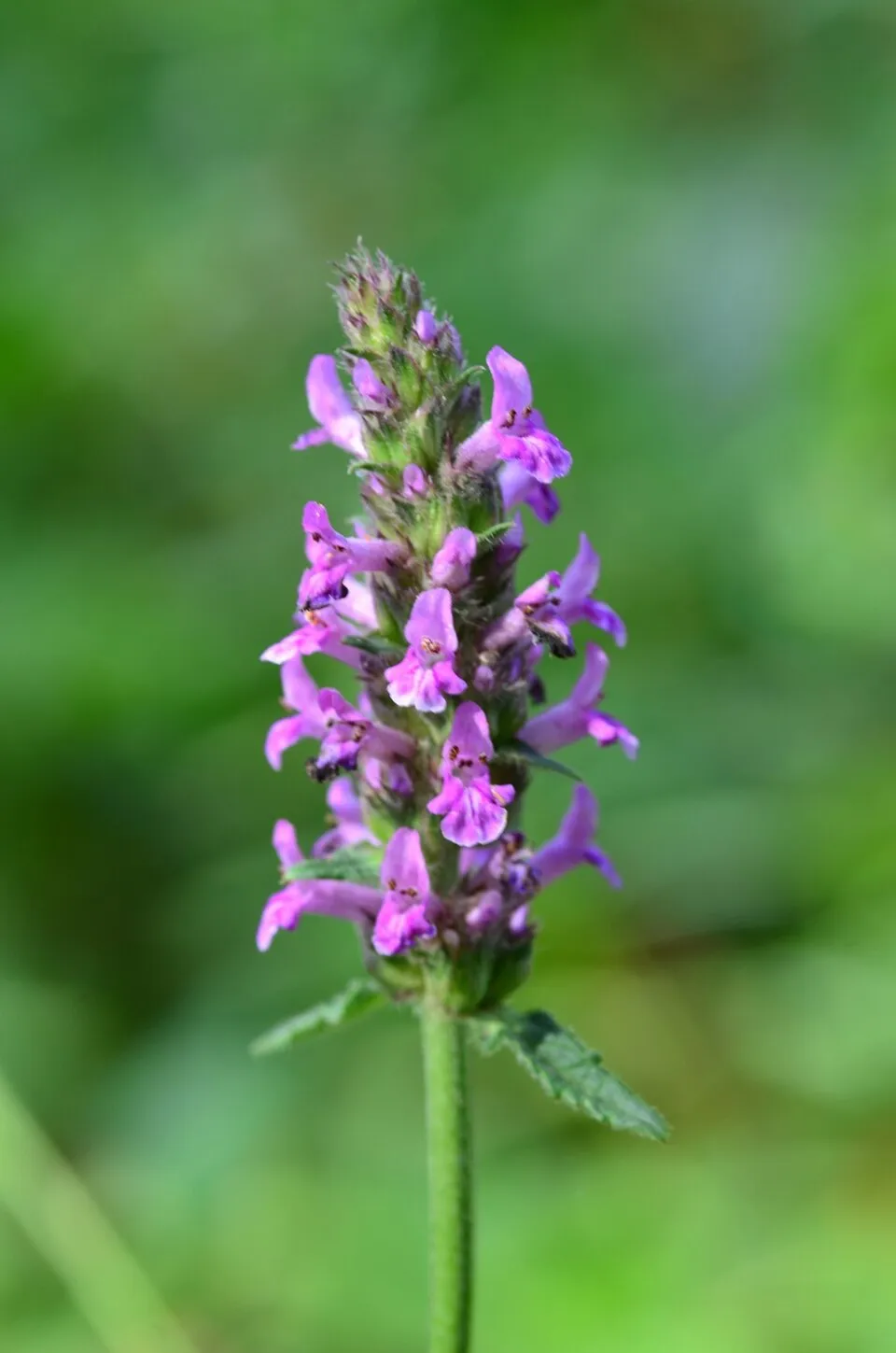
Betony, scientifically known as Betonica officinalis, and historically classified as Stachys officinalis, is a distinguished perennial herbaceous plant belonging to the Lamiaceae family, a diverse group renowned for aromatic herbs like mint, sage, and lavender. This resilient species is indigenous to the expansive regions of Europe, North Africa, and Western Asia, thriving across a variety of temperate landscapes, from open grasslands to shaded woodlands. Morphologically, Betony is characterized by its distinctive square stems, a hallmark of the mint family, which typically grow to a height of 30-60 centimeters. Its basal leaves form a rosette, while stem leaves are arranged oppositely, displaying a dark green hue, a somewhat crinkled texture, and a covering of fine hairs.
These leaves are oblong to ovate with crenate or serrated margins. The plant culminates in striking, dense terminal spikes of labiate flowers, predominantly purplish-pink, though occasionally white variants can be observed. These vibrant blossoms typically emerge from early summer through to early autumn, attracting a variety of pollinators. Betony prefers well-drained soils and can flourish in a range of light conditions, from partial shade to full sun, commonly found inhabiting grasslands, open woodlands, hedgerows, and heathlands.
Its robust root system anchors it firmly, contributing to its perennial nature and ability to persist in diverse environments. The plant's historical and cultural tapestry is rich, extending back millennia, making it one of the most revered medicinal herbs in European folk medicine, often linked etymologically to 'good for the head' or ancient Iberian tribes.
Trusted Scientific References
1. Authoritative external sources for Betonica officinalis
1.1 Wikipedia — Betonica officinalis
1.2 Kew POWO (Plants of the World Online)
1.3 PubMed — peer-reviewed research
1.4 NCBI Taxonomy Browser
1.5 GBIF — Global Biodiversity
1.6Betony should be interpreted through verified botanical identity, practical care, and responsible safety language. This recovery note adds the missing context needed for a complete profile: match light to the plant's habit, use well-drained soil, water according to season, and avoid unsupported medicinal or edible claims. For publishing, the plant can be presented as a source-backed medicinal plant with clear care guidance, common problem diagnosis, and conservative safety wording.
1.1.Betony — Standout Qualities
- ✓Perennial herbaceous plant — Perennial herbaceous plant from the Lamiaceae family.
- ✓Native to Europe, — Native to Europe, North Africa, and Western Asia.
- ✓Characterized by square stems and distinctive purplish — pink flower spikes.
- ✓Holds a rich — Holds a rich historical significance as a revered medicinal herb in European folk medicine.
- ✓Traditionally utilized for — Traditionally utilized for its nervine properties, aiding in relaxation and stress relief.
- ✓Supports digestive health, — Supports digestive health, historically addressing issues like heartburn and diarrhea.
- ✓Contains notable anti — inflammatory, antioxidant, and astringent chemical compounds.
- ✓A traditional remedy — A traditional remedy for various types of headaches and general tension.
- ✓Prefers well — drained soils and thrives in a range of light conditions.
- ✓Commonly found inhabiting — Commonly found inhabiting grasslands, open woodlands, and hedgerows.
1.2.Betony — Quick Summary
- ✓Betony is an ancient European nervine and digestive tonic.
- ✓It is traditionally known for its calming, anti-inflammatory, and astringent properties.
- ✓Historically used for headaches, anxiety, respiratory issues, and digestive complaints.
- ✓The herb contains beneficial tannins, iridoid glycosides, and phenolic acids.
- ✓Caution is advised for pregnant/breastfeeding individuals, those with low blood pressure, and those on specific medications.
- ✓It remains a versatile herb for traditional remedies and modern wellness pursuits.
2.Betony — Scientific Profile
3.Betony — Quick Facts
4.Betony — Morphological Account
5.Betony — Habitat & Distribution
6.Betony — Historical Applications
7.Betony — Secondary Metabolites
- ✓Iridoid Glycosides — Key compounds include Harpagide and Acetylharpagide, known for their anti-inflammatory and analgesic properties, contributing to pain relief and swelling reduction.
- ✓Phenolic Acids — Rosmarinic acid and Caffeic acid are prominent, providing strong antioxidant, anti-inflammatory, and antimicrobial actions, crucial for cellular protection and immune support.
- ✓Tannins — Comprising Gallotannins and Catechins, these compounds impart astringent and antiseptic qualities, beneficial for wound healing, digestive health, and protecting mucous membranes.
- ✓Flavonoids — Such as Luteolin and Apigenin, these contribute to Betony's antioxidant, anti-inflammatory, and anxiolytic effects, supporting cellular health and nervous system calm.
- ✓Betaines — Including Betonicine and Turicine, these nitrogen-containing compounds are thought to contribute to Betony's nervine and mild hypotensive effects, influencing neurological and cardiovascular function.
- ✓Alkaloids — While in trace amounts, certain alkaloids may exert subtle nervine and antispasmodic actions, supporting the plant's traditional uses for nervous conditions.
- ✓Volatile Oils — Containing various monoterpenes and sesquiterpenes, these provide the plant's characteristic aroma and may offer mild antiseptic and calming properties.
- ✓Saponins — Triterpenoid saponins found in Betony can act as expectorants, aiding in respiratory health, and may also possess adaptogenic qualities.
- ✓Verbascoside (Acteoside) — A significant phenylpropanoid glycoside, known for its potent antioxidant, anti-inflammatory, and neuroprotective activities.
8.Betony — What Research Suggests
- ✓Headache and Migraine Relief — Traditionally used as a nervine, Betony may help alleviate headaches and migraines by promoting relaxation and potentially influencing vascular tone through its phytochemicals.
- ✓Anxiety and Tension Reduction — Its nervine properties are thought to soothe the nervous system, making it a historical remedy for stress, anxiety, and general nervous tension.
- ✓Digestive Aid — Betony has been employed to support digestive health, helping to alleviate symptoms of heartburn, indigestion, and diarrhea due to its astringent and mild bitter qualities.
- ✓Respiratory Support — Historically, Betony was used for conditions like bronchitis and asthma, with its compounds potentially offering anti-inflammatory and expectorant effects to ease respiratory discomfort.
- ✓Urinary Tract Health — In traditional medicine, Betony was applied to address issues such as bladder and kidney stones, as well as bladder inflammation, though mechanisms require further study.
- ✓Gout Management — Its anti-inflammatory constituents may contribute to reducing the pain and swelling associated with gout, a condition of acute inflammatory arthritis.
- ✓Nerve Pain (Neuralgia) Alleviation — As a nervine, Betony has been traditionally combined with other herbs to soothe nerve pain and discomfort, offering potential analgesic effects.
- ✓Epilepsy Support — Ancient texts suggest Betony's use in managing seizure disorders like epilepsy, primarily through its calming effects on the nervous system, though modern evidence is lacking.
- ✓Wound Healing — The astringent tannins in Betony make it suitable for external application to minor cuts, scrapes, and wounds, promoting tissue contraction and preventing infection.
- ✓General Tonic and Immune Support — Considered a general tonic in folk medicine, Betony may contribute to overall vitality and immune function through its rich array of antioxidants and beneficial compounds.
- ✓Blood Pressure Regulation — Some research suggests that Betony's chemical constituents may exert a mild hypotensive effect, potentially contributing to blood pressure management.
- ✓Antioxidant Protection — Rich in phenolic acids and flavonoids, Betony offers significant antioxidant activity, helping to protect cells from oxidative stress and free radical damage.
8.1.Betony — Indications & Uses
9.Betony — Precautions & Warnings
9.1.Betony — Possible Adverse Reactions
- ✓Stomach Upset — Some individuals may experience mild gastrointestinal discomfort, including nausea or indigestion, particularly with larger doses.
- ✓Low Blood Pressure — Betony might cause a decrease in blood pressure, potentially leading to symptoms like dizziness or lightheadedness in susceptible individuals.
- ✓Allergic Reactions — Although rare, sensitive individuals might develop allergic reactions such as skin rashes or itching.
- ✓Gastrointestinal Discomfort — In some cases, Betony may induce diarrhea or constipation, depending on individual sensitivity.
- ✓Drug Interactions — There is a risk of interaction with certain medications, especially those affecting blood pressure.
- ✓Sedation — Mild drowsiness or a calming effect has been reported by some users, which could impact alertness.
- ✓Heartburn Exacerbation — While often used for heartburn, in rare cases or with specific sensitivities, it could potentially exacerbate symptoms.
9.2.Betony — Safety Profile
- ✓Pregnancy and Breastfeeding — Betony should be avoided during pregnancy and breastfeeding due to insufficient reliable safety information and potential effects on blood pressure.
- ✓Hypotension — Individuals with pre-existing low blood pressure (hypotension) should exercise caution or avoid Betony, as it may further lower blood pressure.
- ✓Prior to Surgery — Discontinue the use of Betony at least two weeks before any scheduled surgery, as it may interfere with blood pressure control during and after the procedure.
- ✓Drug Interactions — Betony may interact with antihypertensive medications, potentially causing blood pressure to drop too low; consult a healthcare provider.
- ✓Children — The use of Betony in children is not recommended due to a lack of safety data and established dosing guidelines.
- ✓Dosage — There is insufficient scientific information to determine an appropriate range of safe doses for Betony; always consult a healthcare professional.
- ✓Self-Medication — Avoid self-treating serious medical conditions with Betony and always seek professional medical advice.
10.Betony — Preparation & Dosage
- ✓Herbal Tea (Infusion) — Dried leaves and flowering tops are steeped in hot water for 5-10 minutes to create a calming and digestive tea.
- ✓Tincture — Fresh or dried plant material is macerated in alcohol to extract medicinal compounds, typically taken in drops mixed with water.
- ✓Decoction — For tougher plant parts like roots or for a stronger extract, the material is simmered in water for a longer period.
- ✓Poultice or Compress — Crushed fresh leaves can be applied directly to the skin as a poultice or infused into a cloth for a compress to soothe minor wounds or muscle aches.
- ✓Capsules or Powder — Dried Betony herb can be ground into a fine powder and encapsulated for convenient oral consumption.
- ✓Herbal Vinegar — Infusing Betony in apple cider vinegar can create a medicinal vinegar, useful as a tonic or for external washes.
- ✓Herbal Syrup — A concentrated infusion of Betony can be combined with honey or another sweetener to create a soothing syrup, often used for coughs or sore throats.
11.Betony — Growth Requirements
- ✓Propagation — Betony can be propagated effectively from seeds sown in spring or autumn, or by dividing established clumps in early spring or after flowering.
- ✓Soil Requirements — It thrives in well-drained soil with a pH ranging from slightly acidic to neutral (6.0-7.0), tolerating various soil types but preferring loamy conditions.
- ✓Light Conditions — The plant prefers full sun to partial shade, with more sun encouraging denser growth and more abundant flowering.
- ✓Watering — Betony requires moderate watering, especially during dry spells, but is relatively drought-tolerant once established due to its robust root system.
- ✓Spacing — When planting, space individual plants about 30-45 centimeters apart to allow for adequate air circulation and growth.
- ✓Harvesting — Leaves and flowering tops are typically harvested in early summer as the plant begins to bloom, ideally on a dry day.
- ✓Pest and Disease Resistance — Betony is generally hardy and resistant to most common pests and diseases, requiring minimal intervention.
- ✓Winter Care — As a perennial, it is cold-hardy and typically requires no special winter protection in temperate climates, naturally dying back and regrowing in spring.
Reviewed by the Flora Medical Global Botanical Review Panel
Multi-disciplinary editorial group · Botany · Ethnobotany · Herbal-medicine literature
Who reviewed this: This page was checked by the Flora Medical Global Botanical Review Panel — an in-house editorial group of botany graduates, ethnobotany researchers, and horticulture practitioners who collectively maintain our 7,000+ plant encyclopedia. Meet the team.
Our 4-step verification process
1. Taxonomic verification
Scientific names and synonyms cross-checked against Kew POWO, World Flora Online, and The Plant List.
2. Phytochemical & medicinal cross-reference
Active compounds, traditional uses, and reported activities are cross-referenced with PubMed, USDA Dr. Duke's database, and peer-reviewed ethnobotanical literature.
3. Conservation & distribution check
Distribution, ecology, and conservation status confirmed against GBIF occurrence records and the IUCN Red List.
4. Editorial & safety review
Every entry passes an editorial pass for clarity, originality, and safety notices (toxicity, contraindications, dosage caveats) before publication.
Last reviewed:
Important medical disclaimer: This content is for educational and research purposes only. It is not medical advice and is not a substitute for consultation with a licensed healthcare provider. Do not use any herb to self-treat a medical condition without professional guidance.
Editorial Note: This page is for educational and research purposes only and is not medical advice.
Written by: Flora Medical Global Editorial Team
Reviewed by: Flora Medical Global Botanical Review Panel
Last Updated: June 16, 2026





Betony — Comments & Community Reviews
Rate this plant