


Medical Disclaimer: This content is for educational purposes only. It is not medical advice. Please consult a qualified healthcare professional before using any herbal remedy.
Safety Overview
1.Bilberry — Plant Snapshot
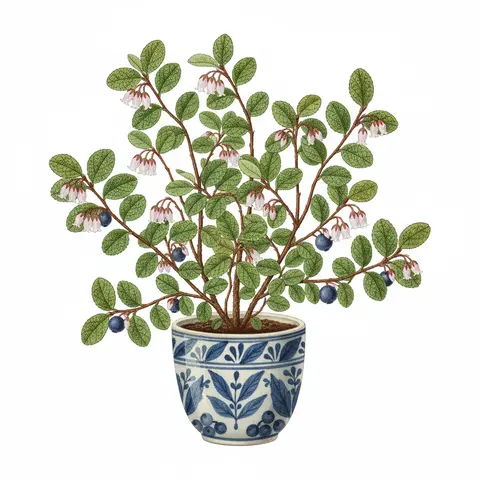
Bilberry (Vaccinium myrtillus), a resilient deciduous shrub, is a treasure of the Ericaceae family, widely distributed across the cooler, temperate zones of Europe, parts of Asia, and even some regions of North America, where it is sometimes mistaken for true blueberries. This low-growing plant typically reaches a height of 30 to 60 centimeters, flourishing in the acidic, nutrient-poor soils characteristic of heaths, open woodlands, and the understory of coniferous forests.
Its preference for moist, airy environments with dappled sunlight, rather than harsh, direct exposure, allows it to thrive in the cool, humid conditions often found in its natural habitats.
The Bilberry plant is easily identified by its slender, angular green stems and small, ovate to elliptical leaves that are glossy on the surface and display finely serrated margins. These leaves undergo a striking transformation in autumn, shifting from a fresh green to vibrant shades of red and orange, adding to the aesthetic appeal of its forest home. The flowers, which emerge in spring, are typically solitary or in small clusters, appearing as pale pink to reddish, bell-shaped structures that hang delicately from the leaf axils.
These blossoms mature into the plant's most notable feature: small, spherical berries, ranging from 5 to 10 millimeters in diameter. These fruits are distinctively dark blue to almost black, often with a subtle waxy bloom, and possess a rich, tart-sweet flavor. Unlike cultivated blueberries, Bilberry fruits have a dark red-purple flesh throughout, which readily stains.
The root system is fibrous and shallow, adapted to drawing moisture and nutrients from the upper layers of acidic forest soils. Taxonomically, Vaccinium myrtillus belongs to the order Ericales, sharing its family (Ericaceae) with other well-known berries like cranberries and cultivated blueberries, highlighting a close botanical relationship and shared phytochemical profile.
Trusted Scientific References
1. Authoritative external sources for Vaccinium myrtillus
1.1 Wikipedia — Vaccinium myrtillus
1.2 Kew POWO (Plants of the World Online)
1.3 PubMed — peer-reviewed research
1.4 NCBI Taxonomy Browser
1.5 GBIF — Global Biodiversity
1.1.Bilberry — Key Features
- ✓Dark Blue — Black Berries — Distinctive fruit with a waxy bloom and deep red-purple flesh that stains readily.
- ✓Rich in Anthocyanins — The primary class of compounds responsible for its color and most therapeutic benefits.
- ✓Vision Enhancer — Widely known for its traditional use and studied effects on eye health, particularly night vision.
- ✓Deciduous Shrub — A low-growing plant that sheds its leaves in autumn, often displaying vibrant fall foliage.
- ✓Acid — Loving Plant — Thrives in acidic, nutrient-poor soils found in heaths and coniferous forests.
- ✓European Native — Primarily distributed across northern and central Europe, also found in parts of Asia and North America.
- ✓Antioxidant Powerhouse — High ORAC value due to diverse phenolic compounds.
- ✓Anti — inflammatory Properties — Helps to mitigate inflammatory responses in the body.
- ✓Member of Ericaceae Family — Related to cranberries and cultivated blueberries, sharing botanical characteristics.
1.2.Bilberry — Quick Summary
- ✓Potent Antioxidant Powerhouse — Rich in anthocyanins, Bilberry offers exceptional free radical scavenging capabilities.
- ✓Renowned for Vision Support — Historically and scientifically recognized for enhancing eye health and improving night vision.
- ✓Anti-inflammatory & Metabolic Benefits — Contributes to reducing inflammation and supporting healthy blood glucose and lipid levels.
- ✓Native European Superberry — A wild, deciduous shrub thriving in cool, acidic forest environments.
- ✓Versatile Usage — Consumed fresh, dried, in juices, or as standardized extracts for various health applications.
2.Bilberry — Systematic Position
3.Bilberry — Botanical Stats
4.Bilberry — Morphological Account
5.Bilberry — Habitat & Distribution
6.Bilberry — Cultural & Traditional Roles
7.Bilberry — Active Compounds
- ✓Anthocyanins — These water-soluble polyphenolic flavonoid compounds are the primary bioactives, responsible for Bilberry's dark color and potent antioxidant properties. Key anthocyanidins include cyanidin, delphinidin, petunidin, peonidin, pelargonidin, and malvidin, predominantly in their glycosidic forms.
- ✓Flavonols — Important flavonoid compounds like quercetin and catechins are present, contributing to the berry's overall antioxidant and anti-inflammatory profile.
- ✓Tannins — Both condensed tannins and ellagitannins are found in Bilberry, offering astringent properties and additional antioxidant benefits.
- ✓Phenolic Acids — Various phenolic acids contribute to the plant's phytochemical mix, further enhancing its antioxidant capacity.
- ✓Vitamin C (Ascorbic Acid) — A natural antioxidant vitamin present in small quantities, supporting immune function and collagen synthesis.
- ✓Organic Acids — Malic acid, citric acid, and succinic acid contribute to the tart flavor and may influence metabolic processes.
- ✓Pectin — A soluble fiber found in the fruit, which can support digestive health and aid in detoxification.
- ✓Sugars — Fructose and glucose are natural sugars present in the berries, providing energy.
8.Bilberry — Modern Studies
- ✓Supports Vision Health — Bilberry is renowned for improving night vision and overall visual acuity, particularly attributed to its anthocyanins which may enhance rhodopsin regeneration in the retina.
- ✓Potent Antioxidant Defense — The high concentration of anthocyanins and other phenolic compounds provides significant antioxidant activity, combating oxidative stress and protecting cells from free radical damage.
- ✓Anti-inflammatory Effects — Active compounds in Vaccinium myrtillus help modulate inflammatory pathways, potentially reducing systemic inflammation throughout the body.
- ✓Lowers Blood Glucose Levels — Research suggests Bilberry may assist in regulating blood sugar, making it of interest for managing hyperglycemia and supporting metabolic health.
- ✓Supports Cardiovascular Health — Its lipid-lowering and antioxidant properties contribute to maintaining healthy blood vessels, potentially reducing the risk of cardiovascular diseases.
- ✓Promotes Lipid Metabolism — Bilberry has been reported to have lipid-lowering effects, which can contribute to healthier cholesterol profiles and overall cardiovascular wellness.
- ✓Boosts Immune System — The rich array of antioxidants and vitamin C in Bilberry can strengthen the body's natural defenses and enhance immune function.
- ✓Antimicrobial Activity — Studies indicate that Bilberry extracts possess antimicrobial properties, which may help inhibit the growth of certain pathogens.
- ✓Protects Against Age-Related Diseases — By mitigating oxidative stress and inflammation, Bilberry may play a role in preventing or delaying the onset of age-related conditions, including cognitive decline.
- ✓Supports Digestive Health — The tannins and fiber content may aid in digestive regularity and soothe gastrointestinal discomfort.
8.1.Bilberry — Indications & Uses
9.Bilberry — Precautions & Warnings
9.1.Bilberry — Reported Side Effects
- ✓Digestive Upset — Large quantities of fresh or dried Bilberry may cause mild stomach upset, nausea, or diarrhea in sensitive individuals.
- ✓Allergic Reactions — Rare, but individuals sensitive to other Vaccinium species or berries may experience allergic symptoms like rash or itching.
- ✓Hypoglycemia Risk — Due to its potential blood glucose-lowering effects, individuals with diabetes on medication should monitor blood sugar levels closely.
- ✓Blood Thinning Potential — While not extensively documented for Bilberry specifically, high doses of certain flavonoids can theoretically have mild anti-platelet effects, warranting caution with anticoagulant medications.
- ✓Low Blood Pressure — Extremely high doses could theoretically contribute to a slight decrease in blood pressure, though this is rare with typical consumption.
9.2.Bilberry — Safety Overview
- ✓Class 1 Herb — Classified by the American Herbal Products Association (AHPA) as safe for appropriate consumption, indicating a low risk profile.
- ✓Generally Well-Tolerated — When used at recommended dosages, Bilberry and its extracts are typically considered safe for most healthy adults.
- ✓Pregnancy and Lactation — Lack of sufficient safety data advises caution; pregnant or breastfeeding individuals should consult a healthcare provider before use.
- ✓Drug Interactions — Potential interactions with anticoagulant medications (e.g., warfarin) due to theoretical blood-thinning effects; also with diabetes medications due to blood sugar-lowering properties.
- ✓Surgical Procedures — Discontinue use at least two weeks prior to any scheduled surgery due to potential influence on blood clotting.
- ✓Pediatric Use — Consult a pediatrician before administering Bilberry supplements to children, especially concentrated extracts.
- ✓Quality Sourcing — Always ensure Bilberry products are from reputable sources to avoid contamination or adulteration.
10.Bilberry — Preparation & Dosage
- ✓Fresh Berries — Consume raw during harvest season for maximum nutrient intake; they are tart but flavorful.
- ✓Dried Berries — Can be rehydrated for culinary uses or consumed as a snack, retaining many beneficial compounds.
- ✓Juices and Syrups — Extract fresh Bilberry juice or prepare syrups for a concentrated form, often diluted or mixed with other beverages.
- ✓Preserves and Jams — Cooked into jams, jellies, and preserves, though some heat-sensitive compounds may be reduced.
- ✓Herbal Teas/Infusions — Dried leaves or fruits can be steeped in hot water to create a healthful tea.
- ✓Standardized Extracts — Available as capsules or tinctures, often concentrated to a specific anthocyanin content (e.g., 25% anthocyanidins) for targeted medicinal use.
- ✓Culinary Ingredient — Used in pies, tarts, sauces, and other desserts, adding flavor and nutritional value.
11.Bilberry — Growth Requirements
- ✓Soil Preference — Requires highly acidic soil (pH 4.0-5.5) that is well-drained but consistently moist, often enriched with peat or pine bark.
- ✓Light Conditions — Thrives in partial shade or dappled sunlight, mimicking its natural understory habitat; direct, intense sun can scorch leaves.
- ✓Watering — Needs regular, consistent watering, especially during dry periods, to maintain soil moisture without becoming waterlogged.
- ✓Climate — Prefers cool, temperate climates with sufficient humidity; tolerant of cold winters but benefits from snow cover.
- ✓Propagation — Can be propagated from seeds, though germination is slow; softwood cuttings taken in late spring or early summer are more common.
- ✓Fertilization — Benefits from light application of acid-loving plant fertilizers, avoiding high nitrogen formulations which can harm root systems.
Reviewed by the Flora Medical Global Botanical Review Panel
Multi-disciplinary editorial group · Botany · Ethnobotany · Herbal-medicine literature
Who reviewed this: This page was checked by the Flora Medical Global Botanical Review Panel — an in-house editorial group of botany graduates, ethnobotany researchers, and horticulture practitioners who collectively maintain our 7,000+ plant encyclopedia. Meet the team.
Our 4-step verification process
1. Taxonomic verification
Scientific names and synonyms cross-checked against Kew POWO, World Flora Online, and The Plant List.
2. Phytochemical & medicinal cross-reference
Active compounds, traditional uses, and reported activities are cross-referenced with PubMed, USDA Dr. Duke's database, and peer-reviewed ethnobotanical literature.
3. Conservation & distribution check
Distribution, ecology, and conservation status confirmed against GBIF occurrence records and the IUCN Red List.
4. Editorial & safety review
Every entry passes an editorial pass for clarity, originality, and safety notices (toxicity, contraindications, dosage caveats) before publication.
Last reviewed:
Important medical disclaimer: This content is for educational and research purposes only. It is not medical advice and is not a substitute for consultation with a licensed healthcare provider. Do not use any herb to self-treat a medical condition without professional guidance.
Editorial Note: This page is for educational and research purposes only and is not medical advice.
Written by: Flora Medical Global Editorial Team
Reviewed by: Flora Medical Global Botanical Review Panel
Last Updated: June 16, 2026





Bilberry — Comments & Community Reviews
Rate this plant