


Medical Disclaimer: This content is for educational purposes only. It is not medical advice. Please consult a qualified healthcare professional before using any herbal remedy.
Safety Overview
1.Black Cohosh — Botanical Snapshot
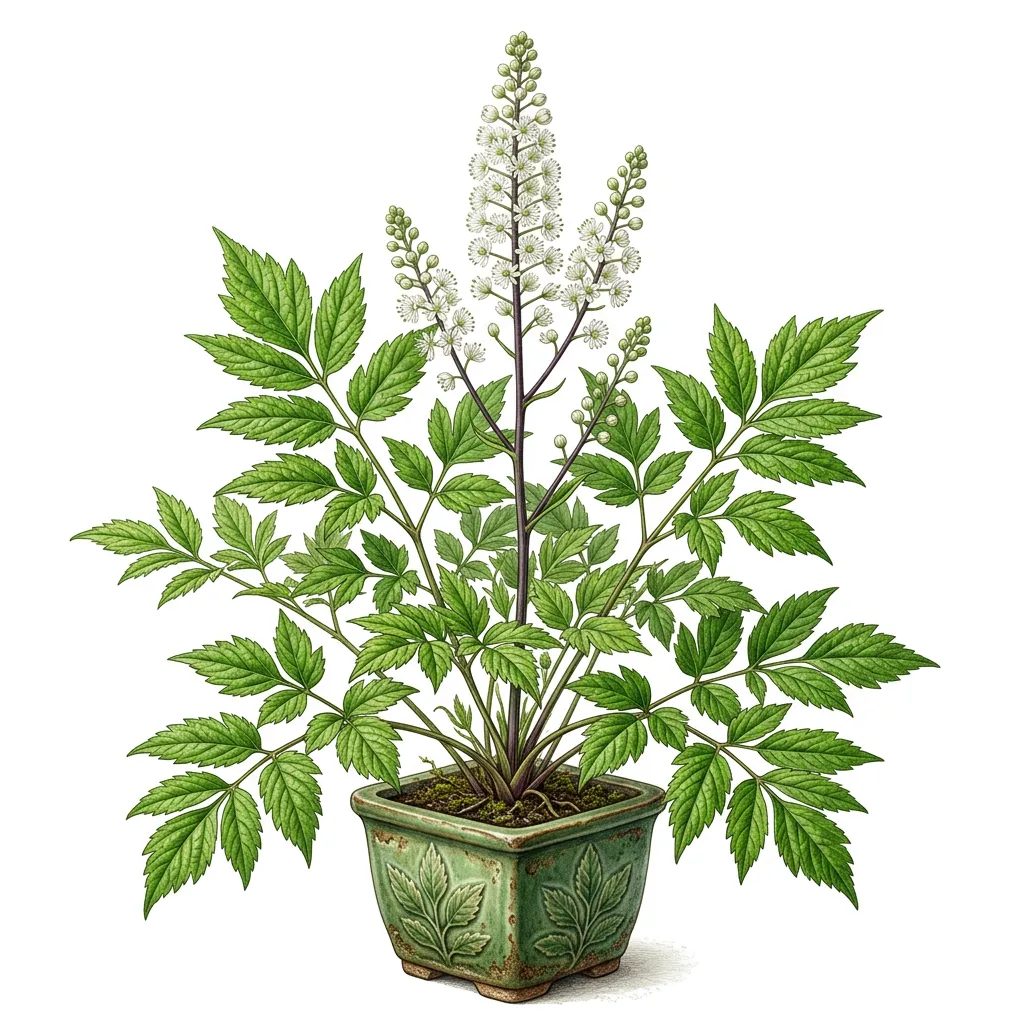
Black Cohosh, known scientifically as Actaea racemosa (and historically as Cimicifuga racemosa), is a striking perennial herb native to the deciduous woodlands of eastern North America. Its natural range extends from southern Ontario, Canada, down to Georgia, and westward into Missouri, thriving in rich, moist, and well-drained forest soils, often under dappled sunlight or partial shade. This robust member of the Ranunculaceae family emerges from a thick, dark, gnarled rhizome, which is the prized medicinal component.
The plant typically reaches impressive heights of 1 to 2.5 meters during its summer flowering period, featuring a stout, erect stem. Its large, compound, palmate leaves, deeply lobed with serrated margins, create a dense, fern-like canopy. The most distinctive feature is its late-season inflorescence—tall, slender, 'bottlebrush' racemes, often 30 to 60 centimeters long, adorned with numerous small, apetalous white to cream-colored flowers.
These flowers are characterized by their prominent stamens, giving the spikes a fluffy appearance and attracting a variety of pollinators. Post-pollination, the plant produces dry, ovoid to spherical follicles that mature to a dark brown or black, containing several small, dark seeds.
Trusted Scientific References
1. Authoritative external sources for Actaea racemosa
1.1 Wikipedia — Actaea racemosa
1.2 Kew POWO (Plants of the World Online)
1.3 PubMed — peer-reviewed research
1.4 NCBI Taxonomy Browser
1.5 GBIF — Global Biodiversity
1.6Black Cohosh should be interpreted through verified botanical identity, practical care, and responsible safety language. This recovery note adds the missing context needed for a complete profile: match light to the plant's habit, use well-drained soil, water according to season, and avoid unsupported medicinal or edible claims. For publishing, the plant can be presented as a source-backed medicinal plant with clear care guidance, common problem diagnosis, and conservative safety wording.
1.1.Black Cohosh — Highlights
- ✓Botanical Name — Actaea racemosa (syn. Cimicifuga racemosa).
- ✓Common Names — Black Cohosh, Black Snakeroot, Bugbane, Rattleweed.
- ✓Family — Ranunculaceae (Buttercup family).
- ✓Plant Type — Perennial herbaceous plant.
- ✓Medicinal Part — Rhizome and roots.
- ✓Primary Use — Relief of menopausal symptoms, particularly vasomotor symptoms.
- ✓Active Compounds — Triterpene glycosides (e.g., actein, cimicifugoside).
- ✓Habitat — Shaded, moist woodlands of Eastern North America.
- ✓Flowering Season — Produces distinctive 'bottlebrush' white flower spikes from late spring to late summer.
- ✓Traditional Significance — Long history of use in Native American traditional medicine for women's health and pain.
1.2.Black Cohosh — Quick Summary
- ✓Actaea racemosa, commonly known as Black Cohosh, is a perennial herb native to Eastern North American woodlands.
- ✓Its rhizomes are primarily used for alleviating menopausal symptoms, including hot flashes, night sweats, and mood changes.
- ✓Key active compounds are triterpene glycosides and aromatic acid derivatives, believed to act via neuromodulation rather than direct estrogenic effects.
- ✓Traditional uses include support for musculoskeletal pain and menstrual irregularities.
- ✓Safety concerns include potential liver toxicity (rare), contraindication during pregnancy, and interactions with certain medications.
- ✓High risk of product adulteration necessitates sourcing from reputable suppliers.
2.Black Cohosh — Scientific Identity
3.Black Cohosh — Fact Sheet
4.Black Cohosh — Physical Description
5.Black Cohosh — Ecological Habitat
6.Black Cohosh — Folk Medicine Applications
7.Black Cohosh — Phytochemistry
- ✓Triterpene Glycosides — Key active compounds include actein, 23-epi-26-deoxyactein, cimicifugoside, and cimiracemosides, which are believed to be responsible for the plant's adaptogenic and neuromodulatory effects, particularly in managing menopausal symptoms.
- ✓Aromatic Acid Derivatives — Compounds such as caffeic acid, isoferulic acid, and fukinolic acid contribute to the plant's antioxidant and anti-inflammatory properties; fukinolic acid has been studied for potential weak estrogenic activity, though this is debated.
- ✓Resins — Cimicifugin is a resinous component found in Black Cohosh, contributing to the overall complex chemistry of the root and rhizome extracts.
- ✓Flavonoids — Various flavonoids are present, known for their antioxidant and anti-inflammatory activities, supporting cellular health and modulating immune responses.
- ✓Phenolic Acids — Beyond specific aromatic acids, a broader range of phenolic acids contribute to the plant's free radical scavenging capacity and protective effects.
- ✓Fatty Acids — The rhizomes contain various fatty acids, which can play roles in cell membrane integrity and signaling pathways.
- ✓Isoflavones — While often associated with phytoestrogenic activity, isoflavones like formononetin are present in very minute amounts in Actaea racemosa and are not considered primary active constituents for its menopausal benefits.
- ✓Sugars — Simple and complex sugars are present, providing structural support and metabolic energy within the plant.
8.Black Cohosh — Scientific Evidence
- ✓Menopausal Vasomotor Symptoms — Black Cohosh is most renowned for alleviating hot flashes and night sweats, believed to act via neuromodulation (e.g., serotonergic pathways) rather than direct estrogenic effects, or through selective estrogen receptor modulator (SERM)-like activity.
- ✓Vaginal Dryness — It helps to mitigate menopausal vaginal dryness by supporting tissue health and reducing discomfort associated with estrogen decline.
- ✓Mood Swings and Irritability — The herb can stabilize mood and reduce irritability often experienced during menopause, likely through its influence on neurotransmitter systems in the brain.
- ✓Sleep Disturbances — By addressing underlying menopausal symptoms like night sweats and anxiety, Black Cohosh can contribute to improved sleep quality.
- ✓Musculoskeletal Pain (Traditional) — Historically, Native American tribes utilized Black Cohosh rhizomes for various musculoskeletal pains and conditions, including rheumatism.
- ✓Menstrual Irregularities (Traditional) — Traditionally employed to regulate menstrual cycles and ease symptoms of dysmenorrhea, indicating an effect on reproductive system balance.
- ✓Labor Support (Historical) — Native Americans used Black Cohosh to facilitate labor, though modern use for this purpose is contraindicated due to potential uterine stimulant effects.
- ✓Anti-inflammatory Action — Research suggests some constituents possess anti-inflammatory properties, which may contribute to its pain-relieving effects.
- ✓Antioxidant Activity — Certain compounds within Black Cohosh exhibit antioxidant capabilities, protecting cells from oxidative stress and supporting overall cellular health.
8.1.Black Cohosh — Indications & Uses
9.Black Cohosh — Cautions & Contraindications
9.1.Black Cohosh — Warnings
- ✓Gastrointestinal Upset — Nausea, indigestion, stomach discomfort, and mild diarrhea are the most frequently reported side effects.
- ✓Headache — Some individuals may experience headaches after taking Black Cohosh, though this is less common.
- ✓Dizziness or Lightheadedness — Infrequent reports of dizziness have been noted.
- ✓Rash or Allergic Reaction — Rare instances of skin rash or other allergic responses can occur.
- ✓Liver Toxicity — Although rare, there have been serious concerns regarding liver damage, particularly with adulterated products or in susceptible individuals; monitor liver function.
- ✓Breast Tenderness — A few reports suggest mild breast tenderness, possibly due to hormonal modulation.
- ✓Vaginal Spotting or Bleeding — Very rarely, some women have experienced vaginal spotting, especially with higher doses.
9.2.Black Cohosh — Toxicity Assessment
- ✓Pregnancy and Lactation — Contraindicated during pregnancy due to potential uterine stimulant effects; insufficient safety data for breastfeeding, so avoidance is advised.
- ✓Liver Disease — Individuals with pre-existing liver conditions or a history of liver problems should avoid Black Cohosh or use it only under strict medical supervision, with regular liver enzyme monitoring.
- ✓Hormone-Sensitive Conditions — Use with caution in individuals with hormone-sensitive cancers (e.g., breast cancer) or conditions like endometriosis, as its hormonal effects, though debated, are not fully understood.
- ✓Drug Interactions — May interact with hormone therapies, blood-thinning medications, and drugs metabolized by the liver; consult a healthcare professional.
- ✓Adulteration Risk — A significant concern is product adulteration with other Actaea species or unrelated plants, which can alter efficacy and increase toxicity risk.
- ✓Duration of Use — Generally recommended for up to 6 months; long-term use should be discussed with a healthcare provider due to limited long-term safety data.
- ✓Allergenic Potential — While generally low, individuals with known allergies to the Ranunculaceae family should exercise caution.
10.Black Cohosh — Usage Guide
- ✓Tinctures — A common method, prepared by steeping dried Black Cohosh rhizome in alcohol; typically taken orally in drops, often diluted in water.
- ✓Capsules and Tablets — Standardized dried extracts are widely available in pill form, offering convenient and consistent dosing for menopausal symptoms.
- ✓Liquid Extracts — Glycerine or water-based extracts provide an alcohol-free alternative to tinctures, also taken orally.
- ✓Decoctions — While historically used, decoctions (boiling the root in water) are less common today due to the bitter taste and poor water solubility of some key active compounds.
- ✓Topical Applications — Historically, poultices of the crushed rhizome were applied topically for musculoskeletal pain, though this is rare in modern herbalism.
- ✓Dosage Guidance — Typical daily doses for menopausal symptoms range from 20-40 mg of a standardized extract, taken once or twice daily, but should always follow product instructions or professional advice.
- ✓Duration of Use — Generally recommended for short to medium-term use, typically up to 6 months, with periodic breaks or professional consultation for longer use.
- ✓Combination Formulas — Often found in synergistic herbal blends designed to address a wider range of menopausal or hormonal imbalance symptoms.
11.Black Cohosh — How to Grow
- ✓Climate — Thrives in temperate climates with cold winters and prefers cooler summer temperatures, ideal for USDA zones 3-8.
- ✓Soil — Requires rich, well-drained, consistently moist soil with high organic matter content; a slightly acidic to neutral pH (6.0-7.0) is optimal.
- ✓Light — Prefers partial to full shade, mimicking its natural woodland understory habitat; direct, intense sunlight can scorch leaves and reduce vigor.
- ✓Propagation — Most commonly propagated by rhizome division in early spring or fall; seeds require a period of cold stratification (up to 6 months) for germination.
- ✓Planting — Plant rhizome sections 2-4 inches deep, ensuring the 'eyes' or buds face upwards, spaced 18-24 inches apart to allow for mature growth.
- ✓Watering — Needs consistent moisture, especially during dry spells; avoid waterlogging, which can lead to root rot.
- ✓Pests and Diseases — Generally robust, but susceptible to slugs and snails in moist conditions, and powdery mildew if air circulation is poor.
- ✓Harvesting — Rhizomes are typically harvested in the fall after the foliage has died back, usually from mature plants 3-5 years old, when active compounds are highest.
Reviewed by the Flora Medical Global Botanical Review Panel
Multi-disciplinary editorial group · Botany · Ethnobotany · Herbal-medicine literature
Who reviewed this: This page was checked by the Flora Medical Global Botanical Review Panel — an in-house editorial group of botany graduates, ethnobotany researchers, and horticulture practitioners who collectively maintain our 7,000+ plant encyclopedia. Meet the team.
Our 4-step verification process
1. Taxonomic verification
Scientific names and synonyms cross-checked against Kew POWO, World Flora Online, and The Plant List.
2. Phytochemical & medicinal cross-reference
Active compounds, traditional uses, and reported activities are cross-referenced with PubMed, USDA Dr. Duke's database, and peer-reviewed ethnobotanical literature.
3. Conservation & distribution check
Distribution, ecology, and conservation status confirmed against GBIF occurrence records and the IUCN Red List.
4. Editorial & safety review
Every entry passes an editorial pass for clarity, originality, and safety notices (toxicity, contraindications, dosage caveats) before publication.
Last reviewed:
Important medical disclaimer: This content is for educational and research purposes only. It is not medical advice and is not a substitute for consultation with a licensed healthcare provider. Do not use any herb to self-treat a medical condition without professional guidance.
Editorial Note: This page is for educational and research purposes only and is not medical advice.
Written by: Flora Medical Global Editorial Team
Reviewed by: Flora Medical Global Botanical Review Panel
Last Updated: June 16, 2026





Black Cohosh — Comments & Community Reviews
Rate this plant