


Medical Disclaimer: This content is for educational purposes only. It is not medical advice. Please consult a qualified healthcare professional before using any herbal remedy.
Safety Overview
1.Blue Lotus — Botanical Snapshot
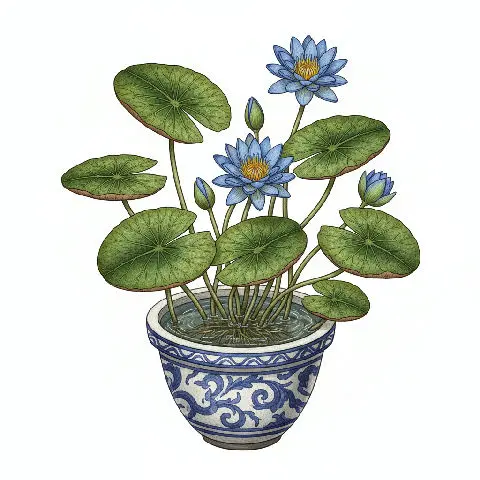
Nymphaea caerulea, commonly known as the Blue Lotus or Sacred Blue Lily, is an exquisite aquatic perennial celebrated for its vivid cerulean blossoms that elegantly float upon tranquil water surfaces. Originating from the fertile Nile River basin and extending throughout East Africa, its profound aesthetic and cultural significance has facilitated its widespread cultivation across various tropical and subtropical regions globally. Morphologically, the Blue Lotus is characterized by its substantial, near-circular leaves, which can reach an impressive diameter of up to 50 cm.
These robust leaves are anchored to the submerged rhizomatous root system by long, flexible petioles. The plant’s iconic flowers, symbolizing daily renewal, unfurl their striking blue petals and reveal a radiant cluster of golden-yellow stamens with the morning light, only to gracefully close as dusk descends. This captivating diurnal rhythm has fascinated numerous civilizations throughout history, particularly the ancient Egyptians.
Taxonomically, Nymphaea caerulea is firmly placed within the ancient Nymphaeaceae family, belonging to the order Nymphaeales, which represents some of the most evolutionarily primitive yet resilient flowering plants. Beyond its profound beauty, the Blue Lotus thrives in diverse freshwater ecosystems, including serene lakes, calm marshes, and shallow riverine environments. It exhibits a strong preference for sunny exposures where water temperatures remain consistently warm and stable, crucial for its vigorous growth.
The submerged rhizomes are robust, serving as both an anchor and a vital storage organ for nutrients, enabling the plant to endure adverse conditions and regenerate annually. Its unique biochemical composition, including prominent alkaloids, underpins its traditional medicinal and spiritual applications.
Trusted Scientific References
1. Authoritative external sources for Nymphaea caerulea
1.1 Wikipedia — Nymphaea caerulea
1.2 Kew POWO (Plants of the World Online)
1.3 PubMed — peer-reviewed research
1.4 NCBI Taxonomy Browser
1.5 GBIF — Global Biodiversity
1.1.Blue Lotus — Notable Characteristics
- ✓Aquatic Perennial — A plant that grows in water and lives for more than two years, renewing annually.
- ✓Striking Cerulean Blossoms — Features vibrant blue flowers that gracefully float on water surfaces.
- ✓Ancient Cultural Significance — Deeply revered in ancient Egyptian civilization for spiritual and ceremonial purposes.
- ✓Psychoactive Alkaloids — Contains apomorphine and nuciferine, contributing to its unique pharmacological effects.
- ✓Natural Sedative Properties — Known to induce relaxation and tranquility, making it a natural aid for sleep.
- ✓Anxiolytic Effects — Helps reduce anxiety and stress, promoting a sense of calm and well-being.
- ✓Mild Euphoric Agent — Can elicit a gentle mood elevation and a subtle feeling of bliss.
- ✓Antioxidant Rich — Abundant in flavonoids and phenolic compounds that combat oxidative stress.
- ✓Diurnal Blooming — Flowers open in the morning and close at dusk, symbolizing renewal.
- ✓Tropical and Subtropical Distribution — Indigenous to Africa and cultivated globally in warm climates.
1.2.Blue Lotus — At-a-Glance Summary
- ✓Blue Lotus (Nymphaea caerulea) — An ancient aquatic perennial revered for its striking blue flowers and cultural significance.
- ✓Key Active Compounds — Contains psychoactive alkaloids apomorphine and nuciferine, responsible for its unique effects.
- ✓Primary Benefits — Known for its natural sedative, anxiolytic, and mild euphoric properties, aiding relaxation and sleep.
- ✓Traditional Uses — Historically used in ancient Egyptian rituals for spiritual enlightenment, mood enhancement, and as an aphrodisiac.
- ✓Important Cautions — Can cause drowsiness and interact with medications; not recommended for pregnant women or before driving.
- ✓Modern Applications — Explored for natural stress relief, sleep support, and as a botanical for holistic well-being.
2.Blue Lotus — Botanical Identity
3.Blue Lotus — Fact Sheet
4.Blue Lotus — Botanical Features
5.Blue Lotus — Ecological Habitat
6.Blue Lotus — Folk Medicine Applications
7.Blue Lotus — Phytochemistry
- ✓Aporphine Alkaloids — Primarily apomorphine and nuciferine, responsible for the plant's psychoactive, sedative, anxiolytic, and dopaminergic effects.
- ✓Flavonoids — Compounds like quercetin and kaempferol contribute to the plant's antioxidant and anti-inflammatory activities, supporting cellular health.
- ✓Anthocyanins — These water-soluble pigments give the Blue Lotus its characteristic blue color and possess significant antioxidant properties.
- ✓Phenolic Acids — Including gallic acid and caffeic acid, which are known for their antioxidant and free-radical scavenging capabilities.
- ✓Glycosides — Various glycosides are present, contributing to the plant's overall biochemical complexity and potential therapeutic effects.
- ✓Tannins — Provide astringent properties and contribute to the plant's defense mechanisms, also offering antioxidant benefits.
- ✓Terpenoids — Aromatic compounds that may contribute to the plant's fragrance and possess various biological activities, though less studied in Blue Lotus.
- ✓Phytosterols — Plant sterols such as beta-sitosterol, which are known for their potential cholesterol-lowering and anti-inflammatory effects.
- ✓Fatty Acids — Essential fatty acids found in the plant contribute to its nutritional profile and cellular function.
- ✓Polysaccharides — Complex carbohydrates, particularly abundant in the rhizomes, serving as energy storage and potentially immune-modulating agents.
8.Blue Lotus — Pharmacological Findings
- ✓Natural Sedative — The alkaloids apomorphine and nuciferine contribute to its calming properties, promoting relaxation and aiding in sleep induction.
- ✓Anxiolytic Effects — Blue Lotus helps alleviate symptoms of anxiety and stress by influencing neurotransmitter pathways in the brain.
- ✓Mild Euphoria — Users often report a gentle mood elevation and sense of well-being, attributed to its subtle psychoactive compounds.
- ✓Muscle Relaxant — Its compounds may help soothe muscle spasms and tension, offering relief from physical discomfort.
- ✓Pain Management — Traditionally used as an analgesic, it may help mitigate mild to moderate pain through its relaxing and mood-altering effects.
- ✓Aphrodisiac Qualities — Historically revered for enhancing libido and sexual desire, likely due to its relaxing and mood-boosting properties.
- ✓Antioxidant Activity — Rich in flavonoids and phenolic compounds, Blue Lotus helps combat oxidative stress and protect cells from damage.
- ✓Anti-inflammatory Support — Certain constituents possess anti-inflammatory actions, potentially reducing inflammation throughout the body.
- ✓Digestive Aid — In traditional practices, it was sometimes used to soothe digestive discomfort and promote gastrointestinal health.
- ✓Sleep Improvement — By inducing a state of calm, Blue Lotus can significantly improve sleep quality and address insomnia.
- ✓Mood Enhancement — Beyond mild euphoria, it can stabilize mood and foster a sense of tranquility, beneficial for mental well-being.
- ✓Spiritual and Ceremonial Use — Valued for its ability to induce meditative states and enhance spiritual connection in ancient rituals.
8.1.Blue Lotus — Health Applications
9.Blue Lotus — Safety & Side Effects
9.1.Blue Lotus — Reported Side Effects
- ✓Drowsiness and Sedation — Can induce significant drowsiness, particularly at higher doses, impairing alertness.
- ✓Nausea and Dizziness — Some individuals may experience stomach upset or lightheadedness, especially when consumed in large quantities.
- ✓Altered Perception — May cause mild psychoactive effects, including altered states of consciousness or visual distortions.
- ✓Potential for Dependence — Regular, high-dose use might lead to psychological dependence due to its psychoactive properties.
- ✓Interactions with Medications — Can potentiate the effects of central nervous system depressants, sedatives, and anxiolytics.
- ✓Allergic Reactions — As with any plant, individuals may experience allergic responses such as skin irritation or respiratory symptoms.
- ✓Impaired Motor Skills — Due to its sedative nature, it can impair coordination and reaction time, making activities like driving dangerous.
9.2.Blue Lotus — Toxicity Assessment
- ✓Pregnancy and Lactation — Contraindicated for pregnant or nursing individuals due to insufficient safety data and potential effects on fetal/infant development.
- ✓Operating Machinery — Avoid driving or operating heavy machinery after consumption due to its sedative and mind-altering effects.
- ✓Medical Consultation — Individuals on prescription medications, especially for mental health, heart conditions, or CNS depressants, should consult a healthcare professional.
- ✓Children and Adolescents — Not recommended for use in children or adolescents due to lack of safety studies and potential developmental impacts.
- ✓Legal Status Variability — The legal status of Blue Lotus varies by region; verify local regulations before purchasing or using.
- ✓Dosage Caution — Start with the lowest effective dose to assess individual sensitivity and avoid adverse reactions.
- ✓Long-Term Use — Long-term safety data are limited; prolonged use is not advised without medical supervision.
- ✓Underlying Conditions — Individuals with liver or kidney conditions, or a history of substance abuse, should exercise extreme caution.
10.Blue Lotus — Preparations & Uses
- ✓Herbal Tea/Infusion — Dried Blue Lotus flowers or petals are steeped in hot water to create a calming and mildly euphoric beverage.
- ✓Tincture — A concentrated liquid extract made by soaking dried plant material in alcohol, allowing for precise dosing and prolonged shelf life.
- ✓Smoking/Vaporizing — Dried petals can be smoked or vaporized for rapid onset of effects, though this method is not universally recommended due to inhalation risks.
- ✓Wine Infusion — Traditionally, flowers were soaked in wine for several hours or days to create an intoxicating and mood-altering drink.
- ✓Topical Oil — Dried flowers can be infused into carrier oils (like jojoba or almond oil) for use in massage or aromatherapy for relaxation.
- ✓Resin/Extract — Highly concentrated forms derived from the plant material, often used in smaller quantities for stronger effects.
- ✓Bath Soak — Adding dried flowers or a strong infusion to bathwater can provide a relaxing and aromatic experience for skin absorption.
- ✓Ceremonial Incense — Dried flowers can be burned as incense to purify spaces and enhance meditative practices.
11.Blue Lotus — Garden Cultivation
- ✓Climate Preference — Thrives in tropical and subtropical climates with consistently warm temperatures, ideally above 20°C (68°F).
- ✓Water Requirements — Prefers still, shallow freshwater bodies like ponds, marshes, or large containers, with water depth typically 15-60 cm (6-24 inches).
- ✓Sunlight Exposure — Requires full sun exposure for at least 6-8 hours daily to promote robust growth and abundant flowering.
- ✓Soil Medium — Best planted in heavy loam or specialized aquatic plant soil within submerged pots, anchored to prevent floating.
- ✓Propagation — Can be propagated from seeds, which require scarification and stratification, or more commonly from rhizome division in spring.
- ✓Fertilization — Benefits from aquatic fertilizer tablets inserted into the soil around the rhizomes during the growing season.
- ✓Winter Care — In colder climates, rhizomes may need to be brought indoors or protected from freezing temperatures.
- ✓Pest and Disease Management — Generally robust, but monitor for aphids or fungal issues, especially in stagnant conditions.
Reviewed by the Flora Medical Global Botanical Review Panel
Multi-disciplinary editorial group · Botany · Ethnobotany · Herbal-medicine literature
Who reviewed this: This page was checked by the Flora Medical Global Botanical Review Panel — an in-house editorial group of botany graduates, ethnobotany researchers, and horticulture practitioners who collectively maintain our 7,000+ plant encyclopedia. Meet the team.
Our 4-step verification process
1. Taxonomic verification
Scientific names and synonyms cross-checked against Kew POWO, World Flora Online, and The Plant List.
2. Phytochemical & medicinal cross-reference
Active compounds, traditional uses, and reported activities are cross-referenced with PubMed, USDA Dr. Duke's database, and peer-reviewed ethnobotanical literature.
3. Conservation & distribution check
Distribution, ecology, and conservation status confirmed against GBIF occurrence records and the IUCN Red List.
4. Editorial & safety review
Every entry passes an editorial pass for clarity, originality, and safety notices (toxicity, contraindications, dosage caveats) before publication.
Last reviewed:
Important medical disclaimer: This content is for educational and research purposes only. It is not medical advice and is not a substitute for consultation with a licensed healthcare provider. Do not use any herb to self-treat a medical condition without professional guidance.
Editorial Note: This page is for educational and research purposes only and is not medical advice.
Written by: Flora Medical Global Editorial Team
Reviewed by: Flora Medical Global Botanical Review Panel
Last Updated: June 16, 2026





Blue Lotus — Comments & Community Reviews
Rate this plant