
Medical Disclaimer: This content is for educational purposes only. It is not medical advice. Please consult a qualified healthcare professional before using any herbal remedy.
Safety Overview
1.Boltonia Asteroides — Botanical Snapshot
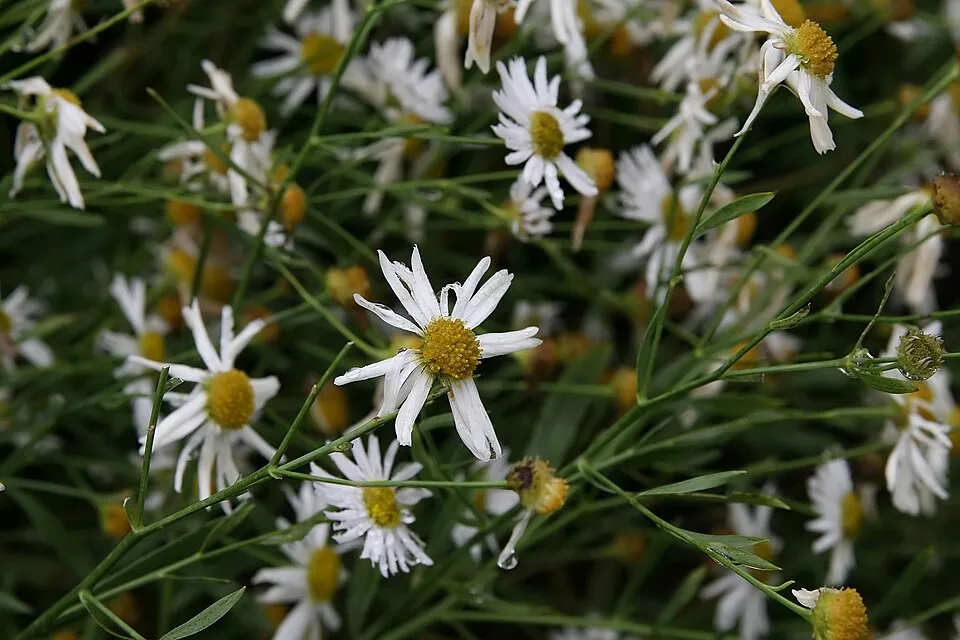
Boltonia Asteroides, commonly known as False Aster or White Boltonia, is a striking herbaceous perennial belonging to the Asteraceae family. This resilient plant typically forms a bushy, upright clump, reaching heights of 0.9 to 1.8 meters (3 to 6 feet) with a spread of similar dimensions, often widening through self-seeding or rhizomatous growth. Its stems are slender but sturdy, supporting an abundance of lance-shaped to linear leaves that are smooth, bright green, and alternate along the stem, creating a dense, verdant appearance.
From late summer through autumn, Boltonia Asteroides produces a spectacular display of daisy-like flowers. These small, star-shaped blossoms feature numerous white to pale lavender ray florets surrounding a prominent yellow central disc, resembling a miniature aster but with a flatter profile. The flowers are arranged in loose, open panicles, creating a cloud-like effect that is highly attractive to various pollinators, including bees and butterflies.
Native to moist prairies, meadows, and open woodlands across eastern and central North America, Boltonia Asteroides thrives in full sun to partial shade and prefers consistently moist, well-drained loamy soils. Its adaptability to various conditions and its late-season bloom make it a valuable addition to naturalized areas, rain gardens, and perennial borders, providing essential nectar sources when many other plants have finished flowering. The plant's robust nature and prolific flowering contribute significantly to local biodiversity.
Trusted Scientific References
1. Authoritative external sources for Boltonia Asteroides
1.1 Wikipedia — Boltonia Asteroides
1.2 Kew POWO (Plants of the World Online)
1.3 PubMed — peer-reviewed research
1.4 NCBI Taxonomy Browser
1.5 GBIF — Global Biodiversity
1.6Boltonia Asteroides should be interpreted through verified botanical identity, practical care, and responsible safety language. This recovery note adds the missing context needed for a complete profile: match light to the plant's habit, use well-drained soil, water according to season, and avoid unsupported medicinal or edible claims. For publishing, the plant can be presented as a source-backed garden plant with clear care guidance, common problem diagnosis, and conservative safety wording.
1.1.Boltonia Asteroides — Notable Characteristics
- ✓Botanical Identity — Boltonia Asteroides, a member of the Asteraceae family, often mistaken for true asters due to its similar flower structure.
- ✓Growth Habit — A robust, bushy perennial reaching 0.9-1.8m tall, forming dense clumps that spread via rhizomes or self-seeding.
- ✓Floral Display — Produces numerous small, white to pale lavender daisy-like flowers with yellow centers from late summer into fall.
- ✓Pollinator Magnet — Highly attractive to bees, butterflies, and other beneficial insects, supporting local ecosystem health.
- ✓Native Range — Indigenous to moist prairies, meadows, and open woodlands across eastern and central North America.
- ✓Traditional Uses — Employed in traditional herbalism for minor digestive complaints, inflammatory conditions, and skin soothing.
- ✓Key Phytochemicals — Contains beneficial compounds like flavonoids, phenolic acids, and triterpenes known for antioxidant and anti-inflammatory properties.
- ✓Cultivation Ease — Adaptable and low-maintenance, thriving in full sun to partial shade with moderate moisture.
- ✓Landscape Value — Excellent for naturalized areas, rain gardens, borders, and late-season color in perennial beds.
- ✓Self — Seeding Nature — Can readily self-seed, contributing to its spread and naturalization in suitable environments.
1.2.Boltonia Asteroides — Concise Overview
- ✓Boltonia Asteroides, or False Aster, is a North American perennial known for its abundant white to pale lavender, daisy-like flowers.
- ✓Traditionally used for digestive issues, skin irritations, and as an anti-inflammatory agent.
- ✓Rich in flavonoids and phenolic acids, contributing to its antioxidant and anti-inflammatory potential.
- ✓An adaptable garden plant, it attracts pollinators and thrives in moist, well-drained soils.
- ✓Requires caution for individuals with Asteraceae allergies, during pregnancy, and when on certain medications.
- ✓A valuable botanical with both ornamental and historical medicinal significance.
2.Boltonia Asteroides — Scientific Identity
3.Boltonia Asteroides — Fact Sheet
4.Boltonia Asteroides — Physical Description
5.Boltonia Asteroides — Native Range & Habitat
6.Boltonia Asteroides — Folk Medicine Applications
7.Boltonia Asteroides — Phytochemistry
- ✓Flavonoids — Key compounds include quercetin, kaempferol, and their glycosides, known for potent antioxidant, anti-inflammatory, and cardioprotective activities.
- ✓Phenolic Acids — Such as chlorogenic acid and caffeic acid, these compounds exhibit strong antioxidant, antimicrobial, and anti-inflammatory properties, contributing to cellular protection.
- ✓Triterpenes — Including ursolic acid and oleanolic acid, which are recognized for their anti-inflammatory, hepatoprotective, and potential anticancer effects.
- ✓Saponins — These glycosides may contribute to expectorant and adaptogenic actions, as well as exhibit some antimicrobial properties.
- ✓Coumarins — A class of phytochemicals with potential anticoagulant, anti-inflammatory, and antimicrobial effects, though typically in lower concentrations.
- ✓Sesquiterpene Lactones — While not as prominent as in some other Asteraceae, these can confer anti-inflammatory and cytotoxic activities, but may also be allergenic for sensitive individuals.
- ✓Volatile Oils — Present in trace amounts, these contribute to the plant's aroma and may offer mild antiseptic or insect-repellent qualities.
- ✓Polysaccharides — Complex carbohydrates that can possess immunostimulatory properties, supporting the body's natural defenses.
- ✓Phytosterols — Plant sterols like beta-sitosterol are known for their cholesterol-lowering and anti-inflammatory effects.
8.Boltonia Asteroides — Pharmacological Findings
- ✓Digestive Support — Traditionally, Boltonia Asteroides has been used to alleviate minor digestive discomforts and promote healthy gut function, potentially through its mild carminative actions.
- ✓Anti-inflammatory Properties — The presence of flavonoids and phenolic acids suggests a capacity to modulate inflammatory responses, making it a potential aid for conditions involving mild inflammation.
- ✓Skin Soothing — Extracts have been anecdotally applied topically to soothe irritated skin, reduce redness, and assist in the healing of minor abrasions.
- ✓Antioxidant Activity — Rich in antioxidant compounds like flavonoids, Boltonia Asteroides helps combat oxidative stress and protect cellular integrity from free radical damage.
- ✓Immune System Modulation — Certain phytochemicals may subtly influence immune responses, contributing to overall immune balance and resilience.
- ✓Mild Astringent — The plant may possess mild astringent qualities, useful for toning tissues and potentially assisting in wound care or reducing minor bleeding.
- ✓Circulatory Wellness — Some traditional uses suggest a supportive role in maintaining healthy circulation, though specific mechanisms require further research.
- ✓Detoxification Support — As a general tonic in some practices, it is believed to support the body’s natural detoxification pathways, aiding in waste elimination.
- ✓Respiratory Comfort — In folk medicine, it has been occasionally employed to ease minor respiratory discomforts, possibly due to expectorant-like effects.
- ✓Pain Relief — Anecdotal accounts suggest a mild analgesic effect, particularly for localized discomfort associated with inflammation.
8.1.Boltonia Asteroides — Conditions Traditionally Used For
9.Boltonia Asteroides — Cautions & Contraindications
9.1.Boltonia Asteroides — Warnings
- ✓Allergic Reactions — Individuals sensitive to plants in the Asteraceae family (e.g., ragweed, daisies) may experience allergic contact dermatitis or hay fever-like symptoms.
- ✓Digestive Upset — High doses or sensitive individuals might experience mild gastrointestinal discomfort, such as nausea or diarrhea.
- ✓Photosensitivity — While rare, some plant compounds can increase skin sensitivity to sunlight in susceptible individuals.
- ✓Drug Interactions — Potential exists for interaction with medications, particularly blood thinners or immunosuppressants, due to its chemical constituents.
- ✓Skin Irritation — Direct contact with sap or fresh plant material may cause mild skin irritation in individuals with very sensitive skin.
- ✓Pregnancy and Lactation Concerns — Lack of sufficient safety data necessitates avoidance during pregnancy and breastfeeding.
9.2.Boltonia Asteroides — Safety Overview
- ✓Asteraceae Allergy — Individuals with known allergies to the Asteraceae/Compositae family should avoid Boltonia Asteroides due to potential cross-reactivity.
- ✓Pregnancy and Breastfeeding — Insufficient scientific data exists regarding its safety during pregnancy and lactation; therefore, use is not recommended.
- ✓Children — Due to limited research, Boltonia Asteroides should be used with caution or avoided in young children.
- ✓Autoimmune Conditions — As it may subtly modulate immune responses, individuals with autoimmune diseases should consult a healthcare professional before use.
- ✓Medication Interactions — Consult a physician or pharmacist if taking prescription medications, especially anticoagulants or immunosuppressants.
- ✓Topical Application — Always perform a patch test on a small area of skin before widespread topical application to check for sensitivity.
- ✓Dosage Adherence — Adhere strictly to recommended dosages in traditional practice or expert guidance to minimize potential adverse effects.
10.Boltonia Asteroides — Preparation Methods
- ✓Herbal Infusion (Tea) — Steep 1-2 teaspoons of dried leaves or flowers in hot water for 5-10 minutes; traditionally consumed for digestive support.
- ✓Decoction — Simmer roots or tougher plant parts in water for 15-20 minutes; used for more concentrated extracts, especially for internal use.
- ✓Tincture — Macerate fresh or dried plant material in alcohol for several weeks; a potent form for internal use, administered in drops.
- ✓Poultice — Crush fresh leaves or flowers and apply directly to the skin for soothing minor irritations, insect bites, or localized inflammation.
- ✓Compress — Soak a cloth in a strong infusion or decoction and apply to affected skin areas for extended topical relief.
- ✓Herbal Oil Infusion — Infuse dried plant material in a carrier oil (e.g., olive oil) for several weeks; used topically in massage or as a base for salves.
- ✓Salve or Ointment — Combine an herbal oil infusion with beeswax and other ingredients to create a topical preparation for skin conditions.
- ✓Glycerite — A non-alcoholic extract made with vegetable glycerin, suitable for those avoiding alcohol, often used for children or sensitive individuals.
11.Boltonia Asteroides — How to Grow
- ✓Site Selection — Choose a location with full sun to partial shade, ensuring at least 6 hours of direct sunlight daily for optimal flowering.
- ✓Soil Preparation — Boltonia Asteroides thrives in moist, well-drained soil rich in organic matter; amend heavy clay or sandy soils with compost.
- ✓Watering Regime — Maintain consistent moisture, especially during dry periods, but avoid waterlogging to prevent root rot. Moderate watering is key.
- ✓Fertilization — Apply a balanced organic fertilizer in spring to support vigorous growth and abundant flowering, especially in poorer soils.
- ✓Propagation — Easily propagated by seed, which can be direct-sown in fall or spring, or by division of mature clumps in early spring or fall.
- ✓Spacing — Space plants about 60-90 cm (2-3 feet) apart to allow for their mature size and to ensure good air circulation, preventing fungal issues.
- ✓Pest and Disease Management — Generally resistant to most pests and diseases, but watch for powdery mildew in humid conditions; ensure good air flow.
- ✓Staking and Deadheading — Taller varieties may benefit from staking to prevent flopping; deadhead spent flowers to encourage more blooms and prevent excessive self-seeding.
Reviewed by the Flora Medical Global Botanical Review Panel
Multi-disciplinary editorial group · Botany · Ethnobotany · Herbal-medicine literature
Who reviewed this: This page was checked by the Flora Medical Global Botanical Review Panel — an in-house editorial group of botany graduates, ethnobotany researchers, and horticulture practitioners who collectively maintain our 7,000+ plant encyclopedia. Meet the team.
Our 4-step verification process
1. Taxonomic verification
Scientific names and synonyms cross-checked against Kew POWO, World Flora Online, and The Plant List.
2. Phytochemical & medicinal cross-reference
Active compounds, traditional uses, and reported activities are cross-referenced with PubMed, USDA Dr. Duke's database, and peer-reviewed ethnobotanical literature.
3. Conservation & distribution check
Distribution, ecology, and conservation status confirmed against GBIF occurrence records and the IUCN Red List.
4. Editorial & safety review
Every entry passes an editorial pass for clarity, originality, and safety notices (toxicity, contraindications, dosage caveats) before publication.
Last reviewed:
Important medical disclaimer: This content is for educational and research purposes only. It is not medical advice and is not a substitute for consultation with a licensed healthcare provider. Do not use any herb to self-treat a medical condition without professional guidance.
Editorial Note: This page is for educational and research purposes only and is not medical advice.
Written by: Flora Medical Global Editorial Team
Reviewed by: Flora Medical Global Botanical Review Panel
Last Updated: June 15, 2026





Boltonia Asteroides — Comments & Community Reviews
Rate this plant