


Medical Disclaimer: This content is for educational purposes only. It is not medical advice. Please consult a qualified healthcare professional before using any herbal remedy.
Safety Overview
1.Bracted Bugle — Botanical Snapshot
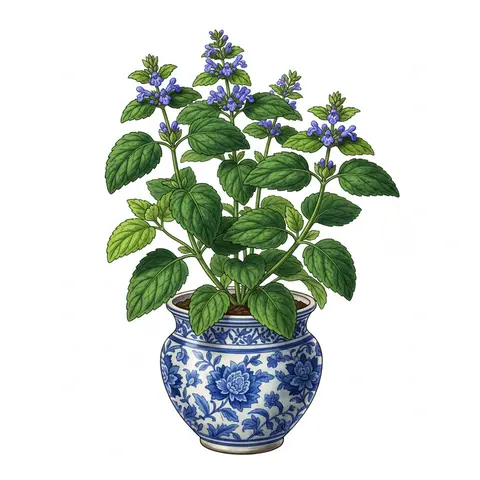
Ajuga bracteosa, commonly known as Bracted Bugle or 'Neelkanthi', is a resilient perennial herb belonging to the Lamiaceae family, the mint family. This species is indigenous to the temperate and sub-Himalayan regions, thriving predominantly across the Himalayan foothills, from altitudes of approximately 1300 to 2200 meters. It typically flourishes in moist, shaded environments, often found along forest edges, in open grasslands, or disturbed areas, showcasing its remarkable adaptability. Morphologically, Ajuga bracteosa exhibits a low-growing or decumbent habit, often forming dense mats or small, compact clumps, rarely exceeding 20 centimeters in height.
Its stems are distinctly quadrangular, a hallmark of the Lamiaceae family, and frequently display a subtle purplish hue. The leaves are spathulate to obovate, characterized by soft, fine hairs and crenate or toothed margins. The inflorescences are quite striking, featuring small blue to purplish flowers arranged in terminal or axillary spikes. A key identifying feature of the Bracted Bugle is its prominent bracts, which are often longer and more showy than the flowers themselves, giving the plant its common name.
The fruit consists of four small, characteristic nutlets, known as mericarps. Historically, Ajuga bracteosa has been a valued component of traditional medicine systems within the Indian subcontinent and parts of Southeast Asia, especially in regional folk practices where its anti-inflammatory, wound-healing, and neuroprotective properties have been revered for generations.
Trusted Scientific References
1. Authoritative external sources for Ajuga bracteosa
1.1 Wikipedia — Ajuga bracteosa
1.2 Kew POWO (Plants of the World Online)
1.3 PubMed — peer-reviewed research
1.4 NCBI Taxonomy Browser
1.5 GBIF — Global Biodiversity
1.6Bracted Bugle should be interpreted through verified botanical identity, practical care, and responsible safety language. This recovery note adds the missing context needed for a complete profile: match light to the plant's habit, use well-drained soil, water according to season, and avoid unsupported medicinal or edible claims. For publishing, the plant can be presented as a source-backed medicinal plant with clear care guidance, common problem diagnosis, and conservative safety wording.
1.1.Bracted Bugle — Highlights
- ✓Scientific Name — Ajuga bracteosa, a member of the Lamiaceae family.
- ✓Common Names — Bracted Bugle, Neelkanthi, Bugleweed.
- ✓Habitat — Predominantly found in the temperate to subalpine zones of the Western Himalayas.
- ✓Key Compounds — Rich in neo-clerodane diterpenoids (e.g., ajugarin I, bractin A), flavonoids (apigenin), and withanolides-like withajugins.
- ✓Traditional Uses — Utilized in Ayurveda and folk medicine for epilepsy, inflammation, liver support, and respiratory complaints.
- ✓Distinctive Morphology — Characterized by showy bracts that are often longer than its blue-purplish flowers, and quadrangular stems.
- ✓Growth Habit — A low-growing, compact perennial herb forming dense mats.
- ✓Ayurvedic Significance — Valued for its subtle, cumulative effects in systemic balancing, particularly for 'cooling the liver' and 'strengthening the nerves'.
- ✓Medicinal Focus — Primarily recognized for its neuroprotective, anti-inflammatory, and hepatoprotective actions.
- ✓Adaptability — Thrives in moist, shaded environments, showcasing resilience in diverse habitats.
1.2.Bracted Bugle — At-a-Glance Summary
- ✓Bracted Bugle (Ajuga bracteosa) is a significant perennial herb from the Lamiaceae family, native to the Himalayan region.
- ✓It is traditionally prized for its neuroprotective, anti-inflammatory, and hepatoprotective properties within various folk and Ayurvedic practices.
- ✓The plant is chemically rich, featuring notable neo-clerodane diterpenoids, flavonoids, and unique withanolide-like compounds.
- ✓Used to support neurological health, alleviate joint pain, enhance liver function, and address respiratory issues.
- ✓Caution is advised regarding dosage and potential interactions, particularly due to its mild hormonal and neurological effects.
- ✓Known locally as 'Neelkanthi', its distinctive blue-purple bracts are a key identifier.
2.Bracted Bugle — Nomenclature & Classification
3.Bracted Bugle — Key Data
4.Bracted Bugle — Botanical Description
5.Bracted Bugle — Native Range & Habitat
6.Bracted Bugle — Traditional Uses
7.Bracted Bugle — Phytochemistry
- ✓Neo-clerodane diterpenoids — Key compounds like ajugarin I and bractin A are responsible for significant anti-inflammatory and antiepileptic effects.
- ✓Flavonoids — Apigenin and luteolin are prominent, contributing substantially to the plant's antioxidant and mild anti-inflammatory activities.
- ✓Sterols — Including β-sitosterol, which plays a role in modulating hormonal pathways and enzymatic functions within the body.
- ✓Iridoids — Compounds such as harpagide are present, known for their anti-inflammatory and analgesic properties.
- ✓Withanolides-like withajugins — These unique compounds are believed to contribute to the neuroprotective actions observed in Ajuga bracteosa.
- ✓Tannins — Astringent compounds that contribute to the plant's traditional wound-healing and antimicrobial properties.
- ✓Saponins — Known for their immunomodulatory potential and ability to form stable foams in aqueous solutions.
- ✓Volatile Oils — Present in small quantities, contributing to the plant's characteristic aroma and offering mild antimicrobial benefits.
8.Bracted Bugle — Pharmacological Findings
- ✓Neurological Stabilization — Research suggests Ajuga bracteosa may assist in managing conditions like epilepsy and muscle tremors by potentially influencing neurotransmitter balance through GABAergic modulation.
- ✓Anti-inflammatory Support — Its diterpenoids and flavonoids contribute to significant anti-inflammatory actions, making it beneficial for joint issues such as gout, rheumatoid arthritis, and general muscle stiffness by inhibiting COX enzymes and TNF-α pathways.
- ✓Hepatoprotective Action — Traditional uses for 'cooling the liver' are supported by studies indicating its ability to reduce elevated liver enzymes and protect hepatic tissue from oxidative stress.
- ✓Antioxidant & Cytoprotective — In vitro analyses confirm its capacity to scavenge free radicals and offer protection against cellular DNA damage, contributing to overall vitality and recovery from chronic illness.
- ✓Mild Hormonal Modulation — The herb appears to regulate testosterone conversion pathways, which may be beneficial in addressing hormone-related concerns like acne, certain types of hair loss, and irregular menstruation.
- ✓Respiratory and Sinus Relief — Historically used as a snuff, the plant helps clear nasal blockages and offers mild antimicrobial effects, often brewed into teas for cough and bronchial congestion.
- ✓Anxiety and Sleep Disturbance — Anecdotal evidence and community reports suggest it can induce mild sedation and improve sleep latency, particularly when combined with other nervine herbs like Ashwagandha.
- ✓Post-COVID Recovery — Emerging observations from integrative clinics indicate its potential to improve energy levels and mental clarity in individuals experiencing long-haul COVID symptoms.
- ✓Wound Healing — Traditional applications highlight its efficacy in promoting the healing of wounds and skin abrasions.
- ✓Fever Reduction — Local folk medicine has historically utilized Bracted Bugle for its febrifugal properties to alleviate feverish conditions.
- ✓Gastrointestinal Support — Used traditionally to address various gastrointestinal complaints, contributing to digestive comfort.
- ✓Skin Infections — Its antimicrobial properties are traditionally employed to combat and alleviate skin infections.
8.1.Bracted Bugle — Health Applications
9.Bracted Bugle — Safety & Side Effects
9.1.Bracted Bugle — Possible Adverse Reactions
- ✓Liver Enzyme Fluctuations — Mild increases in liver enzymes have been observed in animal studies at very high concentrations.
- ✓Hormonal Interference — May potentially affect testosterone and estrogen pathways; caution advised in hormone-sensitive conditions.
- ✓Allergic Reactions — Though rare, individuals sensitive to plants in the mint family (Lamiaceae) may experience allergic responses.
- ✓Dizziness — Higher doses, or combination with other central nervous system depressants, can sometimes lead to feelings of dizziness.
- ✓Sedation — Excessive intake or concurrent use with other sedatives may result in unwanted drowsiness or increased sedation.
- ✓Gastrointestinal Upset — Some sensitive individuals might experience mild stomach discomfort, nausea, or digestive irritation.
- ✓Drug Interactions — Potential interactions with conventional epilepsy drugs, sedatives, or hormone-modulating medications.
9.2.Bracted Bugle — Safety Overview
- ✓Pregnancy and Lactation — Not recommended for use during pregnancy or breastfeeding due to insufficient safety data and potential hormonal effects.
- ✓Hormone-Sensitive Conditions — Individuals with conditions like PCOS, endometriosis, or thyroid disorders should avoid use without strict medical supervision.
- ✓Liver Disease History — Contraindicated in patients with a history of liver disease or significantly impaired liver function.
- ✓Drug Interactions — Avoid concurrent use with anti-seizure medications, sedatives, corticosteroids, or hormone therapy without professional oversight.
- ✓Children — Use in pediatric populations should only occur under the direct supervision of a qualified Ayurvedic practitioner, with adjusted, typically halved, dosages.
- ✓Elderly — Generally well-tolerated in lower doses for elderly individuals, particularly for addressing fatigue or mild neurological weakness.
- ✓Professional Consultation — Always consult a certified Ayurvedic professional or healthcare provider before initiating any treatment with Ajuga bracteosa.
10.Bracted Bugle — Usage Guide
- ✓Powder (Churna) — Administer 1–3 grams twice daily, typically mixed with honey or warm water, especially for inflammatory conditions or menstrual support.
- ✓Fresh Juice (Swarasa) — A dosage of 5–10 ml daily is often recommended for hepatic and nervous system complaints.
- ✓Tincture (1 — 5 alcohol base) — Take 10–20 drops once or twice a day, frequently combined with other nervine herbs like Gotu Kola for enhanced effects.
- ✓Decoction — For specific conditions like epilepsy, it is sometimes prepared as a decoction by boiling with synergistic herbs such as Shankhpushpi and Vacha.
- ✓External Paste/Infused Oil — In tribal medicine, a paste made from the fresh plant or an infused oil is applied topically for joint pain and muscle stiffness.
- ✓Snuff — Historically, dried Ajuga leaves were used as snuff in Balti and Ladakhi medicine for clearing sinuses and recovering from fatigue.
- ✓Local Teas — The plant is often brewed into local teas to alleviate symptoms of cough and bronchial congestion.
- ✓Chewing Fresh Leaves — In some traditional folk practices, fresh leaves are chewed directly for immediate relief of minor ailments.
11.Bracted Bugle — How to Grow
- ✓Preferred Habitat — Thrives in temperate to subalpine zones, especially in the Western Himalayas (Jammu, Kashmir, Himachal Pradesh, Uttarakhand).
- ✓Soil Requirements — Prefers shady, moisture-retentive soil with good drainage and minimal disturbance.
- ✓Altitude Range — Naturally grows at altitudes between 1300 and 2200 meters, favoring specific microclimates.
- ✓Harvesting Time — Leaves and upper stems are ideally harvested in early summer, just before the plant reaches full flowering.
- ✓Harvesting Technique — Traditional methods involve gentle hand-plucking of the aerial parts to ensure sustainable collection.
- ✓Drying Process — Harvested material should be dried in indirect sunlight or a well-ventilated, shaded area to preserve vital flavonoids and other active compounds.
- ✓Authenticity Marker — The plant's distinctive pungent, earthy aroma serves as a traditional indicator of its quality and authenticity.
- ✓Propagation — Can be propagated effectively from seeds or through vegetative division of its low-growing clumps.
Reviewed by the Flora Medical Global Botanical Review Panel
Multi-disciplinary editorial group · Botany · Ethnobotany · Herbal-medicine literature
Who reviewed this: This page was checked by the Flora Medical Global Botanical Review Panel — an in-house editorial group of botany graduates, ethnobotany researchers, and horticulture practitioners who collectively maintain our 7,000+ plant encyclopedia. Meet the team.
Our 4-step verification process
1. Taxonomic verification
Scientific names and synonyms cross-checked against Kew POWO, World Flora Online, and The Plant List.
2. Phytochemical & medicinal cross-reference
Active compounds, traditional uses, and reported activities are cross-referenced with PubMed, USDA Dr. Duke's database, and peer-reviewed ethnobotanical literature.
3. Conservation & distribution check
Distribution, ecology, and conservation status confirmed against GBIF occurrence records and the IUCN Red List.
4. Editorial & safety review
Every entry passes an editorial pass for clarity, originality, and safety notices (toxicity, contraindications, dosage caveats) before publication.
Last reviewed:
Important medical disclaimer: This content is for educational and research purposes only. It is not medical advice and is not a substitute for consultation with a licensed healthcare provider. Do not use any herb to self-treat a medical condition without professional guidance.
Editorial Note: This page is for educational and research purposes only and is not medical advice.
Written by: Flora Medical Global Editorial Team
Reviewed by: Flora Medical Global Botanical Review Panel
Last Updated: June 16, 2026





Bracted Bugle — Comments & Community Reviews
Rate this plant