


Medical Disclaimer: This content is for educational purposes only. It is not medical advice. Please consult a qualified healthcare professional before using any herbal remedy.
Safety Overview
1.Brahma Kamal — Plant Snapshot
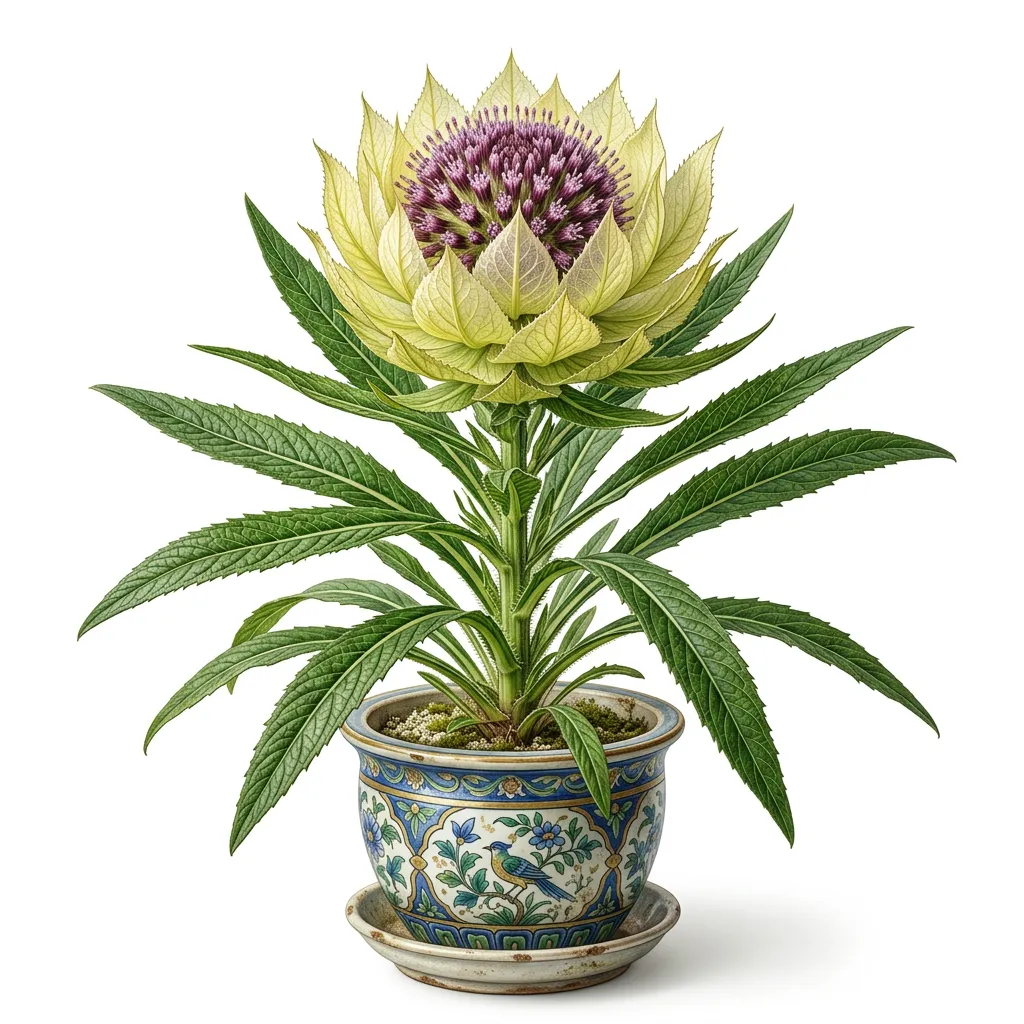
Brahma Kamal, scientifically known as Saussurea obvallata, is a remarkable perennial herbaceous plant native to the extreme high-altitude alpine zones of the Himalayas, typically thriving between 3000 to 5000 meters above sea level. This captivating member of the extensive Asteraceae family is deeply revered for its striking beauty and profound cultural and medicinal significance within indigenous traditions. The plant is distinctively recognized by its large, papery, boat-shaped, pale yellow-green bracts that completely envelop and protect its delicate, disciform flowers, which range from white to pale lilac.
These unique bracts create a 'glasshouse' effect, effectively insulating the developing blooms from the intense cold and harsh UV radiation characteristic of its environment. The true flowers remain hidden within these protective layers, famously blooming predominantly during the monsoon season, from July to September, and opening only in the evenings, adding to its mystical allure.
Morphologically, Saussurea obvallata typically reaches up to 1 meter in height. It features thick, fleshy basal leaves arranged in a dense rosette, a crucial adaptation for conserving moisture and nutrients in its challenging, nutrient-poor habitat. As the plant matures, its stems can become somewhat woody, providing structural integrity.
The inflorescence, a capitulum, is further surrounded by numerous broad, lanceolate phyllaries (modified leaves) that contribute to the plant's distinctive appearance. The entire structure bears a striking resemblance to a lotus, hence its common name 'Brahma Kamal' or 'Brahma's Lotus,' symbolizing purity, creation, and spiritual enlightenment in Hindu and Buddhist mythologies. Taxonomically, S.
obvallata belongs to the order Asterales, tribe Cardueae, and the genus Saussurea, which encompasses approximately 400 species primarily distributed across Asia. Its natural range spans the Indian Himalayan Region, including Uttarakhand (where it is the state flower), Nepal, Bhutan, and parts of Southwest China. The plant has evolved remarkable resilience, adapting to its unique, harsh environment.
Trusted Scientific References
1. Authoritative external sources for Saussurea obvallata
1.1 Wikipedia — Saussurea obvallata
1.2 Kew POWO (Plants of the World Online)
1.3 PubMed — peer-reviewed research
1.4 NCBI Taxonomy Browser
1.5 GBIF — Global Biodiversity
1.1.Brahma Kamal — Standout Qualities
- ✓Endemic to the high — altitude Himalayan regions (3000-5000m).
- ✓Belongs to the — Belongs to the Asteraceae family, also known as the daisy or sunflower family.
- ✓Distinctive boat — shaped, papery bracts protect its hidden flowers.
- ✓Flowers bloom only — Flowers bloom only at night, primarily during the monsoon season (July-September).
- ✓Revered in Hindu — Revered in Hindu and Buddhist mythologies as 'Brahma's Lotus,' symbolizing purity.
- ✓State flower of — State flower of Uttarakhand, India, holding deep cultural and spiritual significance.
- ✓Traditionally used in — Traditionally used in Ayurvedic and local folk medicine for diverse therapeutic purposes.
- ✓Contains various phytochemicals, — Contains various phytochemicals, including flavonoids, sesquiterpenes, and phenolics.
- ✓Classified as an — Classified as an endangered species, facing threats from habitat degradation and over-collection.
- ✓Morphological adaptations like — Morphological adaptations like rosette leaves and thick stems aid survival in harsh alpine climates.
1.2.Brahma Kamal — Quick Summary
- ✓Brahma Kamal is a rare Himalayan alpine plant with significant cultural and medicinal value.
- ✓Known for its unique 'glasshouse' bracts and nocturnal bloom, adapted to harsh environments.
- ✓Traditionally used for a wide range of ailments, including rheumatism, fractures, and infections.
- ✓Contains potent bioactive compounds like flavonoids and sesquiterpene lactones.
- ✓Faces high extinction risk due to habitat loss and over-harvesting, requiring conservation efforts.
- ✓Use requires caution due to potential side effects and lack of extensive clinical safety data.
2.Brahma Kamal — Scientific Profile
3.Brahma Kamal — Reference Facts
4.Brahma Kamal — Morphological Account
5.Brahma Kamal — Geographic Distribution
6.Brahma Kamal — Historical Applications
7.Brahma Kamal — Bioactive Constituents
- ✓Flavonoids — Compounds like luteolin, quercetin, and apigenin are present, known for their potent antioxidant, anti-inflammatory, and neuroprotective activities.
- ✓Sesquiterpene Lactones — These bitter compounds contribute to the plant's medicinal properties, often exhibiting anti-inflammatory, anticancer, and antimicrobial effects.
- ✓Alkaloids — Various alkaloid-like compounds may be present, influencing neurological functions and contributing to its use in nervine debilities.
- ✓Phenolic Acids — Including caffeic acid and chlorogenic acid, these compounds are strong antioxidants and contribute to the plant's free radical scavenging capacity.
- ✓Lignans — Often found in Saussurea species, lignans possess anti-inflammatory, antiviral, and antiproliferative properties.
- ✓Triterpenoids — Such as oleanolic acid and ursolic acid, contributing to anti-inflammatory, hepatoprotective, and anticancer activities.
- ✓Steroids — Phytosterols like beta-sitosterol are present, known for their cholesterol-lowering and anti-inflammatory effects.
- ✓Coumarins — May be present, offering anti-inflammatory, anticoagulant, and antimicrobial activities.
- ✓Volatile Oils — A complex mixture of monoterpenes and sesquiterpenes giving characteristic aroma and contributing to antimicrobial and anti-inflammatory actions.
- ✓Polysaccharides — Contribute to immunomodulatory effects, enhancing the body's natural defense mechanisms.
8.Brahma Kamal — What Research Suggests
- ✓Anti-inflammatory Action — Traditionally used to alleviate rheumatism and joint pain, potentially due to the presence of sesquiterpene lactones and flavonoids that modulate inflammatory pathways.
- ✓Wound Healing and Bone Repair — Applied topically or consumed for treating bone fractures and promoting the healing of various wounds, suggesting regenerative properties.
- ✓Digestive Aid — Utilized to manage dysentery and other gastrointestinal disturbances, indicating potential antimicrobial or soothing effects on the digestive tract.
- ✓Nervine Tonic — Employed in traditional medicine to address nervine debilities, cerebral palsy, and paralysis, suggesting neuroprotective or restorative properties.
- ✓Respiratory Support — Beneficial for lung infections and rhinitis, possibly through its expectorant or antimicrobial components that clear respiratory passages.
- ✓Urogenital Health — Used in cases of urinary tract infections, indicating potential diuretic or antiseptic actions that support urinary system function.
- ✓Skin Conditions — Traditionally applied for leucoderma, a skin condition, suggesting properties that may influence melanin production or skin regeneration.
- ✓Antipyretic Properties — Known to reduce hyperthermia (fever), possibly through its ability to modulate thermoregulation or combat underlying infections.
- ✓Reproductive Health Support — Employed to address certain sexual disorders, hinting at adaptogenic or hormonal balancing effects, though more research is needed.
- ✓Anti-leprosy Agent — Historically used in traditional systems for leprosy, suggesting potent antimicrobial or immunomodulatory properties.
8.1.Brahma Kamal — Therapeutic Indications
9.Brahma Kamal — Adverse Effects
9.1.Brahma Kamal — Side Effects & Warnings
- ✓Allergic Reactions — Individuals sensitive to the Asteraceae family may experience skin rashes, itching, or respiratory distress.
- ✓Digestive Upset — High doses may lead to nausea, vomiting, or stomach discomfort due to its potent compounds.
- ✓Hypotension — Potential to lower blood pressure, which could be problematic for individuals already on hypotensive medication.
- ✓Drug Interactions — May interact with certain medications, particularly anticoagulants, blood pressure drugs, or immunosuppressants.
- ✓Pregnancy and Lactation — Lack of sufficient safety data advises against use during pregnancy and breastfeeding.
- ✓Liver or Kidney Issues — Individuals with pre-existing liver or kidney conditions should exercise caution, as metabolism and excretion pathways may be affected.
- ✓Over-harvesting Impact — Unregulated use contributes to its endangered status, highlighting the ethical implications of sourcing and potential scarcity.
9.2.Brahma Kamal — Safety Profile
- ✓Consult Healthcare Professional — Always seek advice from a qualified medical or herbal practitioner before using Brahma Kamal, especially if pregnant, nursing, or on medication.
- ✓Dosage Adherence — Strict adherence to recommended dosages is crucial to avoid adverse effects and ensure therapeutic benefits.
- ✓Allergic Sensitivity — Individuals with known allergies to plants in the Daisy family (Asteraceae) should avoid its use.
- ✓Endangered Species — Due to its endangered status, ensure any sourced material is ethically and sustainably harvested, preferably from cultivated sources.
- ✓Purity and Authenticity — Verify the authenticity and purity of the plant material to prevent adulteration with less effective or harmful species.
- ✓Children and Elderly — Use with extreme caution in children and elderly individuals, with reduced dosages and close medical supervision.
- ✓Chronic Conditions — Patients with chronic medical conditions should avoid self-medication and use only under expert guidance.
10.Brahma Kamal — Application Forms
- ✓Decoction — Roots and leaves are commonly boiled in water to create a potent decoction, consumed orally for conditions like dysentery and fevers.
- ✓Poultice — Fresh leaves or crushed roots are prepared as a poultice and applied externally to aid in healing bone fractures, rheumatism, and skin issues.
- ✓Powder Form — Dried plant parts, especially the roots, are ground into a fine powder and mixed with honey or other carriers for internal consumption or topical application.
- ✓Infusion — Dried flowers or leaves can be steeped in hot water to make an infusion, often used for respiratory ailments and as a general tonic.
- ✓Herbal Paste — Crushed fresh plant material is sometimes mixed with minimal water or oil to form a paste, applied directly to affected areas for localized relief.
- ✓Medicated Oil — Plant extracts are infused into carrier oils, which are then used for massage to relieve muscular pain, paralysis, and joint stiffness.
- ✓Traditional Formulations — Incorporated into complex polyherbal Ayurvedic or Himalayan traditional medicine formulations to enhance efficacy for specific conditions.
- ✓Direct Application — In some traditional practices, fresh sap or crushed plant parts are directly applied to minor wounds or skin irritations.
11.Brahma Kamal — Growing Guide
- ✓Habitat Replication — Requires high-altitude, cold, and arid conditions, making cultivation challenging outside its natural alpine environment.
- ✓Soil Requirements — Thrives in well-drained, rocky, and sandy-loamy soils with low organic matter, mimicking its natural mountainous habitat.
- ✓Light Exposure — Needs full sun exposure, accustomed to the intense sunlight of alpine regions, but protection from extreme heat is crucial in non-native areas.
- ✓Water Management — Prefers consistent moisture during its growing season (monsoon) but requires excellent drainage to prevent root rot in colder months.
- ✓Propagation — Primarily propagated by seeds, which often require cold stratification to break dormancy, reflecting its adaptation to cold winters.
- ✓Temperature Control — Demands consistently cool temperatures, ideally between 0-15°C, with tolerance for sub-zero conditions during dormancy.
- ✓Conservation Concerns — Due to its endangered status, wild harvesting is strictly prohibited; cultivation efforts focus on ex-situ conservation and sustainable propagation.
- ✓Nutrient Needs — Adapted to nutrient-poor soils, requiring minimal fertilization, typically a slow-release, low-nitrogen formula if grown in controlled environments.
Reviewed by the Flora Medical Global Botanical Review Panel
Multi-disciplinary editorial group · Botany · Ethnobotany · Herbal-medicine literature
Who reviewed this: This page was checked by the Flora Medical Global Botanical Review Panel — an in-house editorial group of botany graduates, ethnobotany researchers, and horticulture practitioners who collectively maintain our 7,000+ plant encyclopedia. Meet the team.
Our 4-step verification process
1. Taxonomic verification
Scientific names and synonyms cross-checked against Kew POWO, World Flora Online, and The Plant List.
2. Phytochemical & medicinal cross-reference
Active compounds, traditional uses, and reported activities are cross-referenced with PubMed, USDA Dr. Duke's database, and peer-reviewed ethnobotanical literature.
3. Conservation & distribution check
Distribution, ecology, and conservation status confirmed against GBIF occurrence records and the IUCN Red List.
4. Editorial & safety review
Every entry passes an editorial pass for clarity, originality, and safety notices (toxicity, contraindications, dosage caveats) before publication.
Last reviewed:
Important medical disclaimer: This content is for educational and research purposes only. It is not medical advice and is not a substitute for consultation with a licensed healthcare provider. Do not use any herb to self-treat a medical condition without professional guidance.
Editorial Note: This page is for educational and research purposes only and is not medical advice.
Written by: Flora Medical Global Editorial Team
Reviewed by: Flora Medical Global Botanical Review Panel
Last Updated: June 16, 2026





Brahma Kamal — Comments & Community Reviews
Rate this plant