


Medical Disclaimer: This content is for educational purposes only. It is not medical advice. Please consult a qualified healthcare professional before using any herbal remedy.
Safety Overview
1.Brihati — Introduction & Highlights
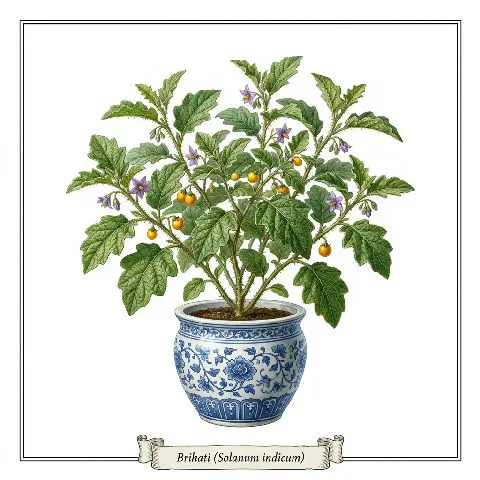
Brihati, scientifically known as Solanum indicum, is an enduring perennial shrub belonging to the diverse Solanaceae family, commonly recognized as the nightshade family. This robust plant typically attains a height of 1 to 3 meters, characterized by a dense, bushy growth habit. Its erect, woody stems are a distinctive feature, frequently armed with sharp, often recurved spines, giving the plant a formidable appearance and contributing to its common name, Indian Nightshade.
The leaves are simple, alternate, and broadly ovate to elliptical, ranging from 5 to 15 cm in length. Their upper surface exhibits a vibrant, glossy green, while the underside is notably paler and covered with fine, soft hairs, lending a slightly velvety texture.
Brihati's floral display is particularly striking, featuring star-shaped flowers that are typically purple or violet, measuring approximately 3 to 4 cm across. Each flower possesses five prominent petals and a contrasting bright yellow central anther cone, adding to its visual appeal. These blossoms emerge in cymose clusters, creating a beautiful spectacle against the backdrop of the verdant foliage.
Following successful pollination, the plant produces small, globose berries, usually 1 to 2 cm in diameter. These fruits undergo a captivating color transformation as they mature, starting as green and progressively ripening to a brilliant yellow or orange hue, making them visually prominent and attractive to various bird species, which aid in seed dispersal. The bark of older stems is grayish-brown, rough, and often longitudinally fissured, contributing to the plant's rugged texture.
Solanum indicum is indigenous to the tropical and subtropical regions of Asia, with a widespread distribution across India, Sri Lanka, and extending into parts of Southeast Asia and Africa. It thrives in diverse environments, including open grasslands, mixed deciduous forests, and disturbed areas such as roadsides and fallow lands, typically at elevations up to 1500 meters.
Trusted Scientific References
1. Authoritative external sources for Solanum indicum
1.1 Wikipedia — Solanum indicum
1.2 Kew POWO (Plants of the World Online)
1.3 PubMed — peer-reviewed research
1.4 NCBI Taxonomy Browser
1.5 GBIF — Global Biodiversity
1.1.Brihati — Key Features
- ✓Dashamoola Component — Integral part of the famous Ayurvedic 'ten roots' formulation, known for anti-inflammatory action.
- ✓Spiny Shrub — Characterized by its formidable thorny stems and bushy growth habit.
- ✓Vibrant Flowers and Fruits — Displays striking purple flowers and small, ripening yellow-orange berries.
- ✓Traditional Respiratory Tonic — Widely used in Ayurveda for managing cough, asthma, and other breathing difficulties.
- ✓Digestive Stimulant — Enhances digestion, improves appetite, and helps in alleviating various gastrointestinal complaints.
- ✓Cardioprotective Herb — Traditionally regarded as beneficial for strengthening and supporting heart function.
- ✓Skin Healing Properties — Applied topically for relief from itching, skin diseases, and promoting epidermal health.
- ✓Rich in Alkaloids — Contains significant amounts of steroidal alkaloids like solasodine, contributing to its pharmacological potency.
- ✓Ethnobotanical Importance — Deeply ingrained in traditional medicine systems across South and Southeast Asia.
- ✓Adaptable Growth — Thrives in diverse tropical and subtropical environments, from grasslands to disturbed areas.
1.2.Brihati — At-a-Glance Summary
- ✓Botanical Identity — Brihati, or Solanum indicum, is a spiny perennial shrub from the Solanaceae family, known as Indian Nightshade.
- ✓Ayurvedic Significance — A vital component of the Dashamoola group, revered in Ayurveda for its broad therapeutic applications.
- ✓Key Benefits — Primarily valued for its anti-inflammatory, respiratory, digestive, and cardiac supportive properties.
- ✓Active Compounds — Rich in steroidal alkaloids like solasodine and solanine, which contribute to its medicinal efficacy.
- ✓Diverse Applications — Utilized internally as powders and decoctions, and externally for skin, hair, and reproductive health.
- ✓Cautionary Use — Requires expert consultation, especially for pregnant women, children, and those on medication, due to potent alkaloid content.
2.Brihati — Systematic Position
3.Brihati — Reference Facts
4.Brihati — Plant Morphology
5.Brihati — Where It Grows
6.Brihati — Historical Applications
7.Brihati — Active Compounds
- ✓Steroidal Alkaloids — Key compounds like Solasodine, Solamargine, and Solanine are responsible for many of Brihati's pharmacological activities, including anti-inflammatory and cytotoxic effects.
- ✓Glycoalkaloids — These nitrogen-containing compounds, such as Solanine and Solasonine, provide protective actions to the plant and contribute to its medicinal properties, often with a bitter taste.
- ✓Saponins — Diosgenin, a notable saponin, serves as a precursor for various steroid hormones and contributes to the plant's anti-inflammatory and adaptogenic potential.
- ✓Phytosterols — Beta-Sitosterol, a common plant sterol, is recognized for its anti-inflammatory, cholesterol-lowering, and immune-modulating effects.
- ✓Carotenoids — Carotene, found abundantly in the fruits, acts as a potent antioxidant, protecting cells from oxidative damage and supporting vision.
- ✓Triterpenes — Compounds like Carpesterol contribute to the plant's diverse biological activities, often associated with anti-inflammatory and antimicrobial properties.
- ✓Flavonoids — While not explicitly listed in all sources, many Solanaceae plants contain flavonoids, which are known for their antioxidant and anti-inflammatory benefits.
- ✓Vitamins — Vitamin C is present, particularly in the fruit, offering significant antioxidant support and contributing to immune function.
- ✓Lanosterol — This triterpenoid alcohol is an intermediate in steroid biosynthesis and may contribute to the plant's overall biochemical profile.
8.Brihati — Research Insights
- ✓Anti-inflammatory Action — Brihati is a key component of Dashamoola, an Ayurvedic formulation renowned for its potent anti-inflammatory properties, helping to alleviate pain and swelling.
- ✓Respiratory Support — Traditionally used to manage various respiratory ailments including asthma, chronic coughs, hiccups, and bronchitis, acting as an expectorant to clear airways.
- ✓Digestive Aid — It stimulates digestive fire (Agni), improving appetite, relieving indigestion (Mandagni), and addressing conditions like abdominal colic, flatulence, and worm infestations.
- ✓Cardiac Tonic — Recognized in Ayurveda as Hrudya, meaning beneficial for the heart, it helps support overall cardiovascular function and strength.
- ✓Skin Health Promotion — Applied topically and taken internally, Brihati assists in managing skin diseases (Kushta), itching (Kandughna), and promoting healthy skin.
- ✓Analgesic Properties — Its Angamarda Prashamana quality indicates its effectiveness in relieving various types of pain, including body aches and abdominal discomfort.
- ✓Anti-emetic Effects — Brihati root preparations are traditionally used to alleviate nausea and vomiting (Chardi), soothing the digestive tract.
- ✓Female Reproductive Health — It is employed in treating conditions like secondary amenorrhea, dysmenorrhea, and post-partum complications, with some varieties believed to support fertility.
- ✓Diuretic Action — The plant exhibits diuretic properties, aiding in increased urine production and potentially assisting in conditions like renal stones and dysuria.
- ✓Oral Health Improvement — It helps relieve tongue coating (Aasya Mala Vairasya) and bad breath, contributing to better oral hygiene and taste perception (Ruchikara).
- ✓Neurological Support — Brihati is traditionally used in Vata disorders, suggesting benefits for neurological health and conditions involving nerve imbalances.
- ✓Aphrodisiac Properties — The seed paste is externally applied to address male impotency and improve erection, supporting reproductive vitality.
8.1.Brihati — Reported Uses
9.Brihati — Precautions & Warnings
9.1.Brihati — Side Effects & Warnings
- ✓Gastrointestinal Upset — Some individuals may experience mild stomach discomfort, nausea, or diarrhea, especially with higher doses or raw consumption.
- ✓Allergic Reactions — Rare instances of allergic responses, such as skin rashes or itching, may occur in hypersensitive individuals.
- ✓Alkaloid Toxicity — Due to the presence of steroidal alkaloids like solanine, excessive consumption or improper preparation can lead to symptoms like vomiting, dizziness, or neurological effects.
- ✓Uterine Stimulation — Traditional uses suggest uterine contracting properties, posing a risk during pregnancy and necessitating avoidance.
- ✓Hypotension — In susceptible individuals or with concurrent medications, it may contribute to a drop in blood pressure, requiring careful monitoring.
- ✓Drug Interactions — Potential to interact with medications affecting blood pressure, heart rhythm, or central nervous system, warranting medical consultation.
- ✓Children's Sensitivity — Children may be more sensitive to the active compounds, and use should be strictly under expert medical guidance.
9.2.Brihati — Toxicity Assessment
- ✓Professional Consultation — Always consult a qualified healthcare practitioner or medical herbalist before using Brihati, especially for chronic conditions, due to its potent compounds.
- ✓Pregnancy and Lactation — Brihati is generally contraindicated during pregnancy and breastfeeding due to potential uterine stimulating effects and lack of comprehensive safety data.
- ✓Pediatric Use — Not recommended for infants and young children without strict medical supervision due to varying sensitivities and potential for toxicity from its alkaloids.
- ✓Dosage Adherence — Strict adherence to prescribed dosages is crucial, as excessive consumption can lead to adverse effects, particularly related to its alkaloid content.
- ✓Pre-existing Conditions — Individuals with cardiac conditions, severe digestive issues, or known allergies to Solanaceae plants should exercise extreme caution or avoid use.
- ✓Quality and Purity — Ensure Brihati products are sourced from reputable suppliers to guarantee authenticity, purity, and absence of contaminants or adulteration.
- ✓Monitoring for Interactions — If taking other medications, particularly for heart conditions or blood pressure, monitor for potential interactions and discuss with a doctor.
10.Brihati — How to Use
- ✓Root Powder — Dried Brihati root is finely powdered and taken internally, typically in doses of 1-2 grams per day, often mixed with honey or warm water.
- ✓Decoction (Kashaya) — A water decoction is prepared by boiling crushed roots or fruits, consumed in doses of 50-100 ml per day, usually in divided doses.
- ✓External Paste — A paste made from the seeds can be applied topically for conditions like impotency or made from the fruit for skin ailments and itching.
- ✓Juice Extract — Fresh juice extracted from the plant parts, particularly the fruit, can be used for specific applications like alopecia when applied to the scalp.
- ✓Fumigation — Fruit powder, combined with other herbs like turmeric, can be used for fumigation in specific traditional treatments, such as for vaginal itching.
- ✓Medicated Oils — Brihati can be infused into oils for topical application to relieve pain, swelling, or to support hair growth.
- ✓Synergistic Formulations — It is often used as an ingredient in complex Ayurvedic formulations like Dashamoola, Nalikerasavam, and Ajamamsa Rasayanam for enhanced therapeutic effects.
- ✓Fruit Consumption — Ripe fruits, though bitter, are sometimes consumed or incorporated into dishes in certain traditional practices, but caution is advised due to alkaloid content.
11.Brihati — Propagation & Care
- ✓Climate Preference — Brihati thrives in tropical and subtropical climates, requiring warm temperatures and sufficient humidity for optimal growth.
- ✓Soil Requirements — It prefers well-drained, fertile soil with a slightly acidic to neutral pH, tolerating a range of soil types including loamy and sandy soils.
- ✓Sunlight Exposure — The plant needs full sunlight exposure for at least 6-8 hours daily to ensure robust growth and prolific flowering and fruiting.
- ✓Propagation — Primarily propagated by seeds, which should be sown in a nursery bed and then transplanted once seedlings are established.
- ✓Watering — Requires consistent moisture, especially during dry periods, but is somewhat drought-tolerant once mature; avoid waterlogging.
- ✓Pruning — Regular pruning helps maintain a bushy habit, encourages new growth, and can enhance fruit production.
- ✓Pest and Disease Management — Generally hardy, but monitor for common Solanaceae pests like aphids or fruit borers and manage with organic solutions if necessary.
- ✓Harvesting — Roots are typically harvested after 9-10 months, ideally in April, while fruits can be collected as they ripen to yellow or orange.
Reviewed by the Flora Medical Global Botanical Review Panel
Multi-disciplinary editorial group · Botany · Ethnobotany · Herbal-medicine literature
Who reviewed this: This page was checked by the Flora Medical Global Botanical Review Panel — an in-house editorial group of botany graduates, ethnobotany researchers, and horticulture practitioners who collectively maintain our 7,000+ plant encyclopedia. Meet the team.
Our 4-step verification process
1. Taxonomic verification
Scientific names and synonyms cross-checked against Kew POWO, World Flora Online, and The Plant List.
2. Phytochemical & medicinal cross-reference
Active compounds, traditional uses, and reported activities are cross-referenced with PubMed, USDA Dr. Duke's database, and peer-reviewed ethnobotanical literature.
3. Conservation & distribution check
Distribution, ecology, and conservation status confirmed against GBIF occurrence records and the IUCN Red List.
4. Editorial & safety review
Every entry passes an editorial pass for clarity, originality, and safety notices (toxicity, contraindications, dosage caveats) before publication.
Last reviewed:
Important medical disclaimer: This content is for educational and research purposes only. It is not medical advice and is not a substitute for consultation with a licensed healthcare provider. Do not use any herb to self-treat a medical condition without professional guidance.
Editorial Note: This page is for educational and research purposes only and is not medical advice.
Written by: Flora Medical Global Editorial Team
Reviewed by: Flora Medical Global Botanical Review Panel
Last Updated: June 16, 2026





Brihati — Comments & Community Reviews
Rate this plant