
Medical Disclaimer: This content is for educational purposes only. It is not medical advice. Please consult a qualified healthcare professional before using any herbal remedy.
Safety Overview
1.Buchu — Introduction & Highlights
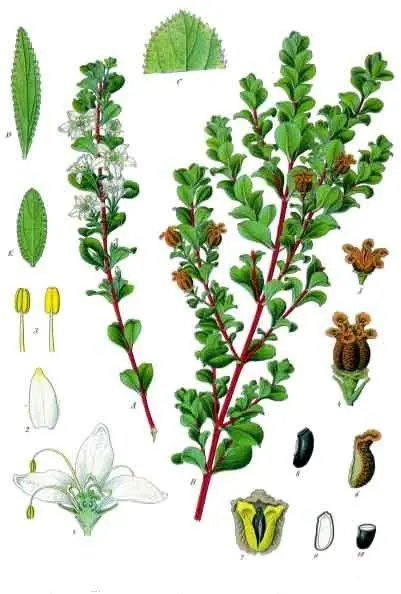
Agathosma betulina, widely known as Buchu, is a resilient, aromatic shrub indigenous to the Fynbos biome of the Western Cape, South Africa. This member of the Rutaceae family, which also includes citrus, typically reaches a height of 1 to 2 meters. Its distinctive ovate to obovate leaves, measuring approximately 1.5 to 2.5 cm long, possess crenate-serrate margins and are conspicuously dotted with oil glands. These glands are responsible for Buchu's characteristic fragrance, often described as a complex blend of blackcurrant, mint, and rosemary.
Small, star-shaped flowers, ranging from white to pale pink, emerge in axillary clusters during the Southern Hemisphere's spring (September to November), eventually yielding small, five-lobed capsular fruits containing seeds. The name 'Buchu' itself is derived from 'bukku,' a Khoi-San term for aromatic plants, reflecting its deep cultural roots among the indigenous Khoi-San people. Historically, they utilized it for spiritual purposes, as a fragrant body rub when mixed with sheep fat, and for a range of medicinal applications. Following its introduction to Europe in the late 18th and early 19th centuries, Agathosma betulina quickly gained recognition in Western herbal medicine for its potent diuretic and antiseptic properties, becoming a popular remedy for urinary tract infections and kidney disorders.
It was even included in esteemed pharmacopoeias like the British and United States Pharmacopoeias, solidifying its established medicinal value before the advent of modern antibiotics led to a decline in its mainstream use. Today, interest in Buchu is experiencing a resurgence, not only for its historical medicinal uses but also for its essential oil in the perfume and food-flavoring industries, and for new pharmacological insights into its anti-inflammatory and metabolic benefits.
Trusted Scientific References
1. Authoritative external sources for Agathosma betulina
1.1 Wikipedia — Agathosma betulina
1.2 Kew POWO (Plants of the World Online)
1.3 PubMed — peer-reviewed research
1.4 NCBI Taxonomy Browser
1.5 GBIF — Global Biodiversity
1.1.Buchu — Key Features
- ✓Native to the — Native to the Western Cape of South Africa, specifically the Fynbos biome.
- ✓Distinctive aromatic scent, — Distinctive aromatic scent, a blend of blackcurrant, mint, and rosemary, from oil glands on its leaves.
- ✓Deeply rooted in traditional Khoi — San medicine for spiritual and healing purposes.
- ✓Historically recognized for — Historically recognized for potent diuretic and urinary antiseptic actions.
- ✓Rich in beneficial — Rich in beneficial flavonoids (e.g., diosmin, hesperidin) and volatile oils (e.g., pulegone, diosphenol).
- ✓Exhibited anti — inflammatory, antimicrobial, and antioxidant activities in scientific studies.
- ✓Included in historical — Included in historical pharmacopoeias like the British and United States Pharmacopoeias.
- ✓Emerging research suggests — Emerging research suggests potential in glucose regulation and cardioprotective effects.
- ✓Utilized in various forms — herbal teas, tinctures, capsules, and essential oil for flavoring and fragrance.
- ✓Requires careful consideration — Requires careful consideration of dosage and contraindications due to potent active compounds.
1.2.Buchu — Quick Summary
- ✓Agathosma betulina, or Buchu, is an aromatic South African shrub with a rich history as a traditional Khoi-San remedy.
- ✓It is primarily known for its powerful diuretic and urinary antiseptic properties, making it valuable for urinary tract health.
- ✓Buchu contains a complex array of active compounds, including flavonoids (diosmin) and volatile oils (pulegone, diosphenol).
- ✓Modern research explores its anti-inflammatory, antioxidant, and potential metabolic benefits, including glucose regulation.
- ✓Available as teas, tinctures, and capsules; its essential oil is used in flavorings and perfumes.
- ✓Caution is advised regarding dosage, especially in pregnancy, liver/kidney conditions, and with certain medications.
2.Buchu — Systematic Position
3.Buchu — Reference Facts
4.Buchu — Morphological Account
5.Buchu — Geographic Distribution
6.Buchu — Historical Applications
7.Buchu — Secondary Metabolites
- ✓Flavonoids — Key compounds include Diosmin, Hesperidin, Quercetin, and Rutin, which are largely responsible for Buchu's antioxidant, anti-inflammatory, and venotonic activities.
- ✓Volatile Oils (Essential Oil) — The characteristic aroma and some therapeutic effects are attributed to compounds like Pulegone, Menthone, Isomenthone, Limonene, and Diosphenol, with pulegone being a significant component.
- ✓Monoterpenes — Present in the essential oil, compounds such as Limonene, Sabinene, and Myrcene contribute to the plant's aromatic profile and may have additional therapeutic actions.
- ✓Sesquiterpenes — Elements like Caryophyllene are found, which are known for their anti-inflammatory and analgesic properties.
- ✓Phenolic Ketones — Diosphenol is a notable constituent, recognized for its antiseptic and diuretic actions within the urinary system.
- ✓Coumarins — Furocoumarins are present, which can possess various biological activities, including potential photosensitizing effects.
- ✓Tannins — These astringent compounds contribute to the plant's potential antimicrobial and anti-inflammatory properties.
- ✓Mucilages — Polysaccharides that provide a soothing effect, particularly on mucous membranes.
- ✓Resins — Complex mixtures that contribute to the overall pharmacological profile of the plant.
- ✓Phenolic Acids — Compounds like caffeic acid and rosmarinic acid are present, further enhancing the plant's antioxidant and anti-inflammatory capacity.
8.Buchu — Research Insights
- ✓Diuretic Action — Buchu promotes increased urine flow, helping to flush the urinary system and alleviate conditions associated with fluid retention.
- ✓Urinary Antiseptic — The plant's volatile oils and phenolic compounds, particularly diosphenol, exert mild antiseptic effects within the urinary tract, helping to combat microbial growth.
- ✓Anti-inflammatory Properties — Research indicates that Buchu extracts can inhibit inflammatory pathways, such as cyclooxygenase (COX) and 5-lipoxygenase (5-LO), reducing pain and swelling.
- ✓Antimicrobial Activity — Leaf extracts have demonstrated moderate inhibitory effects against various bacteria, supporting its traditional use in fighting infections.
- ✓Antioxidant Effects — Flavonoids like diosmin and hesperidin contribute to Buchu's ability to scavenge free radicals, protecting cells from oxidative damage.
- ✓Analgesic Potential — Animal studies have shown that ethanolic extracts of Agathosma betulina possess pain-relieving properties, suggesting utility in managing discomfort.
- ✓Glucose Regulation Support — Preliminary animal research suggests that aqueous Buchu extract can improve glucose uptake and normalize blood sugar levels in diabetic models.
- ✓Cardioprotective Benefits — In rats on a high-fat diet, Buchu consumption led to reduced weight gain, less intraperitoneal fat accumulation, and normalization of elevated blood pressure.
- ✓Traditional UTI Treatment — Historically revered by the Khoi-San and later in Western herbalism, Buchu is a well-known traditional remedy for symptoms of urinary tract infections.
- ✓Kidney Disorder Support — Due to its diuretic and cleansing actions, Buchu has been traditionally used to support kidney function and address various kidney-related ailments.
- ✓Digestive Aid — Traditionally, Buchu was also used to alleviate minor digestive discomfort and flatulence due to its carminative properties.
- ✓Topical Wound Healing — The Khoi-San applied Buchu topically, often mixed with animal fat, for its soothing and antiseptic qualities on minor wounds and skin irritations.
8.1.Buchu — Indications & Uses
9.Buchu — Adverse Effects
9.1.Buchu — Warnings
- ✓Gastrointestinal Upset — High doses may cause nausea, vomiting, stomach irritation, or diarrhea in sensitive individuals.
- ✓Diuretic Overactivity — Excessive consumption can lead to dehydration or electrolyte imbalances due to its potent diuretic effects.
- ✓Allergic Reactions — Individuals sensitive to plants in the Rutaceae family may experience skin rashes, itching, or other allergic responses.
- ✓Liver and Kidney Toxicity — Prolonged use or very high doses, particularly of the essential oil due to its pulegone content, can potentially cause liver or kidney damage.
- ✓Uterine Stimulation — Buchu may have uterine stimulant properties and is therefore contraindicated during pregnancy.
- ✓Blood Pressure Effects — It may lower blood pressure, potentially interacting with antihypertensive medications.
- ✓Drug Interactions — Can interact with diuretics, anticoagulants, and other medications, altering their efficacy or increasing adverse effects.
9.2.Buchu — Safety Overview
- ✓Pregnancy and Lactation — Contraindicated during pregnancy due to potential uterine stimulant effects; avoid during lactation due to insufficient safety data.
- ✓Kidney and Liver Conditions — Individuals with pre-existing severe kidney or liver disease should avoid Buchu or use it only under strict medical supervision.
- ✓Medication Interactions — Exercise caution if taking diuretics, anticoagulants, antiplatelet drugs, or blood pressure medications, as Buchu may interact.
- ✓Children — Not recommended for infants, young children, or individuals under 12 years of age due to lack of comprehensive safety studies.
- ✓Dosage Adherence — Strict adherence to recommended dosages is crucial; high doses, especially of essential oil, can be toxic.
- ✓Professional Consultation — Always consult a qualified healthcare professional or medical herbalist before using Buchu, particularly for chronic conditions or concurrent medication use.
- ✓Pulegone Content — Be aware of the pulegone content, especially in essential oils, as it can be hepatotoxic and nephrotoxic in high concentrations.
10.Buchu — Application Forms
- ✓Herbal Tea/Infusion — Dried Buchu leaves are steeped in hot water to create an aromatic infusion, commonly used for its diuretic and urinary antiseptic effects.
- ✓Tincture Preparation — An alcoholic extract made from the leaves, offering a concentrated form that allows for precise dosing and extended shelf life.
- ✓Capsules and Tablets — Standardized Buchu extracts are available in capsule or tablet form, providing a convenient and consistent dosage for systemic effects.
- ✓Essential Oil Application — Buchu essential oil is utilized in aromatherapy (diluted in carrier oil) or as a flavoring agent in food and beverages; internal use should be under expert guidance only.
- ✓Poultice or Compress — Traditionally, fresh or rehydrated dried leaves can be crushed and applied externally as a poultice for minor inflammatory conditions or skin irritations.
- ✓Infused Oil — Leaves can be infused into a carrier oil (e.g., olive oil) for topical application, creating a soothing rub for localized discomfort.
- ✓Culinary Flavoring — The unique aroma of Buchu essential oil makes it a valued ingredient in the food and beverage industry, particularly in South African cuisine and liqueurs.
11.Buchu — Growth Requirements
- ✓Climate Preference — Buchu thrives in a Mediterranean climate, preferring temperate zones with distinct wet winters and dry summers.
- ✓Soil Requirements — It requires well-drained, slightly acidic to neutral soil, typically sandy loam, to prevent root rot and ensure healthy growth.
- ✓Propagation Techniques — Can be propagated from seeds, though germination can be challenging; semi-hardwood cuttings are a more reliable method for commercial cultivation.
- ✓Sunlight Exposure — Requires full sun exposure to maximize growth and essential oil production, ideally receiving at least 6 hours of direct sunlight daily.
- ✓Watering Regimen — Moderate watering is necessary during establishment; once mature, it is drought-tolerant and prefers less frequent, deep watering.
- ✓Fertilization Needs — Buchu has low nutrient requirements; light application of balanced organic fertilizer or compost can support vigorous growth.
- ✓Pruning Practices — Light pruning after flowering helps maintain shape, promotes bushier growth, and encourages future flower and leaf production.
- ✓Pest and Disease Management — Generally resistant to most pests and diseases; ensuring good air circulation helps prevent fungal issues.
Reviewed by the Flora Medical Global Botanical Review Panel
Multi-disciplinary editorial group · Botany · Ethnobotany · Herbal-medicine literature
Who reviewed this: This page was checked by the Flora Medical Global Botanical Review Panel — an in-house editorial group of botany graduates, ethnobotany researchers, and horticulture practitioners who collectively maintain our 7,000+ plant encyclopedia. Meet the team.
Our 4-step verification process
1. Taxonomic verification
Scientific names and synonyms cross-checked against Kew POWO, World Flora Online, and The Plant List.
2. Phytochemical & medicinal cross-reference
Active compounds, traditional uses, and reported activities are cross-referenced with PubMed, USDA Dr. Duke's database, and peer-reviewed ethnobotanical literature.
3. Conservation & distribution check
Distribution, ecology, and conservation status confirmed against GBIF occurrence records and the IUCN Red List.
4. Editorial & safety review
Every entry passes an editorial pass for clarity, originality, and safety notices (toxicity, contraindications, dosage caveats) before publication.
Last reviewed:
Important medical disclaimer: This content is for educational and research purposes only. It is not medical advice and is not a substitute for consultation with a licensed healthcare provider. Do not use any herb to self-treat a medical condition without professional guidance.
Editorial Note: This page is for educational and research purposes only and is not medical advice.
Written by: Flora Medical Global Editorial Team
Reviewed by: Flora Medical Global Botanical Review Panel
Last Updated: June 16, 2026





Buchu — Comments & Community Reviews
Rate this plant