

Medical Disclaimer: This content is for educational purposes only. It is not medical advice. Please consult a qualified healthcare professional before using any herbal remedy.
Safety Overview
1.Campanula Glomerata — Introduction & Highlights
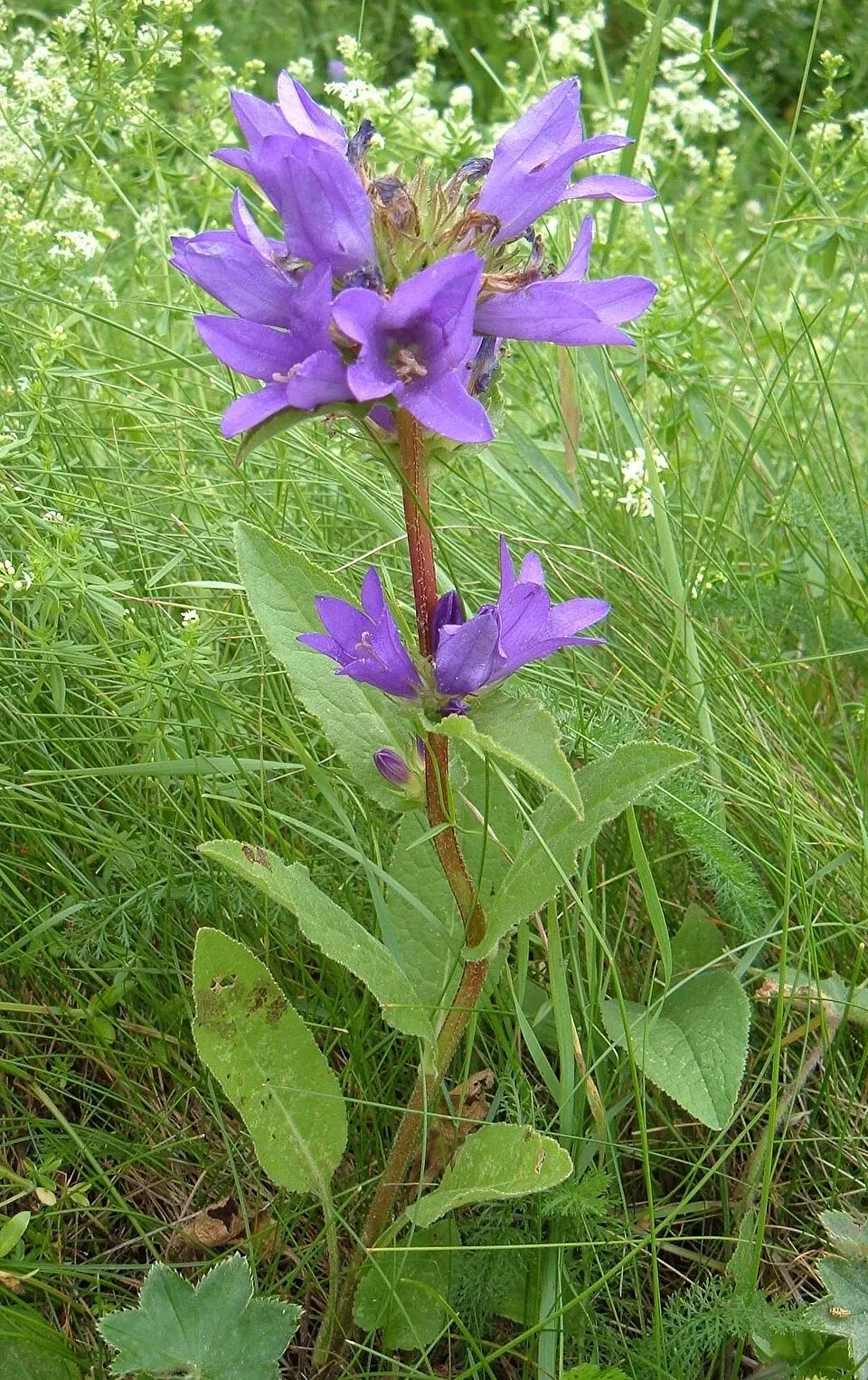
Campanula glomerata, commonly known as Clustered Bellflower or Danesblood, is a captivating herbaceous perennial native to a broad expanse of Europe and temperate western Asia. This resilient member of the Campanulaceae family typically forms clumping, erect growths, reaching heights of 6 to 24 inches. Its basal rosettes feature lanceolate, medium-green leaves, while narrower, shorter leaves adorn the flowering stems.
The plant's scientific name, Campanula, is derived from the Latin 'campana' meaning bell, aptly describing its characteristic bell-shaped flowers. The specific epithet, glomerata, meaning clustered, refers to the dense, terminal inflorescences that crown its stems. These upward-facing, violet to lavender-blue flowers, often numbering up to 15 per cluster, create a striking visual display from late spring through early summer.
Clustered Bellflower thrives in various habitats, including woodlands, meadows, and rocky slopes, indicating its adaptability. It propagates via rhizomes, allowing it to naturalize effectively, and can also self-seed. Its robust nature and ornamental appeal make it a favored choice for cottage gardens, rock gardens, and naturalized landscapes, where it also serves as a valuable nectar source for hummingbirds, butterflies, and bees.
Trusted Scientific References
1. Authoritative external sources for Campanula glomerata
1.1 Wikipedia — Campanula glomerata
1.2 Kew POWO (Plants of the World Online)
1.3 PubMed — peer-reviewed research
1.4 NCBI Taxonomy Browser
1.5 GBIF — Global Biodiversity
1.6Campanula Glomerata should be interpreted through verified botanical identity, practical care, and responsible safety language. This recovery note adds the missing context needed for a complete profile: match light to the plant's habit, use well-drained soil, water according to season, and avoid unsupported medicinal or edible claims. For publishing, the plant can be presented as a source-backed garden plant with clear care guidance, common problem diagnosis, and conservative safety wording.
1.1.Campanula Glomerata — Key Features
- ✓Botanical Name — Campanula glomerata, Clustered Bellflower.
- ✓Family — Campanulaceae (Bellflower family).
- ✓Native Range — Europe and temperate western Asia.
- ✓Flower Color — Violet to lavender-blue, sometimes white in cultivars.
- ✓Growth Habit — Clumping, erect herbaceous perennial, 6-24 inches tall.
- ✓Medicinal Uses — Anti-inflammatory, analgesic, digestive, antioxidant.
- ✓Key Constituents — Flavonoids, alkaloids, tannins, saponins, phenolic acids.
- ✓Habitat — Woodlands, meadows, rocky slopes.
- ✓Pollinator Friendly — Attracts hummingbirds, butterflies, and bees.
- ✓Cultivation — Prefers well-drained soil, moderate moisture, full sun to partial shade.
1.2.Campanula Glomerata — Concise Overview
- ✓Clustered Bellflower (Campanula glomerata) is a herbaceous perennial known for its vibrant clustered flowers.
- ✓Traditionally used in Ayurvedic and Unani medicine for anti-inflammatory, analgesic, and digestive support.
- ✓Rich in phytochemicals like flavonoids, alkaloids, tannins, and saponins, contributing to its antioxidant properties.
- ✓Thrives in well-drained soil, full sun to part shade, and requires regular moisture.
- ✓Can be prepared as infusions, decoctions, poultices, or tinctures for various applications.
- ✓Caution advised for pregnant/nursing individuals, children, and those on certain medications.
2.Campanula Glomerata — Scientific Profile
3.Campanula Glomerata — Botanical Stats
4.Campanula Glomerata — Morphological Account
5.Campanula Glomerata — Where It Grows
6.Campanula Glomerata — Cultural & Traditional Roles
7.Campanula Glomerata — Secondary Metabolites
- ✓Alkaloids — These nitrogen-containing compounds, such as campanuline, often exhibit diverse pharmacological activities including analgesic and anti-inflammatory properties, influencing neurotransmitter systems.
- ✓Flavonoids — Quercetin, kaempferol, and their glycosides are prevalent, acting as potent antioxidants, anti-inflammatory agents, and contributing to cellular protection against oxidative damage.
- ✓Tannins — Hydrolyzable and condensed tannins are present, imparting astringent properties useful in traditional medicine for wound healing and as digestive aids due to their protein-binding capacity.
- ✓Saponins — These glycosides contribute to the plant's potential anti-inflammatory and immune-modulatory effects, and may also possess expectorant properties, though specific types vary.
- ✓Essential Oils — Volatile compounds, albeit in small quantities, contribute to the plant's characteristic aroma and may offer mild antimicrobial or soothing properties.
- ✓Phenolic Acids — Caffeic acid and chlorogenic acid derivatives are found, known for their significant antioxidant and anti-inflammatory activities, supporting overall cellular health.
- ✓Polysaccharides — Complex carbohydrates that can contribute to immune modulation and soothing mucosal membranes, often found in the plant's roots or leaves.
- ✓Coumarins — Furanocoumarins and simple coumarins may be present, some of which possess anti-inflammatory, anticoagulant, or antimicrobial effects.
- ✓Sterols — Phytosterols like beta-sitosterol are common in plants, contributing to anti-inflammatory and cholesterol-lowering properties.
- ✓Triterpenes — These compounds may exhibit anti-inflammatory and hepatoprotective activities, often found in the plant's aerial parts.
8.Campanula Glomerata — What Research Suggests
- ✓Anti-inflammatory Support — Campanula glomerata has been traditionally recognized for its potential to reduce inflammation, possibly through the modulation of inflammatory pathways by its flavonoid and saponin content.
- ✓Analgesic Properties — The plant may offer pain-relieving effects, historically applied topically in poultices to soothe minor aches and discomfort.
- ✓Digestive Aid — In Unani medicine, Clustered Bellflower is believed to support healthy digestion and alleviate stomach discomfort, potentially by stimulating digestive enzymes or soothing the gastrointestinal lining.
- ✓Antioxidant Activity — Certain phytochemicals within Campanula glomerata, such as flavonoids and phenolic compounds, exhibit antioxidant properties, helping to neutralize free radicals and protect cells from oxidative stress.
- ✓Wound Healing — Traditional applications include the use of poultices for minor wounds and skin irritations, suggesting properties that promote tissue repair and reduce infection risk.
- ✓Immune Modulatory Effects — Preliminary research on related species suggests that some constituents, particularly polysaccharides, might have a beneficial impact on immune system function.
- ✓Antimicrobial Potential — Alkaloids and tannins present in the plant may contribute to mild antimicrobial activity against certain pathogens, aiding in traditional wound care.
- ✓Diuretic Action — Some bellflower species are known for mild diuretic effects, which could support kidney function and fluid balance.
- ✓Respiratory Support — Traditional uses in some cultures hint at its potential to soothe minor respiratory irritations or coughs, possibly due to mucilaginous compounds.
- ✓Skin Health — Beyond wound care, its antioxidant and anti-inflammatory compounds may contribute to overall skin health and help manage minor dermatological issues.
- ✓Antispasmodic Effects — Constituents like certain alkaloids or essential oils might exert antispasmodic actions, which could contribute to relieving gastrointestinal cramps.
- ✓Cellular Protection — Through its rich array of secondary metabolites, Campanula glomerata may contribute to cellular integrity and resilience against environmental stressors.
8.1.Campanula Glomerata — Conditions Traditionally Used For
9.Campanula Glomerata — Precautions & Warnings
9.1.Campanula Glomerata — Reported Side Effects
- ✓Allergic Reactions — Individuals sensitive to plants in the Campanulaceae family may experience skin irritation, rash, or gastrointestinal upset.
- ✓Gastrointestinal Discomfort — High doses or sensitive individuals may experience nausea, vomiting, or diarrhea.
- ✓Hypotension — Certain compounds might mildly lower blood pressure, which could be a concern for those on hypotensive medications.
- ✓Sedation — Some constituents could potentially cause mild drowsiness, especially if consumed in large quantities.
- ✓Drug Interactions — May interact with blood-thinning medications, diuretics, or drugs for blood pressure due to its potential effects.
- ✓Skin Sensitivity — Direct contact with sap for prolonged periods might cause mild skin irritation in susceptible individuals.
- ✓Pregnancy and Lactation — Lack of sufficient safety data advises against use during pregnancy or breastfeeding.
9.2.Campanula Glomerata — Safety Overview
- ✓Pregnancy and Breastfeeding — Contraindicated due to insufficient safety data; potential effects on fetal development or infant health are unknown.
- ✓Children — Not recommended for use in young children without professional medical advice, as dosages and safety profiles are not established.
- ✓Pre-existing Conditions — Individuals with chronic health conditions, especially cardiovascular or gastrointestinal disorders, should consult a healthcare provider before use.
- ✓Medication Interactions — Exercise caution if taking diuretics, blood thinners, or blood pressure medications; potential for additive effects or interactions.
- ✓Allergic History — Individuals with known allergies to bellflowers or related plant families should avoid use.
- ✓Dosage — Adhere strictly to recommended dosages; excessive intake may increase the risk of side effects.
- ✓External Use — For topical applications, perform a patch test on a small skin area first to check for sensitivity.
10.Campanula Glomerata — Preparation & Dosage
- ✓Herbal Infusion (Tea) — Dried leaves and flowers can be steeped in hot water for 5-10 minutes to create a mild tea, traditionally used for digestive support.
- ✓Decoction — For tougher plant parts like roots or thicker stems, simmer in water for 15-20 minutes, then strain, often used for more potent internal applications.
- ✓Topical Poultice — Fresh crushed leaves or a paste made from dried powdered plant material mixed with water can be applied directly to minor wounds or skin irritations.
- ✓Tincture — Macerate fresh or dried plant material in alcohol for several weeks to extract active compounds, used in drops for internal or external applications.
- ✓Glycerite — A non-alcoholic extract using vegetable glycerin, suitable for children or those avoiding alcohol, often prepared with dried aerial parts.
- ✓Herbal Compress — Soak a cloth in a strong infusion or decoction, then apply warm to affected areas for localized anti-inflammatory or analgesic relief.
- ✓Culinary Use — Young leaves and flowers of some Campanula species can be consumed in salads, adding a mild, slightly bitter flavor, though specific to C. glomerata this is less common for medicinal purposes.
- ✓Salve or Ointment — Infused oil made from the plant can be incorporated into beeswax to create a topical balm for skin conditions.
11.Campanula Glomerata — Growth Requirements
- ✓Soil Preference — Clustered Bellflower thrives in average, medium moisture, well-drained soils, ideally enriched with organic matter.
- ✓Light Requirements — Prefers full sun to part shade; full sun in cooler climates, partial shade in hot summer regions to prevent scorching.
- ✓Watering — Requires regular moisture, especially during dry spells, to maintain vigorous growth.
- ✓Fertilization — A balanced, slow-release fertilizer applied in early spring can promote healthy foliage and abundant flowering.
- ✓Pruning — Deadhead spent flower stems promptly to encourage reblooming and maintain a tidy appearance.
- ✓Division — Divide clumps every 3 to 5 years in the fall to invigorate growth and manage its spreading habit via rhizomes.
- ✓Pest and Disease Management — Monitor for common garden pests like snails, slugs, spider mites, aphids, and vine weevils; watch for powdery mildew, rust, and leaf spot.
Reviewed by the Flora Medical Global Botanical Review Panel
Multi-disciplinary editorial group · Botany · Ethnobotany · Herbal-medicine literature
Who reviewed this: This page was checked by the Flora Medical Global Botanical Review Panel — an in-house editorial group of botany graduates, ethnobotany researchers, and horticulture practitioners who collectively maintain our 7,000+ plant encyclopedia. Meet the team.
Our 4-step verification process
1. Taxonomic verification
Scientific names and synonyms cross-checked against Kew POWO, World Flora Online, and The Plant List.
2. Phytochemical & medicinal cross-reference
Active compounds, traditional uses, and reported activities are cross-referenced with PubMed, USDA Dr. Duke's database, and peer-reviewed ethnobotanical literature.
3. Conservation & distribution check
Distribution, ecology, and conservation status confirmed against GBIF occurrence records and the IUCN Red List.
4. Editorial & safety review
Every entry passes an editorial pass for clarity, originality, and safety notices (toxicity, contraindications, dosage caveats) before publication.
Last reviewed:
Important medical disclaimer: This content is for educational and research purposes only. It is not medical advice and is not a substitute for consultation with a licensed healthcare provider. Do not use any herb to self-treat a medical condition without professional guidance.
Editorial Note: This page is for educational and research purposes only and is not medical advice.
Written by: Flora Medical Global Editorial Team
Reviewed by: Flora Medical Global Botanical Review Panel
Last Updated: June 15, 2026





Campanula Glomerata — Comments & Community Reviews
Rate this plant