


Medical Disclaimer: This content is for educational purposes only. It is not medical advice. Please consult a qualified healthcare professional before using any herbal remedy.
Safety Overview
1.Cascara Sagrada — At a Glance
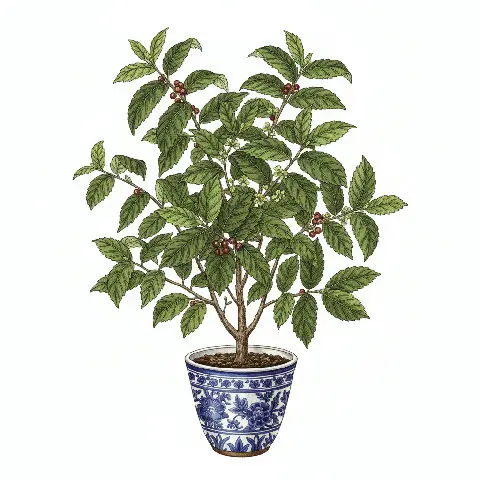
Cascara Sagrada, scientifically known as Frangula purshiana (formerly classified as Rhamnus purshiana), is a distinctive deciduous shrub or small tree indigenous to the Pacific Northwest of North America. Its natural range spans from northern California through Oregon and Washington, extending into British Columbia, and eastward into Idaho and Montana. Typically reaching heights of 2 to 6 meters, mature specimens can ascend to an impressive 18 meters under ideal environmental conditions. The plant's morphology is characterized by simple, alternately arranged, and ovate leaves, generally measuring 5 to 10 centimeters in length.
These leaves exhibit a lustrous dark green on their upper surface, contrasting with a paler, often finely pubescent underside, and are edged with delicate serrations. The bark, which serves as the primary medicinal component, initially presents as smooth and gray-brown, progressively developing a more textured, fissured appearance with age, frequently adorned with patches of gray or white lichens and occasional moss. During late spring to early summer, Frangula purshiana produces small, rather inconspicuous yellowish-green flowers arranged in terminal or axillary clusters, which are a vital nectar source for a variety of pollinators. These flowers subsequently develop into small, berry-like drupes that transition from green to a deep purplish-black by late summer, providing sustenance for local wildlife.
Its root system is typically shallow and fibrous, playing a crucial role in soil stabilization, particularly along riparian zones. Taxonomically, it is placed within the Rhamnaceae family, commonly known as the buckthorn family, a diverse group recognized for several species possessing medicinal properties. Ecologically, Cascara Sagrada significantly contributes to the biodiversity of its native moist, wooded areas and riverbanks, where its presence aids in preventing soil erosion and offers essential habitat and food sources for various fauna.
Trusted Scientific References
1. Authoritative external sources for Frangula purshiana
1.1 Wikipedia — Frangula purshiana
1.2 Kew POWO (Plants of the World Online)
1.3 PubMed — peer-reviewed research
1.4 NCBI Taxonomy Browser
1.5 GBIF — Global Biodiversity
1.1.Cascara Sagrada — Highlights
- ✓Native to the — Native to the Pacific Northwest of North America.
- ✓Medicinal part is — Medicinal part is the aged and dried bark.
- ✓Contains powerful anthraquinone — Contains powerful anthraquinone glycosides like cascarosides.
- ✓Functions as a — Functions as a stimulant laxative, promoting peristalsis.
- ✓FDA — disapproved for over-the-counter laxative use in 2002.
- ✓Requires bark aging — Requires bark aging to neutralize emetic compounds.
- ✓Noted for a delayed onset of action, typically 6 — 8 hours.
- ✓Risk of electrolyte — Risk of electrolyte imbalance and melanosis coli with prolonged use.
- ✓Historically referred to — Historically referred to as 'Sacred Bark' by Indigenous peoples.
- ✓Utilized traditionally for — Utilized traditionally for its strong cathartic properties.
1.2.Cascara Sagrada — In Brief
- ✓Potent stimulant laxative derived from the aged bark of Frangula purshiana.
- ✓Contains active anthraglycosides, primarily cascarosides A and B, which stimulate bowel contractions.
- ✓Historically used for constipation, but FDA revoked its over-the-counter laxative status in 2002 due to lack of modern data.
- ✓Fresh bark is emetic; requires aging or heat treatment to be safe for medicinal use.
- ✓Strict short-term use (under two weeks) is crucial due to risks of electrolyte imbalance, dehydration, and melanosis coli.
- ✓Contraindicated in pregnancy, lactation, children under 10, and individuals with inflammatory bowel diseases.
2.Cascara Sagrada — Botanical Identity
3.Cascara Sagrada — Fact Sheet
4.Cascara Sagrada — Physical Description
5.Cascara Sagrada — Origin & Spread
6.Cascara Sagrada — Traditional Uses
7.Cascara Sagrada — Chemical Profile
- ✓Anthraquinone Glycosides — The primary active compounds, particularly cascarosides A, B, C, and D, which are C- and O-glycosides of aloin and chrysophanol, responsible for the stimulant laxative action.
- ✓Free Anthraquinones — Compounds like emodin and chrysophanol are present, contributing to the overall laxative effect, particularly after enzymatic hydrolysis of the glycosides in the gut.
- ✓Dianthrones — Includes heterodianthrones such as palmidin A, B, and C, which are dimers of anthraquinones and also contribute to the plant's cathartic properties.
- ✓Anthrone Derivatives — Fresh bark contains free anthrone, which is highly emetic and purgative, necessitating the aging or heat treatment of the bark before medicinal use to destroy these compounds.
- ✓Volatile Oils — Contains various non-laxative compounds that contribute to the plant's overall chemical profile and aroma.
- ✓Organic Acids — Such as malic and tannic acids, which can have astringent properties, though their role in the laxative effect is minor.
- ✓Resins and Fats — Present in the bark, these compounds contribute to the plant's structural integrity and may have minor secondary biological activities.
- ✓Sugars and Starches — Including glucose, which are common plant constituents providing energy and structural support.
8.Cascara Sagrada — Evidence-Based Benefits
- ✓Stimulant Laxative Action — Historically revered for its potent cathartic effects, Cascara Sagrada bark contains anthraglycosides that stimulate peristalsis and promote bowel evacuation.
- ✓Bowel Movement Regulation — It aids in restoring and maintaining regular bowel movements by increasing the volume of intestinal contents and enhancing muscular contractions in the colon.
- ✓Short-term Constipation Relief — Traditionally and effectively used for acute, temporary constipation by promoting a natural urge to defecate, with an onset typically 6-8 hours post-ingestion.
- ✓Emodin Research — The constituent emodin is a subject of ongoing scientific interest for potential therapeutic applications beyond its laxative properties, based on promising animal and in vitro data.
- ✓Intestinal Flora Interaction — Its active anthraglycosides are metabolized by beneficial intestinal bacteria into aglycones, which are the true active compounds responsible for the laxative effect.
- ✓Water and Electrolyte Secretion — This plant promotes the active secretion of water and electrolytes into the lumen of the large intestine, which softens stool and facilitates easier passage.
- ✓Traditional Detoxification Support — In historical contexts, it was believed to assist in 'cleansing' the digestive tract and supporting the body's natural detoxification processes through its strong purgative action.
- ✓Colon Cleansing Agent — Its potent cathartic properties were historically valued for thorough colon cleansing, often used in preparation for traditional healing protocols.
8.1.Cascara Sagrada — Conditions Traditionally Used For
9.Cascara Sagrada — Safety & Side Effects
9.1.Cascara Sagrada — Side Effects & Warnings
- ✓Abdominal Cramping and Discomfort — Common adverse effects, particularly with higher doses or sensitive individuals, due to its stimulant action.
- ✓Chronic Diarrhea — Extended or habitual use can lead to persistent diarrhea, resulting in significant fluid and electrolyte loss.
- ✓Electrolyte Imbalance — Prolonged use can cause hypokalemia (low potassium levels), which can lead to muscle weakness, fatigue, and cardiac issues.
- ✓Melanosis Coli — A benign and reversible pigmentation of the colon's mucous membranes, observed with long-term use of anthraquinone laxatives.
- ✓Dehydration — Severe diarrhea from overdose or prolonged use can lead to dehydration, requiring immediate medical attention.
- ✓Nephrotoxicity, Cardiotoxicity, Hepatotoxicity — Rare but serious adverse effects reported with chronic, excessive use, highlighting the importance of short-term, controlled administration.
- ✓Muscle Weakness and Cachexia — Can occur as a consequence of severe and prolonged potassium depletion from chronic diarrhea.
9.2.Cascara Sagrada — Safety Overview
- ✓FDA Ruling — In 2002, the US FDA declared Cascara Sagrada not generally recognized as safe and effective (GRASE) for nonprescription laxative products due to insufficient modern evidence.
- ✓Contraindicated in Children — Use is strictly avoided in children younger than 10 years due to increased sensitivity and risk of adverse effects.
- ✓Pregnancy and Lactation — Absolutely contraindicated during pregnancy due to documented emmenagogue and abortifacient effects, and during lactation as anthranoid metabolites may excrete into breast milk.
- ✓Inflammatory Bowel Conditions — Contraindicated in individuals with inflammatory bowel diseases such as Crohn's disease, ulcerative colitis, irritable bowel syndrome, appendicitis, or intestinal obstruction (ileus).
- ✓Short-Term Use Limit — Usage should be strictly limited to less than two weeks to prevent chronic diarrhea, electrolyte imbalance, and potential dependency.
- ✓Drug Interactions — May potentiate effects of cardiac glycosides, antiarrhythmics, and corticosteroids due to potassium loss; can also interfere with the absorption of other medications.
- ✓Consult Healthcare Professional — Essential to consult a physician or qualified herbalist before use, especially if on other medications or having pre-existing health conditions.
10.Cascara Sagrada — Usage Guide
- ✓Dried Bark Preparations — The aged and dried bark is the primary form used, often as a decoction or in powdered form encapsulated for oral consumption.
- ✓Fluid Extracts — A common method of preparation, fluid extracts allow for precise dosing and are typically taken diluted in water.
- ✓Dried Bark Extracts — Concentrated extracts are available in tablet or capsule form, standardized for their active anthraglycoside content.
- ✓Dosage Guidelines — Typical doses range from 1 gram of crude bark, 2 to 6 mL of fluid extract, or 100 to 300 mg of dried bark extract, adjusted based on individual needs and product concentration.
- ✓Administration Timing — Due to its delayed onset of action (6-8 hours), Cascara Sagrada is usually taken before bedtime to produce a bowel movement the following morning.
- ✓Short-term Use Only — It is critical to limit use to no more than two weeks to avoid potential adverse effects such as electrolyte imbalance and dependency.
- ✓Avoid Fresh Bark — Never use fresh bark, as it contains free anthrones which can cause severe vomiting and intestinal irritation; only aged or heat-treated bark is safe.
- ✓Consult a Professional — Always consult a healthcare professional or qualified herbalist before using Cascara Sagrada, especially given its potent effects and specific contraindications.
11.Cascara Sagrada — How to Grow
- ✓Native Habitat Replication — Thrives in the moist, well-drained soils of its native Pacific Northwest, preferring riparian zones or wooded areas with dappled sunlight.
- ✓Propagation from Seed — Seeds require stratification for successful germination, typically sown in fall for spring emergence, or cold-stratified artificially.
- ✓Vegetative Propagation — Can also be propagated from cuttings, though this method may be less common for large-scale production.
- ✓Soil and Light Requirements — Prefers acidic to neutral, humus-rich soil and can tolerate full sun to partial shade, with optimal growth in moderate light conditions.
- ✓Sustainable Harvesting — Bark is typically harvested from mature trees (at least 10 years old) in spring or early summer, with sustainable practices ensuring the tree's survival by removing strips rather than girdling.
- ✓Post-Harvest Treatment — Crucially, fresh bark must be aged for at least one year or subjected to heat treatment to neutralize the emetic free anthrones, rendering it safe for medicinal use.
- ✓Growth Rate — Frangula purshiana is a relatively slow-growing species, requiring patience for bark production, emphasizing the need for long-term cultivation planning.
- ✓Pest and Disease Management — Generally robust, but monitoring for common tree pests and fungal diseases is advisable to maintain plant health and bark quality.
Reviewed by the Flora Medical Global Botanical Review Panel
Multi-disciplinary editorial group · Botany · Ethnobotany · Herbal-medicine literature
Who reviewed this: This page was checked by the Flora Medical Global Botanical Review Panel — an in-house editorial group of botany graduates, ethnobotany researchers, and horticulture practitioners who collectively maintain our 7,000+ plant encyclopedia. Meet the team.
Our 4-step verification process
1. Taxonomic verification
Scientific names and synonyms cross-checked against Kew POWO, World Flora Online, and The Plant List.
2. Phytochemical & medicinal cross-reference
Active compounds, traditional uses, and reported activities are cross-referenced with PubMed, USDA Dr. Duke's database, and peer-reviewed ethnobotanical literature.
3. Conservation & distribution check
Distribution, ecology, and conservation status confirmed against GBIF occurrence records and the IUCN Red List.
4. Editorial & safety review
Every entry passes an editorial pass for clarity, originality, and safety notices (toxicity, contraindications, dosage caveats) before publication.
Last reviewed:
Important medical disclaimer: This content is for educational and research purposes only. It is not medical advice and is not a substitute for consultation with a licensed healthcare provider. Do not use any herb to self-treat a medical condition without professional guidance.
Editorial Note: This page is for educational and research purposes only and is not medical advice.
Written by: Flora Medical Global Editorial Team
Reviewed by: Flora Medical Global Botanical Review Panel
Last Updated: June 16, 2026





Cascara Sagrada — Comments & Community Reviews
Rate this plant