
Medical Disclaimer: This content is for educational purposes only. It is not medical advice. Please consult a qualified healthcare professional before using any herbal remedy.
Safety Overview
1.Celery — Overview
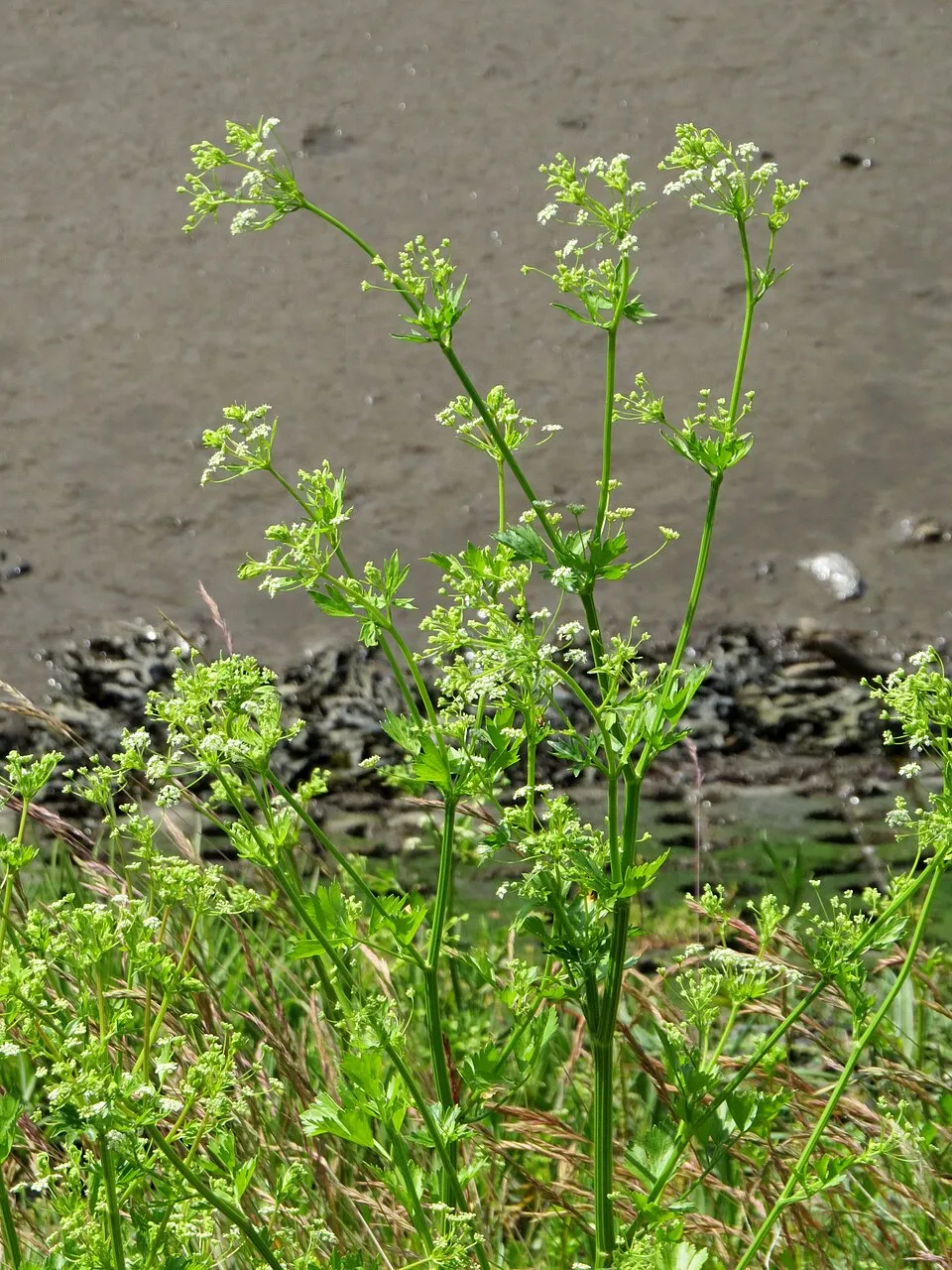
Apium graveolens, commonly known as celery, is a versatile biennial herbaceous plant belonging to the Apiaceae family, renowned for its culinary and medicinal applications. It is indigenous to the marshlands and coastal regions of Europe and Asia, thriving in damp, often saline soils.
Celery boasts a profound historical legacy, with records indicating its use by ancient Egyptians for health benefits and its incorporation into funerary garlands by Greeks and Romans, signifying cultural importance. The plant gained widespread culinary recognition in 16th-century Italy, eventually spreading its roots across Europe and beyond.
Botanically, Apium graveolens typically reaches heights of up to one meter (three feet). It is characterized by its erect, robust, and prominently grooved stems, which are often succulent. The leaves are pinnate, featuring deeply incised leaflets that contribute to its distinctive appearance.
Small, delicate whitish-green flowers are arranged in compound umbels, forming intricate clusters. The plant produces ribbed schizocarp fruits, commonly referred to as 'celery seeds,' which are dry fruits that split into two mericarps. Today, celery is cultivated globally, adapting to various temperate climates while maintaining its significance as both a dietary staple and a potent component in traditional medicine systems worldwide.
Trusted Scientific References
1. Authoritative external sources for Apium graveolens
1.1 Wikipedia — Apium graveolens
1.2 Kew POWO (Plants of the World Online)
1.3 PubMed — peer-reviewed research
1.4 NCBI Taxonomy Browser
1.5 GBIF — Global Biodiversity
1.6Celery should be interpreted through verified botanical identity, practical care, and responsible safety language. This recovery note adds the missing context needed for a complete profile: match light to the plant's habit, use well-drained soil, water according to season, and avoid unsupported medicinal or edible claims. For publishing, the plant can be presented as a source-backed medicinal plant with clear care guidance, common problem diagnosis, and conservative safety wording.
1.1.Celery — Defining Traits
- ✓Botanical Name — Apium graveolens.
- ✓Family — Apiaceae (Carrot family).
- ✓Primary Parts Used — Stalks, leaves, and seeds.
- ✓Key Medicinal Actions — Diuretic, anti-inflammatory, hypotensive.
- ✓Traditional Uses — Digestive aid, blood pressure management, liver support, nervous disorders.
- ✓Active Compounds — Phthalides, flavonoids, coumarins, volatile oils.
- ✓Culinary Versatility — Used raw, cooked, juiced, and as a spice (seeds).
- ✓Historical Significance — Prized by ancient Egyptians, Greeks, and Romans for food and medicine.
- ✓Global Distribution — Indigenous to Europe/Asia, now cultivated worldwide.
- ✓SEO Focus — Celery benefits, celery side effects, Apium graveolens uses, natural remedies.
1.2.Celery — At-a-Glance Summary
- ✓Apium graveolens, or celery, is a versatile biennial plant from the Apiaceae family with a rich history in both culinary and traditional medicine.
- ✓Valued for its diuretic, anti-inflammatory, and antihypertensive properties, it’s a staple in Ayurvedic, TCM, and Unani systems.
- ✓Rich in phthalides, flavonoids, and volatile oils, celery offers significant antioxidant and hepatoprotective benefits.
- ✓Cultivated for its stalks, leaves, and seeds, it requires cool, moist conditions and fertile soil to thrive.
- ✓While generally safe in food, high doses of celery seed or extracts warrant caution due to potential allergies, photosensitivity, and drug interactions.
2.Celery — Taxonomic Classification
3.Celery — Botanical Stats
4.Celery — Structural Profile
5.Celery — Habitat & Distribution
6.Celery — Cultural & Traditional Roles
7.Celery — Active Compounds
- ✓Phthalides — Key compounds like n-butylphthalide, sedanenolide, and sedanolide contribute to celery's distinctive aroma and possess antihypertensive, sedative, and antispasmodic properties.
- ✓Flavonoids — Rich in apigenin, luteolin, and chrysoeriol, these compounds are potent antioxidants and exhibit significant anti-inflammatory and anticancer activities.
- ✓Coumarins — Including bergapten and psoralen, coumarins offer anticoagulant, anti-inflammatory, and antimicrobial effects, though some can cause photosensitivity.
- ✓Volatile Oils — Found predominantly in celery seeds, these oils contain monoterpenes such as limonene, β-pinene, and myrcene, providing carminative and aromatic qualities.
- ✓Phenolic Acids — Caffeic acid and ferulic acid are present, acting as powerful antioxidants that protect against oxidative damage.
- ✓Polyacetylenes — Compounds like falcarinol and falcarindiol contribute to celery's antifungal and anti-inflammatory properties.
- ✓Vitamins — A good source of Vitamin K, Vitamin C, Folate, and Vitamin A, essential for blood clotting, immune function, and cell growth.
- ✓Minerals — Contains vital electrolytes and trace elements including potassium, calcium, magnesium, and sodium, crucial for maintaining bodily functions.
- ✓Polysaccharides — Provides dietary fiber, which is beneficial for digestive health, blood sugar regulation, and cholesterol management.
8.Celery — Research Insights
- ✓Diuretic — Promotes increased urine output, assisting the body in expelling excess fluids and supporting kidney function.
- ✓Anti-inflammatory — Contains flavonoids like apigenin and luteolin that help reduce systemic inflammation and alleviate pain.
- ✓Antihypertensive — May contribute to lowering blood pressure by acting as a vasodilator and a mild diuretic, easing strain on the cardiovascular system.
- ✓Hepatoprotective — Offers protection to liver cells against damage, potentially due to its rich antioxidant content and detoxifying properties.
- ✓Hypolipidemic — Helps in reducing levels of 'bad' cholesterol (LDL) and triglycerides, supporting cardiovascular health.
- ✓Antioxidant — Abundant in phenolic acids and flavonoids, it effectively neutralizes free radicals, thereby protecting cells from oxidative stress.
- ✓Antifungal — Extracts from celery, particularly the seeds, have demonstrated inhibitory effects against certain fungal pathogens in studies.
- ✓Carminative — Aids in the expulsion of gas from the digestive tract, providing relief from bloating, flatulence, and discomfort.
- ✓Nervine — Traditionally used to calm the nervous system, potentially reducing anxiety, promoting relaxation, and improving sleep quality.
- ✓Gastroprotective — May help protect the stomach lining from damage and ulcers, possibly by enhancing mucus production and reducing gastric acid.
- ✓Anticancer — Preliminary research suggests that certain compounds in celery, such as phthalides and flavonoids, may inhibit the growth of various cancer cells.
- ✓Rheumatism & Gout Support — Its diuretic and anti-inflammatory actions can help in the elimination of uric acid and reduction of joint swelling associated with these conditions.
8.1.Celery — Therapeutic Indications
9.Celery — Risk Profile
9.1.Celery — Possible Adverse Reactions
- ✓Allergic Reactions — Can cause contact dermatitis, hives, swelling, and in severe cases, anaphylaxis, particularly in individuals sensitive to birch pollen or mugwort.
- ✓Photosensitivity — Psoralens, especially in celery leaves and seeds, can increase skin sensitivity to UV light, leading to severe sunburn or phytophotodermatitis.
- ✓Uterine Contractions — High doses of celery seed extract may stimulate uterine contractions, posing a risk during pregnancy and should be avoided.
- ✓Hypotension — May lower blood pressure, potentially interacting with antihypertensive medications or causing issues for those with naturally low blood pressure.
- ✓Diuretic Effect — Excessive consumption, especially of celery seeds, can lead to dehydration or electrolyte imbalances, requiring careful monitoring.
- ✓Drug Interactions — Can interact with blood thinners (anticoagulants), diuretics, sedatives, and thyroid medications, altering their efficacy.
- ✓Kidney Issues — Individuals with pre-existing kidney conditions should use celery medicinally only under professional supervision due to its potent diuretic action.
9.2.Celery — Safety Overview
- ✓Pregnancy and Lactation — Medicinal doses of celery seeds should be avoided due to potential abortifacient effects; culinary use is generally considered safe in moderation.
- ✓Allergies — Individuals with known allergies to plants in the Apiaceae family (e.g., carrots, parsley, dill) or pollen should exercise caution due to cross-reactivity.
- ✓Photosensitivity Risk — Limit direct sun exposure after consuming large quantities of celery, especially celery juice or seed extracts, to prevent severe sunburn.
- ✓Blood Pressure Monitoring — Monitor blood pressure closely if consuming celery supplements while on antihypertensive medication to avoid excessive lowering.
- ✓Kidney Disease — Consult a healthcare professional before using celery medicinally if you have any kidney disorders, as its diuretic properties could be problematic.
- ✓Surgery — Discontinue celery supplements at least two weeks prior to any scheduled surgery due to potential interactions with anesthesia and effects on blood clotting.
- ✓Children — Generally safe in culinary amounts for children; however, medicinal doses or concentrated extracts should not be administered without expert guidance.
10.Celery — Preparation & Dosage
- ✓Fresh Consumption — Stalks and leaves are widely consumed raw in salads, as crunchy snacks, or juiced for a refreshing and nutrient-dense beverage.
- ✓Culinary Ingredient — Incorporated cooked into soups, stews, stir-fries, casseroles, and sauces to enhance flavor and add texture.
- ✓Seed Powder/Extract — Celery seeds are ground into a powder or concentrated into extracts, often encapsulated for their potent medicinal properties, especially as a diuretic or anti-inflammatory.
- ✓Herbal Tea — Dried celery leaves or seeds can be steeped in hot water to prepare a mild tea, traditionally used for its calming and diuretic effects.
- ✓Essential Oil — Extracted from celery seeds, the essential oil is used sparingly in aromatherapy or diluted for topical applications, but requires caution due to its potency.
- ✓Tincture — Alcoholic extracts of celery leaves or seeds are prepared for concentrated internal use, allowing for precise dosing of active compounds.
- ✓Topical Application — Crushed celery leaves or a paste made from the seeds can be applied as a poultice to soothe minor skin irritations or localized inflammation.
- ✓Seed Infusion — Celery seeds can be infused in oil for topical massage, traditionally used to ease muscle aches or joint discomfort.
11.Celery — Growing Guide
- ✓Climate — Celery thrives in cool, moist conditions with temperatures ideally between 15-21°C (60-70°F); it is sensitive to frost and extreme heat.
- ✓Soil — Prefers rich, fertile, well-draining loam with a slightly acidic to neutral pH (6.0-7.0) and high organic matter content.
- ✓Planting — Typically started indoors from seeds 10-12 weeks before the last frost, then transplanted outdoors once seedlings are 10-15 cm tall.
- ✓Watering — Requires consistent and abundant moisture, as dry spells can lead to tough, bitter stalks; avoid waterlogging.
- ✓Fertilization — Benefits from regular feeding with a balanced organic fertilizer or compost, especially during active growth, to support its nutrient demands.
- ✓Sunlight — Needs at least 6 hours of full sun daily, but can tolerate partial shade, particularly in hotter climates to prevent bolting.
- ✓Pests and Diseases — Watch for leaf miners, aphids, and fungal diseases like early blight; good air circulation and crop rotation are essential for prevention.
- ✓Harvesting — Stalks can be harvested individually from the outside once they reach a usable size, or the entire plant can be harvested when mature, typically 90-120 days after transplanting.
Reviewed by the Flora Medical Global Botanical Review Panel
Multi-disciplinary editorial group · Botany · Ethnobotany · Herbal-medicine literature
Who reviewed this: This page was checked by the Flora Medical Global Botanical Review Panel — an in-house editorial group of botany graduates, ethnobotany researchers, and horticulture practitioners who collectively maintain our 7,000+ plant encyclopedia. Meet the team.
Our 4-step verification process
1. Taxonomic verification
Scientific names and synonyms cross-checked against Kew POWO, World Flora Online, and The Plant List.
2. Phytochemical & medicinal cross-reference
Active compounds, traditional uses, and reported activities are cross-referenced with PubMed, USDA Dr. Duke's database, and peer-reviewed ethnobotanical literature.
3. Conservation & distribution check
Distribution, ecology, and conservation status confirmed against GBIF occurrence records and the IUCN Red List.
4. Editorial & safety review
Every entry passes an editorial pass for clarity, originality, and safety notices (toxicity, contraindications, dosage caveats) before publication.
Last reviewed:
Important medical disclaimer: This content is for educational and research purposes only. It is not medical advice and is not a substitute for consultation with a licensed healthcare provider. Do not use any herb to self-treat a medical condition without professional guidance.
Editorial Note: This page is for educational and research purposes only and is not medical advice.
Written by: Flora Medical Global Editorial Team
Reviewed by: Flora Medical Global Botanical Review Panel
Last Updated: June 16, 2026





Celery — Comments & Community Reviews
Rate this plant