
Medical Disclaimer: This content is for educational purposes only. It is not medical advice. Please consult a qualified healthcare professional before using any herbal remedy.
Safety Overview
1.Chervil — Botanical Snapshot
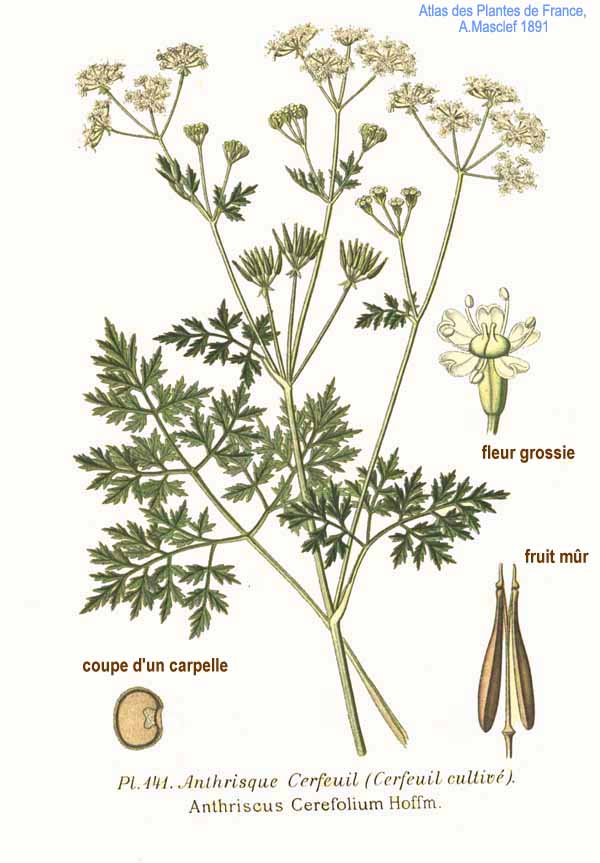
Chervil, scientifically known as Anthriscus cerefolium, is an elegant annual herb belonging to the expansive Apiaceae family, which also encompasses well-known vegetables like carrots and aromatic herbs such as parsley. This delicate plant typically achieves a height of 30 to 60 cm, presenting finely divided, tri-pinnate leaves that bear a striking resemblance to parsley foliage, extending up to 15 cm in length.
The leaves are characterized by their vibrant soft green hue and a distinct feathery texture, contributing significantly to its aesthetic appeal in garden settings.
During its blooming phase, generally from late spring through early summer, Chervil produces clusters of minute, pristine white flowers. These blossoms are meticulously arranged into umbrella-shaped formations known as umbels, with each compound umbel typically comprising 20 to 30 individual florets.
Native to the diverse landscapes of Europe and parts of Western Asia, Chervil flourishes in cool, moist environments, often seeking the dappled shade of woodlands or forest edges. It shows a preference for rich, well-drained soils that exhibit a slightly acidic to neutral pH, making it adaptable to various temperate garden conditions.
Historically, Anthriscus cerefolium has been cherished for both its culinary and medicinal attributes. The ancient Greeks revered Chervil, incorporating it into invigorating spring tonics. The Romans, captivated by its subtle, myrrh-like fragrance, referred to it as 'myrrhis.' Its culinary legacy is particularly strong in French cuisine, where it is an indispensable component of 'fines herbes,' a classic blend alongside tarragon, chives, and parsley.
The flavor profile of Chervil is uniquely mild and nuanced, offering a harmonious blend of parsley and tarragon, underscored by delicate hints of anise and fresh mint. Beyond the kitchen, Chervil has a long-standing recognition in European herbal practices and even in Traditional Chinese Medicine (TCM), where it is valued for its cooling properties and role in supporting digestive and gastrointestinal wellness. This rich tapestry of history and application underscores Chervil's significance as more than just a culinary garnish.
Trusted Scientific References
1. Authoritative external sources for Anthriscus cerefolium
1.1 Wikipedia — Anthriscus cerefolium
1.2 Kew POWO (Plants of the World Online)
1.3 PubMed — peer-reviewed research
1.4 NCBI Taxonomy Browser
1.5 GBIF — Global Biodiversity
1.1.Chervil — Distinguishing Points
- ✓Botanical Name — Anthriscus cerefolium, a member of the Apiaceae family.
- ✓Common Names — French parsley, Garden chervil, Salad chervil.
- ✓Flavor Profile — Mild, nuanced blend of parsley, tarragon, anise, and a hint of mint.
- ✓Culinary Significance — A key ingredient in the classic French 'fines herbes' mixture.
- ✓Traditional Medicinal Uses — Historically valued for digestive support, diuretic effects, and skin health.
- ✓Nutritional Content — A good source of essential minerals, notably calcium and potassium.
- ✓Growth Habit — An annual herb that thrives in cool, moist, and partially shaded environments.
- ✓Morphological Trait — Characterized by delicate, finely divided, feathery green leaves.
- ✓Historical Context — Utilized by ancient Greeks for tonics and Romans for its myrrh-like aroma.
- ✓Blooming Season — Produces small white umbel flowers from late spring to early summer.
1.2.Chervil — Quick Summary
- ✓Delicate annual herb, Anthriscus cerefolium, belonging to the Apiaceae family.
- ✓Known for its mild, anise-like flavor and feathery, parsley-like leaves.
- ✓Integral to French cuisine, particularly the 'fines herbes' blend.
- ✓Offers traditional medicinal benefits as a digestive aid, antioxidant, and diuretic.
- ✓Rich in essential nutrients like calcium and potassium.
- ✓Medicinal doses are contraindicated during pregnancy due to genotoxic concerns.
2.Chervil — Scientific Identity
3.Chervil — Vital Statistics
4.Chervil — Botanical Features
5.Chervil — Origin & Spread
6.Chervil — Folk Medicine Applications
7.Chervil — Phytochemistry
- ✓Flavonoids — Compounds like apigenin and quercetin are present, known for their potent antioxidant and anti-inflammatory properties that protect cells from oxidative stress.
- ✓Phenylpropanoids — Includes compounds such as methyl chavicol (estragole) and myristicin, which contribute to the herb's distinctive anise-like aroma and flavor, along with potential subtle bioactivities.
- ✓Coumarins — Various coumarin derivatives are found in Chervil, which may exert mild anticoagulant and anti-inflammatory effects, characteristic of the Apiaceae family.
- ✓Essential Oils — The volatile oil fraction contains a complex mixture of terpenes and phenylpropanoids, responsible for Chervil's unique fragrance and potential antimicrobial qualities.
- ✓Vitamins — Rich in Vitamin K, crucial for blood clotting and bone health, and Vitamin C, a powerful antioxidant that supports immune function.
- ✓Minerals — A significant source of macro-minerals such as potassium and calcium, essential for cardiovascular health, nerve transmission, and skeletal integrity.
- ✓Carotenoids — Precursors to Vitamin A, these compounds provide antioxidant benefits and are vital for vision and immune system support.
- ✓Fatty Acids — Contains small amounts of beneficial fatty acids that contribute to overall nutritional value and cellular membrane integrity.
- ✓Phenolic Acids — Includes compounds like rosmarinic acid, which possess strong antioxidant and anti-inflammatory activities, further enhancing Chervil's therapeutic profile.
- ✓Polyacetylenes — While less prominent in Chervil compared to other Apiaceae members, these compounds are characteristic of the family and are being investigated for various biological activities.
8.Chervil — Evidence-Based Benefits
- ✓Digestive Aid — Chervil has been traditionally utilized to soothe the digestive system, promoting healthy gastrointestinal function and alleviating discomfort.
- ✓Antioxidant Protection — Extracts of Anthriscus cerefolium exhibit significant free radical scavenging and membrane protective effects, contributing to cellular health.
- ✓Diuretic Properties — Historically, Chervil has been employed to encourage urine flow, assisting the body in expelling excess fluids and supporting kidney function.
- ✓Blood Pressure Support — Early herbalists referenced Chervil's potential in aiding the management of blood pressure levels, though modern evidence is limited.
- ✓Skin Health Promotion — Topically, Chervil has been applied to address various skin conditions such as eczema and localized infections like abscesses.
- ✓Respiratory Comfort — Traditionally, Chervil was used as a remedy for coughs, offering a soothing effect on the respiratory passages.
- ✓Gout Management — The fresh juice of Chervil was historically consumed to alleviate symptoms associated with gout, a condition characterized by uric acid buildup.
- ✓Nutritional Enhancement — Chervil is a good source of essential minerals like calcium and potassium, vital for bone health, nerve function, and electrolyte balance.
- ✓Blood Purification — Ancient practices suggested Chervil could help purify the blood, supporting the body's natural detoxification processes.
- ✓Anti-inflammatory Potential — While not extensively studied, the presence of antioxidants and other bioactive compounds may contribute to mild anti-inflammatory effects.
8.1.Chervil — Indications & Uses
9.Chervil — Safety Considerations
9.1.Chervil — Caution Notes
- ✓Allergic Reactions — Individuals sensitive to plants in the Apiaceae family (e.g., celery, carrot, parsley) may experience allergic contact dermatitis or other reactions.
- ✓Photosensitivity — Although rare, some compounds in Apiaceae plants can cause skin sensitivity to sunlight in susceptible individuals upon direct contact.
- ✓Medicinal Doses Safety — There is insufficient reliable information regarding the safety and potential side effects of Chervil when consumed in concentrated medicinal amounts.
- ✓Pregnancy Risk — Chervil is LIKELY UNSAFE in medicinal quantities during pregnancy due to the presence of chemicals that might induce genetic mutations in the developing fetus.
- ✓Flavor Alteration — The leaves become noticeably bitter once the plant begins to flower, diminishing its culinary appeal.
- ✓Gastrointestinal Upset — Excessive consumption of Chervil, especially raw, might lead to mild digestive discomfort in sensitive individuals.
9.2.Chervil — Safety Overview
- ✓Food Amounts — Chervil is generally considered LIKELY SAFE when consumed in typical culinary quantities as a flavoring agent in food.
- ✓Pregnancy — Avoid Chervil in medicinal amounts during pregnancy as it is LIKELY UNSAFE due to potential genotoxic effects on the fetus.
- ✓Breastfeeding — There is insufficient reliable information to determine the safety of Chervil in medicinal quantities for breastfeeding mothers; caution is advised.
- ✓Children — Chervil is safe for children in culinary amounts; however, medicinal use is not recommended without expert medical advice due to lack of research.
- ✓Allergic Sensitivities — Individuals with known allergies to other Apiaceae family members should exercise caution due to potential cross-reactivity.
- ✓Drug Interactions — Currently, no specific drug interactions with Chervil have been well-documented; consult a healthcare provider for personalized advice.
- ✓Topical Use — Generally well-tolerated when applied topically, but a patch test is recommended for individuals with sensitive skin to rule out irritation.
10.Chervil — Usage Guide
- ✓Culinary Fresh Herb — Use fresh Chervil leaves generously in salads, soups, omelets, and as a finishing herb for delicate dishes, especially in French cuisine.
- ✓Fines Herbes Blend — Incorporate Chervil into the classic French 'fines herbes' mixture with parsley, chives, and tarragon for mild, aromatic seasoning.
- ✓Infusions and Teas — Prepare a hot infusion by steeping fresh or dried Chervil leaves in hot water; traditionally used as a digestive aid or diuretic.
- ✓Topical Poultices — Crush fresh Chervil leaves and apply directly as a poultice to address minor skin irritations, eczema, or superficial abscesses.
- ✓Juices — Historically, fresh Chervil juice was consumed to help manage conditions like gout, often mixed with other herbal juices.
- ✓Vinegar Infusions — Following ancient Roman traditions, infuse Chervil in vinegar to create a flavorful and potentially therapeutic condiment.
- ✓Essential Oil (Aromatherapy) — While less common, very dilute Chervil essential oil can be used in aromatherapy for its calming, anise-like scent.
- ✓Spring Tonics — Emulate ancient Greek practices by incorporating fresh Chervil into invigorating spring tonics or green smoothies.
11.Chervil — How to Grow
- ✓Climate Preference — Chervil thrives as a cool-weather annual, preferring the milder temperatures of spring and fall for optimal growth.
- ✓Light Requirements — It performs best in partial shade, especially in warmer climates where afternoon shade prevents bolting and bitterness.
- ✓Soil Conditions — Plant Chervil in rich, well-drained soil with a slightly acidic to neutral pH (6.0-7.0) for vigorous growth.
- ✓Propagation — Primarily grown from seeds; sow directly outdoors in succession every few weeks to ensure a continuous harvest throughout the season.
- ✓Transplanting Caution — Due to its delicate taproot system, Chervil does not tolerate transplanting well, so direct sowing is highly recommended.
- ✓Moisture Management — Consistent soil moisture is crucial; apply mulch around plants to help retain humidity and keep roots cool.
- ✓Harvesting — Harvest leaves regularly before the plant flowers, as flowering causes the foliage to become bitter and less flavorful.
- ✓Edible Flowers — The small white umbel flowers are also edible and possess a delicate anise flavor, suitable for garnishing.
Reviewed by the Flora Medical Global Botanical Review Panel
Multi-disciplinary editorial group · Botany · Ethnobotany · Herbal-medicine literature
Who reviewed this: This page was checked by the Flora Medical Global Botanical Review Panel — an in-house editorial group of botany graduates, ethnobotany researchers, and horticulture practitioners who collectively maintain our 7,000+ plant encyclopedia. Meet the team.
Our 4-step verification process
1. Taxonomic verification
Scientific names and synonyms cross-checked against Kew POWO, World Flora Online, and The Plant List.
2. Phytochemical & medicinal cross-reference
Active compounds, traditional uses, and reported activities are cross-referenced with PubMed, USDA Dr. Duke's database, and peer-reviewed ethnobotanical literature.
3. Conservation & distribution check
Distribution, ecology, and conservation status confirmed against GBIF occurrence records and the IUCN Red List.
4. Editorial & safety review
Every entry passes an editorial pass for clarity, originality, and safety notices (toxicity, contraindications, dosage caveats) before publication.
Last reviewed:
Important medical disclaimer: This content is for educational and research purposes only. It is not medical advice and is not a substitute for consultation with a licensed healthcare provider. Do not use any herb to self-treat a medical condition without professional guidance.
Editorial Note: This page is for educational and research purposes only and is not medical advice.
Written by: Flora Medical Global Editorial Team
Reviewed by: Flora Medical Global Botanical Review Panel
Last Updated: June 16, 2026





Chervil — Comments & Community Reviews
Rate this plant