


Medical Disclaimer: This content is for educational purposes only. It is not medical advice. Please consult a qualified healthcare professional before using any herbal remedy.
Safety Overview
1.Chinese Magnolia — Overview
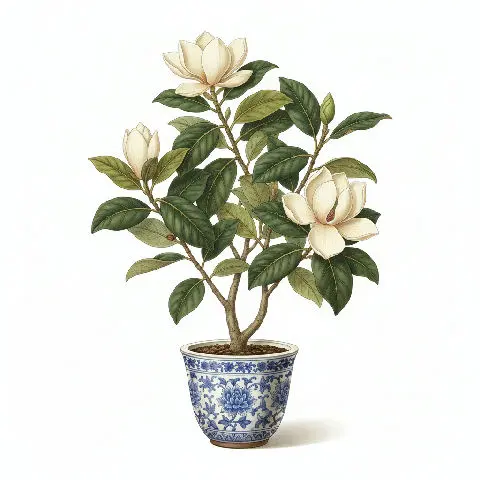
Chinese Magnolia, scientifically known as Magnolia officinalis, is a distinguished deciduous tree belonging to the ancient Magnoliaceae family. Native to the mountainous regions and forests of central and southern China, particularly prevalent in areas like Sichuan, this species can reach impressive heights of up to 20 meters. Its morphology is characterized by a thick, grey-brown bark, which is the primary part utilized in traditional medicine. The bark often displays oval lenticels and longitudinal striations, becoming purplish-brown or dark brown upon traditional processing.
The leaves are large, simple, and obovate to elliptic, typically dark green and glossy. In spring, the tree produces large, fragrant, cup-shaped white or creamy-white flowers, which are highly ornamental and contribute to its common appeal. These blossoms later give way to cone-like fruits containing bright red seeds. Historically, Magnolia officinalis, known as 'Houpo' in Traditional Chinese Medicine (TCM), has been a cornerstone of Asian herbal pharmacopoeias for thousands of years.
Its earliest recorded use dates back to at least 200 AD, where it was documented in classic texts like the 'Shennong Ben Cao Jing'. The plant's significance extends beyond TCM to Japanese Kampo medicine, where its bark and flower buds (Houpohua) are integral components of numerous traditional formulas. This enduring legacy underscores its profound cultural and medicinal value, cementing its status as a vital botanical resource. Modern research continues to explore and validate the therapeutic potential that has been recognized by generations of practitioners, particularly focusing on the unique bioactive compounds present in its bark.
Trusted Scientific References
1. Authoritative external sources for Magnolia officinalis
1.1 Wikipedia — Magnolia officinalis
1.2 Kew POWO (Plants of the World Online)
1.3 PubMed — peer-reviewed research
1.4 NCBI Taxonomy Browser
1.5 GBIF — Global Biodiversity
1.6Chinese Magnolia should be interpreted through verified botanical identity, practical care, and responsible safety language. This recovery note adds the missing context needed for a complete profile: match light to the plant's habit, use well-drained soil, water according to season, and avoid unsupported medicinal or edible claims. For publishing, the plant can be presented as a source-backed medicinal plant with clear care guidance, common problem diagnosis, and conservative safety wording.
1.1.Chinese Magnolia — Defining Traits
- ✓Ancient Medicinal Plant — Thousands of years of documented use in traditional Asian medicine.
- ✓Primary Part Used — The thick bark of the tree, known as 'Houpo'.
- ✓Key Bioactive Compounds — Rich in lignans, notably magnolol and honokiol.
- ✓Anxiolytic & Calming — Renowned for its natural stress-reducing and anti-anxiety effects.
- ✓Anti — inflammatory Power — Exhibits significant anti-inflammatory properties at a cellular level.
- ✓Antioxidant Rich — Protects cells from damage caused by free radicals.
- ✓Digestive Aid — Traditionally used to alleviate gastrointestinal discomfort and spasms.
- ✓Mood & Sleep Support — Contributes to improved mood and restful sleep.
- ✓Neuroprotective — Potential benefits for brain health and cognitive function.
- ✓Broad Traditional Applications — Used for anxiety, asthma, depression, headaches, and more.
- ✓Native to China — Primarily found in the mountainous regions of central and southern China.
- ✓Fragrant Flowers — Produces large, ornamental, and aromatic white flowers.
- ✓Versatile Preparations — Available as decoctions, tinctures, powders, and standardized extracts.
- ✓Pharmacopoeial Recognition — Included in the Chinese Pharmacopoeia.
1.2.Chinese Magnolia — At-a-Glance Summary
- ✓Chinese Magnolia (Magnolia officinalis) is an ancient medicinal tree from China, known as 'Houpo'.
- ✓Its bark is rich in lignans like magnolol and honokiol, offering potent anxiolytic, anti-inflammatory, and antioxidant benefits.
- ✓Widely used in TCM and Kampo for anxiety, digestive issues, mood support, and pain relief.
- ✓Modern research validates its traditional uses, particularly for stress, sleep, and inflammation.
- ✓Available as decoctions, tinctures, powders, and standardized extracts.
- ✓Potential side effects include drowsiness and gastrointestinal upset; contraindicated in pregnancy.
- ✓Always consult a healthcare professional before use, especially with existing health conditions or medications.
2.Chinese Magnolia — Systematic Position
3.Chinese Magnolia — Botanical Stats
4.Chinese Magnolia — Plant Morphology
5.Chinese Magnolia — Geographic Distribution
6.Chinese Magnolia — Cultural & Traditional Roles
7.Chinese Magnolia — Bioactive Constituents
- ✓Lignans — Key compounds include magnolol and honokiol, responsible for the plant's potent anxiolytic, anti-inflammatory, antioxidant, and neuroprotective activities through interaction with GABA-A receptors and inhibition of inflammatory pathways.
- ✓Neolignans — Related to lignans, these compounds further contribute to the diverse pharmacological profile, often exhibiting similar anti-inflammatory and antioxidant properties.
- ✓Alkaloids — While less prominent than lignans, various alkaloids are present, contributing to a broader spectrum of biological effects, though often in minor quantities.
- ✓Volatile Oils (Terpenes) — Comprising compounds like β-eudesmol and α-pinene, these contribute to the characteristic aroma and possess mild antimicrobial and anti-inflammatory actions.
- ✓Flavonoids — A diverse group of plant pigments with significant antioxidant and anti-inflammatory properties, supporting cellular integrity and reducing oxidative stress.
- ✓Phenolic Acids — Including ferulic acid and caffeic acid derivatives, these compounds are strong antioxidants and contribute to the plant's overall protective effects against free radical damage.
- ✓Polysaccharides — Complex carbohydrates found in the bark that may possess immune-modulating and adaptogenic properties, supporting general wellness.
- ✓Tannins — Astringent compounds that can contribute to antimicrobial effects and may have some gastrointestinal benefits by tightening mucosal tissues.
- ✓Steroids — Minor steroidal compounds might be present, potentially influencing hormonal pathways or contributing to anti-inflammatory responses.
- ✓Saponins — These glycosides can have expectorant properties and may contribute to the overall therapeutic effects, though their role in Magnolia officinalis is less studied than lignans.
8.Chinese Magnolia — Modern Studies
- ✓Anxiolytic Properties — Chinese Magnolia bark is highly regarded for its calming effects, primarily due to lignans like magnolol and honokiol, which interact with GABA-A receptors, promoting relaxation and reducing feelings of anxiety.
- ✓Anti-inflammatory Action — The potent anti-inflammatory effects of Magnolia officinalis are attributed to its magnolol and honokiol content, which inhibit pro-inflammatory mediators such as NF-κB, thereby alleviating systemic inflammation.
- ✓Antioxidant Support — Rich in phenolic compounds, Chinese Magnolia acts as a powerful antioxidant, scavenging free radicals and protecting cells from oxidative stress, contributing to overall cellular health and anti-aging.
- ✓Digestive Health Promotion — Traditionally used for gastrointestinal disorders, Magnolia officinalis exhibits antispasmodic effects, easing abdominal discomfort, bloating, and promoting healthy bowel function.
- ✓Mood Enhancement & Antidepressant Effects — Research suggests that compounds in Magnolia bark can modulate neurotransmitter levels, including serotonin and dopamine, potentially offering benefits for managing mild depression and improving mood.
- ✓Neuroprotective Potential — Magnolol and honokiol have demonstrated neuroprotective capabilities by reducing neuronal damage, improving cognitive function, and potentially guarding against neurodegenerative conditions.
- ✓Sleep Aid — The anxiolytic and sedative properties of Chinese Magnolia can help improve sleep quality, reduce sleep latency, and promote a more restful night's sleep without typical sedative side effects.
- ✓Antimicrobial Activity — Extracts of Magnolia officinalis have shown broad-spectrum antimicrobial properties against various bacteria and fungi, contributing to its traditional use in treating infections.
- ✓Anti-allergenic & Anti-asthmatic — By modulating immune responses and reducing inflammation in the airways, Chinese Magnolia may help alleviate symptoms associated with allergies and asthma.
- ✓Stress Reduction — The adaptogenic qualities of Magnolia bark assist the body in coping with stress, normalizing physiological responses to stressors, and supporting adrenal function.
- ✓Pain Management — Its anti-inflammatory and analgesic effects make Chinese Magnolia a potential natural remedy for mild to moderate pain, including headaches and muscle aches.
- ✓Metabolic Health Support — Emerging research indicates that compounds in Magnolia officinalis may play a role in regulating blood glucose and lipid levels, supporting healthy metabolic function.
- ✓Oral Health Benefits — Due to its antimicrobial properties, Magnolia bark extract is sometimes incorporated into oral care products to combat bacteria responsible for bad breath and gum disease.
- ✓Menopausal Symptom Relief — Some studies suggest that Magnolia bark may help alleviate common menopausal symptoms such as hot flashes, sleep disturbances, and mood swings.
8.1.Chinese Magnolia — Indications & Uses
9.Chinese Magnolia — Risk Profile
9.1.Chinese Magnolia — Caution Notes
- ✓Drowsiness/Sedation — Due to its anxiolytic and sedative properties, Chinese Magnolia can cause drowsiness, especially at higher doses.
- ✓Gastrointestinal Upset — Mild side effects such as nausea, stomach discomfort, or diarrhea have been reported in some individuals.
- ✓Allergic Reactions — Rare instances of allergic skin reactions or hypersensitivity may occur in susceptible individuals.
- ✓Hypotension — May potentially lower blood pressure, especially when combined with hypotensive medications.
- ✓Drug Interactions — Can interact with sedatives, anti-anxiety medications, blood thinners, and other drugs due to its metabolic pathways.
- ✓Prolonged Use Concerns — Long-term safety data is limited; caution is advised with extended, unsupervised use.
- ✓Hormonal Effects — Some research suggests potential endocrine modulating effects, warranting caution in hormone-sensitive conditions.
- ✓Liver Enzyme Elevation — Very rare cases of elevated liver enzymes have been noted, though causality is not firmly established.
9.2.Chinese Magnolia — Safety Overview
- ✓Pregnancy and Lactation — Contraindicated during pregnancy and breastfeeding due to potential effects on uterine contractions and insufficient safety data.
- ✓Children — Not recommended for use in infants and young children without expert medical supervision.
- ✓Pre-existing Conditions — Individuals with liver disease, kidney impairment, or cardiovascular conditions should use with extreme caution.
- ✓Surgery — Discontinue use at least two weeks prior to any scheduled surgery due due to potential sedative and blood pressure-lowering effects.
- ✓Medication Interactions — Consult a healthcare professional if taking prescription medications, especially sedatives, antidepressants, blood thinners, or antihypertensives.
- ✓Dosage Adherence — Always adhere to recommended dosages from qualified practitioners or product labels to avoid adverse effects.
- ✓Quality Sourcing — Ensure products are sourced from reputable suppliers to guarantee purity and absence of contaminants.
- ✓Individual Sensitivity — Start with a low dose to assess individual tolerance and watch for any signs of allergic reaction.
10.Chinese Magnolia — Preparation & Dosage
- ✓Decoction — The traditional and most common method; dried bark is simmered in water for 20-30 minutes to extract active compounds, typically consumed as a tea.
- ✓Tincture — Bark is macerated in an alcohol-water solution for several weeks, creating a concentrated liquid extract for dropper administration.
- ✓Powdered Bark — Dried bark can be finely ground and encapsulated or mixed into beverages for convenient intake.
- ✓Traditional Chinese Medicine Formulas — Magnolia officinalis bark (Houpo) is a key ingredient in numerous complex herbal formulas like 'Banxia Houpo Tang' for various ailments.
- ✓Topical Application — Extracts or infusions can be applied topically for skin conditions or as an antimicrobial wash.
- ✓Essential Oil — While less common from the bark, essential oils from Magnolia flowers are used in aromatherapy for relaxation.
- ✓Capsules/Tablets — Standardized extracts of magnolol and honokiol are available in supplement form for precise dosing.
- ✓Dosage — Dosage varies significantly based on preparation, concentration, and individual needs; always consult a qualified practitioner.
- ✓Flower Buds (Xinyi) — The flower buds of related Magnolia species (e.g., M. biondii) are used in TCM for sinus congestion, distinct from M. officinalis bark.
11.Chinese Magnolia — Growth Requirements
- ✓Climate — Thrives in temperate to subtropical climates, preferring regions with adequate rainfall and moderate temperatures.
- ✓Soil Requirements — Prefers well-drained, fertile soil rich in organic matter, with a slightly acidic to neutral pH (6.0-7.0).
- ✓Sunlight Exposure — Requires full sun to partial shade; young trees benefit from some protection from intense afternoon sun.
- ✓Water Needs — Needs consistent moisture, especially during dry periods and in its establishment phase; avoid waterlogging.
- ✓Propagation — Can be propagated by seeds, cuttings, or grafting; seed germination can be slow and may require stratification.
- ✓Harvesting — The bark (Houpo) is typically collected from mature trees (usually 10-20 years old) between April and June.
- ✓Bark Processing — Freshly harvested bark is often slightly decocted, then piled in a moist environment to soften, rolled, and finally dried in the shade to achieve its characteristic form and color.
- ✓Pest and Disease Management — Generally robust, but can be susceptible to scale insects or fungal diseases in poor growing conditions; good air circulation is key.
- ✓Pruning — Minimal pruning is usually required, mainly for shaping or removing dead/diseased branches.
- ✓Sustainable Practices — Encouraging sustainable harvesting practices is crucial given the demand for its bark; cultivation rather than wild harvesting is preferred.
Reviewed by the Flora Medical Global Botanical Review Panel
Multi-disciplinary editorial group · Botany · Ethnobotany · Herbal-medicine literature
Who reviewed this: This page was checked by the Flora Medical Global Botanical Review Panel — an in-house editorial group of botany graduates, ethnobotany researchers, and horticulture practitioners who collectively maintain our 7,000+ plant encyclopedia. Meet the team.
Our 4-step verification process
1. Taxonomic verification
Scientific names and synonyms cross-checked against Kew POWO, World Flora Online, and The Plant List.
2. Phytochemical & medicinal cross-reference
Active compounds, traditional uses, and reported activities are cross-referenced with PubMed, USDA Dr. Duke's database, and peer-reviewed ethnobotanical literature.
3. Conservation & distribution check
Distribution, ecology, and conservation status confirmed against GBIF occurrence records and the IUCN Red List.
4. Editorial & safety review
Every entry passes an editorial pass for clarity, originality, and safety notices (toxicity, contraindications, dosage caveats) before publication.
Last reviewed:
Important medical disclaimer: This content is for educational and research purposes only. It is not medical advice and is not a substitute for consultation with a licensed healthcare provider. Do not use any herb to self-treat a medical condition without professional guidance.
Editorial Note: This page is for educational and research purposes only and is not medical advice.
Written by: Flora Medical Global Editorial Team
Reviewed by: Flora Medical Global Botanical Review Panel
Last Updated: June 16, 2026





Chinese Magnolia — Comments & Community Reviews
Rate this plant