


Medical Disclaimer: This content is for educational purposes only. It is not medical advice. Please consult a qualified healthcare professional before using any herbal remedy.
Safety Overview
1.Chlorella — Plant Snapshot
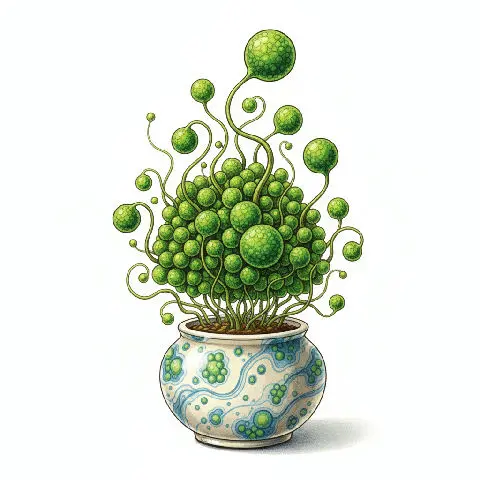
Chlorella vulgaris is a remarkable unicellular green microalga, a microscopic organism typically ranging from 2 to 10 micrometers in diameter, often existing as single cells or forming clones up to 64 cells. Its morphology is distinctly spherical, subspherical, or ellipsoid, characterized by a vibrant green coloration attributed to its exceptionally high chlorophyll content.
Unlike the complex structures of terrestrial plants, Chlorella does not possess roots, stems, or leaves; instead, its entire biological function is encased within a single-celled body. This cell is protected by a remarkably tough and resilient cell wall, primarily composed of cellulose, which necessitates specific processing methods to enhance its digestibility and nutrient bioavailability for human consumption.
In its natural habitat, Chlorella vulgaris thrives in diverse freshwater bodies, particularly favoring nutrient-rich, shallow ponds and lakes, but also found in marine and terrestrial environments. Its geographic distribution is wide-ranging, encompassing various temperate and tropical regions across the globe, with significant cultivation and study in countries like Japan, Taiwan, and the USA.
Taxonomically, Chlorella vulgaris belongs to the phylum Chlorophyta, a diverse group commonly known as green algae, which are fundamental to aquatic ecosystems due to their robust photosynthetic capabilities. The family is Chlorellaceae, further classifying this unique organism within the botanical world.
Reproduction in Chlorella is entirely asexual, primarily occurring through a process known as autospore formation. In favorable environmental conditions, a single mother cell can rapidly divide internally to produce 2 to 32 daughter cells, or autospores. These autospores are then released when the mother cell wall ruptures, enabling exponential growth and efficient biomass production.
This rapid reproductive cycle is a key factor in its viability as a sustainable food source and dietary supplement. Beyond chlorophyll, Chlorella vulgaris contains a spectrum of other important pigments, including various carotenoids and xanthophylls, contributing to its rich nutritional profile.
Trusted Scientific References
1. Authoritative external sources for Chlorella vulgaris
1.1 Wikipedia — Chlorella vulgaris
1.2 Kew POWO (Plants of the World Online)
1.3 PubMed — peer-reviewed research
1.4 NCBI Taxonomy Browser
1.5 GBIF — Global Biodiversity
1.1.Chlorella — Standout Qualities
- ✓Unicellular Green Alga — A microscopic, spherical to ellipsoid organism, 2-10 micrometers in diameter.
- ✓High Chlorophyll Content — Imparts vibrant green color and contributes to its detoxifying properties.
- ✓Complete Protein Source — Contains all nine essential amino acids, making it valuable for plant-based diets.
- ✓Rich in Vitamins & Minerals — Abundant in B12, iron, magnesium, zinc, and various other vital nutrients.
- ✓Powerful Antioxidant — Loaded with carotenoids, chlorophyll, and vitamins C and E to combat oxidative stress.
- ✓Immune System Modulator — Enhances the activity of natural killer cells and interferon production.
- ✓Effective Detoxification Agent — Binds to heavy metals and environmental toxins for elimination.
- ✓Sustainable Food Source — Characterized by rapid growth and high biomass yield, making it environmentally friendly.
- ✓Tough Cell Wall — Requires specialized processing (e.g., 'broken cell wall') for human digestibility and nutrient release.
- ✓Contains Chlorella Growth Factor (CGF) — A unique complex promoting cellular repair, growth, and overall vitality.
1.2.Chlorella — In Brief
- ✓Nutrient-dense freshwater microalga, Chlorella vulgaris.
- ✓Exceptional source of chlorophyll, protein, vitamins, and minerals.
- ✓Renowned for detoxification, immune system support, and antioxidant properties.
- ✓Requires cell wall processing for optimal nutrient absorption.
- ✓Available as powder, tablets, and a functional food additive.
- ✓Potential for digestive upset and interactions with certain medications.
2.Chlorella — Scientific Profile
3.Chlorella — Reference Facts
4.Chlorella — Plant Morphology
5.Chlorella — Where It Grows
6.Chlorella — Cultural & Traditional Roles
7.Chlorella — Bioactive Constituents
- ✓Chlorophyll — High concentration of chlorophyll a and b, responsible for its green color; acts as a powerful antioxidant and aids in detoxification processes.
- ✓Proteins — Comprises 50-60% of its dry weight, offering a complete protein profile with all essential amino acids crucial for tissue repair and enzyme function.
- ✓Carotenoids — Includes beta-carotene, lutein, and zeaxanthin, potent antioxidants that protect cells from oxidative stress and support eye health.
- ✓Vitamins — Rich in B-complex vitamins (B1, B2, B3, B6, B12), Vitamin C, Vitamin E, and Vitamin K, essential for metabolic functions, immune support, and blood clotting.
- ✓Minerals — Abundant in iron, magnesium, zinc, calcium, potassium, and phosphorus, vital for bone health, nerve function, and enzyme activity.
- ✓Chlorella Growth Factor (CGF) — A unique complex of nucleic acids (DNA, RNA), peptides, amino acids, and polysaccharides; promotes cell growth and regeneration.
- ✓Polysaccharides — Contains beta-glucans and other complex carbohydrates that are known for their immune-modulating properties and gut health benefits.
- ✓Dietary Fiber — Primarily cellulose in its tough cell wall; aids in digestion, promotes gut motility, and binds to toxins for elimination.
- ✓Lipids — Includes beneficial fatty acids, notably omega-3 alpha-linolenic acid (ALA), contributing to anti-inflammatory effects and cardiovascular health.
- ✓Phenolic Compounds — Various phenolic acids and flavonoids contribute to its antioxidant capacity and protective effects against cellular damage.
8.Chlorella — What Research Suggests
- ✓Potent Antioxidant Activity — Chlorella contains high levels of chlorophyll, carotenoids like beta-carotene and lutein, and vitamins C and E, which collectively neutralize free radicals and protect cells from oxidative damage.
- ✓Enhances Immune System Function — It stimulates the production of immune cells, including natural killer (NK) cells and interferons, bolstering the body's defense against pathogens and promoting overall immune resilience.
- ✓Supports Heavy Metal Detoxification — The unique fibrous cell wall of Chlorella vulgaris has a remarkable ability to bind to heavy metals such as lead, mercury, and cadmium, as well as other environmental toxins, facilitating their safe excretion from the body.
- ✓Promotes Healthy Cholesterol Levels — Its fiber content, coupled with compounds like niacin, can help reduce total and LDL (bad) cholesterol while supporting healthy HDL (good) cholesterol levels, contributing to cardiovascular wellness.
- ✓Aids Blood Sugar Regulation — Research suggests Chlorella may improve insulin sensitivity and help manage blood glucose levels, making it beneficial for individuals seeking to support metabolic health.
- ✓Contributes to Blood Pressure Management — Rich in potassium, magnesium, and arginine, Chlorella can help relax blood vessels and support healthy blood pressure within the normal range.
- ✓Boosts Digestive Health — The dietary fiber in Chlorella promotes regular bowel movements, acts as a prebiotic to nourish beneficial gut bacteria, and supports a healthy digestive tract.
- ✓Provides Comprehensive Nutritional Support — As a complete protein source containing all nine essential amino acids, along with a wealth of B vitamins (including B12), iron, magnesium, and zinc, it addresses potential nutrient deficiencies.
- ✓Exhibits Anti-inflammatory Properties — Chlorophyll and various carotenoids present in Chlorella possess anti-inflammatory actions, potentially reducing chronic inflammation throughout the body.
- ✓Enhances Energy and Stamina — Its rich B-vitamin profile and high iron content are crucial for cellular energy production and oxygen transport, helping to combat fatigue and improve vitality.
- ✓Supports Liver Function — Chlorella aids the liver's natural detoxification processes and helps protect liver cells from damage, contributing to optimal hepatic health.
- ✓Promotes Cellular Regeneration — The Chlorella Growth Factor (CGF), a complex of nucleic acids, peptides, and polysaccharides, is believed to support cell repair, growth, and overall tissue health.
8.1.Chlorella — Reported Uses
9.Chlorella — Risk Profile
9.1.Chlorella — Caution Notes
- ✓Digestive Upset — New users may experience nausea, gas, bloating, stomach cramps, or diarrhea, especially with higher initial doses.
- ✓Allergic Reactions — In rare cases, individuals may develop allergic symptoms such as skin rashes, hives, itching, or difficulty breathing.
- ✓Photosensitivity — Due to its high chlorophyll content, some individuals might experience increased sensitivity to sunlight, though this is uncommon.
- ✓Green Stool — A harmless but common side effect is the passage of green-colored stool, a direct result of the high chlorophyll intake.
- ✓Heavy Metal Accumulation — If sourced from contaminated environments, Chlorella can accumulate heavy metals, posing a risk if not properly tested.
- ✓Interaction with Medications — Potential interference with blood thinners (due to Vitamin K content) or immunosuppressant drugs.
- ✓Thyroid Exacerbation — Anecdotal reports suggest it might exacerbate symptoms in individuals with pre-existing thyroid conditions, though scientific evidence is limited.
9.2.Chlorella — Toxicity Assessment
- ✓Pregnancy and Lactation — Insufficient research exists to confirm its safety; pregnant or breastfeeding individuals should consult a healthcare professional before use.
- ✓Autoimmune Diseases — Chlorella can stimulate the immune system, which might be problematic for individuals with autoimmune conditions like lupus, rheumatoid arthritis, or multiple sclerosis.
- ✓Bleeding Disorders — Due to its Vitamin K content, Chlorella may interfere with anticoagulant medications such as warfarin, increasing the risk of bleeding.
- ✓Immunosuppressants — It may reduce the efficacy of drugs designed to suppress the immune system, such as those used after organ transplantation.
- ✓Children — Always consult a pediatrician before administering Chlorella supplements to children, as specific dosage and safety data are limited.
- ✓Quality Sourcing — It is critical to select Chlorella products from reputable manufacturers that provide third-party testing for heavy metals, pesticides, and other contaminants.
- ✓Gradual Introduction — Start with a small dose and gradually increase over several weeks to allow the body to adjust and minimize potential digestive discomfort.
10.Chlorella — Application Forms
- ✓Powder Form — The most common method, Chlorella powder is easily mixed into smoothies, fresh juices, water, or protein shakes for a nutritional boost.
- ✓Tablet/Capsule Form — Convenient for precise dosing and portability, these supplements are taken orally with water, typically before or with meals.
- ✓Food Ingredient — Processed Chlorella can be incorporated into various food products such as energy bars, pasta, bread, gluten-free baked goods, and even savory snacks to enhance their nutritional profile.
- ✓Cooking Addition — Can be stirred into soups, stews, sauces, or dressings; however, excessive heat may degrade some heat-sensitive nutrients like certain vitamins.
- ✓Topical Applications — Extracts are occasionally used in cosmetic products for their antioxidant and skin-rejuvenating properties, though this is less common for direct consumption.
- ✓Fermented Products — Some innovative applications involve using Chlorella in fermented foods or beverages to potentially increase nutrient absorption and probiotic benefits.
- ✓Recommended Dosage — A typical daily intake ranges from 3 to 10 grams, often split into multiple doses, but it's advisable to start with a lower dose and gradually increase to assess tolerance.
- ✓Quality Sourcing — Always ensure the Chlorella product is from a reputable source, tested for heavy metals and purity, and has a 'broken cell wall' or 'cracked cell wall' label for optimal absorption.
11.Chlorella — Propagation & Care
- ✓Cultivation Systems — Chlorella is commercially grown in both open pond systems (like raceway ponds) for cost-effectiveness and closed photobioreactors for controlled, contamination-free production.
- ✓Water Source — Requires clean, fresh water, often filtered and sterilized, to prevent contamination and ensure product purity.
- ✓Nutrient Requirements — Supplied with a balanced nutrient medium containing nitrogen, phosphorus, potassium, and trace minerals crucial for optimal growth and biomass accumulation.
- ✓Light Intensity — Needs sufficient light for photosynthesis; optimized with natural sunlight in open systems or artificial LED lighting in closed bioreactors to maximize growth efficiency.
- ✓Temperature Control — Optimal growth temperatures typically range between 25-30°C, with precise control being critical in closed systems.
- ✓PH Level — Culture medium pH is usually maintained within a slightly alkaline range, typically pH 7-8, to support robust Chlorella proliferation.
- ✓CO2 Supply — Carbon dioxide is often supplemented to enhance photosynthetic rates, leading to faster growth and higher biomass yields.
- ✓Harvesting and Processing — Biomass is harvested via centrifugation or flocculation, followed by cell wall disruption (e.g., bead-milling, high-pressure homogenization) to improve digestibility and nutrient bioavailability.
Reviewed by the Flora Medical Global Botanical Review Panel
Multi-disciplinary editorial group · Botany · Ethnobotany · Herbal-medicine literature
Who reviewed this: This page was checked by the Flora Medical Global Botanical Review Panel — an in-house editorial group of botany graduates, ethnobotany researchers, and horticulture practitioners who collectively maintain our 7,000+ plant encyclopedia. Meet the team.
Our 4-step verification process
1. Taxonomic verification
Scientific names and synonyms cross-checked against Kew POWO, World Flora Online, and The Plant List.
2. Phytochemical & medicinal cross-reference
Active compounds, traditional uses, and reported activities are cross-referenced with PubMed, USDA Dr. Duke's database, and peer-reviewed ethnobotanical literature.
3. Conservation & distribution check
Distribution, ecology, and conservation status confirmed against GBIF occurrence records and the IUCN Red List.
4. Editorial & safety review
Every entry passes an editorial pass for clarity, originality, and safety notices (toxicity, contraindications, dosage caveats) before publication.
Last reviewed:
Important medical disclaimer: This content is for educational and research purposes only. It is not medical advice and is not a substitute for consultation with a licensed healthcare provider. Do not use any herb to self-treat a medical condition without professional guidance.
Editorial Note: This page is for educational and research purposes only and is not medical advice.
Written by: Flora Medical Global Editorial Team
Reviewed by: Flora Medical Global Botanical Review Panel
Last Updated: June 16, 2026





Chlorella — Comments & Community Reviews
Rate this plant