
Medical Disclaimer: This content is for educational purposes only. It is not medical advice. Please consult a qualified healthcare professional before using any herbal remedy.
Safety Overview
1.Comfrey — Essential Profile
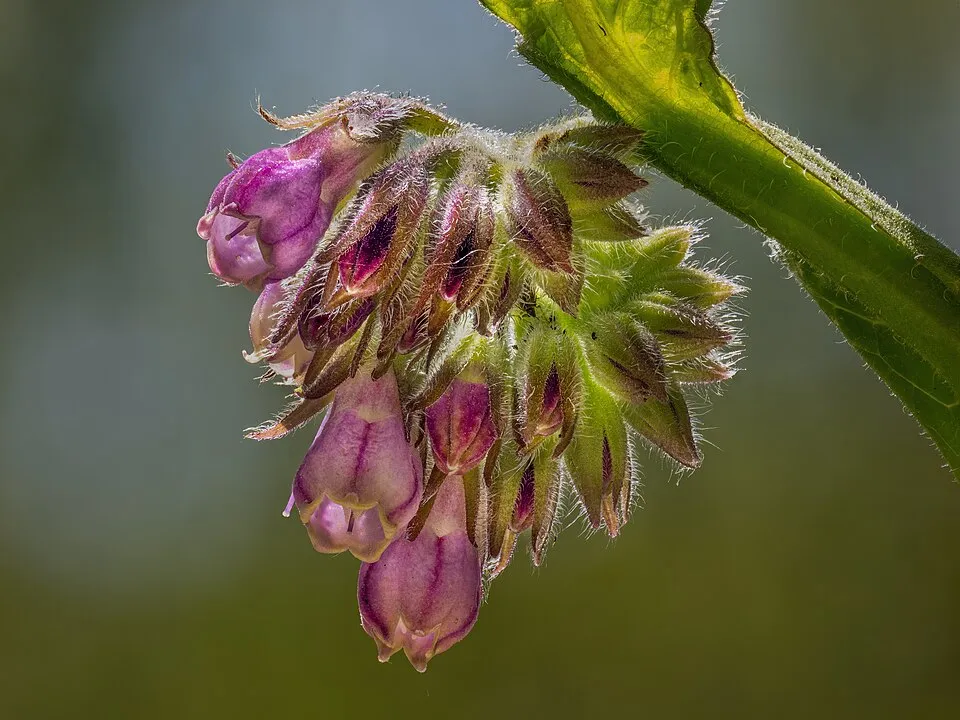
Comfrey, scientifically known as Symphytum officinale, is a robust perennial herb belonging to the Boraginaceae family, renowned for its distinctive morphology and historical medicinal applications. This impressive plant typically reaches heights of up to 1 meter (approximately 3 feet), though some vigorous specimens can grow even taller, forming dense, bushy patches. Its most striking feature is its large, broad, and oval-shaped leaves, which can measure between 10 to 30 cm (4 to 12 inches) in length.
These leaves possess a characteristic downy texture, feeling distinctly velvety to the touch due to a dense covering of fine hairs, which also contribute to the plant's overall rugged appearance. The leaves are sessile or short-petioled, tapering to a point, and exhibit prominent venation.
During its flowering season, which extends from late spring through early summer, Comfrey produces charming bell-shaped flowers that cluster gracefully on upright stems. These blossoms display a delightful palette of colors, commonly appearing in hues of purple, pink, or white, adding to the plant's aesthetic appeal in its natural settings. Beneath the soil, Symphytum officinale anchors itself with a thick, fleshy taproot, often brownish-black externally and creamy white internally.
This substantial root system is not only vital for the plant's survival but also serves as the primary repository for its potent medicinal compounds, notably the pyrrolizidine alkaloids. Comfrey thrives in moist, fertile soils, preferring conditions found in damp habitats across its native range, which spans Europe, Western Asia, and has naturalized in parts of North America. It is commonly observed growing wild along the banks of rivers and streams, in drainage ditches, and frequently appears as a naturalized escape in gardens and disturbed areas.
Taxonomically, the Boraginaceae family is recognized for its diverse array of flowering herbs, many of which share a similar hairy texture and characteristic inflorescences.
Trusted Scientific References
1. Authoritative external sources for Symphytum officinale
1.1 Wikipedia — Symphytum officinale
1.2 Kew POWO (Plants of the World Online)
1.3 PubMed — peer-reviewed research
1.4 NCBI Taxonomy Browser
1.5 GBIF — Global Biodiversity
1.1.Comfrey — Highlights
- ✓Botanical Name — Symphytum officinale.
- ✓Common Names — Knitbone, Boneset, Bruisewort, Slippery Root.
- ✓Family — Boraginaceae, characterized by hairy leaves and coiled inflorescences.
- ✓Morphology — Large, hairy leaves; bell-shaped flowers (purple, pink, white); thick taproot.
- ✓Key Compound — Allantoin, known for cell proliferation and wound healing.
- ✓Toxic Compounds — Pyrrolizidine alkaloids (PAs), highly hepatotoxic if ingested.
- ✓Primary Use — External application for bruises, sprains, muscle pain, and minor skin injuries.
- ✓Historical Significance — Revered in traditional medicine for mending fractures and wounds.
- ✓Growth Habit — Vigorous perennial, thrives in moist, fertile soil.
- ✓Safety Profile — Strict external use only; NEVER ingest; avoid on broken skin, during pregnancy, or with liver disease.
1.2.Comfrey — In Brief
- ✓Comfrey (Symphytum officinale) is a perennial herb in the Boraginaceae family.
- ✓Historically used for 'bone knitting' and wound healing, now strictly for external application.
- ✓Contains toxic pyrrolizidine alkaloids (PAs) causing severe liver damage if ingested.
- ✓Key active compounds for topical use include allantoin, mucilage, and rosmarinic acid.
- ✓Primarily used topically as salves, poultices, or compresses for bruises, sprains, and muscle pain.
- ✓Absolute contraindications include internal use, broken skin, pregnancy, breastfeeding, and liver disease.
2.Comfrey — Nomenclature & Classification
3.Comfrey — Key Data
4.Comfrey — Physical Description
5.Comfrey — Native Range & Habitat
6.Comfrey — Heritage Uses
7.Comfrey — Chemical Profile
- ✓Allantoin — A key compound known for its cell-proliferating and tissue-regenerating properties, crucial for wound and bone healing.
- ✓Rosmarinic Acid — Possesses antioxidant, anti-inflammatory, and antiviral properties, contributing to comfrey's therapeutic effects.
- ✓Mucilage — A gummy substance that provides a soothing and protective coating, beneficial for irritated tissues and mucous membranes.
- ✓Pyrrolizidine Alkaloids (PAs) — A group of compounds, some of which are hepatotoxic (liver-damaging) and carcinogenic, necessitating caution with internal use.
- ✓Tannins — Exhibit astringent properties, which can help to tighten tissues and reduce inflammation.
- ✓Phenolic Acids — Contribute to the antioxidant and anti-inflammatory actions of the plant.
- ✓Steroidal Saponins — May possess anti-inflammatory and wound-healing properties.
8.Comfrey — Pharmacological Findings
- ✓Wound Healing — Comfrey has a long history of use in promoting the healing of wounds, cuts, bruises, and abrasions. Its allantoin content stimulates cell proliferation and tissue regeneration, accelerating the mending process.
- ✓Bone Healing — Traditionally, comfrey poultices were applied to fractures and sprains to aid in bone knitting and reduce inflammation. The mucilage and allantoin are thought to support bone repair.
- ✓Anti-inflammatory Properties — The plant contains compounds that can help reduce inflammation, making it useful for conditions like arthritis, sprains, and strains. It can soothe irritated tissues and alleviate discomfort.
- ✓Skin Irritations — Comfrey can be used topically to soothe various skin irritations, including eczema, psoriasis, and minor burns. Its demulcent properties help to calm and protect the skin.
- ✓Muscle and Joint Pain Relief — Applying comfrey preparations to sore muscles and joints can provide relief from pain and stiffness associated with overuse or inflammatory conditions.
- ✓Bruise Treatment — The herb's ability to reduce swelling and promote tissue repair makes it effective in treating bruises and contusions, helping to clear them more quickly.
- ✓Ulcer Healing — While internal use is cautioned, historically, comfrey was used to address certain types of ulcers, particularly those of the digestive tract, due to its mucilaginous and healing properties.
- ✓Respiratory Support — In traditional medicine, comfrey was sometimes used as an expectorant to help clear mucus from the respiratory tract, though this application is less common today due to safety concerns.
- ✓Hemorrhoid Relief — Topical application of comfrey preparations can help soothe the discomfort and inflammation associated with hemorrhoids.
- ✓Gout Management — Its anti-inflammatory effects may offer some relief from the pain and swelling associated with gout attacks.
- ✓Sprain and Strain Recovery — Comfrey's ability to reduce inflammation and promote tissue repair makes it a valuable aid in the recovery process for sprains and strains.
- ✓Corn and Callus Softening — The mucilage in comfrey can help soften hardened skin, making it useful for treating corns and calluses.
- ✓Sore Throat Relief (External Gargle) — Historically, a diluted gargle made from comfrey was used for sore throats, leveraging its soothing and anti-inflammatory properties.
- ✓Post-Surgical Healing — Following surgery, comfrey preparations may be used externally to support the healing of surgical wounds and reduce scarring.
- ✓Nail Fungus Treatment — Some anecdotal evidence suggests topical application may help with certain fungal infections of the nails due to its antimicrobial properties.
8.1.Comfrey — Health Applications
9.Comfrey — Safety Considerations
9.1.Comfrey — Caution Notes
- ✓The primary concern with comfrey is its content of pyrrolizidine alkaloids (PAs), which can be toxic to the liver and potentially carcinogenic, especially with prolonged internal use.
- ✓Due to these risks, internal consumption of comfrey is generally not recommended by health authorities.
- ✓Topical application is considered safer, but should still be done with caution, avoiding broken skin or prolonged use.
9.2.Comfrey — Safety Overview
- ✓Comfrey should not be taken internally due to the presence of toxic pyrrolizidine alkaloids (PAs). These compounds can cause serious liver damage and have been linked to cancer. For external use, comfrey preparations should be applied only to unbroken skin and not for extended periods.
- ✓Pregnant or breastfeeding women, and individuals with liver disease, should avoid comfrey altogether.
10.Comfrey — Preparation Methods
- ✓Topical Salve/Ointment — Infuse dried Comfrey root and/or leaves in an oil (e.g., olive, sunflower), then combine with beeswax to create a soothing salve for external application on bruises, sprains, and muscle pain.
- ✓Poultice — Crush fresh Comfrey leaves and apply directly to the skin, covering with a clean cloth, to draw out inflammation and aid healing of minor external injuries (ensure skin is unbroken).
- ✓Compress — Steep dried Comfrey leaves or root powder in hot water, strain, and soak a cloth in the liquid. Apply the warm compress to affected areas for pain relief and swelling reduction.
- ✓Infused Oil — Macerate fresh or dried Comfrey leaves and roots in a carrier oil for several weeks, then strain. Use this oil for massage on sore muscles or stiff joints.
- ✓Liniment — Combine Comfrey tincture (alcohol extract) with other anti-inflammatory herbs or essential oils to create a topical liniment for deep muscle and joint discomfort.
- ✓Foot Soak — Add strong Comfrey leaf infusion to warm water for a foot soak, traditionally used to soothe tired feet or minor sprains.
- ✓Herbal Bath — Prepare a strong decoction of Comfrey leaves and add it to bathwater to help soothe widespread muscle aches and skin irritations (again, only on unbroken skin).
11.Comfrey — Cultivation & Care
- ✓Site Selection — Choose a location with moist, fertile, well-draining soil, preferably in partial shade, though it tolerates full sun if moisture is consistent.
- ✓Soil Preparation — Amend heavy clay soils with organic matter like compost to improve drainage and fertility; Comfrey prefers a slightly acidic to neutral pH (6.0-7.0).
- ✓Propagation — Primarily propagated from root cuttings (rhizomes) or divisions in spring or autumn. Seeds can be sown but are slower to establish.
- ✓Planting — Plant root cuttings about 5-10 cm deep and 60-90 cm apart, as Comfrey spreads vigorously. Water thoroughly after planting.
- ✓Watering — Requires consistent moisture, especially during dry spells. Avoid waterlogging, but ensure the soil remains damp.
- ✓Fertilization — Benefits from annual application of compost or a balanced organic fertilizer in spring to support its vigorous growth.
- ✓Pest and Disease Control — Generally robust, Comfrey is rarely bothered by serious pests or diseases. Slugs may occasionally feed on young leaves.
- ✓Harvesting — Leaves can be harvested multiple times throughout the growing season by cutting them close to the ground. Roots are typically harvested in autumn after the foliage dies back.
Reviewed by the Flora Medical Global Botanical Review Panel
Multi-disciplinary editorial group · Botany · Ethnobotany · Herbal-medicine literature
Who reviewed this: This page was checked by the Flora Medical Global Botanical Review Panel — an in-house editorial group of botany graduates, ethnobotany researchers, and horticulture practitioners who collectively maintain our 7,000+ plant encyclopedia. Meet the team.
Our 4-step verification process
1. Taxonomic verification
Scientific names and synonyms cross-checked against Kew POWO, World Flora Online, and The Plant List.
2. Phytochemical & medicinal cross-reference
Active compounds, traditional uses, and reported activities are cross-referenced with PubMed, USDA Dr. Duke's database, and peer-reviewed ethnobotanical literature.
3. Conservation & distribution check
Distribution, ecology, and conservation status confirmed against GBIF occurrence records and the IUCN Red List.
4. Editorial & safety review
Every entry passes an editorial pass for clarity, originality, and safety notices (toxicity, contraindications, dosage caveats) before publication.
Last reviewed:
Important medical disclaimer: This content is for educational and research purposes only. It is not medical advice and is not a substitute for consultation with a licensed healthcare provider. Do not use any herb to self-treat a medical condition without professional guidance.
Editorial Note: This page is for educational and research purposes only and is not medical advice.
Written by: Flora Medical Global Editorial Team
Reviewed by: Flora Medical Global Botanical Review Panel
Last Updated: June 16, 2026





Comfrey — Comments & Community Reviews
Rate this plant