

Medical Disclaimer: This content is for educational purposes only. It is not medical advice. Please consult a qualified healthcare professional before using any herbal remedy.
Safety Overview
1.Copaiba — Overview
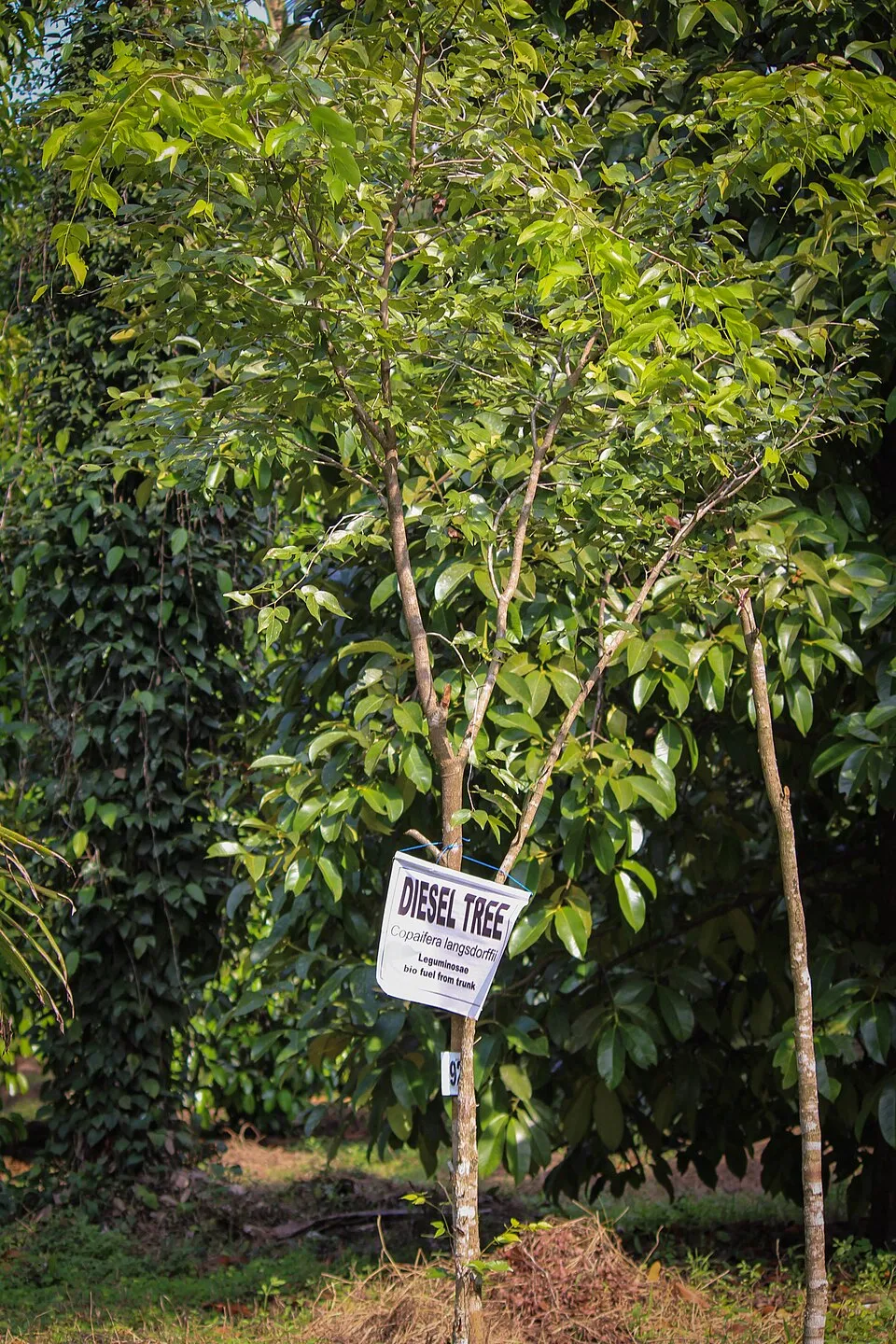
Copaiba, scientifically designated as Copaifera langsdorffii, stands as a majestic arboreal species native to the vibrant Amazonian rainforests and the unique Cerrado biome of central Brazil. This impressive tree can attain considerable heights, often ranging from 15 to 30 meters, with some specimens reaching up to 30 meters and developing a robust, straight trunk that can measure up to 1 meter in diameter.
Its bark is generally smooth to moderately rough, exhibiting shades of gray or brown, and possesses a distinctly fibrous texture when peeled. The canopy of Copaifera langsdorffii is characteristically broadly pyramidal, providing a dense, cooling shade beneath its expansive spread.
The foliage of the Copaiba tree is striking, featuring paripinnate leaves that range from 20 to 40 centimeters in length. Each leaf is composed of 10 to 20 pairs of leaflets, which are typically oval to elliptical in shape, measuring 5 to 10 centimeters long. These leaflets display a glossy, dark green hue on their upper surface, contributing to the tree's lush appearance.
During the rainy season, Copaiba trees produce small, delicate yellowish to pale tan flowers arranged in racemes, which sometimes emit a subtle, pleasant fragrance. Following flowering, the tree develops small fruit pods, each containing 2-4 seeds.
Copaifera langsdorffii thrives in tropical rainforest environments, preferring rich, deep soils and regions with high annual rainfall, although some species are adapted to the drier conditions of the Cerrado. Its geographic distribution spans across tropical South America, with notable presence in Brazil, Argentina, Bolivia, Guyana, Colombia, Peru, and Venezuela. Within the broader genus Copaifera, which encompasses around 35 species, C.
langsdorffii is often used interchangeably with other medicinally valuable species like C. officinalis and C. reticulata due to similar chemical profiles in their oleoresin.
Taxonomically, Copaiba belongs to the vast Fabaceae family, specifically within the subfamily Caesalpinioideae.
Trusted Scientific References
1. Authoritative external sources for Copaifera langsdorffii
1.1 Wikipedia — Copaifera langsdorffii
1.2 Kew POWO (Plants of the World Online)
1.3 PubMed — peer-reviewed research
1.4 NCBI Taxonomy Browser
1.5 GBIF — Global Biodiversity
1.1.Copaiba — Standout Qualities
- ✓Rich in Beta — Caryophyllene — Highest known natural source of this potent anti-inflammatory sesquiterpene.
- ✓Sustainable Harvest — Oleoresin is tapped from living trees without causing harm.
- ✓Broad Spectrum Antimicrobial — Effective against Gram-positive bacteria, including resistant strains.
- ✓Versatile Application — Used internally, topically, and in aromatherapy.
- ✓Amazonian Origin — Native to the Amazon basin and Cerrado biome of South America.
- ✓Traditional Medicine Staple — Long history of use in indigenous and herbal medicine systems.
- ✓Distinct Chemical Profile — Oleoresin and leaf extracts have different sets of active compounds.
- ✓Gastric Protective — Documented anti-ulcerous effects against various gastric damages.
- ✓Wound Healing Accelerator — Promotes collagen synthesis and reduces scarring.
- ✓'Jesuit's Balsam' — Historical name reflecting its early introduction to European medicine.
1.2.Copaiba — Concise Overview
- ✓Amazonian 'Diesel Tree' known for its versatile oleoresin.
- ✓Potent anti-inflammatory and analgesic properties due to beta-caryophyllene.
- ✓Strong antibacterial action, especially against Gram-positive bacteria and MRSA.
- ✓Renowned for accelerating wound healing and protecting the gastric lining.
- ✓Traditionally used for respiratory, urinary, and dermatological conditions.
- ✓Sustainable rainforest resource harvested through tree tapping.
2.Copaiba — Scientific Profile
3.Copaiba — Botanical Stats
4.Copaiba — Morphological Account
5.Copaiba — Where It Grows
6.Copaiba — Ethnobotanical Uses
7.Copaiba — Secondary Metabolites
- ✓Beta-caryophyllene — A sesquiterpene that is a major component, known for its anti-inflammatory, analgesic, and antimicrobial properties, and its interaction with the endocannabinoid system.
- ✓Alpha-humulene — Another sesquiterpene, often found alongside beta-caryophyllene, contributing to anti-inflammatory and potential anticancer effects.
- ✓Copaiferic acids — A group of diterpenes that exhibit antimicrobial and anti-inflammatory activities.
- ✓Germacrene — A sesquiterpene that contributes to the aroma and may have antimicrobial properties.
- ✓Cadinene — A sesquiterpene that is part of the volatile oil, contributing to its scent and potential therapeutic effects.
8.Copaiba — Modern Studies
- ✓Anti-inflammatory — The oleoresin of Copaiba is rich in sesquiterpenes and diterpenes, which are potent anti-inflammatory agents. These compounds work by inhibiting the production of pro-inflammatory cytokines and enzymes like cyclooxygenase (COX) and lipoxygenase (LOX), thereby reducing inflammation in various conditions such as arthritis, inflammatory bowel disease, and skin conditions like eczema and psoriasis.
- ✓Antimicrobial — Copaiba oil exhibits broad-spectrum antimicrobial activity against a range of bacteria, fungi, and even some viruses. Its primary active component, beta-caryophyllene, disrupts bacterial cell membranes and inhibits fungal growth. This makes it useful for treating infections of the skin, respiratory tract, and urinary tract.
- ✓Wound Healing — The anti-inflammatory and antimicrobial properties of Copaiba oil significantly aid in wound healing. It promotes faster tissue regeneration, reduces the risk of infection in open wounds, and helps to minimize scarring. It can be applied topically to cuts, burns, and sores.
- ✓Analgesic — Copaiba oil possesses significant pain-relieving properties, primarily attributed to its anti-inflammatory actions and the presence of compounds that interact with the endocannabinoid system. It can help alleviate pain associated with inflammatory conditions, muscle aches, and nerve pain.
- ✓Antioxidant — The oleoresin contains various antioxidants that help neutralize free radicals, which are unstable molecules that can cause cellular damage and contribute to aging and chronic diseases. This antioxidant activity protects cells from oxidative stress.
- ✓Gastroprotective — Studies suggest that Copaiba oil can protect the stomach lining from damage caused by factors like alcohol and NSAIDs. It achieves this by increasing mucus production and reducing acid secretion, thus preventing ulcers.
- ✓Anticancer Potential — Preliminary research indicates that certain compounds in Copaiba may possess anticancer properties, showing cytotoxic effects on cancer cells and inhibiting their proliferation in laboratory settings. Further research is needed to confirm these effects in humans.
- ✓Respiratory Support — Copaiba oil can be used to alleviate symptoms of respiratory ailments like bronchitis, asthma, and coughs. Its expectorant properties help to loosen mucus, while its anti-inflammatory and antimicrobial actions soothe the airways and fight infection.
- ✓Skin Health — Beyond wound healing, Copaiba is beneficial for various skin concerns. Its anti-inflammatory and antimicrobial effects can help manage acne, reduce redness, and soothe irritated skin. It is also used in cosmetic formulations for its rejuvenating properties.
- ✓Urinary Tract Health — The antimicrobial properties of Copaiba make it effective against urinary tract infections (UTIs). It can help eliminate bacteria and reduce inflammation in the urinary tract, providing relief from discomfort.
- ✓Antispasmodic — Copaiba oil may help relax smooth muscles, making it useful for relieving spasms associated with conditions like irritable bowel syndrome (IBS) and menstrual cramps.
- ✓Antiviral Activity — Emerging research suggests that Copaiba oil may have activity against certain viruses, though more studies are required to fully understand its antiviral potential.
- ✓Insect Repellent — The strong aroma of Copaiba oil can act as a natural insect repellent, deterring mosquitoes and other biting insects.
8.1.Copaiba — Indications & Uses
9.Copaiba — Risk Profile
9.1.Copaiba — Possible Adverse Reactions
- ✓When used topically, Copaiba oil can cause skin irritation or allergic reactions in sensitive individuals.
- ✓Ingesting large amounts may lead to gastrointestinal upset, such as nausea or diarrhea.
- ✓It is always advisable to perform a patch test before widespread topical application and to consult with a healthcare professional before internal use.
9.2.Copaiba — Risk Assessment
- ✓Copaiba oil is generally considered safe for topical use when diluted with a carrier oil. Oral consumption should be approached with caution, and it is recommended to use therapeutic-grade oils from reputable sources.
- ✓Pregnant or breastfeeding women, and individuals with pre-existing medical conditions, should avoid use or consult a healthcare provider before use.
10.Copaiba — Preparation & Dosage
- ✓Oral Ingestion (Resin) — Typically 5-15 drops of the oleoresin, mixed with honey or water, taken 2-3 times daily for internal inflammation, urinary tract issues, or gastric protection.
- ✓Topical Application (Resin) — Diluted oleoresin is applied directly to affected skin areas for wounds, skin sores, insect bites, pain, and inflammation.
- ✓Gargle/Mouthwash — A few drops of resin (e.g., 15 drops) in warm water can be used as an antiseptic gargle for sore throats and tonsillitis.
- ✓Inhalation — Vaporization of the oleoresin in diffusers or steam inhalations for respiratory support, such as for bronchitis or sinusitis.
- ✓Gel Capsules — Commercially available in gel capsules for convenient internal administration, particularly for systemic anti-inflammatory benefits.
- ✓Balms and Ointments — Incorporated into topical preparations for localized pain relief, wound care, and skin conditions due to its soothing and healing properties.
- ✓Traditional Plasters — Used in traditional medicine systems, mixed into a plaster for external application to treat conditions like leishmaniasis or localized inflammation.
11.Copaiba — Growing Guide
- ✓Preferred Climate — Thrives in tropical rainforest environments with high annual rainfall and consistent warm temperatures.
- ✓Soil Requirements — Prefers rich, deep, well-drained soils, often found in alluvial plains or humid forest floors.
- ✓Propagation — Can be propagated from seeds, which are typically collected from mature fruit pods.
- ✓Sustainable Harvesting — Oleoresin is harvested by tapping or drilling into the trunk, similar to maple syrup collection, allowing the tree to continue producing for many years.
- ✓Yield — A single mature Copaiba tree can sustainably yield approximately 40 liters of oleoresin annually, making it a valuable non-timber forest product.
- ✓Light Exposure — Requires full sun to partial shade, with young trees benefiting from some canopy protection.
- ✓Water Needs — High water requirements, especially during establishment and dry periods, mimicking its native rainforest conditions.
Reviewed by the Flora Medical Global Botanical Review Panel
Multi-disciplinary editorial group · Botany · Ethnobotany · Herbal-medicine literature
Who reviewed this: This page was checked by the Flora Medical Global Botanical Review Panel — an in-house editorial group of botany graduates, ethnobotany researchers, and horticulture practitioners who collectively maintain our 7,000+ plant encyclopedia. Meet the team.
Our 4-step verification process
1. Taxonomic verification
Scientific names and synonyms cross-checked against Kew POWO, World Flora Online, and The Plant List.
2. Phytochemical & medicinal cross-reference
Active compounds, traditional uses, and reported activities are cross-referenced with PubMed, USDA Dr. Duke's database, and peer-reviewed ethnobotanical literature.
3. Conservation & distribution check
Distribution, ecology, and conservation status confirmed against GBIF occurrence records and the IUCN Red List.
4. Editorial & safety review
Every entry passes an editorial pass for clarity, originality, and safety notices (toxicity, contraindications, dosage caveats) before publication.
Last reviewed:
Important medical disclaimer: This content is for educational and research purposes only. It is not medical advice and is not a substitute for consultation with a licensed healthcare provider. Do not use any herb to self-treat a medical condition without professional guidance.
Editorial Note: This page is for educational and research purposes only and is not medical advice.
Written by: Flora Medical Global Editorial Team
Reviewed by: Flora Medical Global Botanical Review Panel
Last Updated: June 16, 2026





Copaiba — Comments & Community Reviews
Rate this plant