

Medical Disclaimer: This content is for educational purposes only. It is not medical advice. Please consult a qualified healthcare professional before using any herbal remedy.
Safety Overview
1.Curry Plant — Botanical Snapshot
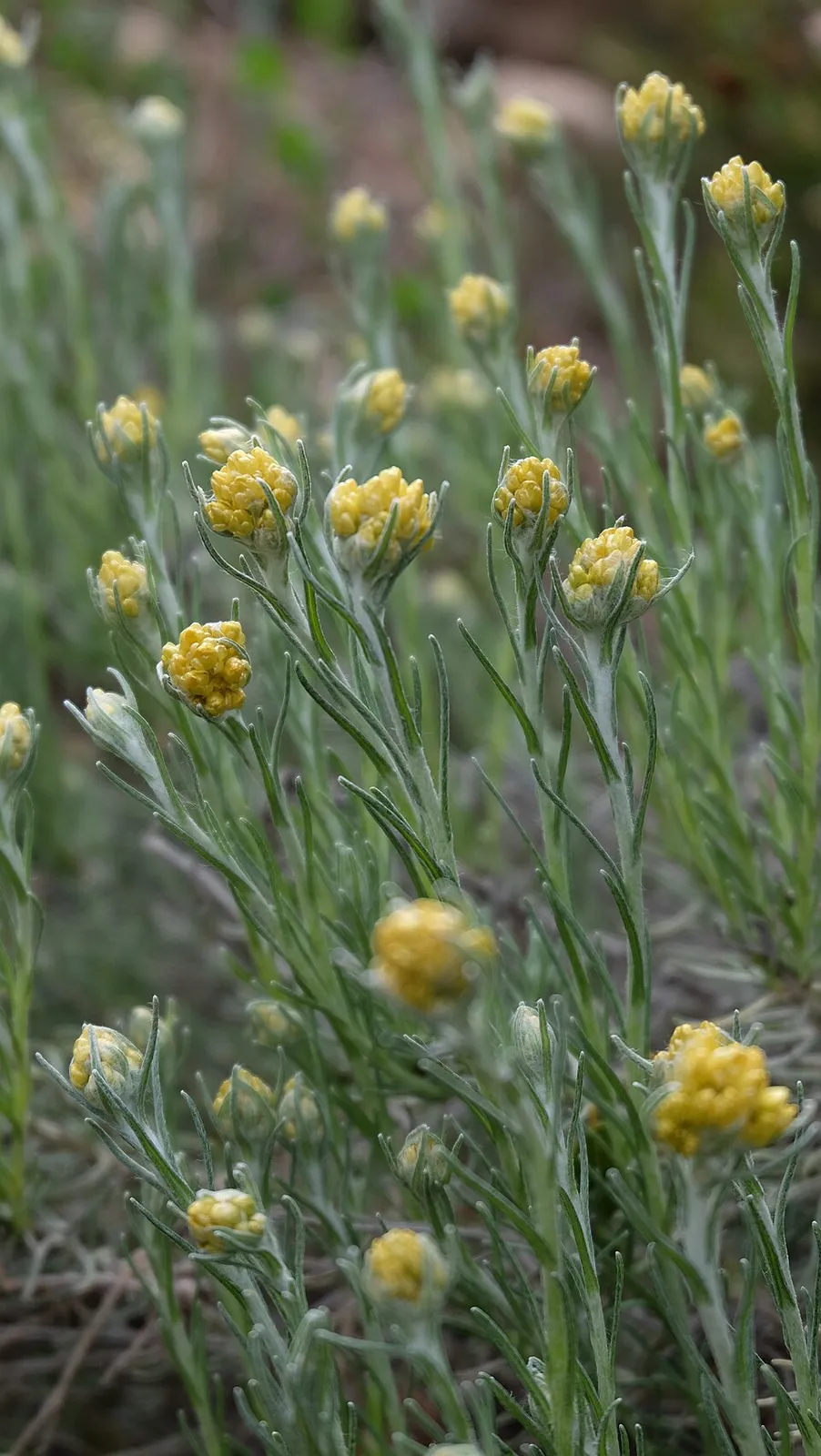
The Curry Plant, botanically known as Helichrysum italicum, is a distinguished member of the Asteraceae family, commonly recognized for its unique aroma and therapeutic properties. This tender perennial shrub is native to the sun-drenched coastal and mountainous regions of the Mediterranean, thriving across Southern Europe, North Africa, and parts of Western Asia. It typically grows to a height of about 2 feet (60 cm) and can spread up to 3 feet (90 cm) wide, forming a dense, rounded bush. Its morphology is characterized by slender, woody stems that are branched and covered with a fine, silvery-grey down, giving the plant a soft, almost ethereal appearance. The leaves are linear to lanceolate, approximately 1-2 inches long, and possess a distinctive woolly texture due to numerous trichomes, which help the plant conserve water in arid environments. These leaves emit a strong, curry-like fragrance when bruised, hence its common name, though it is not botanically related to the culinary curry tree (Murraya koenigii).
During late spring and summer, Helichrysum italicum produces clusters of small, globular, bright yellow flower heads. These flowers are renowned for retaining their color and shape long after being picked and dried, earning the plant the evocative common names 'Immortelle' and 'Everlasting'. The inflorescences are typically arranged in corymbs, adding to the plant's ornamental appeal. The root system is fibrous, adapted to anchor the plant firmly in shallow, well-drained soils. Ecologically, the Curry Plant prefers full sun exposure and well-drained, often sandy or loamy soils with an alkaline to neutral pH. It is remarkably drought-tolerant, making it an excellent candidate for xeriscaping.
Historically and culturally, Helichrysum italicum has held significance beyond its medicinal uses. Its 'everlasting' flowers have been traditionally used in dried arrangements, wreaths, and potpourris, admired for their enduring beauty and strong, pleasant aroma. The essential oil, extracted primarily from its vibrant yellow flowers, has also been prized in perfumery and aromatherapy for centuries, contributing to its rich cultural heritage in Mediterranean communities. Its unique fragrance and resilient nature have cemented its place as a cherished botanical resource. Trusted Scientific References Authoritative external sources for Helichrysum italicum : Wikipedia — Helichrysum italicum Kew POWO (Plants of the World Online) PubMed — peer-reviewed research NC ...[CURRENT TEXT EXISTS: 2546 chars]
1.1.Curry Plant — Highlights
- ✓Everlasting Flowers — Its vibrant yellow flowers retain their color and shape remarkably well after drying, earning it the name 'Immortelle'.
- ✓Curry — like Aroma — The foliage emits a distinct, pungent aroma reminiscent of curry spice when bruised, though it is not a culinary spice.
- ✓Silvery — Grey Foliage — The leaves are covered in fine, silvery hairs, giving the plant a unique visual texture and helping it conserve water.
- ✓Drought — Tolerant — Highly adapted to arid conditions, requiring minimal water once established, making it ideal for xeriscaping.
- ✓Deer — Resistant — Its strong aroma and taste naturally deter deer and other common garden pests.
- ✓Mediterranean Native — Originates from the coastal and mountainous regions of Southern Europe and North Africa.
- ✓Essential Oil Source — Prized for its highly valued essential oil, extracted from the flowers, known for its therapeutic properties.
- ✓Skin Healing Properties — Exceptionally effective for wound healing, scar reduction, and alleviating bruises (hematomas).
- ✓Anti — inflammatory Powerhouse — Contains compounds that significantly reduce inflammation in the body and on the skin.
- ✓Natural Anticoagulant — Exhibits mild blood-thinning properties, contributing to its use in circulatory support.
- ✓Versatile Culinary Herb — Fresh leaves can be used sparingly to flavor various dishes, adding a unique Mediterranean touch.
- ✓Aromatherapy Favorite — The essential oil is widely used in aromatherapy for its calming, stress-reducing, and uplifting effects.
- ✓Asteraceae Family Member — Belongs to the large and diverse daisy family, sharing characteristics with many other medicinal plants.
- ✓Tender Perennial — Grows as a perennial in warmer climates but is frost-tender and often treated as an annual or overwintered indoors in colder zones.
- ✓Xeriscaping Plant — Its low water requirements and aesthetic appeal make it an excellent choice for water-wise landscaping.
1.2.Curry Plant — Quick Summary
- ✓Primary Use — Renowned for its potent anti-inflammatory, wound healing, and skin regenerating properties.
- ✓Key Compound — Contains unique diketones (italidiones) along with a rich profile of flavonoids and terpenes.
- ✓Traditional System — Valued in Mediterranean folk medicine and increasingly in Western herbalism for diverse applications.
- ✓Botanical Family — Belongs to the Asteraceae family, also known as the daisy or sunflower family.
- ✓Native Region — Indigenous to the dry, sunny regions of the Mediterranean Basin.
- ✓Key Action — Offers significant antioxidant, antimicrobial, and mild anticoagulant benefits.
- ✓Distinctive Feature — Characterized by its silvery-grey foliage, everlasting yellow flowers, and strong curry-like aroma.
- ✓Safety Note — Potential for increased bleeding risk when combined with anticoagulant medications.
2.Curry Plant — Nomenclature & Classification
3.Curry Plant — Vital Statistics
4.Curry Plant — Botanical Description
5.Curry Plant — Native Range & Habitat
6.Curry Plant — Folk Medicine Applications
7.Curry Plant — Key Phytochemicals
- ✓Flavonoids — (e.g., Naringenin, Apigenin, Luteolin, Quercetin, Kaempferol) These are potent antioxidants and anti-inflammatory agents, contributing to the plant's protective and soothing effects on the body.
- ✓Terpenoids (Monoterpenes) — (e.g., alpha-Pinene, beta-Pinene, Limonene, Linalool, Camphene) Known for their antiseptic, expectorant, and stimulating properties, these compounds contribute to the essential oil's aroma and therapeutic actions.
- ✓Terpenoids (Sesquiterpenes) — (e.g., gamma-Curcumene, beta-Caryophyllene, alpha-Humulene, Nerol) These compounds are largely responsible for the anti-inflammatory, analgesic, and antimicrobial actions, particularly beneficial for skin healing.
- ✓Diketones — (e.g., Italidiones I, II, III, IV) Unique to Helichrysum, these compounds are highly prized for their exceptional anti-hematoma and tissue-regenerating properties, playing a key role in bruise and scar reduction.
- ✓Phenolic Acids — (e.g., Caffeic acid, Rosmarinic acid, Chlorogenic acid) Powerful antioxidants with anti-inflammatory and antimicrobial activities, supporting cellular defense and overall health.
- ✓Coumarins — (e.g., Scopoletin, Umbelliferone) These compounds exhibit anticoagulant, anti-inflammatory, and antispasmodic properties, contributing to cardiovascular and muscular relaxation benefits.
- ✓Phthalides — (e.g., Ligustilide) While less prominent, certain phthalides may contribute to antispasmodic and anti-inflammatory effects within the plant's complex chemistry.
- ✓Triterpenes — (e.g., Ursolic acid, Oleanolic acid) These are recognized for their anti-inflammatory, hepatoprotective (liver-protective), and potential anticarcinogenic activities.
- ✓Phytosterols — (e.g., Beta-sitosterol) Plant sterols that can modulate immune responses, reduce inflammation, and may have cholesterol-lowering effects.
- ✓Esters — (e.g., Neryl acetate, Geranyl acetate) These compounds contribute significantly to the essential oil's calming and antispasmodic qualities, enhancing its use in aromatherapy.
- ✓Alcohols — (e.g., Nerol, Geraniol) Possess antibacterial, antifungal, and often pleasant aromatic properties, supporting the plant's antimicrobial defense.
- ✓Hydrocarbons — (e.g., Germacrene D, alpha-Copaene) These volatile compounds contribute to the essential oil's complex fragrance and may possess insecticidal or antimicrobial properties.
- ✓Chalcones — (e.g., Arzanol) A specific type of flavonoid found in Helichrysum, known for its potent anti-inflammatory and antioxidant activities, particularly relevant in skin conditions.
8.Curry Plant — Evidence-Based Benefits
- ✓Anti-inflammatory Action — Helichrysum italicum exhibits potent anti-inflammatory effects attributed to its diverse phytochemical profile, including flavonoids and italidiones. It is traditionally used in Western herbalism for conditions like arthritis, muscle aches, and various skin inflammations, helping to reduce swelling and discomfort by modulating inflammatory pathways.
- ✓Antioxidant Support — Rich in polyphenolic compounds, the Curry Plant provides significant antioxidant activity, neutralizing harmful free radicals that contribute to cellular damage and premature aging. This protective action supports overall cellular health and can help prevent oxidative stress-related diseases.
- ✓Antimicrobial Properties — The essential oil and extracts of Curry Plant possess broad-spectrum antimicrobial activity against bacteria, fungi, and potentially viruses. This makes it valuable for treating skin infections, minor cuts, wounds, and as a natural preservative, inhibiting the growth of pathogens.
- ✓Wound Healing and Skin Regeneration — Renowned for its ability to promote skin repair, Helichrysum italicum is a powerful ally for wound healing, reducing the appearance of scars, and alleviating hematomas (bruises). Its compounds stimulate cellular regeneration and reduce inflammation, accelerating the healing process for burns, cuts, and post-operative scars.
- ✓Anticoagulant Effects — Certain constituents in Curry Plant, particularly from its essential oil, have demonstrated mild anticoagulant properties, potentially helping to thin the blood. This effect may contribute to cardiovascular health by reducing the risk of clot formation, though it requires careful consideration.
- ✓Respiratory Health — Traditionally, Curry Plant has been employed to address respiratory ailments such as coughs and fevers. Its anti-inflammatory and expectorant properties can help soothe irritated airways, reduce congestion, and support the body's natural defenses against respiratory challenges.
- ✓Digestive Support — Recent research suggests that Helichrysum italicum infusion may possess prebiotic activities, positively influencing gut microbiota and reducing inflammatory markers like IL-1β. This indicates its potential to promote a healthy digestive system and alleviate gut imbalances.
- ✓Pain Relief (Analgesic) — Through its significant anti-inflammatory actions, Curry Plant can help mitigate pain associated with inflammatory conditions, muscle soreness, and injuries. It offers a natural approach to discomfort management, particularly when applied topically.
- ✓Stress and Anxiety Reduction — The calming aroma of Curry Plant essential oil makes it a popular choice in aromatherapy for reducing anxiety and stress. Diffusing or topically applying diluted oil can promote relaxation and emotional well-being.
- ✓Antifungal Activity — Its fungicidal properties are beneficial for treating various fungal skin conditions, including athlete's foot and other superficial mycoses. The plant's compounds can inhibit fungal growth and alleviate associated symptoms.
- ✓Astringent Action — When applied topically, Curry Plant acts as an astringent, helping to tone the skin, reduce pore size, and control excess oil production. This makes it beneficial for improving skin texture and managing oily or acne-prone skin.
- ✓Insecticidal and Repellent — Beyond human health, the plant is a natural repellent against certain pests, including deer and mosquitoes. Its strong aromatic compounds deter unwanted insects and animals, contributing to its ecological role and potential for natural pest control.
- ✓Anticarcinogenic Potential — Preliminary studies indicate that Helichrysum italicum extracts and essential oils may exhibit anticarcinogenic activities, with compounds potentially inhibiting cancer cell growth. Further research is needed to fully understand these complex mechanisms.
- ✓Antiparasitic Effects — Research also points to potential antiparasitic effects, suggesting its utility in traditional medicine systems against certain internal and external parasites. This broad-spectrum action highlights its versatility as a medicinal agent.
- ✓Circulatory Enhancement — Beyond its anticoagulant properties, Curry Plant may support overall circulatory health by reducing inflammation in blood vessels and promoting healthy blood flow, contributing to general cardiovascular well-being.
8.1.Curry Plant — Indications & Uses
9.Curry Plant — Safety Considerations
9.1.Curry Plant — Possible Adverse Reactions
- ✓Skin Irritation/Sensitization — Topical application of undiluted Curry Plant essential oil can cause skin irritation, redness, or allergic reactions, especially in sensitive individuals. Always dilute with a carrier oil.
- ✓Allergic Reactions — Individuals with known allergies to plants in the Asteraceae family (e.g., ragweed, marigolds, daisies) may experience cross-reactivity and allergic responses to Curry Plant.
- ✓Increased Bleeding Risk — Due to its mild anticoagulant properties, Curry Plant may increase the risk of bleeding or bruising, particularly when taken internally or in high doses.
- ✓Gastrointestinal Upset — Internal consumption of Curry Plant extracts or essential oil, especially in concentrated forms, may lead to mild gastrointestinal discomfort, nausea, or diarrhea in some individuals.
- ✓Hypotension — There is a theoretical possibility that Curry Plant could contribute to a lowering of blood pressure, which might be a concern for individuals already on hypotensive medications.
- ✓Drowsiness or Sedation — In some individuals, particularly with aromatherapy or internal use, the calming properties of Curry Plant might induce drowsiness or a mild sedative effect.
- ✓Liver/Kidney Strain — While generally considered safe in appropriate doses, excessive or prolonged internal use of unpurified extracts could potentially strain the liver or kidneys, especially in individuals with pre-existing conditions.
- ✓Photosensitivity — Although rare, some essential oils can increase skin sensitivity to sunlight. Users should monitor for any increased sun sensitivity when applying topically.
9.2.Curry Plant — Clinical Safety Notes
- ✓Drug Interactions — Curry Plant should be used with caution by individuals taking anticoagulant or antiplatelet medications (e.g., Warfarin, Aspirin) due to its potential blood-thinning effects, which could increase the risk of bleeding.
- ✓Pregnancy and Lactation — Due to insufficient safety data, the use of Curry Plant, particularly its essential oil and concentrated extracts, is generally not recommended for pregnant or breastfeeding women. Consult a healthcare provider.
- ✓Children — For pediatric use, especially with essential oils, always consult a qualified healthcare professional. Lower dosages and careful dilution are crucial, and internal use is generally contraindicated.
- ✓Asteraceae Allergy — Individuals with known allergies to other plants in the Asteraceae family should avoid Curry Plant due to the risk of allergic reactions and cross-sensitivity.
- ✓Prior to Surgery — Discontinue use of Curry Plant supplements or essential oil at least two weeks before any scheduled surgery due to its potential to affect blood clotting.
- ✓Liver/Kidney Conditions — Individuals with pre-existing liver or kidney conditions should exercise caution and consult a physician before using Curry Plant, especially for internal applications.
- ✓Internal Use of Essential Oil — Helichrysum italicum essential oil is highly concentrated and should generally not be ingested without the guidance of a qualified medical herbalist or aromatherapist due to potential toxicity.
- ✓Quality Control — Always source Curry Plant products from reputable suppliers to ensure purity, potency, and absence of contaminants. Adulterated or improperly processed products can pose health risks.
10.Curry Plant — Usage Guide
- ✓Herbal Tea Infusion — To prepare a tea, steep 1-2 teaspoons of dried Curry Plant flowers or leaves in 8 ounces of hot water for 5-10 minutes. Strain and drink up to three times daily for respiratory support, digestive ease, or general well-being.
- ✓Essential Oil Topical Application — For skin conditions, dilute 2-5 drops of Helichrysum italicum essential oil in 1 teaspoon of a carrier oil (e.g., jojoba, almond, or olive oil). Gently massage onto affected areas such as bruises, scars, inflamed skin, or minor cuts. Perform a patch test first.
- ✓Aromatherapy Diffusion — Add 3-5 drops of Curry Plant essential oil to an ultrasonic diffuser to fill your space with its calming and uplifting aroma. This method is effective for reducing stress, anxiety, and supporting respiratory function.
- ✓Culinary Flavoring — Fresh leaves of Curry Plant can be finely chopped and added sparingly to salads, stews, meat, fish, or vegetable dishes to impart a unique, savory flavor. Use in moderation as the taste can be quite strong.
- ✓Carrier Oil Blends for Massage — Create a therapeutic massage oil by blending 10-15 drops of Helichrysum italicum essential oil with 1 ounce (30 ml) of a beneficial carrier oil. Use for soothing sore muscles, joints, or promoting circulation.
- ✓Compresses and Poultices — For localized inflammation or bruising, soak a clean cloth in a warm infusion of Curry Plant (prepared as tea) or a diluted essential oil solution. Apply directly to the affected area for 15-20 minutes.
- ✓Bath Additive — Add 5-10 drops of Curry Plant essential oil, first mixed with a dispersant like Epsom salts or a cup of milk, to warm bathwater. This can provide a relaxing experience and deliver skin-soothing benefits.
- ✓Extracts and Tinctures — Standardized liquid extracts or tinctures can be prepared using alcohol or glycerin. Follow product-specific dosage instructions, usually a few drops diluted in water, for internal systemic support. Always consult a qualified practitioner for internal use.
- ✓Infused Oils — Steep dried Curry Plant flowers in a carrier oil (like olive or sunflower oil) for several weeks in a sunny spot to create an infused oil. This can then be used directly on the skin as a moisturizer or for minor skin irritations.
11.Curry Plant — How to Grow
- ✓Climate and Hardiness — Curry Plant thrives in USDA hardiness zones 7-10. It is a tender perennial and should be protected from frost, as it is not tolerant of freezing temperatures.
- ✓Sunlight Requirements — This plant demands full sunlight, ideally receiving at least 6-8 hours of direct sun per day. Ample light is crucial for robust growth and optimal essential oil production.
- ✓Soil Preferences — Helichrysum italicum prefers well-drained, sandy or loamy soils. It is adaptable to various soil types but will not tolerate heavy, waterlogged conditions. An alkaline to neutral pH (6.5-8.0) is ideal.
- ✓Watering Regime — Curry Plant is highly drought-tolerant and requires minimal watering once established. Water sparingly, allowing the soil to dry out completely between waterings to prevent root rot, making it suitable for xeriscaping.
- ✓Planting and Propagation — Seeds can be sown indoors in February or March and transplanted outdoors after the last frost. It can also be propagated from 2-inch (5 cm) cuttings taken from established plants in spring or early summer.
- ✓Pruning and Maintenance — Prune in spring to remove old wood and maintain the plant's shape, encouraging bushier growth. In late fall, cut the plant back to about 3 inches (7.5 cm) above ground level as it enters dormancy, especially in colder zones.
- ✓Pest and Disease Resistance — Curry Plant is naturally resistant to many common pests, including deer. Its aromatic oils act as a deterrent, and it generally suffers from few diseases, provided it has good drainage.
- ✓Location and Shelter — Choose a location that is sheltered from strong winds and excessive wetness, which can damage the delicate foliage and promote fungal issues.
- ✓Fertilization — This plant is adapted to nutrient-poor soils and generally does not require heavy fertilization. A light application of a balanced, slow-release fertilizer in spring can be beneficial but is often not necessary.
- ✓Harvesting — For culinary use, snip fresh leaves as needed. For essential oil extraction, harvest the flower heads when they are fully open but before they begin to fade, typically in late spring to early summer.
Reviewed by the Flora Medical Global Botanical Review Panel
Multi-disciplinary editorial group · Botany · Ethnobotany · Herbal-medicine literature
Who reviewed this: This page was checked by the Flora Medical Global Botanical Review Panel — an in-house editorial group of botany graduates, ethnobotany researchers, and horticulture practitioners who collectively maintain our 7,000+ plant encyclopedia. Meet the team.
Our 4-step verification process
1. Taxonomic verification
Scientific names and synonyms cross-checked against Kew POWO, World Flora Online, and The Plant List.
2. Phytochemical & medicinal cross-reference
Active compounds, traditional uses, and reported activities are cross-referenced with PubMed, USDA Dr. Duke's database, and peer-reviewed ethnobotanical literature.
3. Conservation & distribution check
Distribution, ecology, and conservation status confirmed against GBIF occurrence records and the IUCN Red List.
4. Editorial & safety review
Every entry passes an editorial pass for clarity, originality, and safety notices (toxicity, contraindications, dosage caveats) before publication.
Last reviewed:
Important medical disclaimer: This content is for educational and research purposes only. It is not medical advice and is not a substitute for consultation with a licensed healthcare provider. Do not use any herb to self-treat a medical condition without professional guidance.
Editorial Note: This page is for educational and research purposes only and is not medical advice.
Written by: Flora Medical Global Editorial Team
Reviewed by: Flora Medical Global Botanical Review Panel
Last Updated: June 16, 2026





Curry Plant — Comments & Community Reviews
Rate this plant