
Medical Disclaimer: This content is for educational purposes only. It is not medical advice. Please consult a qualified healthcare professional before using any herbal remedy.
Safety Overview
1.Devil's Tree — At a Glance
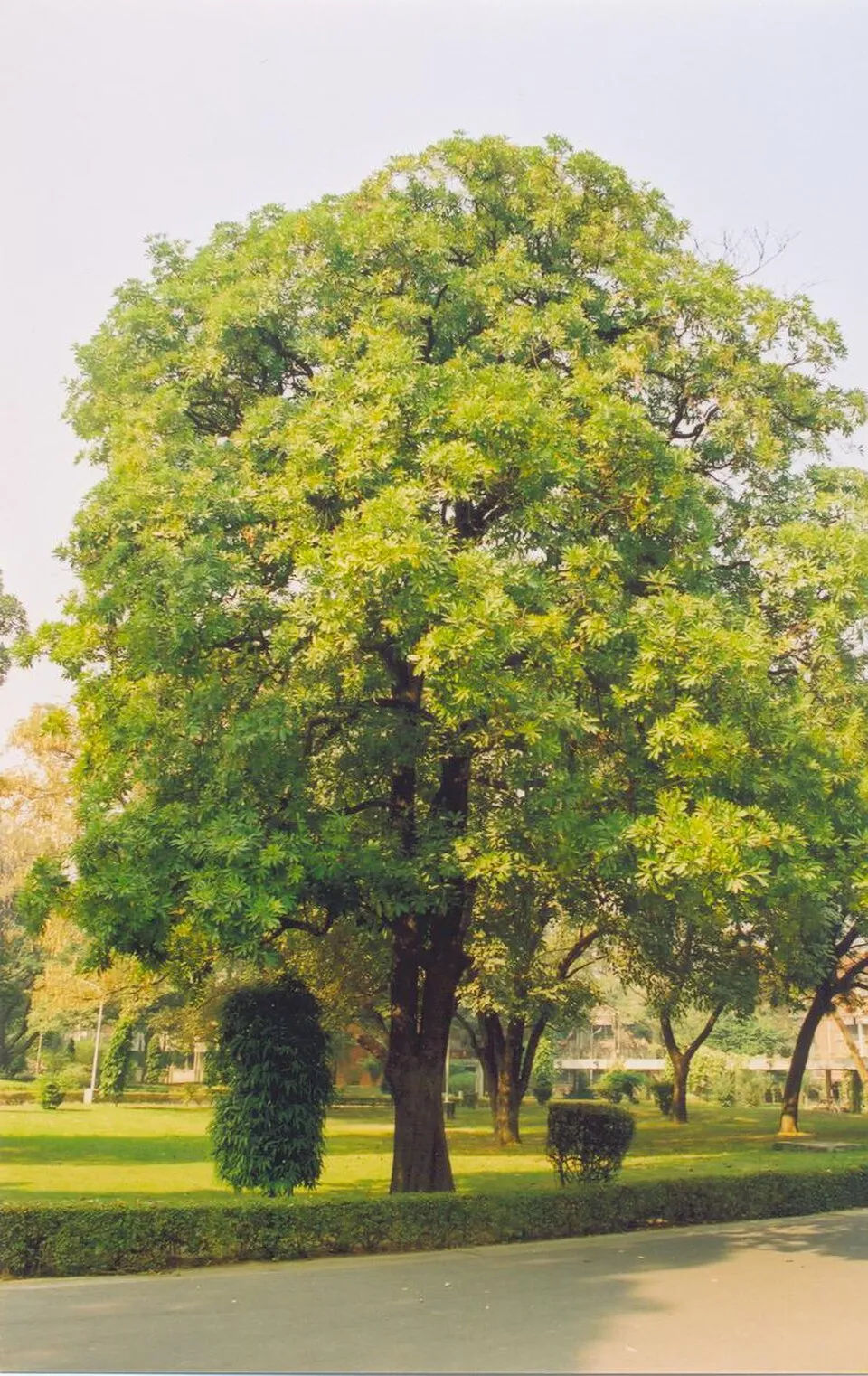
Alstonia scholaris, widely recognized as Devil's Tree or Blackboard Tree, is a magnificent evergreen species belonging to the Apocynaceae family. This towering tree can achieve impressive heights of up to 40 meters, occasionally even reaching 60 meters, and is distinguished by its straight trunk, often exhibiting a fluted appearance due to prominent buttressing roots. The bark is typically gray to pale gray, punctuated by numerous lenticels, and famously exudes a milky white sap when incised or damaged, a characteristic shared by many members of its family. Its glossy dark green leaves, paler on the underside, are arranged in distinctive whorls of four to eight.
These leaves are typically obovate to elliptic, gracefully tapering towards the base and featuring rounded tips, supported by short petioles. The tree thrives across a broad spectrum of tropical and subtropical environments, flourishing in diverse habitats such as lush rainforests, expansive savannahs, and along meandering riverbanks, from sea level up to altitudes exceeding 1,000 meters. Native to the Indian subcontinent and extending across Southeast Asia to northern Australia and parts of China, Alstonia scholaris bursts into bloom with clusters of small, intensely fragrant greenish-white flowers. These nocturnal-pollinator-attracting blossoms give way to slender, papery follicles, which can grow up to 30 centimeters long, containing numerous flat, light-brown seeds equipped with hairy tufts for efficient wind dispersal.
Historically, its lightweight yet durable timber was utilized for making blackboards in Southeast Asia, hence its species epithet 'scholaris'. Culturally, the Devil's Tree holds significant reverence, particularly in Jainism, where it is considered a sacred tree, and has been a cornerstone in various traditional medicine systems like Ayurveda for its profound therapeutic properties, underscoring its dual ecological and ethnomedicinal importance.
Trusted Scientific References
1. Authoritative external sources for Alstonia scholaris
1.1 Wikipedia — Alstonia scholaris
1.2 Kew POWO (Plants of the World Online)
1.3 PubMed — peer-reviewed research
1.4 NCBI Taxonomy Browser
1.5 GBIF — Global Biodiversity
1.1.Devil's Tree — Distinguishing Points
- ✓Majestic evergreen tree — Majestic evergreen tree reaching up to 40 meters tall.
- ✓Distinctive milky white — Distinctive milky white sap exuded from all parts when damaged.
- ✓Leaves arranged in — Leaves arranged in characteristic whorls of four to eight.
- ✓Produces small, highly fragrant greenish — white flowers.
- ✓Fruits are long, — Fruits are long, slender, papery follicles with hairy seeds.
- ✓Native to a — Native to a wide range from Pakistan to Northern Australia.
- ✓Bark is the — Bark is the primary medicinal part, rich in potent alkaloids.
- ✓Revered in traditional — Revered in traditional medicine systems like Ayurveda and culturally significant in Jainism.
- ✓Known for its — Known for its bitter taste, a key indicator of its alkaloid content.
- ✓Timber historically used — Timber historically used for making blackboards, hence 'scholaris'.
1.2.Devil's Tree — Quick Summary
- ✓Alstonia scholaris, or Devil's Tree, is a large evergreen known for its medicinal bark.
- ✓Rich in indole alkaloids, notably echitamine, responsible for its therapeutic actions.
- ✓Traditionally used in Ayurveda for fever, malaria, diarrhea, and inflammatory conditions.
- ✓Exhibits significant antipyretic, anti-malarial, anti-inflammatory, and anti-diarrheal properties.
- ✓The plant is considered toxic; internal use requires strict professional supervision.
- ✓Culturally significant, also known as the Blackboard Tree due to historical timber use.
2.Devil's Tree — Scientific Identity
3.Devil's Tree — Fact Sheet
4.Devil's Tree — Physical Description
5.Devil's Tree — Origin & Spread
6.Devil's Tree — Traditional Uses
7.Devil's Tree — Phytochemistry
- ✓Indole Alkaloids — A prominent class, including ditamine, echitamine, echitenine, alstonine, and alstonidine, which are responsible for many of the plant's significant pharmacological activities, particularly its anti-malarial and anti-cancer properties.
- ✓Monoterpene Indole Alkaloids — Specific alkaloids like echitamine are well-studied for their cytotoxic, anti-malarial, and antibacterial effects, acting via various cellular mechanisms.
- ✓Triterpenoids — Compounds such as lupeol and ursolic acid derivatives are present, contributing to the plant's anti-inflammatory, antioxidant, and potential anti-cancer activities.
- ✓Flavonoids — These phenolic compounds possess antioxidant and anti-inflammatory properties, supporting overall cellular health and mitigating oxidative stress.
- ✓Phenolic Acids — Including gallic acid and caffeic acid, which contribute to the plant's antioxidant capacity and may play a role in its antimicrobial effects.
- ✓Steroids — Phytosterols are found, which can have anti-inflammatory and cholesterol-lowering properties.
- ✓Saponins — These glycosides may contribute to the plant's expectorant and immunomodulatory effects, though their specific roles are less defined than alkaloids.
- ✓Tannins — Present in the bark, tannins provide astringent properties, contributing to its traditional use in treating diarrhea and wound healing by promoting tissue contraction and acting as antiseptics.
- ✓Glycosides — Various glycosidic compounds are present, which can have diverse biological activities depending on their aglycone structure.
- ✓Resins — Contribute to the overall chemical complexity and traditional uses, often associated with antimicrobial and protective properties.
8.Devil's Tree — Scientific Evidence
- ✓Antipyretic — Traditionally utilized in Ayurvedic medicine, Alstonia scholaris bark decoctions are known for their ability to significantly reduce fever and alleviate associated symptoms, potentially through modulation of inflammatory pathways.
- ✓Anti-malarial — The bark contains potent alkaloids such as echitamine and alstonine, which have demonstrated significant anti-plasmodial activity, making it a traditional remedy for malaria symptoms.
- ✓Anti-diarrheal — Extracts from the Devil's Tree bark have been historically employed to manage diarrhea and dysentery, believed to exert their effects by inhibiting gut motility and possessing antimicrobial properties against intestinal pathogens.
- ✓Anti-inflammatory — Various compounds within Alstonia scholaris, including certain alkaloids and triterpenoids, exhibit anti-inflammatory actions, which may contribute to pain relief and reduction of swelling in traditional applications.
- ✓Analgesic — The plant's extracts are traditionally used to mitigate pain, suggesting the presence of compounds that interact with pain perception pathways.
- ✓Hepatoprotective — Preliminary studies suggest that constituents of Alstonia scholaris may offer protective effects on liver cells, helping to safeguard against damage from toxins and promoting liver health.
- ✓Wound Healing — Topical applications derived from the bark and leaves are traditionally used to accelerate the healing of wounds, ulcers, and skin infections, likely due to antimicrobial and regenerative properties.
- ✓Immunomodulatory — Research indicates that certain compounds in Alstonia scholaris may influence immune responses, potentially enhancing the body's defense mechanisms.
- ✓Anti-hypertensive — Traditional systems sometimes employ Alstonia scholaris for managing high blood pressure, with some research exploring its potential vasodilatory effects.
- ✓Anti-cancer Potential — Several alkaloids from Alstonia scholaris have shown cytotoxic activity against various cancer cell lines in preclinical studies, positioning it as an area of ongoing pharmaceutical interest.
- ✓Anti-asthmatic — In some traditional practices, the plant is used to relieve symptoms of asthma and other respiratory conditions, possibly through bronchodilatory effects.
- ✓Anti-diabetic — Emerging research explores the potential of Alstonia scholaris extracts to help regulate blood glucose levels, suggesting a role in metabolic health.
8.1.Devil's Tree — Conditions Traditionally Used For
9.Devil's Tree — Safety Considerations
9.1.Devil's Tree — Possible Adverse Reactions
- ✓Gastrointestinal Upset — May cause nausea, vomiting, stomach cramps, or diarrhea, particularly at higher doses.
- ✓Allergic Reactions — Individuals may experience skin rashes, itching, or other hypersensitivity reactions.
- ✓Neurological Effects — High doses of certain alkaloids can lead to dizziness, confusion, or other central nervous system disturbances.
- ✓Liver and Kidney Toxicity — Prolonged use or excessive dosages may potentially impact liver and kidney function, especially in susceptible individuals.
- ✓Hypotension — Due to its potential to lower blood pressure, it might cause excessive drops in individuals already on anti-hypertensive medication.
- ✓Uterine Contractions — There is a theoretical risk of stimulating uterine contractions, making it unsafe during pregnancy.
- ✓Bitter Taste — The intense bitterness of the bark can be unpalatable for some users, leading to compliance issues.
9.2.Devil's Tree — Toxicity Assessment
- ✓Pregnancy and Lactation — Contraindicated during pregnancy due to potential abortifacient effects and during lactation as constituents may pass into breast milk.
- ✓Children — Not recommended for use in infants and young children due to insufficient safety data and potential toxicity.
- ✓Pre-existing Conditions — Individuals with liver, kidney, or heart conditions should avoid use or consult a healthcare professional.
- ✓Drug Interactions — May interact with anti-hypertensive drugs, sedatives, or other medications due to its active compounds.
- ✓Toxicity Warning — The plant is considered toxic, and its internal use should only be under the guidance of a qualified medical herbalist.
- ✓Dosage Adherence — Strict adherence to recommended dosages is crucial to prevent adverse effects and potential toxicity.
- ✓Professional Consultation — Always consult with a qualified healthcare provider or medical herbalist before using Alstonia scholaris, especially for internal consumption.
10.Devil's Tree — Preparation Methods
- ✓Bark Decoction — The most common method; dried bark is boiled in water to extract medicinal compounds, traditionally used for fevers and malaria.
- ✓Powdered Bark — Dried bark is ground into a fine powder, which can be mixed with honey or water for internal administration or applied topically.
- ✓Leaf Poultice — Fresh leaves are crushed and applied directly to wounds, ulcers, or skin infections for their healing properties.
- ✓Latex Application — The milky sap (latex) is sometimes carefully applied topically for skin ailments, though caution is advised due to its potential toxicity.
- ✓Herbal Infusion — Dried leaves or smaller bark pieces can be steeped in hot water, similar to tea, for milder therapeutic effects.
- ✓Ayurvedic Formulations — Incorporated into complex polyherbal preparations (e.g., 'Saptaparna Ghan Vati') following traditional Ayurvedic texts for specific conditions.
- ✓Oil Infusion — Bark pieces can be infused in carrier oils for topical application as an analgesic or anti-inflammatory liniment.
- ✓Standardized Extracts — Modern preparations involve standardized extracts, ensuring consistent potency for research and commercial supplements.
11.Devil's Tree — Cultivation & Care
- ✓Climate — Thrives in tropical and subtropical regions with ample rainfall and warm temperatures, intolerant of frost.
- ✓Soil Requirements — Prefers well-drained, fertile soils, adaptable to various types including alluvial, volcanic, and metamorphic.
- ✓Propagation — Primarily propagated by seeds, which germinate readily, or through stem cuttings for faster establishment.
- ✓Sunlight — Requires full sun exposure for optimal growth, though young plants can tolerate partial shade.
- ✓Watering — Needs consistent moisture, especially during dry periods, but avoids waterlogging.
- ✓Pests and Diseases — Generally robust, but can be susceptible to fungal diseases and certain insect pests in adverse conditions.
- ✓Fertilization — Benefits from organic matter and balanced fertilization, particularly in less fertile soils, to support vigorous growth.
- ✓Harvesting — Bark is typically harvested from mature trees, often through sustainable methods to ensure tree survival and regeneration.
Reviewed by the Flora Medical Global Botanical Review Panel
Multi-disciplinary editorial group · Botany · Ethnobotany · Herbal-medicine literature
Who reviewed this: This page was checked by the Flora Medical Global Botanical Review Panel — an in-house editorial group of botany graduates, ethnobotany researchers, and horticulture practitioners who collectively maintain our 7,000+ plant encyclopedia. Meet the team.
Our 4-step verification process
1. Taxonomic verification
Scientific names and synonyms cross-checked against Kew POWO, World Flora Online, and The Plant List.
2. Phytochemical & medicinal cross-reference
Active compounds, traditional uses, and reported activities are cross-referenced with PubMed, USDA Dr. Duke's database, and peer-reviewed ethnobotanical literature.
3. Conservation & distribution check
Distribution, ecology, and conservation status confirmed against GBIF occurrence records and the IUCN Red List.
4. Editorial & safety review
Every entry passes an editorial pass for clarity, originality, and safety notices (toxicity, contraindications, dosage caveats) before publication.
Last reviewed:
Important medical disclaimer: This content is for educational and research purposes only. It is not medical advice and is not a substitute for consultation with a licensed healthcare provider. Do not use any herb to self-treat a medical condition without professional guidance.
Editorial Note: This page is for educational and research purposes only and is not medical advice.
Written by: Flora Medical Global Editorial Team
Reviewed by: Flora Medical Global Botanical Review Panel
Last Updated: June 16, 2026





Devil's Tree — Comments & Community Reviews
Rate this plant