


Medical Disclaimer: This content is for educational purposes only. It is not medical advice. Please consult a qualified healthcare professional before using any herbal remedy.
Safety Overview
1.Dioscorea — At a Glance
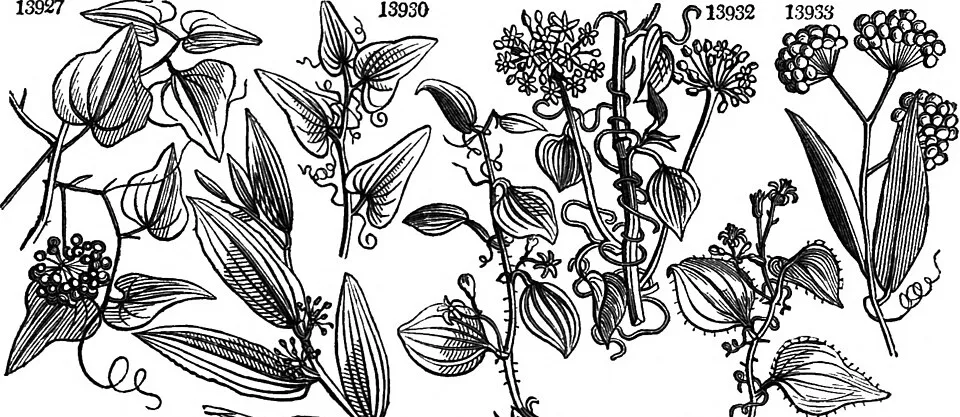
Dioscorea opposita, commonly known as Chinese yam or Shan Yao, is a captivating perennial climbing vine belonging to the botanical family Dioscoreaceae. This robust plant typically ascends to heights of 1 to 2 meters, gracefully twining its way around supports.
Its foliage is characterized by distinctive heart-shaped (cordate) leaves, measuring between 8 to 15 cm in length, which present a lustrous, glossy green surface and are arranged alternately along the stem. The venation is typically palmate, radiating from the petiole attachment point.
During its flowering season, Dioscorea opposita produces delicate, often inconspicuous flowers that range in color from yellowish-white to a subtle greenish hue. These small, fragrant blossoms are borne in slender, drooping axillary racemes, adding a touch of understated beauty to the vine.
The plant's most notable feature is its subterranean tuber, which can extend impressively up to 30 cm in length and several centimeters in diameter. The tuber's exterior is smooth, typically beige to light brown, while its interior flesh is white, mucilaginous, and starchy.
Native to the temperate and subtropical regions of East Asia, particularly widespread across China, Japan, and Korea, Dioscorea opposita thrives in diverse environments. It is commonly found flourishing on hillsides, nestled within thickets, and along field margins, preferring well-drained, fertile loamy soils. Its robust stem, cylindrical in form, may vary in thickness and often presents a slightly rough exterior, sometimes adorned with subtle longitudinal ridges.
The genus Dioscorea, and specifically D. opposita, exhibits considerable genetic diversity, leading to numerous cultivars that display slight variations in morphological characteristics such as leaf shape, tuber size, and skin texture.
Beyond its botanical attributes, Dioscorea opposita holds profound historical and cultural significance. For millennia, it has been a staple food crop and a revered medicinal herb across its native range, deeply integrated into traditional health practices.
Its dual role as a nutritious food source and a therapeutic agent underscores its enduring importance in both culinary and medicinal landscapes.
Trusted Scientific References
1. Authoritative external sources for Dioscorea Plum.
1.1 Wikipedia — Dioscorea Plum.
1.2 Kew POWO (Plants of the World Online)
1.3 PubMed — peer-reviewed research
1.4 NCBI Taxonomy Browser
1.5 GBIF — Global Biodiversity
1.1.Dioscorea — Notable Characteristics
- ✓Perennial Vine — Dioscorea opposita is a long-lived climbing plant that returns year after year from its underground tubers.
- ✓Heart — Shaped Leaves — Its distinct cordate (heart-shaped) leaves are a key identifying morphological characteristic.
- ✓Edible Tuber — The large, starchy, and mucilaginous tuber is a significant food source and the primary medicinal part.
- ✓Twining Growth Habit — The vine climbs by twining around supports, typically reaching 1-2 meters in height.
- ✓East Asian Native — Indigenous to regions like China, Japan, and Korea, where it has been cultivated for millennia.
- ✓Yellowish — White Flowers — Produces small, fragrant, inconspicuous flowers in axillary racemes.
- ✓Mucilaginous Texture — The raw and cooked tuber exhibits a characteristic slimy or mucilaginous texture, beneficial for digestion.
- ✓Diosgenin Source — A notable natural source of diosgenin, a precursor for steroidal hormone synthesis.
- ✓Spleen and Kidney Tonic — Highly valued in TCM for its tonifying effects on the spleen and kidneys.
- ✓Antioxidant Rich — Contains a wealth of phenolic compounds and flavonoids, contributing to its antioxidant capacity.
- ✓Adaptogenic Qualities — Traditionally considered an adaptogen, helping the body adapt to various stressors.
- ✓Versatile Culinary Ingredient — Used extensively in various Asian cuisines, from soups to stir-fries.
- ✓Drought Tolerant — Once established, it shows reasonable tolerance to dry spells due to its tuberous root system.
- ✓Genetic Diversity — Exhibits significant genetic variation, leading to numerous cultivated varieties and landraces.
- ✓Long Shelf Life — The harvested tubers can be stored for extended periods under proper conditions, making them a valuable food reserve.
1.2.Dioscorea — Snapshot Summary
- ✓Primary Use — Revered for its adaptogenic, digestive, and hormonal support, deeply rooted in traditional medicine.
- ✓Key Compound — Diosgenin, a steroidal saponin, is central to its anti-inflammatory and hormone-modulating properties.
- ✓Traditional System — A cornerstone herb in Traditional Chinese Medicine (TCM) for spleen, kidney, and lung health.
- ✓Nutritional Value — Rich in complex carbohydrates, vitamins, and minerals, serving as both food and medicine.
- ✓Health Benefits — Offers antioxidant, anti-inflammatory, antidiabetic, and potential anticancer effects.
- ✓Common Name — Widely known as Chinese yam or Shan Yao, recognized for its edible and medicinal tubers.
- ✓Safety Note — Caution is advised for pregnant individuals, those with hormone-sensitive conditions, and those on specific medications.
2.Dioscorea — Nomenclature & Classification
3.Dioscorea — Key Data
4.Dioscorea — Botanical Description
5.Dioscorea — Origin & Spread
6.Dioscorea — Traditional Uses
7.Dioscorea — Phytochemistry
- ✓Steroidal Saponins — Diosgenin (a key precursor for steroid hormone synthesis, exhibits anti-inflammatory, anticancer, and hormone-modulating activities), Dioscin (another important saponin with similar activities).
- ✓Alkaloids — Dioscorine (a minor alkaloid, contributing to some pharmacological effects, though less prominent than saponins).
- ✓Phenolic Compounds — Caffeic acid, Ferulic acid, Chlorogenic acid (potent antioxidants, contribute to anti-inflammatory and hepatoprotective effects).
- ✓Flavonoids — Quercetin, Kaempferol (strong antioxidants, exhibit anti-inflammatory, antiviral, and cardioprotective properties).
- ✓Polysaccharides — Yam polysaccharides (contribute to immune modulation, antidiabetic effects, and gut health).
- ✓Allantoin — A nitrogenous organic compound (known for its healing, moisturizing, and keratolytic properties, beneficial for skin regeneration).
- ✓Tannins — Gallotannins, ellagitannins (astringent properties, contribute to antioxidant and antimicrobial effects).
- ✓Glycosides — Various glycosides (contribute to antioxidant effects and other specific biological activities).
- ✓Amino Acids — Aspartic acid, glutamic acid, arginine (essential building blocks for proteins, support overall metabolism and cellular function).
- ✓Vitamins — Vitamin C, Vitamin B complex (essential cofactors for numerous metabolic processes, immune support).
- ✓Minerals — Potassium, Calcium, Magnesium, Zinc (vital for electrolyte balance, bone health, enzyme function, and immune response).
- ✓Fatty Acids — Linoleic acid, oleic acid (essential fatty acids, important for cell membrane integrity and overall health).
- ✓Phytosterols — Beta-sitosterol (contributes to cholesterol-lowering effects and anti-inflammatory actions).
- ✓Mucilage — Glycoproteins and complex carbohydrates (responsible for the plant's soothing and protective properties on mucous membranes, aiding digestion).
8.Dioscorea — Pharmacological Findings
- ✓Antioxidant Activity — Dioscorea opposita is rich in phenolic compounds and flavonoids, which are potent antioxidants. These compounds help to neutralize harmful free radicals in the body, reducing oxidative stress and protecting cells from damage. This activity contributes to overall cellular health and disease prevention.
- ✓Anti-inflammatory Effects — Research indicates that compounds like diosgenin and other saponins found in Chinese yam possess significant anti-inflammatory properties. They help to modulate inflammatory pathways, reducing the production of pro-inflammatory cytokines such as IL-6 and TNF-α, which can alleviate symptoms associated with chronic inflammatory conditions.
- ✓Antidiabetic Potential — Dioscorea opposita has shown promise in modulating blood glucose levels and improving insulin sensitivity. Its polysaccharides and saponins may help to regulate carbohydrate metabolism, reduce post-prandial glucose spikes, and enhance glucose uptake by cells, making it a valuable adjunct for diabetes management, particularly in traditional systems.
- ✓Anticancer Properties — Studies highlight the anticancer effects of diosgenin, which has been observed to inhibit cancer cell proliferation, induce apoptosis (programmed cell death) in various cancer cell lines, and suppress invasion and metastasis. It achieves this by modulating signaling pathways like JAK/STAT3.
- ✓Antimicrobial Efficacy — Extracts from Dioscorea opposita exhibit broad-spectrum antimicrobial activity against various bacterial and fungal strains. This is attributed to its diverse phytochemical profile, including alkaloids and saponins, which can disrupt microbial cell membranes or inhibit their growth.
- ✓Immune System Support — Traditionally, Chinese yam has been used to bolster immune function. Its rich nutrient content, including vitamins and minerals, combined with its bioactive compounds, helps to strengthen the body's natural defenses and enhance resilience against infections.
- ✓Digestive Health Improvement — Dioscorea opposita is a mucilaginous plant, and its tubers contain compounds that soothe and protect the gastrointestinal lining. It is traditionally used to alleviate digestive discomfort, improve gut motility, and support the health of the spleen and stomach, as per Traditional Chinese Medicine (TCM).
- ✓Kidney Tonic — In TCM, Shan Yao is highly valued as a kidney tonic, believed to nourish kidney yin and essence. It is used to address symptoms associated with kidney deficiency, such as frequent urination, lower back pain, and general debility, promoting overall renal well-being.
- ✓Spleen Qi Fortification — As a prominent herb in TCM, Dioscorea opposita is renowned for its ability to fortify spleen Qi. It helps to improve digestive function, enhance nutrient absorption, and combat fatigue, contributing to improved energy levels and vitality.
- ✓Hormonal Balance Support — Diosgenin, a key steroidal saponin, is a precursor for the synthesis of various steroid hormones. This property has led to its traditional use and modern investigation for supporting hormonal balance, particularly in women experiencing menopausal symptoms or premenstrual syndrome.
- ✓Cardiovascular Health — Some research suggests that components of Dioscorea opposita may contribute to cardiovascular health by helping to lower cholesterol levels, specifically LDL-cholesterol, and reducing triglyceride levels. Its antioxidant properties also protect against oxidative damage to blood vessels.
- ✓Skin Healing and Regeneration — The presence of allantoin in Dioscorea opposita contributes to its traditional use for promoting skin healing and regeneration. Allantoin is known for its keratolytic, moisturizing, and anti-irritant properties, aiding in wound recovery and soothing irritated skin.
- ✓Respiratory System Support — In traditional medicine, Chinese yam is sometimes used to benefit the lungs and alleviate respiratory symptoms, particularly in cases of chronic cough or asthma, due to its nourishing and moistening properties.
- ✓Cognitive Function Enhancement — Emerging research indicates potential neuroprotective effects of Dioscorea opposita, possibly due to its antioxidant and anti-inflammatory compounds, which may support cognitive function and protect against neurodegenerative processes.
- ✓Anti-fatigue and Energy Boost — By nourishing the spleen and kidneys, and improving overall metabolic efficiency, Dioscorea opposita is traditionally used to combat fatigue, increase stamina, and enhance physical endurance.
- ✓Bone Health Maintenance — Dioscorea opposita contains certain minerals and compounds that may play a role in maintaining bone density and health, though more direct research is needed, its overall nourishing properties are considered beneficial for musculoskeletal well-being.
8.1.Dioscorea — Conditions Traditionally Used For
9.Dioscorea — Cautions & Contraindications
9.1.Dioscorea — Caution Notes
- ✓Gastrointestinal Upset — Some individuals may experience mild digestive disturbances such as nausea, diarrhea, or stomach discomfort, particularly with high doses or initial use of Dioscorea opposita.
- ✓Allergic Reactions — Although uncommon, allergic reactions can occur, manifesting as skin rashes, itching, or hives. Individuals with known allergies to plants in the Dioscoreaceae family should exercise caution.
- ✓Hormonal Imbalance — Due to the presence of diosgenin, which can act as a precursor to steroid hormones, excessive consumption or prolonged use might theoretically influence hormone levels. This is particularly relevant for individuals sensitive to hormonal changes.
- ✓Blood Sugar Fluctuations — While beneficial for blood sugar regulation, individuals with diabetes on medication should monitor their glucose levels closely, as Dioscorea opposita may enhance the effects of hypoglycemic drugs, potentially leading to hypoglycemia.
- ✓Anticoagulant Effects — Some compounds in Dioscorea opposita might possess mild anticoagulant properties. Individuals on blood-thinning medications should use it cautiously and consult a healthcare professional.
- ✓Skin Irritation — In rare cases, direct skin contact with fresh, uncooked yam can cause mild irritation or itching due to certain compounds, which usually dissipates upon cooking.
9.2.Dioscorea — Clinical Safety Notes
- ✓Drug Interactions — Dioscorea opposita may interact with certain medications. It could potentially augment the effects of antidiabetic drugs, leading to hypoglycemia. Caution is also advised for individuals on anticoagulant medications, as it might increase the risk of bleeding. Consult a healthcare provider if taking prescription drugs.
- ✓Pregnancy and Lactation — Due to its potential influence on hormone levels (via diosgenin), Dioscorea opposita is generally not recommended for use during pregnancy or lactation. Insufficient research exists to confirm its safety in these populations.
- ✓Hormone-Sensitive Conditions — Individuals with hormone-sensitive conditions, such as estrogen-receptor-positive cancers (e.g., breast, ovarian, uterine cancer), endometriosis, or uterine fibroids, should avoid Dioscorea opposita due to the theoretical potential of diosgenin to mimic estrogenic activity.
- ✓Children — The use of Dioscorea opposita in children should be approached with caution and under the guidance of a qualified healthcare practitioner, as specific dosage and safety data for pediatric populations are limited.
- ✓Pre-existing Medical Conditions — Individuals with chronic diseases, particularly liver or kidney conditions, should seek medical advice before using Dioscorea opposita, especially in concentrated forms or for prolonged periods.
- ✓Dosage and Duration — Adhere to recommended dosages. Long-term use of high doses without professional supervision is not advised, as the cumulative effects of its bioactive compounds are still being thoroughly investigated.
- ✓Raw Consumption — While edible, consuming large quantities of raw Dioscorea opposita is not recommended, as some individuals may experience mild irritation or digestive upset. Cooking typically neutralizes these compounds.
10.Dioscorea — Usage Guide
- ✓Decoction/Tea — For a decoction, simmer 10-30 grams of dried Chinese yam (Shan Yao) slices or powder in 500 ml of water for 20-30 minutes. Strain and drink 1-2 times daily. This method is common for addressing digestive issues, fatigue, and general tonic effects.
- ✓Powdered Form — Dried Dioscorea opposita tubers can be ground into a fine powder. Take 5-15 grams of powder daily, mixed into water, juice, or smoothies. This is a convenient way to consume the herb for sustained benefits, such as immune support and spleen fortification.
- ✓Culinary Use — Fresh Chinese yam tubers can be peeled, sliced, and cooked. They can be stir-fried, added to soups, stews, or roasted. The mucilaginous texture is often appreciated in Asian cuisine. Cooking may alter some delicate compounds but retains many nutritional benefits.
- ✓Tincture — Prepare a tincture by soaking dried and chopped Dioscorea opposita in a mixture of alcohol and water (e.g., 1:5 ratio with 40-60% alcohol) for 2-4 weeks. Strain and take 2-5 ml (40-100 drops) up to three times daily. Tinctures offer concentrated benefits for systemic issues.
- ✓Topical Application — For skin healing or anti-inflammatory effects, a poultice can be made from fresh grated yam or a paste from the dried powder mixed with water. Apply directly to affected skin areas, such as minor wounds, rashes, or bruises. Leave on for 30 minutes to an hour.
- ✓Congee/Porridge — Incorporate fresh or dried Dioscorea opposita into traditional Chinese congee (rice porridge). This gentle preparation is ideal for digestive weakness, convalescence, and nourishing the spleen and stomach, especially in children or the elderly.
- ✓Capsules/Tablets — Standardized Dioscorea opposita extracts are available in capsule or tablet form. Follow the manufacturer's recommended dosage, typically ranging from 500 mg to 1500 mg per day, often divided into multiple doses.
- ✓External Wash — A cooled decoction of Dioscorea opposita can be used as an external wash for skin irritations or minor wounds. This leverages its allantoin content for soothing and healing properties.
- ✓Juicing — Fresh yam can be juiced, often combined with other fruits or vegetables, for a nutrient-dense beverage. This provides a raw form of the plant, though its mucilaginous nature can be challenging for some juicers.
11.Dioscorea — Cultivation & Care
- ✓Soil Requirements — Dioscorea opposita thrives in well-drained, fertile, loamy soils rich in organic matter. An ideal soil pH range is between 6.0 and 7.0, indicating slightly acidic to neutral conditions.
- ✓Site Selection — Choose a location that receives full sun to partial shade, preferably with morning sun and some afternoon protection in hotter climates. Ensure good air circulation to prevent fungal diseases.
- ✓Planting Time — Plant tubers or tuber sections in early spring, after the last frost date, when soil temperatures have warmed sufficiently.
- ✓Tuber Preparation — If using large tubers, cut them into sections, ensuring each section has at least one 'eye' or bud. Allow cut surfaces to dry and callus for a day or two before planting to prevent rot.
- ✓Planting Depth and Spacing — Plant tuber sections approximately 5-10 cm (2-4 inches) deep. Maintain a spacing of 30-45 cm (12-18 inches) between plants to allow for adequate growth and nutrient uptake.
- ✓Watering — Provide consistent moisture, especially during the active growing season. The soil should remain evenly moist but never waterlogged, as this can lead to tuber rot. Reduce watering as foliage yellows in autumn.
- ✓Fertilization — Incorporate well-rotted compost or aged manure into the soil prior to planting. During the growing season, apply a balanced organic fertilizer every 4-6 weeks to support robust growth and tuber development.
- ✓Support Structure — As a climbing vine, Dioscorea opposita requires a sturdy trellis, stake, or fence for support. Install these structures at planting time to prevent damage to the young vines.
- ✓Pest and Disease Management — Monitor for common pests such as aphids and nematodes. Employ organic pest control methods like neem oil or insecticidal soap. Ensure good cultural practices to minimize fungal issues.
- ✓Weeding — Keep the planting area free of weeds, especially during the early growth stages, as weeds compete for nutrients and moisture.
- ✓Harvesting — Tubers are typically ready for harvest in late autumn, usually after the first frost, when the foliage has yellowed and died back. Carefully dig around the plant, gently prying the tubers from the soil to avoid damage.
- ✓Winter Care — In colder climates, tubers can be left in the ground with a thick layer of mulch for winter protection or dug up, cleaned, and stored in a cool, dark, frost-free location for replanting the following spring.
Reviewed by the Flora Medical Global Botanical Review Panel
Multi-disciplinary editorial group · Botany · Ethnobotany · Herbal-medicine literature
Who reviewed this: This page was checked by the Flora Medical Global Botanical Review Panel — an in-house editorial group of botany graduates, ethnobotany researchers, and horticulture practitioners who collectively maintain our 7,000+ plant encyclopedia. Meet the team.
Our 4-step verification process
1. Taxonomic verification
Scientific names and synonyms cross-checked against Kew POWO, World Flora Online, and The Plant List.
2. Phytochemical & medicinal cross-reference
Active compounds, traditional uses, and reported activities are cross-referenced with PubMed, USDA Dr. Duke's database, and peer-reviewed ethnobotanical literature.
3. Conservation & distribution check
Distribution, ecology, and conservation status confirmed against GBIF occurrence records and the IUCN Red List.
4. Editorial & safety review
Every entry passes an editorial pass for clarity, originality, and safety notices (toxicity, contraindications, dosage caveats) before publication.
Last reviewed:
Important medical disclaimer: This content is for educational and research purposes only. It is not medical advice and is not a substitute for consultation with a licensed healthcare provider. Do not use any herb to self-treat a medical condition without professional guidance.
Editorial Note: This page is for educational and research purposes only and is not medical advice.
Written by: Flora Medical Global Editorial Team
Reviewed by: Flora Medical Global Botanical Review Panel
Last Updated: June 16, 2026





Dioscorea — Comments & Community Reviews
Rate this plant