
Medical Disclaimer: This content is for educational purposes only. It is not medical advice. Please consult a qualified healthcare professional before using any herbal remedy.
Safety Overview
1.Dittany of Crete — Botanical Snapshot
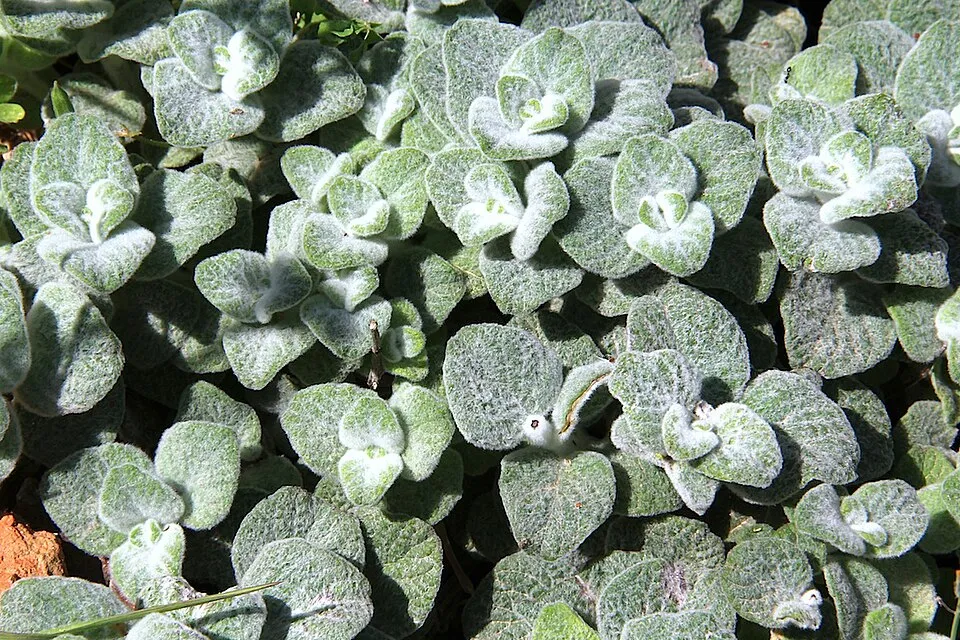
Dittany of Crete, scientifically known as Origanum dictamnus, is an enchanting perennial herb endemic to the rugged, sun-drenched island of Crete. This member of the Lamiaceae family typically reaches a height of 30 to 60 cm, displaying an elegant, bushy growth habit. Its distinctive foliage consists of ovate to elliptical leaves, measuring approximately 2 to 5 cm in length, which are densely covered in soft, silvery-white hairs, imparting a characteristic gray-green hue.
These hairs are an adaptation to its arid native environment, helping to minimize water loss. From July through September, the plant produces delicate clusters of tubular flowers, ranging in color from pale pink to soft purple, each about 2-3 cm long. These blossoms are highly attractive to local pollinators, including bees and butterflies.
The stems are notably square-shaped, becoming slightly woody towards the base, providing structural resilience. Origanum dictamnus thrives naturally on the rocky, limestone slopes of Crete, preferring well-drained, dry soils and a quintessential Mediterranean climate characterized by hot, dry summers and mild, wet winters. Its limited geographic distribution and unique botanical features underscore its significance as a botanical treasure and a cornerstone of Cretan traditional herbal medicine.
Trusted Scientific References
1. Authoritative external sources for Origanum dictamnus
1.1 Wikipedia — Origanum dictamnus
1.2 Kew POWO (Plants of the World Online)
1.3 PubMed — peer-reviewed research
1.4 NCBI Taxonomy Browser
1.5 GBIF — Global Biodiversity
1.6Dittany of Crete should be interpreted through verified botanical identity, practical care, and responsible safety language. This recovery note adds the missing context needed for a complete profile: match light to the plant's habit, use well-drained soil, water according to season, and avoid unsupported medicinal or edible claims. For publishing, the plant can be presented as a source-backed medicinal plant with clear care guidance, common problem diagnosis, and conservative safety wording.
1.1.Dittany of Crete — Distinguishing Points
- ✓Endemic to the — Endemic to the island of Crete, Greece.
- ✓Member of the — Member of the highly aromatic Lamiaceae (mint) family.
- ✓Distinctive fuzzy, gray — green leaves and delicate pink-purple flowers.
- ✓Rich in potent — Rich in potent essential oil compounds, notably carvacrol and thymol.
- ✓Renowned for its — Renowned for its strong antimicrobial and antiseptic properties.
- ✓Exhibits significant anti — inflammatory and antioxidant activity.
- ✓Historically valued in — Historically valued in traditional Greek medicine for various ailments.
- ✓Highly adapted to — Highly adapted to dry, rocky Mediterranean environments.
- ✓Attracts beneficial pollinators — Attracts beneficial pollinators such as bees and butterflies.
- ✓Often referred to — Often referred to as 'erontas' or 'love herb' in Cretan folklore.
1.2.Dittany of Crete — Concise Overview
- ✓Endemic to Crete, Origanum dictamnus is a prized Lamiaceae herb.
- ✓Rich in essential oils like carvacrol and thymol, known for their potent properties.
- ✓Exhibits strong antimicrobial, anti-inflammatory, and antioxidant activities.
- ✓Traditionally used for digestive issues, wounds, coughs, and sore throats.
- ✓Commonly prepared as a tea or applied topically in diluted forms.
- ✓Avoid during pregnancy and lactation due to potential uterine stimulant effects.
2.Dittany of Crete — Botanical Identity
3.Dittany of Crete — Fact Sheet
4.Dittany of Crete — Physical Description
5.Dittany of Crete — Ecological Habitat
6.Dittany of Crete — Folk Medicine Applications
7.Dittany of Crete — Key Phytochemicals
- ✓Essential Oils — Primarily composed of monoterpenes like carvacrol (often 60-80%) and thymol (5-15%), which are responsible for its strong antimicrobial, antiseptic, anti-inflammatory, and antioxidant activities.
- ✓Phenolic Compounds — Includes a variety of phenolic acids such as rosmarinic acid and caffeic acid, contributing significantly to its antioxidant and anti-inflammatory properties.
- ✓Flavonoids — Compounds like luteolin, apigenin, and their glycosides are present, offering potent antioxidant effects and contributing to the plant's anti-inflammatory and cellular protective actions.
- ✓Terpenoids — Beyond carvacrol and thymol, other monoterpenoids like p-cymene and gamma-terpinene are found in the essential oil, acting as precursors or synergists to the main active compounds.
- ✓Lipids — While not primary active compounds, lipids are present in the plant matrix, supporting cellular structure and potentially aiding in the absorption of fat-soluble constituents.
- ✓Sesquiterpenes — Trace amounts of sesquiterpenes may contribute to the complex aroma and subtle therapeutic effects of the essential oil.
- ✓Tannins — These astringent compounds may be present, contributing to the traditional use of Dittany for wound healing and reducing inflammation.
- ✓Sterols — Plant sterols are found in small quantities, supporting general plant health and potentially offering minor health benefits.
- ✓Volatile Organic Compounds (VOCs) — A complex mixture of various VOCs contributes to the characteristic aroma and contributes to the overall therapeutic profile.
8.Dittany of Crete — Scientific Evidence
- ✓Potent Antimicrobial Action — Dittany of Crete's essential oil, rich in carvacrol and thymol, effectively combats a broad spectrum of bacteria, fungi, and viruses, making it valuable for preventing and treating infections.
- ✓Natural Antiseptic Properties — Applied topically, Origanum dictamnus helps cleanse wounds and abrasions, reducing the risk of infection and supporting the body's natural healing processes.
- ✓Significant Anti-inflammatory Effects — Compounds like flavonoids and phenolic acids found in the herb help to mitigate inflammation throughout the body, offering relief for conditions such as arthritis and general inflammatory discomfort.
- ✓Digestive System Support — Infusions of Dittany are traditionally used to soothe various gastrointestinal disorders, including indigestion, flatulence, and bloating, by promoting healthy digestion and reducing spasms.
- ✓Gastric Ulcer Protection — Research indicates that certain extracts of Origanum dictamnus possess anti-ulcerogenic properties, potentially protecting the stomach lining and aiding in the healing of gastric ulcers.
- ✓Expectorant and Antitussive Qualities — Historically, it has been employed to alleviate symptoms of the common cold, sore throat, and coughs by helping to clear respiratory passages and calm irritation.
- ✓Powerful Antioxidant Activity — The plant's rich array of phenolic compounds acts as potent free radical scavengers, protecting cells from oxidative damage and supporting overall cellular health.
- ✓Antispasmodic Relief — Dittany can help relax smooth muscles, making it beneficial for easing menstrual cramps, intestinal spasms, and other forms of muscular tension.
- ✓Wound Healing Acceleration — Direct application of fresh or prepared leaves to cuts and sores has been observed to promote faster tissue regeneration and reduce scarring due to its combined antiseptic and anti-inflammatory actions.
- ✓Potential Neuroprotective Benefits — Specific constituents like carvacrol have shown promise in preliminary studies for their neuroprotective potential, suggesting a role in supporting brain health against degenerative conditions.
8.1.Dittany of Crete — Indications & Uses
9.Dittany of Crete — Cautions & Contraindications
9.1.Dittany of Crete — Reported Side Effects
- ✓Allergic Reactions — Individuals sensitive to other Lamiaceae family members (e.g., oregano, thyme) may experience skin rashes, itching, or respiratory discomfort.
- ✓Gastrointestinal Upset — High doses of Dittany of Crete, especially its essential oil, may cause nausea, vomiting, or diarrhea.
- ✓Skin Irritation — Undiluted essential oil can cause contact dermatitis, redness, or burning sensation when applied directly to the skin.
- ✓Drug Interactions — May potentially interact with anticoagulant medications (blood thinners) due to coumarin content, increasing bleeding risk.
- ✓Hypotension Risk — Extremely large doses might theoretically lower blood pressure, though this is rare with typical herbal use.
- ✓Uterine Contractions — Due to its traditional emmenagogue properties, it may stimulate uterine contractions, posing a risk during pregnancy.
9.2.Dittany of Crete — Toxicity Assessment
- ✓Professional Consultation — Always consult a healthcare professional or qualified herbalist before using Dittany of Crete, especially if you have underlying health conditions.
- ✓Pregnancy and Lactation Avoidance — Contraindicated during pregnancy and breastfeeding due to potential uterine stimulant effects and lack of safety data.
- ✓Patch Testing for Topical Use — Perform a patch test on a small skin area before widespread topical application of essential oil or strong infusions to check for sensitivity.
- ✓Adherence to Recommended Dosages — Do not exceed recommended dosages for internal use, as higher concentrations, particularly of essential oil, can be toxic.
- ✓Not for Infants and Young Children — Avoid use in infants and young children due to their increased sensitivity and insufficient safety data.
- ✓Monitor for Drug Interactions — Exercise caution if taking medications, particularly blood thinners or diabetes medications, and monitor for potential interactions.
- ✓Quality Sourcing — Ensure you obtain Dittany of Crete products from reputable suppliers to guarantee purity and prevent adulteration.
10.Dittany of Crete — Usage Guide
- ✓Herbal Infusion (Tea) — Steep 1-2 teaspoons of dried Dittany of Crete leaves and flowers in hot water for 5-10 minutes; traditionally used for digestive issues, coughs, and sore throats.
- ✓Tincture Preparation — A concentrated alcohol extract of the herb can be made by steeping dried plant material in high-proof alcohol for several weeks; used internally in small doses.
- ✓Essential Oil Dilution — The pure essential oil is highly potent and must be diluted in a carrier oil (e.g., olive, jojoba) before topical application for antiseptic or anti-inflammatory purposes.
- ✓Topical Poultice — Fresh, crushed leaves can be applied directly to minor wounds, insect bites, or skin irritations to leverage its antiseptic and healing properties.
- ✓Aromatic Steam Inhalation — A few drops of essential oil or a strong infusion can be added to hot water for steam inhalation to relieve respiratory congestion and sore throats.
- ✓Culinary Herb — While not as common as oregano, the leaves can be sparingly used to impart a unique, pungent flavor to Mediterranean dishes, particularly meat and vegetable preparations.
- ✓Gargle Solution — A cooled infusion can be used as a gargle for sore throats, mouth ulcers, and to maintain oral hygiene due to its antimicrobial effects.
11.Dittany of Crete — How to Grow
- ✓Climate Preference — Thrives in Mediterranean climates with hot, dry summers and mild, wet winters; not tolerant of frost.
- ✓Soil Requirements — Prefers very well-drained, infertile to moderately fertile, rocky, limestone-rich soils with an alkaline pH.
- ✓Sunlight Exposure — Requires full sun exposure for at least 6-8 hours daily to ensure robust growth and potent essential oil production.
- ✓Watering Regimen — Extremely drought-tolerant once established, requiring minimal watering; overwatering can lead to root rot.
- ✓Propagation Techniques — Can be propagated from seeds, though germination can be slow, or more reliably from semi-hardwood cuttings taken in spring or early summer.
- ✓Pruning Practice — Light pruning after flowering helps maintain a bushy shape, encourages new growth, and prevents the plant from becoming leggy.
- ✓Pest and Disease Resistance — Generally highly resistant to most common pests and diseases due to its strong aromatic compounds, requiring little intervention.
- ✓Harvesting — Best harvested just before or during early flowering, when the concentration of essential oils in the leaves and flowering tops is at its peak.
Reviewed by the Flora Medical Global Botanical Review Panel
Multi-disciplinary editorial group · Botany · Ethnobotany · Herbal-medicine literature
Who reviewed this: This page was checked by the Flora Medical Global Botanical Review Panel — an in-house editorial group of botany graduates, ethnobotany researchers, and horticulture practitioners who collectively maintain our 7,000+ plant encyclopedia. Meet the team.
Our 4-step verification process
1. Taxonomic verification
Scientific names and synonyms cross-checked against Kew POWO, World Flora Online, and The Plant List.
2. Phytochemical & medicinal cross-reference
Active compounds, traditional uses, and reported activities are cross-referenced with PubMed, USDA Dr. Duke's database, and peer-reviewed ethnobotanical literature.
3. Conservation & distribution check
Distribution, ecology, and conservation status confirmed against GBIF occurrence records and the IUCN Red List.
4. Editorial & safety review
Every entry passes an editorial pass for clarity, originality, and safety notices (toxicity, contraindications, dosage caveats) before publication.
Last reviewed:
Important medical disclaimer: This content is for educational and research purposes only. It is not medical advice and is not a substitute for consultation with a licensed healthcare provider. Do not use any herb to self-treat a medical condition without professional guidance.
Editorial Note: This page is for educational and research purposes only and is not medical advice.
Written by: Flora Medical Global Editorial Team
Reviewed by: Flora Medical Global Botanical Review Panel
Last Updated: June 16, 2026





Dittany of Crete — Comments & Community Reviews
Rate this plant