
Medical Disclaimer: This content is for educational purposes only. It is not medical advice. Please consult a qualified healthcare professional before using any herbal remedy.
Safety Overview
1.Floss Flower — At a Glance
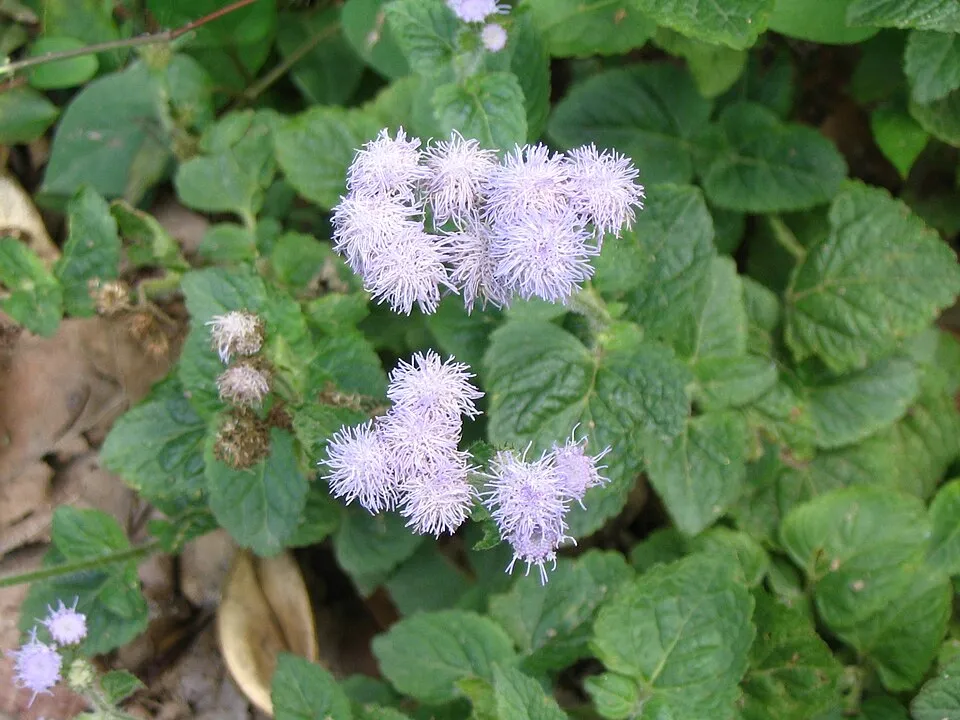
Ageratum conyzoides, widely recognized as Floss Flower or sometimes colloquially as Billygoat-weed, is an annual herbaceous plant that is a member of the diverse Asteraceae family. This aromatic species exhibits a characteristic morphology, featuring soft, often hairy stems that typically ascend to heights ranging from 30 to 100 centimeters. Its leaves are generally ovate to rhomboid, averaging 4 to 10 cm in length, with distinctive crenate or serrate margins.
The plant produces small, densely clustered flower heads, which are typically found in shades of lavender, pale blue, or white, arranged in dense corymbs that serve to attract a variety of pollinators. The genus name 'Ageratum' is derived from ancient Greek, signifying 'ageless,' a tribute to the remarkably long-lasting nature of its blooms. The specific epithet 'conyzoides' indicates its morphological similarity to plants within the genus Conyza.
Originally indigenous to the tropical and subtropical zones of Central and South America, Ageratum conyzoides has since achieved a pantropical distribution, establishing itself as a pervasive weed across numerous continents including Asia, Africa, and Oceania. It thrives in disturbed ecological niches such as agricultural fields, roadsides, and open woodlands, showcasing remarkable adaptability. Its prolific seed production is a significant factor contributing to its widespread naturalization.
Historically, this plant has been a cornerstone in various traditional medical systems globally, including Ayurveda, Traditional Chinese Medicine (TCM), and Unani. Ethnobotanical records consistently highlight its utility in addressing a broad spectrum of ailments, from minor cuts and sprains to systemic conditions like fever and various gastrointestinal disturbances, underscoring its traditional recognition as an anti-inflammatory, analgesic, antipyretic, and effective wound-healing botanical.
Trusted Scientific References
1. Authoritative external sources for Ageratum conyzoides
1.1 Wikipedia — Ageratum conyzoides
1.2 Kew POWO (Plants of the World Online)
1.3 PubMed — peer-reviewed research
1.4 NCBI Taxonomy Browser
1.5 GBIF — Global Biodiversity
1.1.Floss Flower — Highlights
- ✓Common Names — Floss Flower, Billygoat-weed, Goat Weed, Chick Weed.
- ✓Scientific Name — Ageratum conyzoides L.
- ✓Family — Asteraceae (Daisy family).
- ✓Morphology — Hairy stems, ovate to rhomboid leaves, small lavender/blue/white flower heads in corymbs.
- ✓Global Distribution — Pantropical invasive weed, native to Central and South America.
- ✓Traditional Uses — Anti-inflammatory, analgesic, antipyretic, wound healing, antimicrobial, gastrointestinal aid.
- ✓Key Bioactive Compounds — Flavonoids, terpenoids (precocenes), coumarins, and pyrrolizidine alkaloids (PAs).
- ✓Primary Caution — Contains hepatotoxic pyrrolizidine alkaloids, limiting safe internal use.
- ✓Research Focus — Antifungal, antimicrobial, antioxidant, anti-inflammatory activities.
- ✓Ecological Role — Prolific seed producer, often found in disturbed areas.
1.2.Floss Flower — In Brief
- ✓Floss Flower (Ageratum conyzoides) is an annual herb from the Asteraceae family, native to the Americas.
- ✓Widely recognized for its traditional uses in inflammation, pain, wound healing, and antimicrobial applications.
- ✓Contains bioactive compounds like flavonoids, terpenoids (precocenes), and coumarins, but also hepatotoxic pyrrolizidine alkaloids (PAs).
- ✓Modern research supports its antimicrobial, antifungal, and anti-inflammatory properties.
- ✓Internal use is strongly cautioned or contraindicated due to PA content, especially for liver-compromised individuals, pregnant/lactating women, and children.
- ✓Primarily recommended for external applications due to safety concerns regarding pyrrolizidine alkaloids.
2.Floss Flower — Botanical Identity
3.Floss Flower — Fact Sheet
4.Floss Flower — Botanical Description
5.Floss Flower — Origin & Spread
6.Floss Flower — Folk Medicine Applications
7.Floss Flower — Key Phytochemicals
- ✓Pyrrolizidine Alkaloids (PAs) — Key compounds like lycopsamine, echinatine, and their N-oxides are present, known for potential hepatotoxicity, especially with chronic internal use.
- ✓Flavonoids — Includes compounds such as quercetin, kaempferol, and luteolin, responsible for significant antioxidant, anti-inflammatory, and antimicrobial activities.
- ✓Terpenoids — Notably contains precocenes I and II (chromenes), which exhibit insect anti-juvenile hormone activity and contribute to the plant's aromatic profile and antifungal properties.
- ✓Coumarins — Simple coumarins and derivatives are found, contributing to its anti-inflammatory and potential anticoagulant effects.
- ✓Saponins — These glycosides are present and contribute to the plant's foaming properties and may have immunomodulatory or hypocholesterolemic effects.
- ✓Phenolic Acids — Compounds like caffeic acid and chlorogenic acid are prevalent, known for their strong antioxidant and anti-inflammatory actions.
- ✓Essential Oils — Volatile compounds, including ageratochromene, caryophyllene, and limonene, impart the plant's characteristic aroma and contribute to its antimicrobial and insecticidal properties.
- ✓Steroids — Phytosterols such as beta-sitosterol are identified, which may have cholesterol-lowering and anti-inflammatory benefits.
- ✓Alkaloids (non-PA) — Beyond PAs, other nitrogen-containing compounds may be present, influencing various pharmacological activities.
- ✓Tannins — Astringent compounds that contribute to wound healing and anti-diarrheal effects by binding to proteins and forming protective layers.
8.Floss Flower — Scientific Evidence
- ✓Anti-inflammatory Properties — Floss Flower extracts have demonstrated significant anti-inflammatory effects, potentially due to the presence of flavonoids and terpenoids that modulate inflammatory pathways.
- ✓Analgesic Activity — Traditional uses suggest pain-relieving capabilities, which scientific studies have begun to corroborate, attributing it to compounds that may interfere with pain signal transmission.
- ✓Antimicrobial Action — The plant exhibits broad-spectrum antimicrobial activity against bacteria and fungi, making it valuable for treating infections and supporting wound healing.
- ✓Antifungal Potential — Research indicates Ageratum conyzoides is effective against various fungal pathogens like Aspergillus and Candida, likely due to chromenes and terpenoids.
- ✓Wound Healing — Topically applied preparations traditionally hasten the healing of cuts and sores, supported by its antiseptic and anti-inflammatory compounds that promote tissue regeneration.
- ✓Antipyretic Effects — Historically used to reduce fever, its constituents may help regulate body temperature through mechanisms involving prostaglandin synthesis inhibition.
- ✓Antioxidant Activity — Rich in flavonoids and phenolic compounds, Floss Flower scavenges free radicals, protecting cells from oxidative damage and contributing to overall health.
- ✓Gastrointestinal Support — Traditional medicine employs it for dysentery and diarrhea, suggesting properties that soothe the digestive tract and combat causative pathogens.
- ✓Insecticidal Properties — Certain compounds, particularly precocenes, have shown insect anti-juvenile hormone activity, contributing to its traditional use as an insect repellent.
- ✓Antidiabetic Potential — Preliminary studies indicate a potential role in blood sugar regulation, possibly by improving insulin sensitivity or inhibiting glucose absorption, though more research is needed.
- ✓Hepatoprotective Effects — Some research suggests protective effects on the liver, although this must be balanced with the presence of potentially hepatotoxic pyrrolizidine alkaloids.
- ✓Hypotensive Action — Extracts have been observed to lower blood pressure in animal models, indicating a potential cardiovascular benefit, warranting further investigation.
8.1.Floss Flower — Health Applications
9.Floss Flower — Safety Considerations
9.1.Floss Flower — Caution Notes
- ✓Liver Toxicity — Contains pyrrolizidine alkaloids (PAs), which can cause cumulative liver damage, veno-occlusive disease, and are potentially carcinogenic, especially with chronic internal use.
- ✓Allergic Reactions — Individuals sensitive to the Asteraceae family may experience allergic contact dermatitis or other hypersensitivity reactions.
- ✓Gastrointestinal Upset — High doses may lead to nausea, vomiting, or diarrhea in some sensitive individuals.
- ✓Photosensitivity — Some constituents might increase skin sensitivity to sunlight, leading to sunburn-like reactions.
- ✓Central Nervous System Effects — In extremely high doses, certain compounds could potentially depress the central nervous system, leading to drowsiness.
- ✓Drug Interactions — May interact with medications metabolized by the liver due to its alkaloid content or with blood thinners due to coumarins.
- ✓Teratogenicity — Due to pyrrolizidine alkaloids, it poses a risk to fetal development and should be avoided during pregnancy.
9.2.Floss Flower — Safety Overview
- ✓Pregnancy and Lactation — Absolutely contraindicated due to the presence of pyrrolizidine alkaloids (PAs) which can be toxic to the fetus and pass into breast milk.
- ✓Liver Disease — Individuals with pre-existing liver conditions should strictly avoid internal use due to the hepatotoxic potential of PAs.
- ✓Children — Not recommended for internal use in children due to their increased susceptibility to alkaloid toxicity and lack of sufficient safety data.
- ✓Duration of Use — Internal use should be strictly limited and under professional guidance, preferably avoided, due to cumulative PA toxicity. External use is generally safer.
- ✓Allergic Sensitivity — Exercise caution if allergic to other plants in the Asteraceae family (e.g., ragweed, marigolds) as cross-reactivity may occur.
- ✓Professional Consultation — Always consult a qualified healthcare professional or medical herbalist before using Floss Flower, especially for internal applications, to assess risks and benefits.
- ✓External Use Only (Preferred) — Given the PA content, topical application is generally considered safer for wound healing and skin conditions, avoiding ingestion.
10.Floss Flower — Usage Guide
- ✓Herbal Infusion (Tea) — Dried or fresh leaves and flowers can be steeped in hot water to create an infusion, traditionally consumed for fevers and gastrointestinal issues.
- ✓Decoction — Roots or tougher plant parts can be boiled in water for a longer duration to extract compounds, used for more chronic conditions or concentrated effects.
- ✓Poultice — Crushed fresh leaves or a paste made from dried powder mixed with water is applied directly to wounds, sprains, or skin conditions for anti-inflammatory and healing effects.
- ✓Tincture — Plant material can be macerated in alcohol to create a concentrated liquid extract, used internally in small, diluted doses or externally.
- ✓Ointment/Balm — Extracts or infused oils can be incorporated into topical ointments or balms for localized application on skin ailments, cuts, and bruises.
- ✓Essential Oil Extraction — The plant's volatile compounds can be extracted via steam distillation, yielding an essential oil used for aromatherapy, insect repellent, or diluted for topical applications.
- ✓Mouthwash — A cooled decoction or infusion can be used as a gargle or mouthwash for oral hygiene and treating mouth sores, leveraging its antimicrobial properties.
- ✓Compress — Cloth soaked in a warm infusion or decoction can be applied to inflamed areas or painful joints for relief.
11.Floss Flower — How to Grow
- ✓Climate Preference — Thrives in tropical and subtropical climates, preferring warm temperatures and high humidity, though it can adapt to temperate zones as an annual.
- ✓Soil Requirements — Prefers well-drained, fertile soils with a pH range of 5.0 to 7.0, but is highly adaptable and can grow in poor or disturbed soils.
- ✓Light Exposure — Requires full sun to partial shade for optimal growth, with more vigorous growth observed in full sun.
- ✓Watering — Needs consistent moisture, especially during dry periods, but is somewhat drought-tolerant once established due to its weed-like resilience.
- ✓Propagation — Primarily propagated by seeds, which are dispersed effectively by wind and water, leading to its invasive nature. Can also be grown from cuttings.
- ✓Pests and Diseases — Generally robust against most pests and diseases, reflecting its invasive success, but can be susceptible to common garden pests under stress.
- ✓Fertilization — Typically does not require heavy fertilization, as it can extract nutrients efficiently from various soil types.
- ✓Harvesting — Leaves and flowering tops are usually harvested when the plant is in full bloom for medicinal purposes, often by cutting the aerial parts.
Reviewed by the Flora Medical Global Botanical Review Panel
Multi-disciplinary editorial group · Botany · Ethnobotany · Herbal-medicine literature
Who reviewed this: This page was checked by the Flora Medical Global Botanical Review Panel — an in-house editorial group of botany graduates, ethnobotany researchers, and horticulture practitioners who collectively maintain our 7,000+ plant encyclopedia. Meet the team.
Our 4-step verification process
1. Taxonomic verification
Scientific names and synonyms cross-checked against Kew POWO, World Flora Online, and The Plant List.
2. Phytochemical & medicinal cross-reference
Active compounds, traditional uses, and reported activities are cross-referenced with PubMed, USDA Dr. Duke's database, and peer-reviewed ethnobotanical literature.
3. Conservation & distribution check
Distribution, ecology, and conservation status confirmed against GBIF occurrence records and the IUCN Red List.
4. Editorial & safety review
Every entry passes an editorial pass for clarity, originality, and safety notices (toxicity, contraindications, dosage caveats) before publication.
Last reviewed:
Important medical disclaimer: This content is for educational and research purposes only. It is not medical advice and is not a substitute for consultation with a licensed healthcare provider. Do not use any herb to self-treat a medical condition without professional guidance.
Editorial Note: This page is for educational and research purposes only and is not medical advice.
Written by: Flora Medical Global Editorial Team
Reviewed by: Flora Medical Global Botanical Review Panel
Last Updated: June 16, 2026





Floss Flower — Comments & Community Reviews
Rate this plant