


Medical Disclaimer: This content is for educational purposes only. It is not medical advice. Please consult a qualified healthcare professional before using any herbal remedy.
Safety Overview
1.Holly — Botanical Snapshot
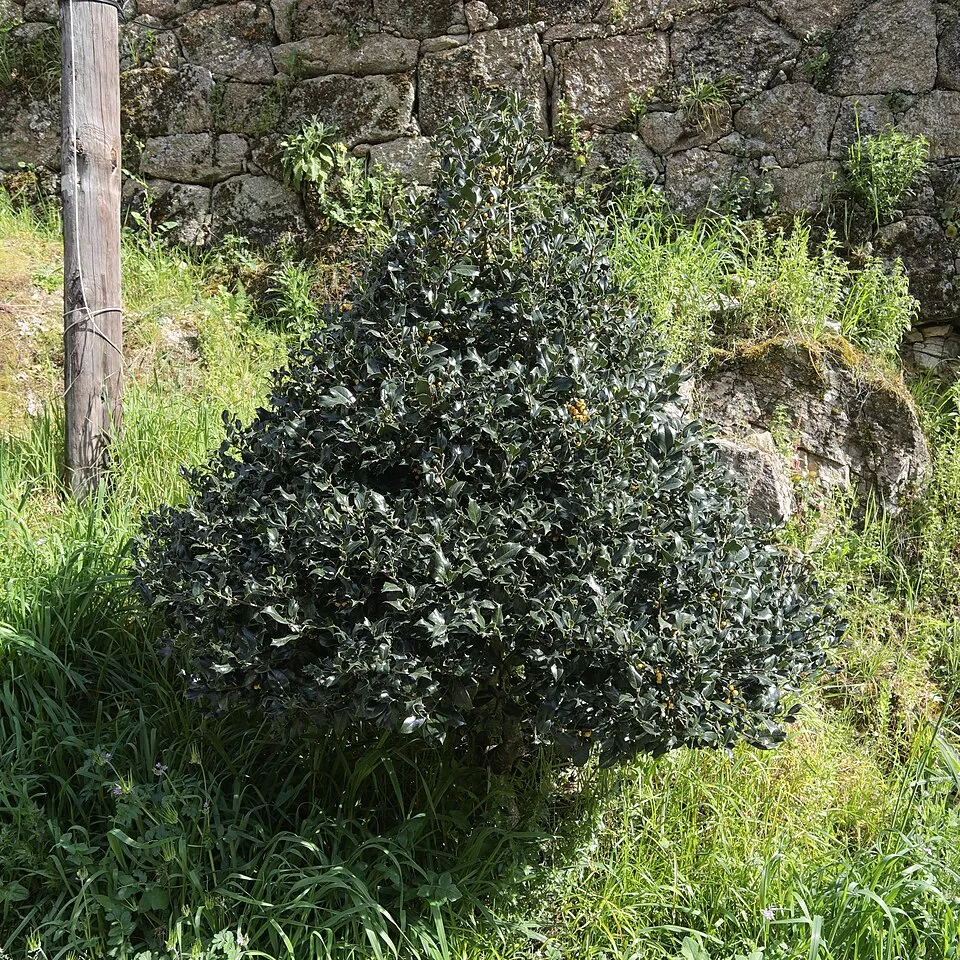
Ilex aquifolium, widely recognized as the common holly, European holly, or English holly, is a distinguished species of flowering plant belonging to the family Aquifoliaceae. This iconic evergreen tree or shrub is indigenous to western and southern Europe, including the Azores, and extends into northwestern Africa. It is instantly identifiable by its striking glossy, dark green, and notably leathery leaves, which typically present an ovate or elliptical shape with sharply spiny margins. These spines, while contributing to its distinctive aesthetic, primarily function as a robust deterrent against herbivores, safeguarding the plant from grazing. The growth habit of Ilex aquifolium is remarkably variable, ranging from a dense, compact shrub to a majestic, towering tree that can reach impressive heights of up to 25 meters (82 feet) with a trunk diameter of up to 1 meter (3.3 feet).
The bark is characteristically smooth and grey in its younger stages, gradually developing fissures and a rougher texture with advancing age. Holly is a dioecious species, meaning that its male and female flowers are borne on separate individual plants. The small, often inconspicuous flowers, which bloom in late spring and early summer, are typically white or greenish-white and arranged in cymose clusters. These flowers are primarily pollinated by insects, particularly bees and flies. However, the true visual spectacle of Ilex aquifolium emerges in autumn and persists through winter with the development of its vibrant berries.
These are bright red, spherical drupes, generally measuring between 6-10 mm in diameter. Female plants, provided they are pollinated by a nearby male specimen, produce a profusion of these eye-catching berries, which remain on the branches throughout the winter, serving as a crucial food source for various bird species and other wildlife. The wood of the holly tree is prized for being hard, white, and fine-grained, and has been historically utilized in intricate inlay work, carving, and the fabrication of small, specialized articles. It is critical to note that despite their attractive appearance, the leaves and berries of Ilex aquifolium are toxic if ingested in substantial quantities, particularly to humans and pets, primarily due to the presence of triterpenoid saponins and other compounds. Trusted Scientific References Authoritative external sources for Ilex aquifolium : Wikipedia — Ilex aquifolium Kew POWO (Plants of the World Online) PubMed — peer-revie ...[CURRENT TEXT EXISTS: 2561 chars]
1.1.Holly — Highlights
- ✓Iconic Evergreen Foliage — Distinctive glossy, dark green, leathery leaves with characteristic sharp, spiny margins.
- ✓Striking Winter Berries — Abundant, bright red, globular drupes produced by female plants, providing visual appeal and wildlife food throughout winter.
- ✓Dioecious Reproduction — Requires separate male and female plants in proximity for successful pollination and subsequent fruit set.
- ✓Native European Distribution — Indigenous to Western and Southern Europe, the Azores, and northwestern Africa.
- ✓High Ornamental Value — Widely prized for its aesthetic contributions to landscape design, used for hedging, screening, and as specimen plants.
- ✓Hard, Fine — Grained Wood — Historically utilized for intricate carving, inlay work, and the manufacture of specialized small articles.
- ✓Wildlife Food Source — Its persistent winter berries serve as a crucial food supply for various bird species and other wildlife.
- ✓Contains Toxic Saponins — The primary chemical constituents, triterpenoid saponins, are responsible for the plant's toxicity upon ingestion.
- ✓Adaptable Growth Habit — Exhibits a versatile growth form, ranging from a dense, bushy shrub to a tall, stately tree.
- ✓Low Maintenance Once Established — Relatively easy to cultivate and care for in suitable environmental conditions.
1.2.Holly — Concise Overview
- ✓Ilex aquifolium, or European Holly, is an evergreen tree or shrub recognized by its glossy, spiny leaves and vibrant red winter berries.
- ✓All components of the plant, especially the berries, are toxic if ingested due to the presence of triterpenoid saponins.
- ✓Historically, it was used in folk medicine as an emetic, purgative, and for fevers, but these practices are dangerous and not recommended today.
- ✓Primarily valued as an ornamental plant for landscaping and its hard, fine-grained wood is used in crafting.
- ✓Requires full sun to partial shade, well-draining acidic soil, and both male and female plants for successful berry production.
- ✓Ingestion can lead to severe gastrointestinal distress and other serious symptoms; immediate medical attention is essential.
2.Holly — Nomenclature & Classification
3.Holly — Key Data
4.Holly — Physical Description
5.Holly — Ecological Habitat
6.Holly — Folk Medicine Applications
7.Holly — Key Phytochemicals
- ✓Triterpenoid Saponins — Key compounds like ilicin are responsible for the plant's toxicity, causing emetic and purgative effects upon ingestion.
- ✓Flavonoids — Includes derivatives of quercetin and kaempferol, contributing to antioxidant and potential anti-inflammatory activities, primarily in the leaves.
- ✓Phenolic Acids — Such as chlorogenic acid and caffeic acid, which are known for their antioxidant properties and presence in various plant parts.
- ✓Tannins — Predominantly gallotannins and ellagitannins, providing astringent qualities and contributing to traditional uses for skin irritation and as antioxidants.
- ✓Sterols — Various phytosterols are present in the plant, playing roles in plant membrane structure and potentially offering minor biological activities.
- ✓Waxes — The leaves are coated with a protective layer of epicuticular waxes, contributing to their glossy appearance and reducing water loss.
- ✓Resins — Minor amounts of resinous compounds may be present, contributing to the plant's overall chemical complexity.
- ✓Trace Alkaloids — While not a primary class, very small quantities of various alkaloids may be found, though their specific roles and effects in Ilex aquifolium are not well-defined.
8.Holly — Scientific Evidence
- ✓Traditional Febrifuge — Historically, infusions prepared from dried Holly leaves were employed in European folk medicine to aid in reducing fevers, a use attributed to their perceived diaphoretic properties.
- ✓Diuretic Properties (Traditional) — Some historical uses suggest a mild diuretic effect from Holly leaf preparations, believed to assist in fluid elimination, though this application must be approached with extreme caution due to the plant's toxicity.
- ✓Rheumatic Pain Relief (External Traditional) — Poultices crafted from crushed fresh Holly leaves were traditionally applied topically to alleviate localized rheumatic pain, swelling, and joint discomfort.
- ✓Emetic/Purgative Action (Historical Caution) — In certain historical practices, a strong decoction of Holly berries was occasionally used as a potent emetic and purgative; however, this is an extremely dangerous and strongly unrecommended practice due to severe toxicity.
- ✓Cough and Bronchitis (Traditional Folk Remedy) — Infusions of Holly leaves were sometimes utilized in traditional European herbalism to soothe coughs, alleviate respiratory discomfort, and address symptoms of bronchitis.
- ✓Digestive Stimulant (Historical, High Risk) — Very small, precisely controlled doses were mentioned in some traditional texts for their potential to stimulate digestion, though this application carries significant health risks and is not advised.
- ✓Anti-inflammatory (Traditional External Application) — The topical application of preparations from Holly leaves was historically believed to reduce localized inflammation, likely due to the presence of flavonoids and tannins.
- ✓Wound Healing (Folk Remedy) — Crushed Holly leaves were occasionally applied as a folk remedy to minor cuts and abrasions, based on perceived mild antiseptic and astringent qualities.
- ✓Astringent Properties — The presence of tannins in Holly leaves contributed to their traditional use as an astringent for minor skin irritations and to tighten tissues.
8.1.Holly — Therapeutic Indications
9.Holly — Safety Considerations
9.1.Holly — Caution Notes
- ✓Severe Gastrointestinal Distress — Ingestion of Holly berries or large quantities of leaves can induce severe nausea, persistent vomiting, intense abdominal pain, and profuse diarrhea due to high saponin content.
- ✓Cardiac Irregularities — Ingesting significant amounts of the plant material may, in rare and severe cases, lead to cardiac rhythm disturbances or palpitations.
- ✓Central Nervous System Depression — Excessive consumption of Holly can result in central nervous system depression, manifesting as drowsiness, lethargy, or even stupor.
- ✓Dehydration and Electrolyte Imbalance — Prolonged or severe vomiting and diarrhea, particularly in vulnerable populations like children or pets, can lead to significant fluid loss and critical electrolyte imbalances.
- ✓Allergic Contact Dermatitis — Direct skin contact with the spiny leaves or other plant parts may cause mild irritation, redness, or allergic dermatitis in individuals with sensitive skin.
- ✓Liver and Kidney Impact — Although less common, chronic or high-dose exposure to the plant's toxic compounds, especially saponins, could potentially exert a detrimental effect on liver and kidney function.
- ✓Oral and Throat Irritation — Chewing or ingesting Holly leaves or berries can cause immediate irritation and a burning sensation in the mouth and throat.
9.2.Holly — Safety Profile
- ✓Highly Toxic When Ingested — All parts of the Ilex aquifolium plant, particularly the attractive red berries and leaves, are considered toxic to humans and pets if consumed, primarily due to their saponin content.
- ✓Keep Out of Reach of Children and Pets — It is imperative to ensure that Holly plants, especially those bearing berries, are inaccessible to young children and animals who might be tempted to ingest them.
- ✓Avoid Internal Consumption — Internal use of Holly for any medicinal purpose is unequivocally discouraged and unsafe due to its potent emetic, purgative, and potentially cardiotoxic effects.
- ✓Immediate Medical Attention for Ingestion — In the event of suspected ingestion, immediate medical attention for humans or veterinary consultation for pets is absolutely critical.
- ✓Topical Use with Extreme Caution — While some traditional external applications exist, topical use should be limited to small, intact skin areas and discontinued immediately if any irritation or adverse reaction occurs.
- ✓Contraindicated During Pregnancy and Lactation — Due to the lack of safety data and known toxicity, Ilex aquifolium should be strictly avoided by pregnant and breastfeeding individuals.
- ✓No Established Safe Medicinal Dosing — There are no scientifically established safe dosages for the internal medicinal use of Ilex aquifolium, reinforcing the recommendation against its consumption.
10.Holly — Preparation Methods
- ✓Horticultural and Ornamental Use — Ilex aquifolium is predominantly cultivated as an ornamental plant for its aesthetic appeal, serving as excellent hedging, screening, and specimen plants in landscape design.
- ✓Festive Decorations — Its branches, adorned with glossy evergreen leaves and bright red berries, are widely harvested and utilized for seasonal decorations, wreaths, and garlands during winter holidays.
- ✓Woodcraft and Carving Material — The hard, fine-grained, and pale wood of the Holly tree has a long history of use in intricate inlay work, fine carving, and the creation of specialized tools or small decorative articles.
- ✓Traditional Leaf Infusion (External Only) — Historically, dried Holly leaves were steeped in hot water to create infusions for topical compresses, applied externally to soothe minor skin irritations or rheumatic discomfort, with caution.
- ✓Poultice Application (Traditional External) — Crushed fresh Holly leaves were traditionally applied as a poultice to external wounds or inflamed joints, based on historical beliefs in their anti-inflammatory and antiseptic properties.
- ✓Traditional Dye Source — The bark and leaves of Holly were historically employed in some traditional practices to extract a yellow dye, used for coloring textiles.
- ✓Berry Decoction (Historically Dangerous) — In ancient folk medicine, a highly diluted decoction of berries was very rarely and dangerously used as an emetic; this practice is now strongly discouraged due to severe toxicity and health risks.
11.Holly — How to Grow
- ✓Site Selection — Choose a location offering full sun to partial shade; full sun promotes the most abundant berry production for Ilex aquifolium.
- ✓Soil Requirements — Holly thrives in rich, consistently well-draining soil with a slightly acidic pH, ideally between 5.0 and 6.5.
- ✓Planting Procedure — Dig a planting hole that is twice as wide as the root ball and slightly deeper, ensuring the top of the root ball is level with or slightly above the surrounding soil.
- ✓Watering Regimen — Maintain evenly moist soil, especially during the plant's establishment phase; avoid waterlogging to prevent the development of root rot.
- ✓Fertilization Schedule — Apply a slow-release fertilizer specifically formulated for acid-loving trees and shrubs in early spring and again in the fall to support vigorous growth.
- ✓Pruning Practices — Generally, Ilex aquifolium requires minimal pruning; focus on removing any dead, diseased, or crossing branches and light shaping to maintain its natural form, ideally performed in late winter or early spring.
- ✓Pollination Needs — As a dioecious species, both male and female Holly plants must be grown in relatively close proximity to ensure successful pollination and the subsequent production of berries on female plants.
- ✓Container Growing — Holly can be successfully cultivated in large containers, provided they have adequate drainage holes and are filled with a high-quality, all-purpose potting mix.
Reviewed by the Flora Medical Global Botanical Review Panel
Multi-disciplinary editorial group · Botany · Ethnobotany · Herbal-medicine literature
Who reviewed this: This page was checked by the Flora Medical Global Botanical Review Panel — an in-house editorial group of botany graduates, ethnobotany researchers, and horticulture practitioners who collectively maintain our 7,000+ plant encyclopedia. Meet the team.
Our 4-step verification process
1. Taxonomic verification
Scientific names and synonyms cross-checked against Kew POWO, World Flora Online, and The Plant List.
2. Phytochemical & medicinal cross-reference
Active compounds, traditional uses, and reported activities are cross-referenced with PubMed, USDA Dr. Duke's database, and peer-reviewed ethnobotanical literature.
3. Conservation & distribution check
Distribution, ecology, and conservation status confirmed against GBIF occurrence records and the IUCN Red List.
4. Editorial & safety review
Every entry passes an editorial pass for clarity, originality, and safety notices (toxicity, contraindications, dosage caveats) before publication.
Last reviewed:
Important medical disclaimer: This content is for educational and research purposes only. It is not medical advice and is not a substitute for consultation with a licensed healthcare provider. Do not use any herb to self-treat a medical condition without professional guidance.
Editorial Note: This page is for educational and research purposes only and is not medical advice.
Written by: Flora Medical Global Editorial Team
Reviewed by: Flora Medical Global Botanical Review Panel
Last Updated: June 15, 2026





Holly — Comments & Community Reviews
Rate this plant