
Medical Disclaimer: This content is for educational purposes only. It is not medical advice. Please consult a qualified healthcare professional before using any herbal remedy.
Safety Overview
1.Indian Birthwort — Botanical Snapshot
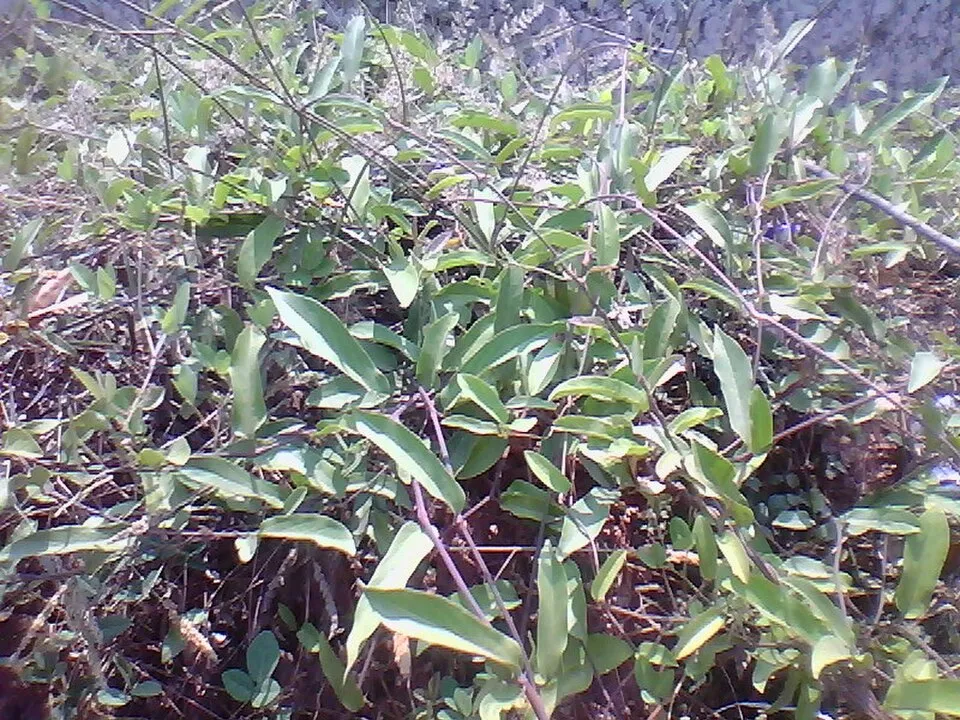
Aristolochia indica, commonly known as Indian Birthwort or Ishwari, is a remarkable perennial climbing herb belonging to the Aristolochiaceae family. This species is indigenous to the Indian subcontinent, Southeast Asia, and parts of southern China, where it flourishes in warm, humid environments such as forest undergrowth, along riverbanks, and in open scrublands, often twining around other vegetation.
Its slender, robust stems can extend to considerable lengths, supporting glossy green leaves that are typically ovate to lanceolate, reaching up to 12 cm in length. When crushed, these leaves release a distinct aromatic scent characteristic of the plant.
The most striking feature of Aristolochia indica is its unique flowers, which are S-shaped or pipe-shaped, earning it the common name 'Duck flower' in some regions. These pale greenish-white blooms, often adorned with purplish-brown venation, measure about 3-4 cm across and employ an intricate mechanism to trap small insects, primarily flies, for pollination. Following successful pollination, the plant produces globose or pear-shaped capsules that mature and open from the base upwards, dispersing numerous flattened, winged seeds.
Taxonomically, it falls under the Kingdom Plantae, Clade Angiosperms, Order Piperales, Family Aristolochiaceae, Genus Aristolochia, and Species A. indica. Historically, its name derives from Greek words signifying 'best delivery', reflecting its ancient use in uterine conditions, though modern understanding of its phytochemistry has led to significant safety concerns.
Trusted Scientific References
1. Authoritative external sources for Aristolochia indica
1.1 Wikipedia — Aristolochia indica
1.2 Kew POWO (Plants of the World Online)
1.3 PubMed — peer-reviewed research
1.4 NCBI Taxonomy Browser
1.5 GBIF — Global Biodiversity
1.6Indian Birthwort should be interpreted through verified botanical identity, practical care, and responsible safety language. This recovery note adds the missing context needed for a complete profile: match light to the plant's habit, use well-drained soil, water according to season, and avoid unsupported medicinal or edible claims. For publishing, the plant can be presented as a source-backed medicinal plant with clear care guidance, common problem diagnosis, and conservative safety wording.
1.1.Indian Birthwort — Notable Characteristics
- ✓Perennial climbing vine — Perennial climbing vine native to the Indian subcontinent and Southeast Asia.
- ✓Features distinctive S — shaped or pipe-shaped flowers, often called 'Duck flower'.
- ✓Leaves are ovate — Leaves are ovate to lanceolate and emit a unique aroma when crushed.
- ✓Historically referenced in — Historically referenced in ancient Ayurvedic and Unani texts for various medicinal uses.
- ✓Contains potent aristolochic — Contains potent aristolochic acids (AA), which are severe nephrotoxins and carcinogens.
- ✓Also contains beneficial — Also contains beneficial flavonoids like luteolin and kaempferol with anti-inflammatory properties.
- ✓Traditional uses include — Traditional uses include remedies for snakebites, skin diseases, and musculoskeletal pain.
- ✓Modern medical consensus — Modern medical consensus strongly advises against internal consumption due to high toxicity.
- ✓Its fruit is — Its fruit is a globose capsule releasing numerous flattened, winged seeds.
- ✓Requires humid, shaded — Requires humid, shaded environments for optimal growth.
1.2.Indian Birthwort — Concise Overview
- ✓Aristolochia indica is a tropical climbing vine, recognized by its unique pipe-shaped flowers.
- ✓Traditionally used in Ayurveda and folk medicine for snakebites, skin issues, and joint pain.
- ✓Contains highly toxic aristolochic acids (AA) which are nephrotoxic and carcinogenic.
- ✓Modern science strongly advises against internal use due to severe kidney damage and cancer risks.
- ✓Flavonoids like luteolin offer some anti-inflammatory benefits, but AA contamination is a major concern.
- ✓Only AA-free extracts are being researched, and expert consultation is crucial for any application.
2.Indian Birthwort — Nomenclature & Classification
3.Indian Birthwort — Fact Sheet
4.Indian Birthwort — Botanical Features
5.Indian Birthwort — Native Range & Habitat
6.Indian Birthwort — Traditional Uses
7.Indian Birthwort — Key Phytochemicals
- ✓Aristolochic Acids I & II — These are potent phenanthrene derivatives, known for their vasodilatory effects but primarily recognized for severe nephrotoxic and carcinogenic properties, especially with chronic exposure.
- ✓Luteolin — A significant flavonoid with established anti-inflammatory and antioxidant properties, capable of modulating NF-κB pathways to reduce inflammatory cytokines.
- ✓Kaempferol — Another beneficial flavonol that contributes to cellular health, exhibits mild anti-inflammatory effects, and functions as an antioxidant.
- ✓Isoquinoline Alkaloids — A class of nitrogen-containing compounds that may contribute to mild analgesic effects, historically observed in traditional applications.
- ✓Aristolactams — These are lactam derivatives, often metabolites of aristolochic acids, some of which may retain partial biological activity or toxicity.
- ✓Terpenoids — Various terpenoid compounds are present, contributing to the plant's aromatic profile and potentially to its defensive mechanisms.
- ✓Glycosides — A range of glycosides can be found, which may influence the plant's overall pharmacological activity and bioavailability of other compounds.
- ✓Phenolic Compounds — Beyond specific flavonoids, other general phenolic compounds contribute to the plant's antioxidant and protective qualities.
8.Indian Birthwort — Evidence-Based Benefits
- ✓Snakebite Adjunct — Traditionally, topical application was believed to slow venom spread due to local vasodilation and anti-inflammatory action, though no robust clinical trials exist to confirm venom neutralization.
- ✓Arthralgia & Myalgia Relief — Historically, small doses of root powder were used in Ayurvedic practices to alleviate joint swelling and muscle pain, an effect potentially mediated by anti-inflammatory flavonoids like luteolin.
- ✓Skin Disorders Management — Poultices made from crushed fresh leaves were traditionally applied for conditions such as eczema, ulcers, and skin eruptions, leveraging potential antimicrobial and anti-inflammatory properties of its flavonoid content.
- ✓Anti-inflammatory Action — Research on isolated luteolin fractions from Aristolochia indica has shown a reduction in COX-2 expression and IL-6 release in vitro, suggesting a genuine anti-inflammatory potential at non-toxic levels.
- ✓Antioxidant Support — The presence of flavonoids like luteolin and kaempferol contributes to the plant's antioxidant capacity, helping to combat oxidative stress at a cellular level.
- ✓Digestive Tonic (Traditional) — In some folk traditions, a microgram tincture was used to stimulate bile flow and aid digestion, although this application is highly questionable and discouraged by modern standards due to toxicity.
- ✓Antimicrobial Properties — Traditional uses for skin infections suggest inherent antimicrobial activity, which could be attributed to various secondary metabolites present in the plant.
- ✓Uterine Support (Historical) — As implied by its name, Aristolochia indica was historically valued in ancient texts for applications related to childbirth and uterine health, though these uses are now strictly contraindicated due to severe risks.
8.1.Indian Birthwort — Therapeutic Indications
9.Indian Birthwort — Safety & Side Effects
9.1.Indian Birthwort — Warnings
- ✓Nephrotoxicity — The primary concern is severe, irreversible kidney damage, known as Aristolochic Acid Nephropathy (AAN), leading to chronic kidney disease.
- ✓Carcinogenicity — Aristolochic acids are potent carcinogens, significantly increasing the risk of upper urinary tract cancers and other malignancies.
- ✓Gastrointestinal Distress — Nausea, vomiting, and abdominal discomfort are possible adverse effects, particularly with internal consumption.
- ✓Proteinuria and Hypertension — Kidney damage can manifest as proteinuria (protein in urine) and contribute to or exacerbate high blood pressure.
- ✓Allergic Contact Dermatitis — Topical application of leaves or plant material can cause localized skin irritation or allergic reactions in sensitive individuals.
- ✓Hepatic Toxicity — While primarily nephrotoxic, there is potential for adverse effects on liver function with prolonged or high-dose exposure.
- ✓Drug Interactions — May interact synergistically with other nephrotoxic medications, such as NSAIDs or aminoglycosides, amplifying kidney damage.
9.2.Indian Birthwort — Clinical Safety Notes
- ✓Internal Use Strictly Contraindicated — Due to severe nephrotoxicity and carcinogenicity from aristolochic acids, internal consumption of Aristolochia indica in any form is highly discouraged and banned in many regions.
- ✓Contraindicated in Pregnancy and Lactation — The plant poses significant risks to fetal development and infant health, making its use during pregnancy and breastfeeding unsafe.
- ✓Avoid with Kidney or Liver Disease — Individuals with pre-existing renal or hepatic impairments are at extremely high risk and must never use this plant.
- ✓Not for Children or Elderly — Vulnerable populations, including young children and the elderly with potentially diminished renal reserves, should completely avoid Aristolochia indica.
- ✓Consult a Healthcare Professional — Prior to any use, especially topical, always seek guidance from a qualified Ayurvedic practitioner or medical doctor to understand potential risks and alternatives.
- ✓Patch Testing for Topical Use — Before applying topically, perform a small patch test on the skin to check for any allergic reactions or irritation.
- ✓Immediate Medical Attention — If symptoms like dark urine, swelling, or reduced urine output occur after exposure, cease use immediately and seek urgent medical care.
10.Indian Birthwort — Preparations & Uses
- ✓Topical Poultice — Fresh leaves are crushed and mixed with ingredients like turmeric and coconut oil, then applied externally 2-3 times daily for joint pain, skin eruptions, or insect bites.
- ✓Root Powder (Traditional, Discouraged) — Historically, 50-100 mg of dried root powder was taken internally with ghee twice daily, but this practice is now strongly discouraged due to severe toxicity.
- ✓Decoction (Traditional, Rarely Used) — A traditional preparation involved simmering 5g of dried root in 100ml water, reduced to 25ml, and sipped slowly; this method is seldom used today.
- ✓Tinctures (Historical, High Risk) — Microgram quantities of distilled extracts were once used for various internal ailments, but the associated renal risks mean this form is no longer recommended.
- ✓External Pastes and Oils — Roots or leaves can be processed into pastes or infused into oils for localized external application, especially for skin conditions, with careful patch-testing.
- ✓Aristolochic Acid-Free Extracts (Research Phase) — Scientists are actively researching and developing extracts specifically depleted of aristolochic acids for potential safer therapeutic applications, though these are not widely available.
- ✓Professional Consultation — Any consideration of using Aristolochia indica, even topically, must be preceded by a thorough consultation with qualified Ayurvedic or medical professionals due to its potent and dangerous phytochemistry.
11.Indian Birthwort — How to Grow
- ✓Climate and Habitat — Thrives in warm, humid tropical and subtropical regions, ideally at elevations up to 500 meters, preferring shaded or partially shaded environments.
- ✓Soil Requirements — Prefers well-drained, fertile, and organically rich loamy soils with a slightly acidic to neutral pH (6.0-7.0).
- ✓Light Conditions — Requires indirect sunlight or dappled shade; direct, intense sun can scorch its leaves and hinder growth.
- ✓Propagation — Can be propagated from seeds, which require specific stratification, or more commonly from stem cuttings taken during the growing season.
- ✓Watering and Humidity — Demands consistent moisture, requiring regular watering to keep the soil moist but not waterlogged. High ambient humidity is also beneficial.
- ✓Support Structure — As a climbing vine, it needs a sturdy support structure like a trellis, fence, or other plants to twine around for optimal growth.
- ✓Pest and Disease Management — Generally robust, but can be susceptible to fungal issues in overly damp conditions; regular inspection helps prevent common pests.
- ✓Harvesting — Roots and rhizomes are traditionally harvested in the late monsoon season when the concentration of active compounds is believed to be at its peak, followed by careful cleaning and sun-drying.
Reviewed by the Flora Medical Global Botanical Review Panel
Multi-disciplinary editorial group · Botany · Ethnobotany · Herbal-medicine literature
Who reviewed this: This page was checked by the Flora Medical Global Botanical Review Panel — an in-house editorial group of botany graduates, ethnobotany researchers, and horticulture practitioners who collectively maintain our 7,000+ plant encyclopedia. Meet the team.
Our 4-step verification process
1. Taxonomic verification
Scientific names and synonyms cross-checked against Kew POWO, World Flora Online, and The Plant List.
2. Phytochemical & medicinal cross-reference
Active compounds, traditional uses, and reported activities are cross-referenced with PubMed, USDA Dr. Duke's database, and peer-reviewed ethnobotanical literature.
3. Conservation & distribution check
Distribution, ecology, and conservation status confirmed against GBIF occurrence records and the IUCN Red List.
4. Editorial & safety review
Every entry passes an editorial pass for clarity, originality, and safety notices (toxicity, contraindications, dosage caveats) before publication.
Last reviewed:
Important medical disclaimer: This content is for educational and research purposes only. It is not medical advice and is not a substitute for consultation with a licensed healthcare provider. Do not use any herb to self-treat a medical condition without professional guidance.
Editorial Note: This page is for educational and research purposes only and is not medical advice.
Written by: Flora Medical Global Editorial Team
Reviewed by: Flora Medical Global Botanical Review Panel
Last Updated: June 16, 2026





Indian Birthwort — Comments & Community Reviews
Rate this plant