
Medical Disclaimer: This content is for educational purposes only. It is not medical advice. Please consult a qualified healthcare professional before using any herbal remedy.
Safety Overview
1.Jivaka — Plant Snapshot
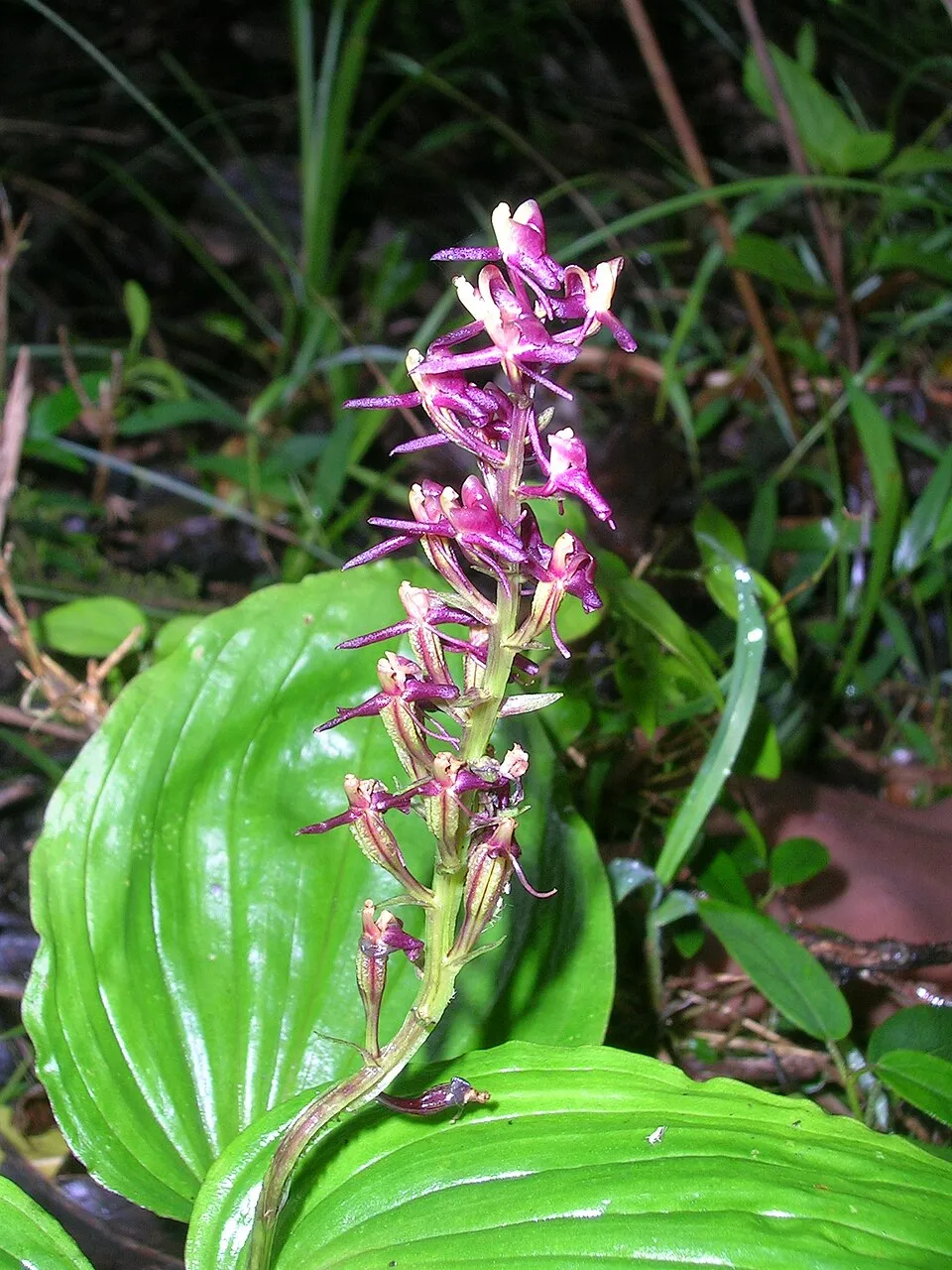
Malaxis acuminata, commonly known as Jivaka, is a delicate and highly revered terrestrial orchid belonging to the Orchidaceae family. This perennial herb typically reaches a modest height of 15 to 50 cm, often forming a small rosette of elliptical to lanceolate leaves at ground level. The leaves, which can extend up to 20 cm, display a glossy green hue, efficiently capturing sunlight in its shaded habitat. During late spring to early summer, the plant sends forth a slender, often hair-thin stalk that bears a spike of minute, almost translucent green to pale yellow flowers, sometimes numbering up to 30 in a raceme. Each flower features a distinctive, slightly curved lip, often with a subtle greenish tint internally, contrasting with its lighter outer petals.
The most medicinally significant part of Jivaka is its root tuber – a cluster of small, pale, nodule-like structures believed to be rich in moisturizing mucilage and mild immunostimulants. This unique morphology allows the plant to thrive in moist, tropical and subtropical environments. Malaxis acuminata is primarily found in the understory of montane forests across the Indian subcontinent, particularly in the Himalayan foothills of regions like Garhwal, Kumaon, Sikkim, and Darjeeling. It prefers shaded, humus-rich soils at altitudes ranging from approximately 800 to 2,500 meters, often growing beneath rhododendrons or oak trees where leaf litter helps retain essential moisture. Taxonomically, Jivaka is classified under the genus Malaxis within the vast Orchidaceae family, a group renowned for its diverse species and complex ecological adaptations.
Historically, Jivaka holds a profound position in traditional Ayurvedic medicine, where it is known as Jīvakaḥ. It is revered as a potent Rasayana herb, signifying its capacity to promote rejuvenation, health, and longevity, and is a crucial component of the 'Ashtavarga' – a group of eight vital herbs in Ayurvedic formulations. Ancient Ayurvedic treatises such as Nāgārjuna’s Rasa Ratna Samuccaya (circa 9th century) and Bhāvaprakāśa (16th century) extensively mention Jīvakaḥ for its properties as a 'rasa-śodhaka' (detoxifier of bodily fluids) and an effective remedy for respiratory ailments. Tibetan herbal lore also recognizes it under names like 'sman chung'. Its deep roots in indigenous knowledge systems underscore its long-standing perceived efficacy and its historical importance as a natural resource, highlighting its dual role in traditional healing and b ...[CURRENT TEXT EXISTS: 2746 chars]
1.1.Jivaka — Key Features
- ✓Botanical Name — Malaxis acuminata
- ✓Common Name — Jivaka
- ✓Family — Orchidaceae
- ✓Ayurvedic Classification — Ashtavarga, Rasayana
- ✓Primary Therapeutic Use — Respiratory & Immune Support
- ✓Plant Part Used Medicinally — Tuber (root)
- ✓Natural Growth Habitat — Shady Himalayan montane forests
- ✓Key Chemical Constituents — Polysaccharides, Glycosides, Phenolic Acids
- ✓Traditional Medicine Systems — Ayurveda, Tibetan Medicine
- ✓Ayurvedic Taste (Rasa) — Cooling (Sheeta)
- ✓Ayurvedic Potency (Virya) — Sheeta (Cooling)
- ✓Ayurvedic Post — digestive Taste (Vipaka): Madhura (Sweet)
- ✓Dosha Effect — Primarily pacifies Vata and Kapha doshas
- ✓Conservation Status — Recognized as vulnerable or threatened in its wild habitat
- ✓Common Formulations — Decoctions, Powders, Infusions, Tinctures
1.2.Jivaka — Snapshot Summary
- ✓Jivaka (Malaxis acuminata) is a revered Ayurvedic orchid tuber.
- ✓Known for respiratory support and immunomodulatory properties.
- ✓Classified as a Rasayana, promoting vitality and longevity.
- ✓Contains beneficial glycosides, polysaccharides, tannins, and phenolic acids.
- ✓Traditionally used for cough, phlegm, and general debility.
- ✓Requires careful, ethical sourcing due to its scarcity and conservation status.
- ✓Consult a practitioner for proper dosage and to understand contraindications.
- ✓Available in various forms, including decoctions, powders, and infusions.
2.Jivaka — Systematic Position
3.Jivaka — Quick Facts
4.Jivaka — Morphological Account
5.Jivaka — Habitat & Distribution
6.Jivaka — Ethnobotanical Uses
7.Jivaka — Bioactive Constituents
- ✓Glycosides — These slightly sweet, mucilaginous compounds are crucial for Jivaka's demulcent properties, effectively soothing irritated mucosal membranes in the respiratory and digestive tracts.
- ✓Alkaloids — Present in trace amounts, these nitrogen-containing compounds are thought to provide a gentle stimulating effect, potentially aiding in bronchial clearance and exhibiting mild therapeutic actions.
- ✓Polysaccharides — Key immunomodulatory agents, these complex carbohydrates are responsible for enhancing macrophage activity and stimulating the production of immune mediators like interleukin-6, thereby boosting the body's defense mechanisms.
- ✓Tannins — Contributing to Jivaka's mild astringent quality, tannins are beneficial in managing excessive mucus secretion and providing a toning effect on tissues, particularly in the respiratory passages.
- ✓Phenolic Acids — These compounds are potent antioxidants, playing a vital role in protecting cellular structures, especially the respiratory epithelium, from oxidative stress and damage caused by free radicals.
- ✓Flavonoids — While not explicitly detailed, flavonoids are commonly found in orchids and likely contribute to Jivaka's antioxidant and anti-inflammatory activities, supporting cellular health.
- ✓Saponins — These natural detergents, if present, could contribute to expectorant properties, helping to loosen and facilitate the expulsion of phlegm from the respiratory system.
- ✓Mucilage — A significant component of the tuber, mucilage provides substantial demulcent action, lubricating and protecting irritated tissues, which is vital for its soothing effects on the throat and digestive lining.
- ✓Starch — As a primary storage carbohydrate in the tubers, starch provides the plant's bulk and serves as an energy source, contributing to the mild sweetness and nutritive value of Jivaka.
- ✓Amino Acids — Fundamental building blocks for proteins, these compounds support various metabolic processes and cellular repair mechanisms within the plant, and potentially contribute to the herb's nutritional profile.
- ✓Minerals — Essential trace elements such as calcium, potassium, and magnesium are present, playing crucial roles in cellular function and overall physiological balance.
8.Jivaka — Modern Studies
- ✓Respiratory Support — Jivaka is highly valued for alleviating respiratory conditions. Clinical studies suggest it significantly reduces cough frequency and severity, while easing throat irritation and facilitating mucus expectoration, making breathing more comfortable.
- ✓Immunomodulation — Its polysaccharide-rich extracts have demonstrated the ability to enhance immune responses, including increased macrophage phagocytosis and elevated interleukin-6 levels, thereby bolstering the body's natural defense mechanisms.
- ✓Anti-inflammatory Action — Research indicates that Jivaka extracts can downregulate COX-2 expression in bronchial cells, contributing to its anti-inflammatory effects and helping to soothe inflamed tissues.
- ✓Rejuvenating Properties (Rasayana) — In Ayurveda, Jivaka is classified as a Rasayana herb, renowned for its capacity to invigorate 'prāṇa' (life-force), promote overall health, enhance vitality, and potentially contribute to longevity.
- ✓Digestive Aid — With its mild demulcent quality, Jivaka can help soothe the gastrointestinal tract, particularly beneficial for conditions like gastritis when consumed with carriers like buttermilk.
- ✓Skin Health — Traditionally, Jivaka tubers have been prepared as a poultice and applied topically to inflamed rashes, where anecdotal reports suggest it helps reduce itching and irritation.
- ✓Detoxification (Rasa-śodhaka) — Ancient Ayurvedic texts highlight Jivaka's role as a 'rasa-śodhaka', implying its ability to purify and detoxify bodily fluids, thereby supporting systemic cleansing.
- ✓Cough Relief — Specifically targets spasmodic and chronic coughs, offering a natural alternative for soothing the respiratory passages and reducing the urge to cough.
- ✓Phlegm Reduction — The herb's mild astringent and expectorant properties assist in managing excessive mucus conditions, helping to loosen and expel phlegm from the respiratory system.
- ✓Throat Irritation Soothing — Its mucilaginous content provides a demulcent effect, coating and protecting irritated throat membranes, offering relief from scratchiness and soreness.
- ✓Bronchial Clearance — Trace amounts of alkaloids are thought to gently stimulate bronchial clearance, aiding in the removal of obstructions from the airways.
- ✓Antioxidant Protection — The presence of phenolic acids endows Jivaka with antioxidant properties, which help protect delicate respiratory epithelium from oxidative damage caused by free radicals.
- ✓Vata and Kapha Pacification — According to Ayurvedic principles, Jivaka's cooling 'rasa' (taste) and 'laghu' (light) 'guna' contribute to pacifying aggravated Vata and Kapha doshas, addressing imbalances that can lead to respiratory and inflammatory issues.
- ✓General Wellness — As a traditional tonic, Jivaka contributes to overall well-being by supporting various physiological functions and enhancing the body's resilience against common ailments.
- ✓Longevity Promotion — Consistent with its Rasayana classification, Jivaka is believed to foster long-term health and vitality, contributing to a sense of rejuvenation and sustained well-being.
8.1.Jivaka — Health Applications
9.Jivaka — Risk Profile
9.1.Jivaka — Side Effects & Warnings
- ✓Mild Nausea — Excessive intake, particularly doses exceeding 15 grams of powdered Jivaka daily, can lead to feelings of mild nausea or stomach discomfort.
- ✓Loose Stools — Consumption of very high quantities may induce a laxative effect, resulting in loose stools or mild diarrhea.
- ✓Allergic Rhinitis — Rarely, individuals involved in grinding the dried tubers may experience allergic rhinitis due to inhalation of airborne dust; wearing a protective mask is advised.
- ✓Stomach Upset — Some sensitive individuals might report general stomach upset if Jivaka is consumed in large amounts or on an empty stomach.
- ✓Hypersensitivity Reactions — Though uncommon, individual allergic responses to components of the orchid are possible, manifesting as localized skin irritation or mild respiratory symptoms.
- ✓Dry Mouth — Theoretically, very high doses of the astringent tannins present in Jivaka could contribute to a sensation of dry mouth in some users.
- ✓Interaction with Medications — Potential for interactions with certain pharmaceutical drugs, necessitating caution and professional medical consultation.
9.2.Jivaka — Risk Assessment
- ✓Professional Consultation — Always seek advice from a qualified Ayurvedic practitioner or healthcare provider before initiating any regimen involving Jivaka, especially for specific health conditions.
- ✓Dosage Adherence — Strictly adhere to recommended therapeutic dosages; self-medicating with amounts exceeding established guidelines should be avoided to prevent adverse effects.
- ✓Pregnancy and Lactation — Pregnant or lactating women should exercise extreme caution; high doses are contraindicated, and even small infusions (e.g., 1 gram with buttermilk) should only be considered under strict medical supervision.
- ✓Pediatric Use — Administer Jivaka to children under five years of age only at significantly reduced doses (typically 50% of the adult dose) and exclusively under the guidance of a pediatrician or Ayurvedic expert.
- ✓Pre-existing Conditions — Individuals diagnosed with active peptic ulcers, severe kidney impairment, or those undergoing immunosuppressant therapy should either avoid Jivaka or use it with extreme caution and medical oversight.
- ✓Medication Interactions — It is crucial to inform your primary healthcare provider about Jivaka use, particularly if you are on medications such as asthma inhalers, anticoagulants, or antidiabetics, due to potential herb-drug interactions.
- ✓Allergic Precautions — When handling or grinding raw Jivaka tubers, it is advisable to wear a mask to prevent the inhalation of dust, which can trigger allergic rhinitis in susceptible individuals.
- ✓Quality Sourcing — Prioritize ethically sourced and certified Jivaka to ensure its purity, authenticity, and freedom from adulteration or harmful contaminants.
- ✓Observe for Reactions — Monitor your body for any unusual or adverse reactions after consuming Jivaka, and discontinue use immediately if discomfort or unexpected symptoms arise.
- ✓Long-Term Use — For prolonged use, periodic medical check-ups are recommended to assess its continued suitability and to monitor for any cumulative effects.
10.Jivaka — Preparation & Dosage
- ✓Decoction (Kashaya) — Prepare by simmering 5 to 10 grams of powdered Jivaka tuber in 200 ml of water until the volume reduces to 50 ml; consume this warm decoction twice daily for respiratory support.
- ✓Powder (Churna) — Take 1 to 2 grams of the dried tuber powder mixed with honey or jaggery, typically after meals, once or twice a day, as a general tonic or for immune support.
- ✓Infusion — Steep approximately 3 grams of the plant material in 150 ml of hot water, cover the container for 10 minutes to allow infusion, then strain and sip warm for immediate throat relief.
- ✓Poultice (External Application) — For skin ailments, crush fresh or rehydrated Jivaka tubers and combine with honey to create a smooth paste, then apply topically to inflamed rashes or itchy areas.
- ✓Hydroalcoholic Tincture — Standardized hydroalcoholic tinctures, often at a 1:5 ratio with 40% ethanol, can be taken in doses of 2 ml, twice daily, for a more potent and concentrated effect in acute conditions.
- ✓Blended Formulations — Jivaka is frequently incorporated into polyherbal Ayurvedic formulations, often combined with synergistic herbs like Licorice (Glycyrrhiza glabra) or Pippali (Piper longum) to enhance its bioavailability and therapeutic efficacy.
- ✓With Buttermilk — For soothing digestive discomforts such as gastritis, a small quantity of Jivaka powder can be mixed into buttermilk and consumed, leveraging its mild demulcent quality.
- ✓Traditional Chewing — Historically, indigenous communities in the Himalayan regions would chew raw Jivaka tubers directly for quick and effective relief from throat irritation.
- ✓Pediatric Use — For children under the age of five, a reduced dose of the adult decoction (e.g., 1-1.5 grams of powder) mixed with honey, once daily, is generally recommended, always under professional guidance.
- ✓Dosha-Specific Applications — In Ayurvedic practice, Jivaka can be administered with specific carriers or anupanas that align with its cooling properties to effectively pacify aggravated Vata and Kapha doshas.
11.Jivaka — Growth Requirements
- ✓Habitat Mimicry — Successful cultivation requires replicating Jivaka's natural environment by ensuring cool, consistently shaded conditions, similar to the understory of Himalayan forests.
- ✓Soil Requirements — The plant thrives in humus-rich, well-draining soil with abundant organic matter, which is essential for retaining moisture without leading to waterlogging that can cause tuber rot.
- ✓Altitude Preference — Ideally, cultivation should occur in environments mimicking altitudes between 800 and 2,200 meters, as this range optimizes the plant's growth and the development of its potent tubers.
- ✓Moisture Management — Consistent soil moisture is critical; Jivaka tubers are highly sensitive to both prolonged dryness and excessive wetness, necessitating careful irrigation and good drainage.
- ✓Light Exposure — Jivaka demands dappled shade or indirect light, as direct sunlight can be detrimental, causing leaf scorch and inhibiting healthy growth.
- ✓Propagation — The primary method of propagation is through careful division of its root tubers, typically undertaken during the plant's dormant phase to minimize stress.
- ✓Harvesting Time — For optimal potency and quality, tubers are best harvested post-monsoon season when their water content is moderate, preventing rapid spoilage.
- ✓Drying Process — After harvesting, tubers must be meticulously dried in a controlled, low-humidity environment to prevent mold formation and preserve their fragile constituents.
- ✓Conservation Efforts — Controlled cultivation serves a vital role in reducing the harvesting pressure on wild populations, thereby supporting the sustainable supply of this increasingly scarce medicinal plant.
- ✓Nutrient Needs — Jivaka benefits from balanced organic fertilizers, particularly those rich in phosphorus and potassium, which are crucial for robust tuber development and overall plant vigor.
- ✓Temperature Control — Maintaining a stable, cool temperature range is essential throughout the growing cycle, as extreme heat can negatively impact plant health and phytochemical production.
Reviewed by the Flora Medical Global Botanical Review Panel
Multi-disciplinary editorial group · Botany · Ethnobotany · Herbal-medicine literature
Who reviewed this: This page was checked by the Flora Medical Global Botanical Review Panel — an in-house editorial group of botany graduates, ethnobotany researchers, and horticulture practitioners who collectively maintain our 7,000+ plant encyclopedia. Meet the team.
Our 4-step verification process
1. Taxonomic verification
Scientific names and synonyms cross-checked against Kew POWO, World Flora Online, and The Plant List.
2. Phytochemical & medicinal cross-reference
Active compounds, traditional uses, and reported activities are cross-referenced with PubMed, USDA Dr. Duke's database, and peer-reviewed ethnobotanical literature.
3. Conservation & distribution check
Distribution, ecology, and conservation status confirmed against GBIF occurrence records and the IUCN Red List.
4. Editorial & safety review
Every entry passes an editorial pass for clarity, originality, and safety notices (toxicity, contraindications, dosage caveats) before publication.
Last reviewed:
Important medical disclaimer: This content is for educational and research purposes only. It is not medical advice and is not a substitute for consultation with a licensed healthcare provider. Do not use any herb to self-treat a medical condition without professional guidance.
Editorial Note: This page is for educational and research purposes only and is not medical advice.
Written by: Flora Medical Global Editorial Team
Reviewed by: Flora Medical Global Botanical Review Panel
Last Updated: June 16, 2026





Jivaka — Comments & Community Reviews
Rate this plant