


Medical Disclaimer: This content is for educational purposes only. It is not medical advice. Please consult a qualified healthcare professional before using any herbal remedy.
Safety Overview
1.Kapoor — Introduction & Highlights
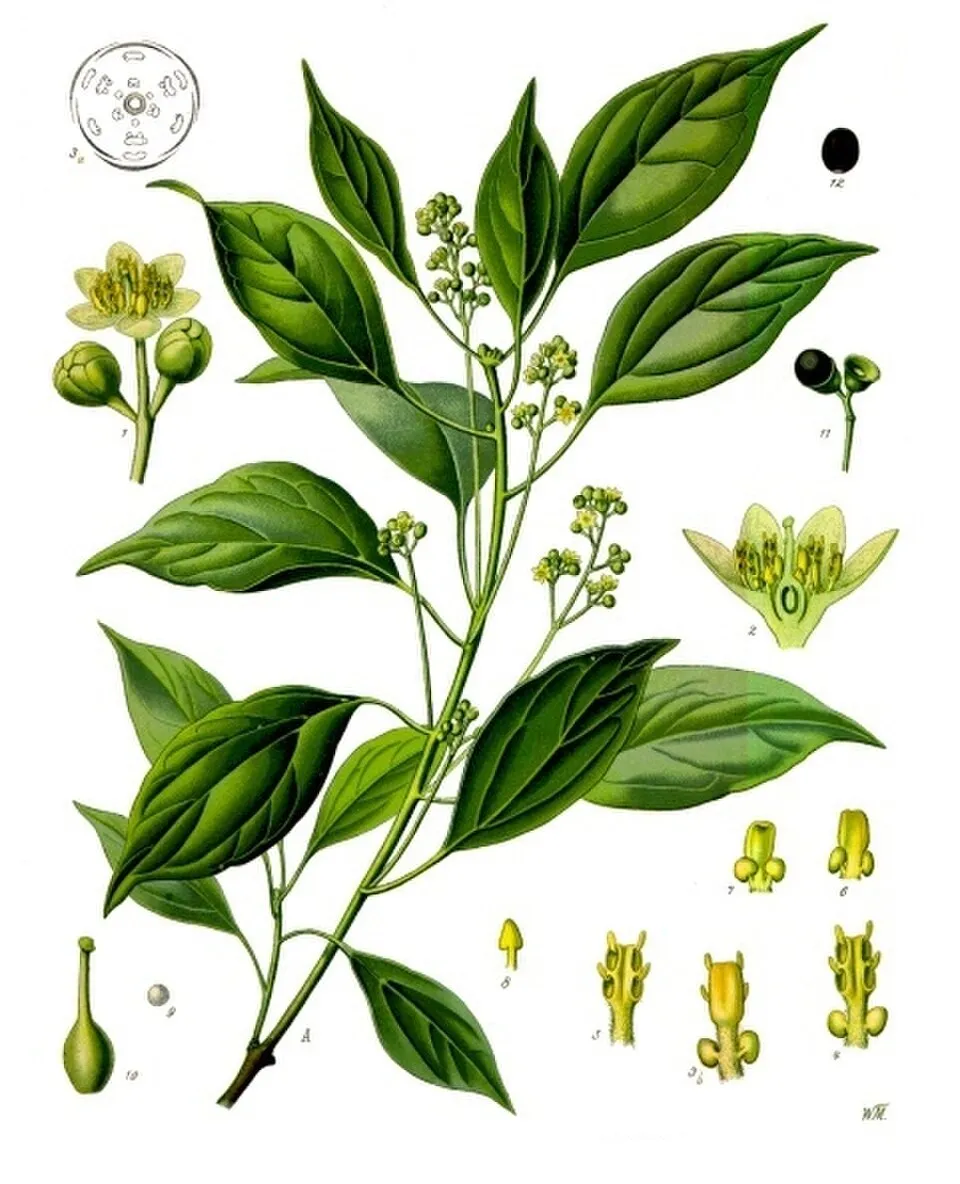
Cinnamomum camphora, widely recognized as Kapoor or the camphor tree, is a majestic evergreen specimen belonging to the esteemed Lauraceae family, a lineage celebrated for its many aromatic species. This impressive tree can attain considerable heights, typically ranging from 20 to 30 meters, standing as a prominent feature in its native ecosystems. Its foliage is distinctive, characterized by glossy, leathery leaves that are lanceolate to elliptical in shape, generally measuring between 5 to 12 centimeters in length and 3 to 6 centimeters in width. These leaves are arranged alternately along the branches and emit a characteristic camphoraceous aroma when crushed, a key identifier of the species. The bark of Cinnamomum camphora presents a rough, dark gray texture, which deepens with age, offering a visually distinct appearance. During late spring to early summer, the tree produces small, rather inconspicuous flowers.
These greenish-white blossoms aggregate in delicate clusters, each contributing to the tree's overall aromatic profile. Following successful pollination, these flowers give way to small, spherical fruits, which mature into a deep purple-black drupe, approximately 1 centimeter in diameter, each containing a single seed. Native to the subtropical and tropical regions of East Asia, particularly China, Taiwan, and Japan, Cinnamomum camphora has been extensively cultivated and naturalized across various tropical and subtropical zones worldwide. Its global spread is primarily due to the high demand for its aromatic wood and, more significantly, the essential oil derived from it, which is rich in camphor. The tree thrives in diverse environments but shows a strong preference for well-drained, fertile soils. It is commonly found in forested areas, mountainous terrains, and along riverbanks, preferring a humid subtropical to tropical climate.
Despite its adaptability to a variety of soil types and conditions, it flourishes most robustly when exposed to full sunlight. The ecological importance of Kapoor extends beyond its aromatic compounds; it plays a role in forest ecosystems, providing habitat and contributing to biodiversity. Historically, the tree has been revered across cultures, not only for its timber but especially for its medicinal properties, which have been documented and utilized for centuries in traditional healing systems. Its unique botanical characteristics, coupled with its significant historical and economic value, underscore Cinnamum ...[CURRENT TEXT EXISTS: 2812 chars]
1.1.Kapoor — Key Features
- ✓Evergreen Tree — Tall, robust evergreen belonging to the Lauraceae family.
- ✓Aromatic Foliage — Leaves release a characteristic camphor scent when crushed.
- ✓Camphor Production — Principal source of natural camphor, a waxy crystalline solid.
- ✓East Asian Native — Indigenous to regions like China, Taiwan, and Japan.
- ✓Global Distribution — Widely cultivated in tropical and subtropical zones worldwide.
- ✓Medicinal Versatility — Used in traditional and modern medicine for diverse ailments.
- ✓Analgesic Agent — Known for its pain-relieving properties, especially topical.
- ✓Decongestant Power — Effective in clearing respiratory congestion and coughs.
- ✓Penetration Enhancer — Enhances transdermal absorption of other compounds.
- ✓Antiseptic Qualities — Possesses mild antiseptic and insect-repellent properties.
- ✓Distinctive Aroma — Strong, pungent, and refreshing camphoraceous scent.
- ✓Toxic if Ingested — Potentially lethal if taken internally, particularly for children.
- ✓Traditional Uses — Integral to Ayurvedic, TCM, and Unani healing systems.
- ✓Fast — Growing — Can grow relatively quickly under optimal conditions.
- ✓Ornamental Value — Also valued as an ornamental and shade tree.
1.2.Kapoor — Concise Overview
- ✓Cinnamomum camphora, or Kapoor, is an evergreen tree known for its highly aromatic properties.
- ✓The primary active compound is camphor, a terpene ketone with a strong, distinctive scent.
- ✓Traditionally used in Ayurveda and TCM for respiratory issues, pain, and inflammation.
- ✓Modern uses include topical analgesics, decongestants, and as a penetration enhancer in formulations.
- ✓Highly toxic if ingested, especially for children, and should only be used externally.
- ✓Acts as a counterirritant, providing local pain relief and soothing respiratory passages.
- ✓Found in various topical balms, liniments, and essential oil preparations.
- ✓Avoid use during pregnancy, lactation, and in individuals with seizure disorders.
2.Kapoor — Scientific Profile
3.Kapoor — Botanical Stats
4.Kapoor — Plant Morphology
5.Kapoor — Where It Grows
6.Kapoor — Cultural & Traditional Roles
7.Kapoor — Bioactive Constituents
- ✓Monoterpenes — The most prominent constituent is D-camphor (C10H16O), a bicyclic monoterpene ketone responsible for the characteristic aroma and many pharmacological actions, including analgesic and decongestant effects. Other monoterpenes like alpha-pinene, beta-pinene, camphene, and limonene are also present, contributing to the oil's overall profile and therapeutic properties.
- ✓Monoterpenoids (Oxygenated) — Besides camphor, other oxygenated monoterpenoids like borneol (a cyclic terpene alcohol), 1,8-cineole (eucalyptol), and terpineol are found. Borneol, in particular, has been studied for its penetration-enhancing properties and ability to cross physiological barriers.
- ✓Sesquiterpenes — While less abundant than monoterpenes, Cinnamomum camphora may contain various sesquiterpenes such as beta-caryophyllene and humulene, which can contribute to anti-inflammatory and other subtle effects.
- ✓Aromatic Compounds — Trace amounts of compounds like safrole (though less common in medicinal camphor chemotypes) and eugenol may be present, depending on the chemotype and plant part, adding to the complex scent profile.
- ✓Esters — Esters such as bornyl acetate are found, contributing to the aromatic complexity and potentially offering mild soothing properties.
- ✓Alcohols — Beyond borneol, other terpene alcohols may be present, influencing the essential oil's antimicrobial and therapeutic activities.
- ✓Aldehydes — Compounds like cinnamaldehyde, though more characteristic of other Cinnamomum species, can sometimes be found in trace amounts, contributing to the overall aroma.
- ✓Phenols — While not primary constituents, certain phenolic compounds might occur, offering antioxidant or antimicrobial effects.
- ✓Ketones — Camphor itself is a ketone, but other minor ketones might also be present, albeit in much lower concentrations, influencing the overall chemical profile.
8.Kapoor — Research Insights
- ✓Analgesic Properties — Camphor, the primary constituent of Kapoor, is well-known for its ability to relieve pain. When applied topically, it acts as a counterirritant, producing a localized sensation of warmth or coolness that distracts from deeper pain, making it effective for muscle aches and joint discomfort.
- ✓Decongestant Action — The aromatic vapors of camphor are highly effective in clearing respiratory passages. Inhaling camphor-infused preparations can help alleviate nasal congestion, coughs, and other symptoms associated with colds, flu, and bronchitis by thinning mucus and promoting expectoration.
- ✓Anti-inflammatory Effects — Traditional medicine systems like Ayurveda utilize Kapoor for its purported anti-inflammatory capabilities. It is believed to reduce swelling and inflammation, which contributes to its use in treating respiratory conditions and localized pain.
- ✓Topical Penetration Enhancer — Research indicates that camphor can enhance the transdermal delivery of other therapeutic compounds. It perturbs the skin's lipid structure, temporarily increasing permeability, which can improve the absorption of co-applied medications.
- ✓Antiseptic Qualities — Camphor possesses mild antiseptic properties, which contribute to its traditional use in wound care and as a component in various skin preparations. It can help prevent the growth of certain microorganisms on the skin surface.
- ✓Cough Suppressant — As a component in many over-the-counter cough and cold remedies, camphor acts as a cough suppressant. Its vapors soothe irritated airways and reduce the urge to cough, providing relief from persistent coughing.
- ✓Antispasmodic Benefits — In traditional practices, Kapoor has been used to alleviate spasms. This property makes it beneficial for conditions involving muscle cramps or spasmodic coughs, contributing to a sense of relaxation.
- ✓Insect Repellent — The strong, distinctive aroma of camphor is a natural deterrent to various insects. It has been traditionally used to repel moths and other pests, and can also be applied topically in diluted forms to ward off mosquitoes.
- ✓Local Anesthetic — When applied to the skin, camphor can produce a mild numbing sensation, acting as a local anesthetic. This contributes to its pain-relieving effects, particularly for superficial pain and itching.
- ✓Diaphoretic Action — Traditional Chinese Medicine (TCM) employs camphor for its diaphoretic properties, meaning it can induce sweating. This action is believed to help expel toxins and reduce fever during the initial stages of a cold.
- ✓Circulatory Stimulant — Topical application of camphor can cause local vasodilation, increasing blood flow to the area. This hyperemic effect is beneficial for conditions like rheumatism and muscular stiffness, promoting warmth and healing.
- ✓Traditional Eye Health Support — In some traditional Ayurvedic formulations, camphor has been an ingredient for eye diseases. For example, specific preparations like Talarasad i dhara, when traditionally prepared, were noted for their potential benefits in various eye conditions, though its direct application to the eyes requires extreme caution.
- ✓Mood Elevation — The invigorating aroma of camphor essential oil is sometimes used in aromatherapy for its stimulating and uplifting effects. It is believed to help clear the mind and reduce feelings of lethargy or mental fatigue.
- ✓Anti-fungal Activity — Some studies suggest that camphor may exhibit anti-fungal properties, making it potentially useful in addressing certain superficial fungal infections when properly formulated and applied.
8.1.Kapoor — Indications & Uses
9.Kapoor — Precautions & Warnings
9.1.Kapoor — Warnings
- ✓Skin Irritation and Allergic Reactions — Topical application can cause redness, itching, burning, or rash, especially in sensitive individuals or with high concentrations.
- ✓Central Nervous System Toxicity (Ingestion) — Ingesting camphor, even in small amounts, can lead to severe neurological symptoms including nausea, vomiting, abdominal pain, irritability, restlessness, confusion, hallucinations, and seizures.
- ✓Respiratory Distress — Excessive inhalation of camphor vapors, particularly in sensitive individuals or infants, can cause respiratory irritation, bronchospasm, or breathing difficulties.
- ✓Liver Toxicity — Cases of hepatotoxicity have been reported, particularly in infants treated with camphor-containing remedies applied to the skin or ingested, highlighting its systemic absorption and metabolic burden.
- ✓Oral Toxicity in Children — Children are particularly vulnerable to camphor poisoning, with even small ingested doses (e.g., a teaspoon of camphorated oil) being potentially fatal.
- ✓Gastrointestinal Upset — Oral ingestion can cause severe stomach upset, cramping, and diarrhea.
- ✓Cardiac Effects — In severe poisoning cases, camphor can lead to cardiac depression or arrhythmias.
- ✓Pregnancy Complications — Camphor can cross the placental barrier and has been linked to effects on embryo development; it is also reported to induce abortion and reduce milk production.
9.2.Kapoor — Safety Profile
- ✓External Use Only — Camphor (Cinnamomum camphora) should be used strictly for external application and inhalation, never ingested, due to its high toxicity when taken internally.
- ✓Avoid Broken or Damaged Skin — Do not apply camphor to open wounds, broken skin, or mucous membranes, as this increases systemic absorption and risk of toxicity.
- ✓Not for Infants and Young Children — Camphor is highly toxic to children; avoid use in infants and young children, especially on the chest or face, due to risk of respiratory depression and seizures.
- ✓Pregnancy and Lactation Contraindication — Pregnant and lactating women should avoid camphor due to potential adverse effects on fetal development and possible reduction in milk supply.
- ✓Avoid in Seizure Disorders — Individuals with a history of seizures or epilepsy should avoid camphor, as it can induce seizures.
- ✓Patch Test Recommended — Always perform a patch test on a small area of skin before extensive topical application to check for allergic reactions or sensitivity.
- ✓Proper Storage — Store camphor products securely, out of reach of children and pets, in clearly labeled containers.
- ✓Consult a Healthcare Professional — Individuals with pre-existing medical conditions (e.g., liver disease, asthma) or those on medication should consult a doctor before using camphor products.
- ✓Dosage and Concentration — Use camphor products strictly according to recommended dosages and concentrations; higher concentrations increase the risk of adverse effects.
10.Kapoor — Application Forms
- ✓Topical Ointments and Balms — Apply camphor-infused ointments or balms directly to the skin for muscle aches, joint pain, or chest congestion. Rub gently until absorbed, avoiding broken skin.
- ✓Inhalation for Respiratory Relief — Add a few drops of camphor essential oil to a bowl of hot water or a diffuser for steam inhalation to clear nasal passages and ease coughs. Do not ingest.
- ✓Chest Rubs — Apply camphorated oil or vapor rub to the chest and throat area to alleviate coughs and congestion, especially before sleep.
- ✓Liniments for Pain — Use camphor-containing liniments as a counterirritant for localized pain, such as sprains or arthritis, by massaging into the affected area.
- ✓Insect Repellent Sprays — Dilute camphor essential oil with a carrier oil or water to create a natural insect repellent for skin or to spray in living spaces.
- ✓Aromatherapy — Diffuse camphor essential oil in a well-ventilated room to refresh the air, uplift mood, or as part of respiratory support. Use sparingly.
- ✓Traditional Ayurvedic Preparations — In Ayurveda, camphor is used in specific formulations (e.g., powders, oils) for respiratory issues, pain, and as a digestive stimulant, always under expert guidance and in very small, prescribed doses.
- ✓Traditional Chinese Medicine (TCM) Applications — In TCM, camphor is incorporated into external applications for pain relief, inflammation, and to 'open the orifices,' and in very minute internal doses for specific conditions, strictly by qualified practitioners.
- ✓Moth Repellent — Place small pieces of solid camphor in closets or drawers to deter moths and protect fabrics, ensuring it is out of reach of children and pets.
- ✓Foot Soaks — Add a small amount of diluted camphor solution to a warm foot bath to soothe tired feet or address minor fungal issues, ensuring proper dilution.
11.Kapoor — Growth Requirements
- ✓Climate Preference — Thrives in humid subtropical to tropical climates, preferring warm temperatures and adequate rainfall.
- ✓Soil Requirements — Prefers well-drained, fertile, slightly acidic to neutral soils (pH 5.5-7.0); tolerates a range of soil types but avoids waterlogging.
- ✓Sunlight Exposure — Requires full sun exposure for optimal growth, although young trees can tolerate partial shade.
- ✓Propagation — Primarily propagated by seeds, which require stratification for improved germination; also can be propagated by cuttings, though with varying success rates.
- ✓Watering — Requires consistent moisture, especially during dry periods and for young plants, but is relatively drought-tolerant once established.
- ✓Fertilization — Benefits from regular fertilization with a balanced, slow-release fertilizer, especially during its active growing season.
- ✓Pruning — Minimal pruning is needed, primarily for shaping, removing dead or diseased branches, or to manage size in cultivation.
- ✓Pest and Disease Management — Generally robust, but can be susceptible to root rot in poorly drained soils and occasional leaf spot diseases or insect pests; requires good air circulation.
- ✓Harvesting — Camphor is typically extracted from the wood, bark, and leaves of mature trees, often through steam distillation or solvent extraction.
- ✓Growing Environment — Can be grown as a shade tree, ornamental, or in plantations for commercial camphor production.
Reviewed by the Flora Medical Global Botanical Review Panel
Multi-disciplinary editorial group · Botany · Ethnobotany · Herbal-medicine literature
Who reviewed this: This page was checked by the Flora Medical Global Botanical Review Panel — an in-house editorial group of botany graduates, ethnobotany researchers, and horticulture practitioners who collectively maintain our 7,000+ plant encyclopedia. Meet the team.
Our 4-step verification process
1. Taxonomic verification
Scientific names and synonyms cross-checked against Kew POWO, World Flora Online, and The Plant List.
2. Phytochemical & medicinal cross-reference
Active compounds, traditional uses, and reported activities are cross-referenced with PubMed, USDA Dr. Duke's database, and peer-reviewed ethnobotanical literature.
3. Conservation & distribution check
Distribution, ecology, and conservation status confirmed against GBIF occurrence records and the IUCN Red List.
4. Editorial & safety review
Every entry passes an editorial pass for clarity, originality, and safety notices (toxicity, contraindications, dosage caveats) before publication.
Last reviewed:
Important medical disclaimer: This content is for educational and research purposes only. It is not medical advice and is not a substitute for consultation with a licensed healthcare provider. Do not use any herb to self-treat a medical condition without professional guidance.
Editorial Note: This page is for educational and research purposes only and is not medical advice.
Written by: Flora Medical Global Editorial Team
Reviewed by: Flora Medical Global Botanical Review Panel
Last Updated: June 16, 2026





Kapoor — Comments & Community Reviews
Rate this plant