
Medical Disclaimer: This content is for educational purposes only. It is not medical advice. Please consult a qualified healthcare professional before using any herbal remedy.
Safety Overview
1.Kratom Vine — At a Glance
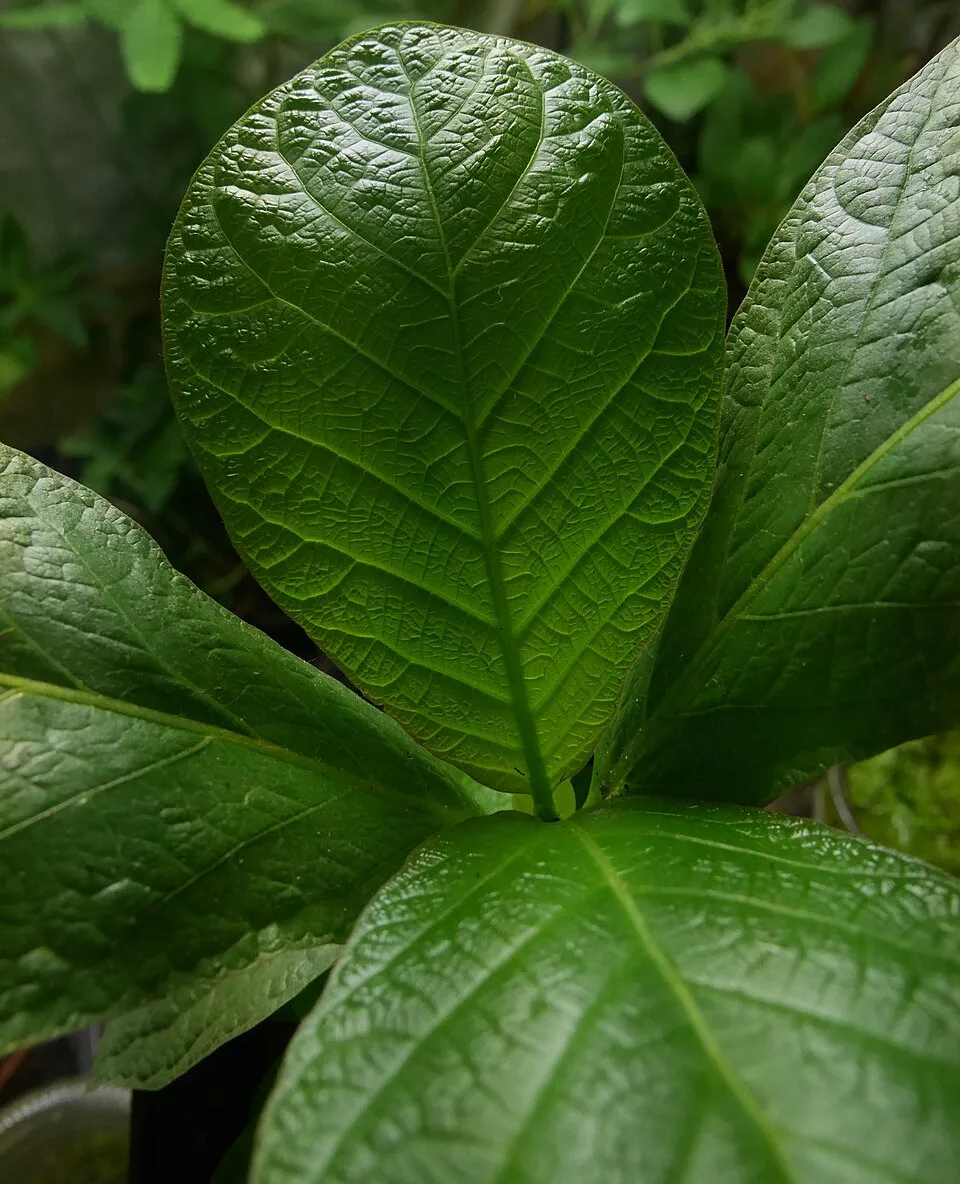
Mitragyna hirsuta, commonly known as Kratom Vine, is a captivating evergreen tree native to the lush, humid tropical forests of Southeast Asia, particularly prevalent in countries such as Thailand and parts of Cambodia. Belonging to the esteemed Rubiaceae family, it shares kinship with coffee and other significant botanical species. This robust plant typically attains a moderate height, ranging from 2 to 5 meters, sometimes reaching up to 10 meters in ideal conditions, with a spreading canopy. Its distinctive leaves are elliptical to ovate, measuring approximately 10–20 cm in length and 5–10 cm in width.
The upper surface of the leaves boasts a vibrant, glossy deep green, contrasting with a paler, often velvety underside, and features prominent pinnate venation. The leaf margins are characteristically smooth, and the petioles are stout, ensuring a strong attachment to the stem. The plant produces small, spherical clusters of pale yellow to cream-colored flowers, which are botanically intriguing and contribute to its visual appeal. The bark of Mitragyna hirsuta is fibrous, exhibiting a range of grey to brown hues, providing a reliable identifier in its natural habitat.
It thrives in diverse soil types, from the nutrient-rich floodplains to the more challenging conditions of steep hillsides, demonstrating its remarkable adaptability to various tropical ecosystems. Taxonomically, while closely related to the more widely recognized Mitragyna speciosa, M. hirsuta possesses a distinct phytochemical profile, contributing to its unique traditional applications.
Trusted Scientific References
1. Authoritative external sources for Mitragyna hirsuta
1.1 Wikipedia — Mitragyna hirsuta
1.2 Kew POWO (Plants of the World Online)
1.3 PubMed — peer-reviewed research
1.4 NCBI Taxonomy Browser
1.5 GBIF — Global Biodiversity
1.6Kratom Vine should be interpreted through verified botanical identity, practical care, and responsible safety language. This recovery note adds the missing context needed for a complete profile: match light to the plant's habit, use well-drained soil, water according to season, and avoid unsupported medicinal or edible claims. For publishing, the plant can be presented as a source-backed medicinal plant with clear care guidance, common problem diagnosis, and conservative safety wording.
1.1.Kratom Vine — Distinguishing Points
- ✓Milder Alternative — Offers gentler effects compared to Mitragyna speciosa, often preferred for subtle support.
- ✓Unique Alkaloid Profile — Dominated by speciociliatine and paynantheine, not mitragynine or 7-hydroxymitragynine.
- ✓Traditional Thai Ethnobotany — Deeply rooted in Southeast Asian folk medicine for centuries.
- ✓Evergreen Tree — A robust, moderate-sized tree thriving in tropical rainforests.
- ✓Distinct Leaf Morphology — Glossy deep green elliptical leaves with prominent venation.
- ✓Pale Yellow Flowers — Small, clustered flowers add to its botanical charm.
- ✓Adaptable Growth — Found in diverse habitats from lowlands to hillsides.
- ✓Rubiaceae Family Member — Part of the coffee family, indicating botanical significance.
- ✓Potential for Mood and Energy Support — Traditionally valued for its uplifting and stimulating properties.
- ✓Natural Analgesic Properties — Historically used for mild pain relief.
1.2.Kratom Vine — Concise Overview
- ✓Mitragyna hirsuta is a tropical tree from Southeast Asia, related to M. speciosa.
- ✓Traditionally used for mild pain relief, mood enhancement, and fatigue reduction.
- ✓Contains unique alkaloids like speciociliatine and paynantheine, distinct from M. speciosa.
- ✓Known for generally milder effects compared to its more potent relatives.
- ✓Requires careful dosage and awareness of potential side effects and interactions.
- ✓Legal status varies by region; responsible use and informed decisions are crucial.
2.Kratom Vine — Scientific Identity
3.Kratom Vine — Vital Statistics
4.Kratom Vine — Botanical Description
5.Kratom Vine — Origin & Spread
6.Kratom Vine — Traditional Uses
7.Kratom Vine — Phytochemistry
- ✓Indole Alkaloids — Mitragyna hirsuta is characterized by a unique alkaloid profile, distinct from Mitragyna speciosa. Its dominant indole alkaloids include Speciociliatine and Paynantheine, which are present in significant concentrations. These compounds interact with opioid receptors, but generally with lower affinity than mitragynine.
- ✓Speciociliatine — A major alkaloid in M. hirsuta, recognized for its potential opioid receptor agonist activity, contributing to the plant's traditional analgesic and mood-enhancing effects, albeit generally milder than mitragynine.
- ✓Paynantheine — Another prominent alkaloid found in M. hirsuta, also an indole alkaloid, which may contribute to the plant's overall pharmacological profile, including mild muscle relaxant properties.
- ✓Mitragynine (Trace Amounts) — Unlike M. speciosa where it is dominant, mitragynine is typically found in very low or trace amounts, or sometimes absent, in M. hirsuta, explaining its milder effects.
- ✓7-Hydroxymitragynine (Trace Amounts) — Similarly, this potent alkaloid, a metabolite of mitragynine, is either absent or present in negligible quantities in M. hirsuta, further differentiating its pharmacological action.
- ✓Oxindole Alkaloids — These derivatives of indole alkaloids might also be present in smaller quantities, contributing to the plant's complex pharmacology.
- ✓Flavonoids — A class of polyphenolic compounds known for their antioxidant and anti-inflammatory properties, potentially contributing to the plant's overall health benefits.
- ✓Terpenoids — Present in many plants, these compounds can offer various biological activities, including anti-inflammatory or antimicrobial effects, though their specific role in M. hirsuta is less studied.
- ✓Saponins — These glycosides may contribute to traditional uses, potentially influencing absorption or having mild expectorant properties.
- ✓Tannins — Astringent compounds that can contribute to antioxidant activity and may have traditional uses in digestive health.
8.Kratom Vine — Evidence-Based Benefits
- ✓Traditional Mild Analgesia — Historically employed in Thai folk medicine for its gentle pain-relieving properties, offering comfort without the intense effects associated with stronger botanical remedies.
- ✓Mood Enhancement — Users traditionally report a subtle uplift in mood and a sense of well-being, potentially aiding in the alleviation of mild depressive feelings.
- ✓Fatigue Reduction — The leaves have been used to combat physical and mental exhaustion, providing a mild stimulating effect to enhance energy and stamina during strenuous activities.
- ✓Stress and Anxiety Support — In traditional contexts, it is believed to help calm the mind and reduce feelings of anxiety, promoting a more relaxed state.
- ✓Opiate Withdrawal Support (Traditional) — Anecdotal reports suggest its use as a traditional aid for mitigating mild symptoms of opiate withdrawal, acting as a less potent alternative to more intense compounds.
- ✓Cognitive Support — Some traditional users note improved focus and concentration, potentially due to its mild stimulating properties.
- ✓Muscle Relaxation — May possess properties that help relax tense muscles, offering relief from minor aches and discomfort.
- ✓Anti-inflammatory Potential — While research is limited for Mitragyna hirsuta specifically, related Mitragyna species exhibit anti-inflammatory compounds, suggesting similar potential.
- ✓Appetite Regulation (Traditional) — Historically, it might have been used to influence appetite, though this aspect requires further scientific exploration.
- ✓Traditional Digestive Aid — In some folk practices, it was consumed to support digestive comfort, particularly for minor discomforts.
8.1.Kratom Vine — Reported Uses
9.Kratom Vine — Safety & Side Effects
9.1.Kratom Vine — Reported Side Effects
- ✓Nausea and Vomiting — Can occur, especially with higher doses or initial use, due to alkaloid interaction with the digestive system.
- ✓Dizziness and Sedation — May induce feelings of lightheadedness or drowsiness, impairing concentration and motor skills.
- ✓Constipation — A common side effect, particularly with regular use, related to opioid receptor activity in the gut.
- ✓Dry Mouth — Users may experience xerostomia, or dry mouth, which can lead to dental issues over time.
- ✓Loss of Appetite — Some individuals report a decrease in appetite with regular consumption.
- ✓Mild Withdrawal Symptoms — Although milder than M. speciosa, prolonged heavy use may lead to mild withdrawal symptoms upon cessation, such as irritability or discomfort.
- ✓Allergic Reactions — As with any botanical, allergic reactions like skin rashes or itching are possible.
9.2.Kratom Vine — Safety Profile
- ✓Pregnancy and Breastfeeding — Contraindicated; lack of safety data poses risks to fetal development and infant health.
- ✓Liver and Kidney Conditions — Individuals with pre-existing liver or kidney disease should avoid use due to potential metabolic strain.
- ✓Drug Interactions — Potential for interaction with other medications, especially those metabolized by cytochrome P450 enzymes (e.g., antidepressants, opioids, blood thinners).
- ✓Mental Health Conditions — Caution advised for individuals with psychiatric disorders, as effects on mood and cognition can vary.
- ✓Driving and Operating Machinery — Avoid these activities after consumption due to potential for dizziness or sedation.
- ✓Dosage Sensitivity — Start with very low doses to assess individual tolerance, as effects can vary greatly.
- ✓Legal Status — Be aware of the legal status of Mitragyna hirsuta in your region, as it varies globally and can be restricted.
10.Kratom Vine — Preparations & Uses
- ✓Traditional Leaf Chewing — Fresh leaves are traditionally chewed directly, allowing for slow release of active compounds.
- ✓Herbal Tea Infusion — Dried and crushed leaves are steeped in hot water to create a decoction or tea, a common method for consumption.
- ✓Powdered Leaf Ingestion — Dried leaves are ground into a fine powder, which can be mixed with water, juice, or encapsulated.
- ✓Tinctures and Extracts — Leaves can be processed into alcoholic tinctures or concentrated extracts for more potent and convenient dosing.
- ✓Topical Applications (Traditional) — In some folk practices, crushed leaves might have been applied externally as poultices for localized discomfort.
- ✓Smoking/Vaporizing (Less Common) — While possible, smoking or vaporizing leaves is less traditional and generally not recommended due to potential respiratory irritation and unknown safety profile.
- ✓Blended Herbal Preparations — M. hirsuta may be combined with other herbs in traditional formulations for synergistic effects.
11.Kratom Vine — How to Grow
- ✓Climate Preference — Thrives in tropical to subtropical climates with high humidity and and consistent rainfall.
- ✓Soil Requirements — Prefers well-draining, fertile, humus-rich soil with a slightly acidic to neutral pH (6.0-7.0).
- ✓Light Exposure — Requires full sun to partial shade; young plants benefit from some protection from intense direct sunlight.
- ✓Watering — Needs consistent moisture; soil should remain damp but not waterlogged. Drought can stress the plant.
- ✓Propagation — Primarily propagated from seeds, though stem cuttings can also be used, requiring high humidity for rooting.
- ✓Fertilization — Benefits from regular feeding with a balanced, slow-release fertilizer during the growing season.
- ✓Pruning — Pruning helps maintain shape, encourage branching, and facilitate leaf harvesting.
Reviewed by the Flora Medical Global Botanical Review Panel
Multi-disciplinary editorial group · Botany · Ethnobotany · Herbal-medicine literature
Who reviewed this: This page was checked by the Flora Medical Global Botanical Review Panel — an in-house editorial group of botany graduates, ethnobotany researchers, and horticulture practitioners who collectively maintain our 7,000+ plant encyclopedia. Meet the team.
Our 4-step verification process
1. Taxonomic verification
Scientific names and synonyms cross-checked against Kew POWO, World Flora Online, and The Plant List.
2. Phytochemical & medicinal cross-reference
Active compounds, traditional uses, and reported activities are cross-referenced with PubMed, USDA Dr. Duke's database, and peer-reviewed ethnobotanical literature.
3. Conservation & distribution check
Distribution, ecology, and conservation status confirmed against GBIF occurrence records and the IUCN Red List.
4. Editorial & safety review
Every entry passes an editorial pass for clarity, originality, and safety notices (toxicity, contraindications, dosage caveats) before publication.
Last reviewed:
Important medical disclaimer: This content is for educational and research purposes only. It is not medical advice and is not a substitute for consultation with a licensed healthcare provider. Do not use any herb to self-treat a medical condition without professional guidance.
Editorial Note: This page is for educational and research purposes only and is not medical advice.
Written by: Flora Medical Global Editorial Team
Reviewed by: Flora Medical Global Botanical Review Panel
Last Updated: June 16, 2026





Kratom Vine — Comments & Community Reviews
Rate this plant