

Medical Disclaimer: This content is for educational purposes only. It is not medical advice. Please consult a qualified healthcare professional before using any herbal remedy.
Safety Overview
1.Kushtha — Botanical Snapshot
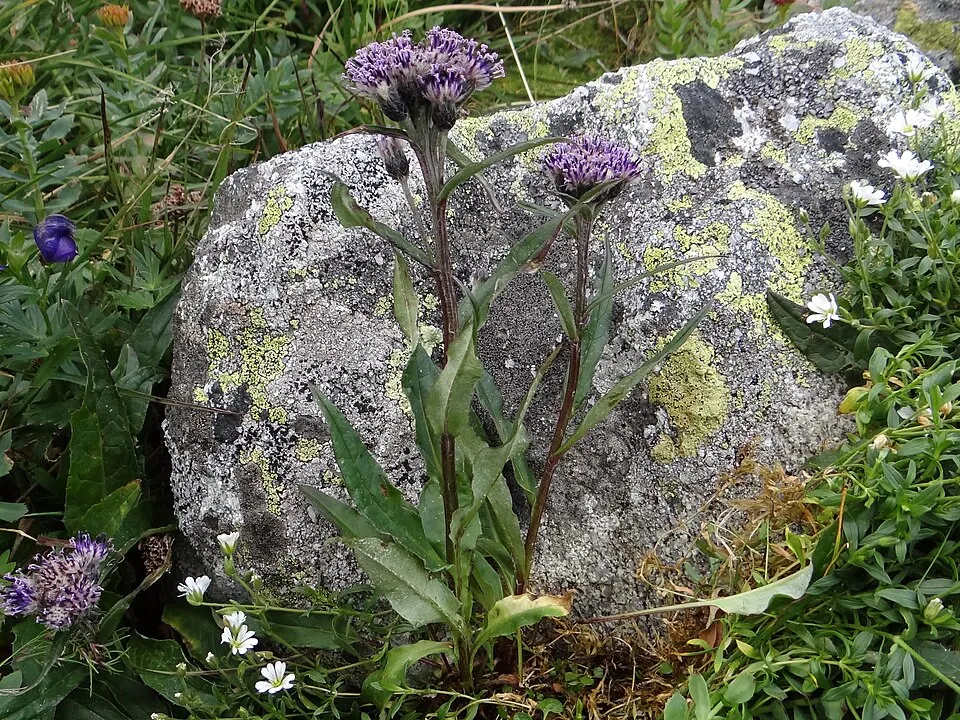
Saussurea lappa, widely known as Kushtha or Indian Costus, is a critically endangered perennial herb belonging to the Asteraceae family, revered for centuries in traditional medicine systems. This stout plant typically reaches heights of 50 to 120 centimeters, presenting a robust, sometimes slightly hairy stem. Its large, ovate to elongated leaves, which can measure up to 30 centimeters in length and 15 centimeters in width, form a distinctive rosette at the base, exhibiting a glossy green surface that captures light in its high-altitude habitat.
During its flowering season, Kushtha produces striking purple to violet flowers, meticulously arranged in dense, spherical heads known as capitula, each reaching up to 5 centimeters in diameter. These tubular flowers are highly efficient in attracting a variety of pollinators, crucial for the plant’s reproductive cycle.
Native to the majestic mountainous regions of India, Nepal, and Tibet, Saussurea lappa thrives in alpine to temperate climates, preferring altitudes ranging from 3000 to 4800 meters. This specific environmental niche contributes to its unique phytochemical profile. Taxonomically, Kushtha is a significant member of the Asteraceae family, sharing close botanical ties with numerous other medicinal herbs known for their therapeutic properties.
The most prized part of the plant is its thick, aromatic root, which can extend up to 30 centimeters in length. These roots display a characteristic brownish-purple hue and are enveloped by a rough, wrinkled bark, contributing to their distinctive and potent fragrance. Historically, the roots have been harvested for their profound therapeutic properties, forming the cornerstone of its application in Ayurvedic, Traditional Chinese Medicine (TCM), and Unani practices for a wide array of ailments.
Its classification as critically endangered underscores the urgent need for sustainable cultivation and conservation efforts to protect this invaluable botanical resource for future generations.
Trusted Scientific References
1. Authoritative external sources for Saussurea lappa
1.1 Wikipedia — Saussurea lappa
1.2 Kew POWO (Plants of the World Online)
1.3 PubMed — peer-reviewed research
1.4 NCBI Taxonomy Browser
1.5 GBIF — Global Biodiversity
1.1.Kushtha — Distinguishing Points
- ✓Critically Endangered Status — A high-priority species for conservation due to overharvesting and habitat loss.
- ✓Perennial Herb — Lives for more than two years, typically harvested after several seasons of growth.
- ✓Asteraceae Family — Belongs to the daisy family, known for many medicinal plants.
- ✓Aromatic Taproot — The thick, fragrant root is the primary medicinal part, rich in active compounds.
- ✓High — Altitude Habitat — Thrives in alpine to temperate regions of the Himalayas (3000-4800m).
- ✓Traditional Medicine Staple — Central to Ayurvedic, Traditional Chinese, and Unani medicine.
- ✓Potent Anti — inflammatory — Contains sesquiterpene lactones with strong inflammation-modulating effects.
- ✓Broad — Spectrum Antimicrobial — Effective against various bacteria, fungi, and viruses.
- ✓Expectorant Properties — Aids in clearing respiratory passages and alleviating coughs.
- ✓Hepatoprotective — Supports liver health and protects against liver injury.
- ✓Thyroid Support — Potential to modulate thyroid function and improve tissue damage.
- ✓Pain Reliever — Traditionally used for its analgesic and anti-spasmodic qualities.
- ✓Antioxidant Rich — Protects cells from oxidative damage with its phenolic compounds.
- ✓Skin Healing — Applied topically for wound healing and treating inflammatory skin conditions.
- ✓Distinctive Purple Flowers — Produces dense, spherical purple capitula.
1.2.Kushtha — Concise Overview
- ✓Critically endangered perennial herb, Saussurea lappa, known as Kushtha, from the Asteraceae family.
- ✓Revered in Ayurveda and TCM for its aromatic roots, thriving in high-altitude regions of Asia.
- ✓Key benefits include anti-inflammatory, antimicrobial, antioxidant, respiratory support, and liver protection.
- ✓Contains potent sesquiterpene lactones (costunolide, dehydrocostus lactone) responsible for many therapeutic actions.
- ✓Shows promising potential in modern research for thyroid regulation, antiviral, and anticancer activities.
- ✓Requires sustainable cultivation and urgent conservation efforts due to its endangered status.
- ✓Used traditionally as decoctions, powders, and topical applications for a wide range of ailments.
- ✓Important safety considerations include contraindications for pregnancy, bleeding disorders, and potential drug interactions.
2.Kushtha — Nomenclature & Classification
3.Kushtha — Vital Statistics
4.Kushtha — Botanical Features
5.Kushtha — Ecological Habitat
6.Kushtha — Heritage Uses
7.Kushtha — Phytochemistry
- ✓Sesquiterpene Lactones — Key compounds include Costunolide, Dehydrocostus lactone, and Saussureal. These are primarily responsible for the plant's potent anti-inflammatory, antimicrobial, and anticancer activities.
- ✓Alkaloids — Contains Saussureamine, which contributes to antispasmodic effects and may influence neurological pathways.
- ✓Flavonoids — A diverse group of polyphenols such as Quercetin and Kaempferol derivatives, offering significant antioxidant, anti-inflammatory, and hepatoprotective benefits.
- ✓Lignans — Present in the root, these compounds contribute to the plant's antioxidant and potentially anti-estrogenic properties.
- ✓Volatile Oils (Essential Oils) — Composed of various monoterpenes and sesquiterpenes like alpha- and beta-ionone, camphene, and limonene, providing the characteristic aroma and contributing to antimicrobial and anti-inflammatory actions.
- ✓Polysaccharides — Notably Inulin, a fructan, found abundantly in the root, acting as a prebiotic fiber that supports gut health and immune function.
- ✓Triterpenes — Compounds like alpha- and beta-amyrin, known for their anti-inflammatory and analgesic properties.
- ✓Sterols — Including beta-sitosterol, which may contribute to anti-inflammatory and cholesterol-lowering effects.
- ✓Tannins — Possess astringent properties, contributing to wound healing and antimicrobial effects, particularly on mucosal surfaces.
- ✓Saponins — Exhibit expectorant and anti-inflammatory activities, aiding in respiratory conditions and immune modulation.
- ✓Phenolic Acids — Such as chlorogenic acid and caffeic acid, providing additional antioxidant and anti-inflammatory support.
- ✓Glycosides — Various glycosidic compounds that may contribute to diverse pharmacological activities, often influencing absorption and bioavailability.
8.Kushtha — Scientific Evidence
- ✓Respiratory Health Support — Kushtha is a potent expectorant in Ayurveda, traditionally used to alleviate respiratory ailments such as coughs, asthma, and bronchitis by aiding in the expulsion of mucus and soothing inflamed airways.
- ✓Anti-inflammatory Action — The presence of sesquiterpene lactones like costunolide and dehydrocostus lactone contributes to its significant anti-inflammatory properties, effective in reducing systemic and localized inflammation.
- ✓Antimicrobial Properties — Research indicates that Saussurea lappa exhibits broad-spectrum antimicrobial activity, helping to combat bacterial, viral, and fungal infections, including the potential to control Candida species.
- ✓Antioxidant Activity — Rich in various phytochemicals, Kushtha acts as a powerful antioxidant, protecting cells from oxidative stress and damage caused by free radicals, which contributes to overall cellular health.
- ✓Liver Protection (Hepatoprotective) — Studies suggest its potential in protecting the liver from injury and promoting liver health, making it a valuable herb for hepatoprotective formulations.
- ✓Thyroid Regulation — Emerging research highlights its potential to improve thyroid tissue damage and support thyroid function, particularly in cases of carbazole-induced hypothyroidism.
- ✓Pain Relief (Analgesic) — In traditional systems like TCM, Kushtha is utilized to relieve pain, often attributed to its anti-inflammatory and circulatory enhancing effects.
- ✓Improves Blood Circulation — Considered a blood invigorator in TCM, it helps promote healthy circulation, which is vital for nutrient delivery and waste removal throughout the body.
- ✓Skin Condition Treatment — Its anti-inflammatory and antimicrobial properties make it effective in treating various skin conditions, including dermatitis, eczema, and other inflammatory dermatoses.
- ✓Wound Healing — Topical application of powdered Kushtha root has been traditionally used to accelerate wound healing and reduce inflammation associated with skin injuries.
- ✓Antifungal Efficacy — Beyond general antimicrobial action, specific studies point to its effectiveness in combating various fungal infections, supporting its use in mycotic conditions.
- ✓Antiviral Potential — Preliminary findings suggest antiviral activities, including potential inhibition of viral replication, which warrants further investigation for conditions like SARS-CoV-2.
- ✓Anti-urolithiasis Activity — Traditional uses and some studies indicate its potential in preventing or treating kidney stones, though the exact mechanism requires more research.
- ✓Anticancer Properties — Certain compounds within Saussurea lappa have demonstrated anticancer activities in preclinical studies, inhibiting the growth of various cancer cell lines.
- ✓Digestive Health — Traditionally used to stimulate digestion and alleviate gastrointestinal discomfort, promoting a healthy digestive tract.
- ✓Detoxification Support — By supporting liver function and enhancing circulation, Kushtha can indirectly aid the body’s natural detoxification processes.
- ✓Stress Adaptation — Some traditional applications suggest adaptogenic qualities, helping the body adapt to various stressors and promoting overall vitality.
8.1.Kushtha — Reported Uses
9.Kushtha — Cautions & Contraindications
9.1.Kushtha — Possible Adverse Reactions
- ✓Allergic Reactions — Individuals sensitive to the Asteraceae family may experience allergic reactions, including skin rashes, itching, or respiratory distress.
- ✓Gastrointestinal Upset — High doses or sensitive individuals may experience nausea, vomiting, stomach cramps, or diarrhea.
- ✓Hypotension — May cause a drop in blood pressure in some individuals, particularly those on antihypertensive medications.
- ✓Anticoagulant Effects — Potential to inhibit blood clotting, increasing the risk of bleeding, especially when combined with anticoagulant drugs.
- ✓Uterine Stimulation — Traditional use suggests it may stimulate uterine contractions, posing a risk during pregnancy.
- ✓Drug Interactions — Can interact with various medications, including blood thinners, immunosuppressants, and drugs metabolized by the liver.
- ✓Liver Enzyme Elevation — In rare cases, high or prolonged use might lead to elevated liver enzymes, particularly in individuals with pre-existing liver conditions.
- ✓Drowsiness — Some users might experience mild sedation or drowsiness, affecting the ability to operate machinery.
- ✓Skin Irritation — Topical application may cause local skin irritation or contact dermatitis in sensitive individuals.
- ✓Hypoglycemia — Potential to lower blood sugar levels, which could be problematic for diabetics or those on hypoglycemic medications.
9.2.Kushtha — Safety Profile
- ✓Pregnancy and Lactation — Contraindicated during pregnancy due to potential uterine stimulating effects; avoid during breastfeeding as safety data is insufficient.
- ✓Bleeding Disorders — Individuals with bleeding disorders or those on anticoagulant medications should avoid Kushtha due to its potential antiplatelet activity.
- ✓Surgery — Discontinue use at least two weeks prior to any scheduled surgery to minimize the risk of excessive bleeding.
- ✓Allergic History — Exercise caution in individuals with known allergies to plants in the Asteraceae family (e.g., ragweed, chrysanthemums).
- ✓Liver Disease — Patients with pre-existing liver conditions should use with extreme caution and under medical supervision, given potential for liver enzyme elevation.
- ✓Hypotension Risk — Individuals with low blood pressure or on blood pressure-lowering medications should monitor their blood pressure closely.
- ✓Diabetes — Diabetics should use with caution and monitor blood sugar levels due to potential hypoglycemic effects.
- ✓Consult a Healthcare Professional — Always consult a qualified medical herbalist or physician before using Kushtha, especially if you have underlying health conditions or are on medication.
- ✓Dosage Adherence — Adhere strictly to recommended dosages; excessive intake can increase the risk of adverse effects.
- ✓Quality Sourcing — Ensure the product is sourced from reputable suppliers to avoid adulteration and contamination with heavy metals or pesticides.
10.Kushtha — Usage Guide
- ✓Decoction — The dried and powdered root is simmered in water to create a potent decoction, commonly used for internal respiratory support or digestive issues.
- ✓Powdered Root — Finely ground root powder can be mixed with honey, ghee, or warm water and ingested, or applied topically as a paste for skin conditions and wounds.
- ✓Tincture — An alcoholic extract of the root, allowing for concentrated dosage and longer shelf life, often used for systemic benefits.
- ✓Infusion (Topical) — A milder aqueous extract, used as a wash or compress for external skin irritations or inflammatory conditions.
- ✓Herbal Oils — The root is infused into carrier oils (like sesame or coconut oil) for topical application to soothe muscular pain, joint inflammation, or skin ailments.
- ✓Capsules/Tablets — Standardized extracts or powdered root are encapsulated for convenient and precise oral administration.
- ✓Inhalation — The aromatic properties of the root can be utilized in steam inhalations to clear nasal passages and relieve respiratory congestion.
- ✓Poultice — Fresh or powdered root mixed with a binder (e.g., water, oil) applied directly to the skin for localized inflammation, pain, or wound care.
- ✓Herbal Formulations — Incorporated into complex polyherbal remedies in Ayurvedic and TCM traditions, often combined with synergistic herbs to enhance efficacy.
- ✓Essential Oil — While not strictly a 'usage method' of the whole root, the essential oil derived from Saussurea lappa is used in aromatherapy for its calming and anti-inflammatory properties.
- ✓Medicinal Wine — In some traditional systems, the root is macerated in wine for a period, believed to enhance its tonic and circulatory benefits.
11.Kushtha — Garden Cultivation
- ✓Climate and Altitude — Prefers cool, alpine to temperate climates, thriving at high altitudes (3000-4800m) with well-defined seasons.
- ✓Soil Requirements — Requires well-drained, sandy-loamy soil rich in organic matter, with a slightly acidic to neutral pH (6.0-7.0).
- ✓Propagation from Seeds — Seeds require cold stratification for successful germination; sow in early spring in well-prepared seedbeds or trays.
- ✓Root Division — Mature plants can be propagated by dividing the rhizomatous rootstock in late autumn or early spring, ensuring each section has buds.
- ✓Light Exposure — Prefers full sun to partial shade, especially in warmer climates to prevent scorching.
- ✓Water Management — Needs consistent moisture, particularly during the growing season, but good drainage is crucial to prevent root rot.
- ✓Nutrient Supply — Benefits from regular applications of balanced organic fertilizer or compost to support robust root development.
- ✓Pest and Disease Control — Generally hardy, but monitor for common root pests and fungal diseases; ensure good air circulation and proper watering.
- ✓Harvesting — Roots are typically harvested in late autumn or early spring after 2-3 years of growth, when active compounds are at their peak.
- ✓Conservation Farming — Due to its endangered status, sustainable cultivation practices, including in-situ and ex-situ conservation, are critical to prevent over-harvesting from wild populations.
- ✓Genetic Preservation — Efforts should focus on preserving genetic diversity through seed banks and controlled propagation to ensure long-term viability.
- ✓Greenhouse Cultivation — Controlled environment agriculture can offer a viable alternative for commercial cultivation and conservation.
Reviewed by the Flora Medical Global Botanical Review Panel
Multi-disciplinary editorial group · Botany · Ethnobotany · Herbal-medicine literature
Who reviewed this: This page was checked by the Flora Medical Global Botanical Review Panel — an in-house editorial group of botany graduates, ethnobotany researchers, and horticulture practitioners who collectively maintain our 7,000+ plant encyclopedia. Meet the team.
Our 4-step verification process
1. Taxonomic verification
Scientific names and synonyms cross-checked against Kew POWO, World Flora Online, and The Plant List.
2. Phytochemical & medicinal cross-reference
Active compounds, traditional uses, and reported activities are cross-referenced with PubMed, USDA Dr. Duke's database, and peer-reviewed ethnobotanical literature.
3. Conservation & distribution check
Distribution, ecology, and conservation status confirmed against GBIF occurrence records and the IUCN Red List.
4. Editorial & safety review
Every entry passes an editorial pass for clarity, originality, and safety notices (toxicity, contraindications, dosage caveats) before publication.
Last reviewed:
Important medical disclaimer: This content is for educational and research purposes only. It is not medical advice and is not a substitute for consultation with a licensed healthcare provider. Do not use any herb to self-treat a medical condition without professional guidance.
Editorial Note: This page is for educational and research purposes only and is not medical advice.
Written by: Flora Medical Global Editorial Team
Reviewed by: Flora Medical Global Botanical Review Panel
Last Updated: June 16, 2026





Kushtha — Comments & Community Reviews
Rate this plant