
Medical Disclaimer: This content is for educational purposes only. It is not medical advice. Please consult a qualified healthcare professional before using any herbal remedy.
Safety Overview
1.Larch — Overview
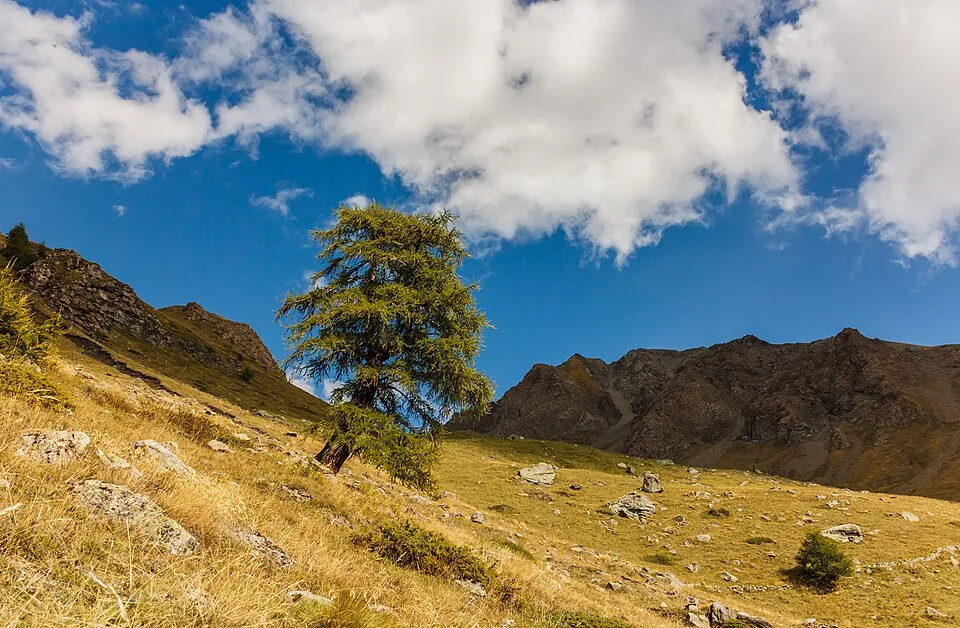
Larch, scientifically known as Larix decidua, is a majestic deciduous conifer belonging to the Pinaceae family, a characteristic that sets it apart from most other conifers which retain their needles year-round. This remarkable tree typically reaches impressive heights of 20 to 40 meters, with some specimens soaring even taller, and boasts a tall, straight, and slender trunk that can achieve a diameter of up to 1 meter. The bark of the European Larch is distinctively grayish-brown, developing deep fissures and scales as the tree matures, offering a rugged, textured appearance. Its foliage consists of soft, linear, needle-like leaves, measuring approximately 2 to 4 centimeters in length, which emerge in vibrant bright green tufts in spring. Uniquely for a conifer, these needles transform into a brilliant golden-yellow hue in the autumn before gracefully shedding, contributing significantly to seasonal forest aesthetics.
Reproduction involves small, monoecious cone-shaped flowers appearing in spring; the male catkins are small, ovoid, and sessile, while the female cones are slightly larger, often reddish-green initially. These mature into cylindrical, woody brown cones, typically 3 to 7 centimeters long, which persist on the branches for several years after releasing their seeds. Larix decidua is predominantly indigenous to the mountainous regions of Central Europe, thriving in well-drained, often acidic to neutral soils and tolerating various altitudes from lowlands to subalpine zones. Its natural distribution spans from the Alps across to the Carpathian Mountains and beyond, showcasing its adaptability to diverse climatic conditions and soil types. Historically, the European Larch was introduced to England in the 17th century and has since been widely cultivated across Europe for its valuable, durable timber and ornamental qualities.
Taxonomically, Larix decidua falls under the genus Larix, which is renowned for its deciduous nature within the otherwise evergreen conifer order. Ecologically, this tree plays a critical role in forest ecosystems; its rapid growth rate and ability to improve soil quality make it a valuable 'nurse' tree for slower-growing species. The extensive root system helps stabilize slopes and prevent erosion, while the tree provides essential habitat and food sources for various wildlife, including birds and small mammals. Its resin, known as Venice Turpentine, and bark have also held historical significance in traditional European medi ...[CURRENT TEXT EXISTS: 2798 chars]
1.1.Larch — Key Features
- ✓Deciduous Conifer — Unique among conifers for shedding its needles annually, turning brilliant yellow in autumn.
- ✓Tall and Slender Growth — Reaches significant heights with a straight trunk, ideal for timber production.
- ✓Fissured Bark — Distinctive grayish-brown, deeply fissured, and scaly bark develops with age.
- ✓Needle — like Leaves — Soft, linear needles grow in tufts, bright green in spring.
- ✓Monoecious Cones — Produces both male and female cones on the same tree, maturing into woody brown structures.
- ✓Central European Origin — Indigenous to mountainous regions across Central Europe, highly adaptable.
- ✓Durable Timber — Highly prized for its strong, tough, and durable wood, used in construction and mining.
- ✓Venice Turpentine Source — A significant producer of oleoresin known as Venice Turpentine, used medicinally and industrially.
- ✓Expectorant Properties — Traditionally used to clear respiratory passages and relieve coughs.
- ✓Anti — inflammatory Action — Contains compounds that help reduce inflammation internally and externally.
- ✓Astringent Effects — Bark is rich in tannins, making it effective for reducing secretions and minor bleeding.
- ✓Wound Healing Potential — Resin shows promise in treating ulcerating wounds.
- ✓Immune Support — Certain polysaccharides in Larch are known to modulate immune function.
- ✓Ecological Importance — Acts as a pioneer species, improving soil and providing habitat.
- ✓Rapid Growth Rate — One of the fastest-growing conifers, making it economically valuable.
1.2.Larch — At-a-Glance Summary
- ✓Larix decidua, or European Larch, is a unique deciduous conifer with significant medicinal value.
- ✓The bark and resin (Venice Turpentine) are traditionally used for their expectorant, anti-inflammatory, and astringent properties.
- ✓Key compounds include tannic acid, larixinic acid, and various terpenes.
- ✓Widely applied for respiratory conditions, wound healing, and chronic skin ailments.
- ✓Promotes immune support and acts as a diuretic.
- ✓Requires careful use due to potency; contraindications include pregnancy and kidney issues.
- ✓Valued for both its durable timber and ecological benefits.
2.Larch — Taxonomic Classification
3.Larch — Reference Facts
4.Larch — Structural Profile
5.Larch — Habitat & Distribution
6.Larch — Ethnobotanical Uses
7.Larch — Active Compounds
- ✓Tannic Acid — A potent polyphenolic compound found abundantly in the bark, responsible for Larch's significant astringent properties, contributing to its use in traditional medicine for reducing inflammation and stopping bleeding.
- ✓Larixinic Acid — A specific phenolic acid present in the bark, which contributes to the plant's overall anti-inflammatory and antioxidant profile, supporting cellular protection and immune responses.
- ✓Turpentine (Oleoresin) — A complex mixture of volatile terpenes and resin acids exuded from the trunk, primarily composed of alpha-pinene, beta-pinene, and delta-3-carene. It is responsible for the expectorant, antiseptic, and balsamic actions of Larch.
- ✓Larixin — A crystalline principle isolated from Larch, resembling pyrogallol, which suggests potential antiseptic and antioxidant activities, contributing to the plant's traditional medicinal applications.
- ✓Melezitose — A non-reducing trisaccharide sugar exuded from the leaves, known as Briançon Manna. While its medicinal use is largely obsolete, it highlights the diverse biochemical pathways within the plant.
- ✓Gummi Orenbergense — A water-soluble gum exuded from the trunk when trees are burnt, similar to Gum Arabic. It is a polysaccharide with potential demulcent and emollient properties, although its medicinal application is not widespread.
- ✓Flavonoids — Various flavonoid glycosides may be present, acting as antioxidants and contributing to the plant's protective mechanisms against oxidative stress and inflammation.
- ✓Resin Acids — Beyond the volatile terpenes, the turpentine contains non-volatile resin acids like abietic acid, which contribute to the resin's adhesive and protective qualities, particularly in wound healing.
- ✓Lignans — These plant compounds, known for their antioxidant and potential phytoestrogenic activities, may be present in the wood and bark, contributing to the tree's chemical complexity.
- ✓Essential Oils — Derived from the turpentine, these concentrated volatile compounds, rich in monoterpenes and sesquiterpenes, are responsible for the characteristic aroma and many of the therapeutic effects of Larch.
8.Larch — Modern Studies
- ✓Expectorant Action — Larch bark and resin, particularly the turpentine, possess expectorant properties. They help to loosen and expel tenacious mucus from the respiratory tract, easing congestion and facilitating clearer breathing in conditions like chronic bronchitis.
- ✓Anti-inflammatory Support — The compounds found in Larix decidua, such as larixinic acid and certain terpenes in the resin, exhibit anti-inflammatory effects. This can help reduce swelling and discomfort associated with inflammatory conditions, both internally and externally.
- ✓Immune System Modulation — Extracts from Larch, specifically arabinogalactans (a polysaccharide found in Larix species), are known to support and modulate the immune system. They can enhance the activity of immune cells, contributing to overall defense against pathogens.
- ✓Wound Healing Promotion — The resin of Larix decidua has demonstrated therapeutic potential for treating ulcerating wounds. Its antiseptic and balsamic properties aid in the cleansing, protection, and regeneration of damaged skin tissues, promoting faster healing.
- ✓Astringent Properties — Larch bark contains significant amounts of tannic acid, which confers potent astringent effects. This makes it useful for constricting tissues, reducing secretions, and helping to stop minor bleeding, particularly in cases of internal haemorrhage or superficial wounds.
- ✓Diuretic Effect — Traditionally, preparations from Larch have been used as a diuretic. This action encourages increased urine production, which can assist the body in flushing out excess fluids and toxins, potentially benefiting conditions like cystitis.
- ✓Antiseptic Qualities — The resin and bark extracts exhibit mild antiseptic properties, helping to inhibit the growth of bacteria and other microorganisms. This makes them beneficial for disinfecting wounds and preventing infections.
- ✓Digestive Health Aid — The astringent nature of Larch bark can also be beneficial for certain digestive complaints, such as mild diarrhea, by tightening the intestinal lining and reducing excessive fluid secretion.
- ✓Skin Condition Relief — As an external application, Larch preparations have been historically found useful in managing chronic skin conditions like eczema and psoriasis. Their anti-inflammatory and antiseptic actions can soothe irritation and support skin repair.
- ✓Respiratory Disinfectant — The volatile compounds in Larch turpentine act as a respiratory disinfectant. Inhaled or ingested, they can help clear bacterial or viral loads in the airways, complementing expectorant action.
- ✓General Tonic and Wellness — Due to its combined actions, Larch has been traditionally regarded as a general stimulant and balsamic tonic. It contributes to overall vitality and helps restore balance in the body during periods of convalescence or general debility.
- ✓Joint and Muscle Pain Relief — Topically applied Larch resin or balms may offer relief from localized joint and muscle pain. Its warming and anti-inflammatory effects can help alleviate discomfort from conditions such as arthritis or minor sprains.
8.1.Larch — Therapeutic Indications
9.Larch — Precautions & Warnings
9.1.Larch — Warnings
- ✓Skin Irritation — Direct contact with Larch resin or essential oil can cause contact dermatitis or allergic reactions in sensitive individuals, manifesting as redness, itching, or rashes.
- ✓Gastrointestinal Upset — Internal consumption of Larch preparations, especially turpentine, can lead to stomach irritation, nausea, vomiting, or diarrhea if taken in excessive doses.
- ✓Kidney Irritation — High doses of turpentine can potentially irritate the kidneys and urinary tract, potentially exacerbating pre-existing kidney conditions.
- ✓Allergic Reactions — Individuals with sensitivities to conifers or other resins may experience allergic responses, including respiratory symptoms or skin eruptions.
- ✓Central Nervous System Effects — Ingesting large quantities of turpentine can lead to more severe systemic effects, including dizziness, confusion, or central nervous system depression.
- ✓Drug Interactions — Larch preparations, particularly those with diuretic or astringent properties, may interact with certain medications, such as diuretics or blood thinners.
- ✓Mucous Membrane Irritation — Direct application or strong inhalation of Larch essential oil can irritate mucous membranes of the eyes, nose, and throat.
9.2.Larch — Risk Assessment
- ✓Pregnancy and Lactation — Avoid use during pregnancy and lactation due to insufficient safety data and the potential for uterine stimulation or transfer of active compounds to breast milk.
- ✓Children — Not recommended for use in infants and young children, especially internally, due to their increased sensitivity to potent compounds and risk of toxicity.
- ✓Kidney Conditions — Individuals with pre-existing kidney disease or compromised renal function should avoid Larch preparations, particularly turpentine, due to potential nephrotoxicity.
- ✓Gastrointestinal Disorders — Exercise caution or avoid use in individuals with sensitive stomachs, peptic ulcers, or inflammatory bowel conditions, as it may cause irritation.
- ✓Allergic Sensitivities — Perform a patch test before topical application for individuals with known allergies or sensitive skin to check for adverse reactions.
- ✓Dosage Adherence — Strictly adhere to recommended dosages and consult a qualified healthcare professional or medical herbalist before internal use due to the potency of Larch compounds.
- ✓External Use Only for Resin — Larch resin (Venice Turpentine) is primarily recommended for external use; internal ingestion should only be under expert medical supervision.
- ✓Professional Consultation — Always consult with a healthcare provider before incorporating Larch into a therapeutic regimen, especially if taking other medications or managing chronic health conditions.
- ✓Quality Sourcing — Ensure Larch products are sourced from reputable suppliers to guarantee purity and minimize contamination risks.
10.Larch — Application Forms
- ✓Tincture of Bark — Prepare a tincture by macerating dried, powdered Larch bark in alcohol; typically used internally as an expectorant or astringent, following professional dosage guidelines.
- ✓Bark Decoction — Boil Larch bark in water to create a decoction, traditionally used for internal applications like chronic bronchitis or cystitis, or as a strong external wash for skin conditions.
- ✓Venice Turpentine Application — The raw oleoresin, or Venice Turpentine, can be applied externally as a balm or poultice for ulcerating wounds, eczema, psoriasis, or localized pain, due to its antiseptic and anti-inflammatory properties.
- ✓Essential Oil Diffusion — Larch essential oil, derived from the turpentine, can be diffused to purify air and support respiratory health, though direct inhalation should be done cautiously.
- ✓Inhalation for Respiratory Relief — A small amount of Larch essential oil or turpentine can be added to hot water for steam inhalation to relieve congestion and coughs.
- ✓Poultice for Skin Ailments — Ground Larch bark mixed with a carrier (e.g., water, oil) can form a poultice applied directly to skin irritations, minor injuries, or boils.
- ✓Infused Oil — Infuse Larch bark or resin in a carrier oil (e.g., olive oil) for topical application as a massage oil for sore muscles or a soothing agent for dry, irritated skin.
- ✓Internal Resin Use (Historical) — Historically, small, controlled doses of Venice Turpentine were ingested for internal conditions, but this practice requires extreme caution and professional guidance due to its potency.
- ✓Bath Additive — Add a strong bark decoction or a few drops of essential oil to bathwater for a therapeutic soak, beneficial for skin conditions or muscle aches.
- ✓Herbal Syrups — Incorporate Larch bark extract into homemade herbal syrups for cough and cold relief, often combined with other demulcent herbs.
11.Larch — Growing Guide
- ✓Site Selection — Prefers full sun exposure and well-drained, moist soils; intolerant of waterlogging.
- ✓Soil Requirements — Thrives in loamy, sandy, or clay soils with a slightly acidic to neutral pH (5.5-7.0).
- ✓Climate Adaptability — Highly cold-hardy, suitable for temperate climates, and tolerant of harsh winter conditions.
- ✓Propagation — Primarily propagated from seeds, which require stratification for successful germination, or occasionally from cuttings.
- ✓Planting — Best planted in spring or autumn, ensuring adequate spacing for mature growth and root development.
- ✓Watering — Requires consistent moisture, especially during establishment, but is drought-tolerant once mature.
- ✓Fertilization — Generally low maintenance; may benefit from balanced slow-release fertilizer in nutrient-poor soils.
- ✓Pruning — Minimal pruning is needed, mostly for shaping young trees or removing dead/diseased branches.
- ✓Pest and Disease Management — Relatively resistant to most pests but can be susceptible to larch canker and sawfly infestations.
- ✓Growth Rate — Known for its rapid growth, making it a popular choice for forestry and landscaping.
- ✓Ecological Role — Often used as a pioneer species in reforestation efforts, improving soil quality and providing shelter.
Reviewed by the Flora Medical Global Botanical Review Panel
Multi-disciplinary editorial group · Botany · Ethnobotany · Herbal-medicine literature
Who reviewed this: This page was checked by the Flora Medical Global Botanical Review Panel — an in-house editorial group of botany graduates, ethnobotany researchers, and horticulture practitioners who collectively maintain our 7,000+ plant encyclopedia. Meet the team.
Our 4-step verification process
1. Taxonomic verification
Scientific names and synonyms cross-checked against Kew POWO, World Flora Online, and The Plant List.
2. Phytochemical & medicinal cross-reference
Active compounds, traditional uses, and reported activities are cross-referenced with PubMed, USDA Dr. Duke's database, and peer-reviewed ethnobotanical literature.
3. Conservation & distribution check
Distribution, ecology, and conservation status confirmed against GBIF occurrence records and the IUCN Red List.
4. Editorial & safety review
Every entry passes an editorial pass for clarity, originality, and safety notices (toxicity, contraindications, dosage caveats) before publication.
Last reviewed:
Important medical disclaimer: This content is for educational and research purposes only. It is not medical advice and is not a substitute for consultation with a licensed healthcare provider. Do not use any herb to self-treat a medical condition without professional guidance.
Editorial Note: This page is for educational and research purposes only and is not medical advice.
Written by: Flora Medical Global Editorial Team
Reviewed by: Flora Medical Global Botanical Review Panel
Last Updated: June 16, 2026





Larch — Comments & Community Reviews
Rate this plant