
Medical Disclaimer: This content is for educational purposes only. It is not medical advice. Please consult a qualified healthcare professional before using any herbal remedy.
Safety Overview
1.Lovage — Overview
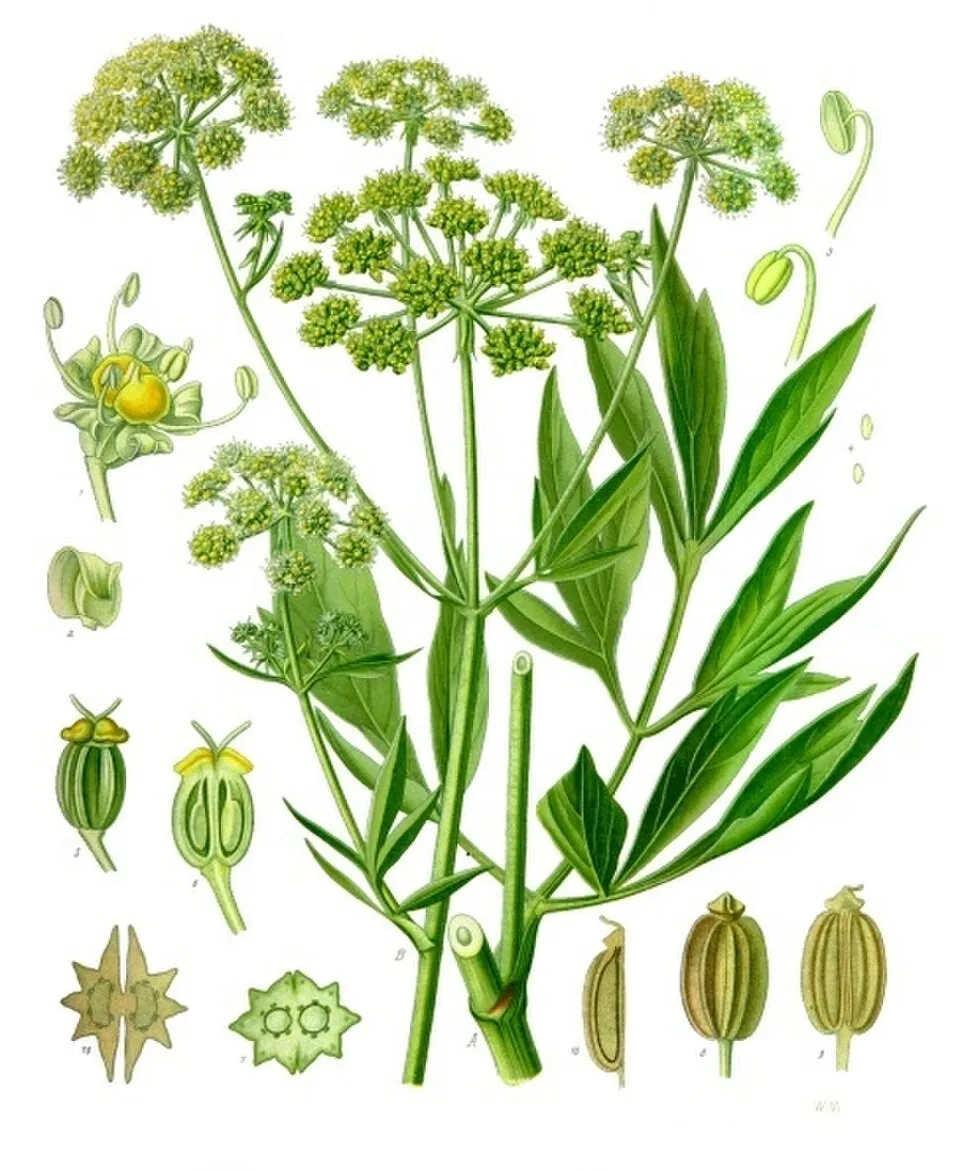
Lovage, scientifically known as Levisticum officinale, is a commanding herbaceous perennial belonging to the Apiaceae family, a lineage shared with popular culinary plants like carrots, celery, and parsley. This robust plant can reach impressive heights of 1.5 to 2.5 meters (5 to 8 feet), establishing a strong presence in its habitat.
Its striking foliage consists of large, pinnate leaves, often extending up to 30 centimeters (12 inches) in length, characterized by bright green, ovate, and serrated leaflets that give the plant a lush and vibrant appearance. During the early summer months, Lovage produces distinctive yellow-green flowers arranged in compound umbels, where numerous tiny florets cluster together to create an intricate, eye-catching inflorescence.
Supporting this dense canopy are hollow, smooth, and notably thick stems, providing significant structural integrity to the plant. Below ground, Lovage develops a robust, thick, and tuberous root system, which is not only essential for its vigorous growth but also emits a characteristic, aromatic scent often likened to celery, underscoring its close botanical relations.
Native to the sun-drenched regions of the Mediterranean, particularly Iran and Afghanistan, Lovage has adapted to thrive in temperate climates worldwide, where it is often cultivated for both its culinary and medicinal attributes.
The plant demonstrates a marked preference for damp, rich, and well-draining soils, frequently found flourishing in cultivated gardens, natural wetlands, and along the edges of water bodies. This preference for moist habitats is crucial for its development and the accumulation of its potent phytochemicals.
Taxonomically, its placement within the Apiaceae family highlights its unique chemical profile and traditional applications, which have been recognized for centuries. Historically, Lovage has been revered for its diverse therapeutic properties and its use as a flavor enhancer, cementing its significance in both ancient and modern herbal pharmacopeias.
Trusted Scientific References
1. Authoritative external sources for Levisticum officinale
1.1 Wikipedia — Levisticum officinale
1.2 Kew POWO (Plants of the World Online)
1.3 PubMed — peer-reviewed research
1.4 NCBI Taxonomy Browser
1.5 GBIF — Global Biodiversity
1.1.Lovage — Standout Qualities
- ✓Botanical Identity — Levisticum officinale, a member of the Apiaceae family.
- ✓Impressive Size — Reaches heights of 1.5 to 2.5 meters with robust growth.
- ✓Aromatic Profile — Distinctive celery-like aroma from roots and leaves.
- ✓Diuretic Action — Promotes fluid excretion, beneficial for edema and UTIs.
- ✓Digestive Stimulant — Acts as a stomachic, relieving bloating and indigestion.
- ✓Anti — inflammatory Properties — Helps reduce inflammation in joints and tissues.
- ✓Rich Phytochemistry — Contains phthalides, coumarins, and essential oils.
- ✓Traditional Uses — Integrated into Ayurveda, TCM, and European herbalism.
- ✓Culinary Versatility — Leaves and roots used as a pungent flavoring agent.
- ✓Photosensitivity Risk — Furanocoumarins can increase sensitivity to sunlight.
- ✓Reproductive Impact — Known to induce menstruation, contraindicated in pregnancy.
- ✓Habitat Preference — Thrives in moist, rich soils of temperate regions.
- ✓Root System — Features thick, tuberous roots with concentrated active compounds.
- ✓Medicinal Versatility — Supports kidney, bladder, and digestive health.
1.2.Lovage — At-a-Glance Summary
- ✓Lovage (Levisticum officinale) is a robust perennial herb in the Apiaceae family.
- ✓Known for its celery-like aroma and large, lush foliage.
- ✓Traditionally used as a diuretic, digestive aid, and anti-inflammatory.
- ✓Rich in phthalides, coumarins, essential oils, and flavonoids.
- ✓Supports urinary tract health, alleviates bloating, and may reduce inflammation.
- ✓Contraindicated in pregnancy due to menstruation-inducing effects.
- ✓Can cause photosensitivity and interacts with diuretics and anticoagulants.
- ✓Valued in traditional medicine systems like Ayurveda and TCM.
2.Lovage — Scientific Profile
3.Lovage — Quick Facts
4.Lovage — Morphological Account
5.Lovage — Habitat & Distribution
6.Lovage — Cultural & Traditional Roles
7.Lovage — Bioactive Constituents
- ✓Phthalides — Key compounds like ligustilide, butylphthalide, and sedanolide are responsible for much of Lovage's characteristic aroma and contribute significantly to its antispasmodic, anti-inflammatory, and potentially sedative effects, particularly in the gastrointestinal and urinary tracts.
- ✓Coumarins and Furanocoumarins — Present compounds include bergapten, psoralen, and osthol. Coumarins contribute to Lovage's diuretic and antispasmodic properties, while furanocoumarins, although potentially photosensitizing, are also being studied for their anti-cancer and anti-inflammatory activities.
- ✓Essential Oils — Comprising a complex mixture of monoterpenes and sesquiterpenes, including alpha- and beta-pinene, limonene, and beta-phellandrene. These oils are largely responsible for the plant's distinctive flavor and contribute to its antimicrobial, carminative, and expectorant actions.
- ✓Flavonoids — Important compounds such as quercetin, kaempferol, and their glycosides are found in Lovage. These polyphenolic compounds are potent antioxidants, exhibit anti-inflammatory properties, and contribute to vascular health.
- ✓Phenolic Acids — Derivatives like caffeic acid, chlorogenic acid, and ferulic acid are present, acting as strong antioxidants. They contribute to the plant's anti-inflammatory and chemoprotective effects, helping to neutralize free radicals.
- ✓Polyacetylenes — These compounds, though less studied in Lovage compared to other Apiaceae members, are known for their antimicrobial, anti-inflammatory, and cytotoxic properties, suggesting a role in the plant's broad therapeutic profile.
- ✓Phenylpropanoids — Including compounds like methyl eugenol, which contribute to the plant's aromatic profile and may possess antiseptic and anti-inflammatory activities, though methyl eugenol is typically present in very small amounts.
- ✓Alkaloids — While not a primary class, trace amounts of alkaloid-like compounds may be present, which could contribute to minor pharmacological effects, though their specific roles are not well-defined.
- ✓Organic Acids — Various organic acids, such as malic acid and citric acid, are present, contributing to the plant's nutritional value and potentially influencing metabolic processes, supporting overall physiological balance.
- ✓Saponins — These glycosides are known for their expectorant and anti-inflammatory properties. While not a dominant class, their presence may contribute to Lovage's traditional use in respiratory complaints and inflammation.
- ✓Sterols — Including beta-sitosterol, which are plant sterols known for their potential to lower cholesterol and exert anti-inflammatory effects, contributing to the plant's overall health benefits.
8.Lovage — Modern Studies
- ✓Diuretic Properties — Lovage acts as a natural diuretic, promoting increased urine production and facilitating the elimination of excess fluids and toxins from the body. This action is attributed to compounds like phthalides and coumarins, which influence kidney function to enhance fluid excretion.
- ✓Anti-inflammatory Effects — The plant contains active compounds, including certain phthalides and phenolic acids, that exhibit significant anti-inflammatory actions. These constituents help to modulate inflammatory pathways, potentially alleviating discomfort associated with conditions like rheumatism and gout.
- ✓Antimicrobial Activity — Research suggests that extracts from Levisticum officinale possess antimicrobial properties, particularly against certain bacteria and fungi. This effect contributes to its traditional use in managing infections, including those affecting the urinary tract.
- ✓Digestive Aid — Lovage has a long history of use as a stomachic, stimulating appetite and aiding digestion. Its essential oils can help to relax the smooth muscles of the gastrointestinal tract, reducing symptoms such as bloating, flatulence, and indigestion.
- ✓Urinary Tract Support — Due to its diuretic and antimicrobial actions, Lovage is traditionally employed to support urinary tract health. It assists in flushing out pathogens and preventing the formation of kidney stones, offering relief in conditions like urinary tract infections (UTIs).
- ✓Menstrual Cycle Regulation — In traditional practices, Lovage has been used to help regulate the menstrual cycle and alleviate menstrual discomfort. It is believed to possess emmenagogic properties, which can stimulate menstrual flow.
- ✓Relief for Respiratory Conditions — Historically, Lovage has been applied to soothe sore throats and alleviate symptoms of tonsillitis. Its expectorant properties may help to clear respiratory passages and reduce irritation.
- ✓Potential Anti-cancer Effects — Preliminary in vitro studies have indicated that certain compounds within Lovage may exhibit anti-cancer activities, by inhibiting the proliferation of various cancer cell lines. Further comprehensive research is needed to validate these findings in vivo.
- ✓Antioxidant Protection — The presence of flavonoids and phenolic acids endows Lovage with potent antioxidant capabilities. These compounds help to neutralize free radicals, protecting cellular structures from oxidative damage and supporting overall health.
- ✓Management of Cystinuria — A rare hereditary condition, cystinuria, which leads to bladder and kidney stones, has shown some response to Lovage supplementation in preliminary studies. It was observed to reduce cysteine and creatinine levels in affected individuals.
- ✓Skin Condition Management — Traditional applications include the use of Lovage for external conditions like boils and certain skin irritations. Its anti-inflammatory and antiseptic properties may contribute to soothing and healing.
- ✓Liver Support — In some traditional systems, Lovage has been used to support liver function, particularly in conditions like jaundice, where it is believed to assist in detoxification processes and bile flow.
- ✓Antispasmodic Action — The essential oils in Lovage, especially phthalides, contribute to its antispasmodic effects, helping to relieve cramps and muscle spasms in various parts of the body, including the digestive and urinary systems.
- ✓Detoxification Support — By enhancing kidney function and promoting urination, Lovage aids the body's natural detoxification processes. It helps eliminate metabolic waste products and environmental toxins more efficiently.
- ✓Circulatory Health — Some traditional uses point to Lovage's potential to improve circulation. While specific mechanisms are under research, its general tonic properties may contribute to cardiovascular well-being.
8.1.Lovage — Reported Uses
9.Lovage — Adverse Effects
9.1.Lovage — Possible Adverse Reactions
- ✓Menstruation-Inducing Effect — Lovage contains properties that can induce menstruation, making it contraindicated for pregnant individuals.
- ✓Photosensitivity — The furanocoumarins present in Lovage can cause photosensitivity, increasing the risk of sunburn or skin reactions upon exposure to UV light. Limit sun exposure when using.
- ✓Allergic Reactions — Individuals sensitive to plants in the Apiaceae family (e.g., celery, parsley, dill) may experience allergic reactions to Lovage, including skin rash, itching, or respiratory issues.
- ✓Gastrointestinal Upset — High doses or prolonged use may lead to mild gastrointestinal disturbances such as nausea, vomiting, or diarrhea in sensitive individuals.
- ✓Increased Bleeding Risk — Due to the presence of coumarins, Lovage may inhibit blood clotting. It should be used with caution, or avoided, by individuals on anticoagulant medications as it can increase the risk of bleeding.
- ✓Dizziness and Low Blood Pressure — When combined with diuretic medications, Lovage's diuretic effect can lead to excessive fluid loss, potentially causing dizziness, dehydration, and a significant drop in blood pressure.
- ✓Kidney Irritation — While generally beneficial for urinary health, individuals with impaired kidney function should avoid Lovage, as its irritating effects on kidney tissue could exacerbate existing conditions.
- ✓Uterine Contractions — In addition to inducing menstruation, Lovage may stimulate uterine contractions, posing a risk during pregnancy.
9.2.Lovage — Safety Overview
- ✓Pregnancy Contraindication — Lovage is contraindicated during pregnancy due to its emmenagogic properties, which can induce menstruation and potentially uterine contractions.
- ✓Breastfeeding — There is insufficient research on the safety of Lovage during breastfeeding; therefore, it is generally advised to avoid its use.
- ✓Children and Adolescents — Due to a lack of clinical research, Lovage is not recommended for use in children and adolescents under 18 years of age.
- ✓Allergy to Apiaceae Family — Individuals with known allergies or hypersensitivity to plants in the Apiaceae family (e.g., celery, carrot, parsley) should avoid Lovage.
- ✓Kidney Impairment — Avoid use if you have impaired kidney function, as Lovage may have irritating effects on kidney tissue.
- ✓Heart Conditions — Use with caution if you have pre-existing heart conditions, particularly if taking diuretic medications, due to the risk of electrolyte imbalance or excessive fluid loss.
- ✓Anticoagulant Medications — Individuals on blood-thinning medications (anticoagulants) should avoid Lovage due to its coumarin content, which may increase the risk of bleeding.
- ✓Diuretic Medications — Do not combine Lovage with prescription diuretics without medical supervision, as it can lead to excessive fluid and electrolyte loss.
- ✓Photosensitivity Risk — Minimize exposure to direct sunlight or UV radiation when consuming Lovage, especially in large amounts, to prevent photosensitive skin reactions.
- ✓Consultation with Healthcare Provider — Always consult with a qualified healthcare provider before incorporating Lovage into your therapeutic regimen, especially if you have underlying health conditions or are taking other medications.
10.Lovage — How to Use
- ✓Herbal Tea (Infusion) — Prepare a tea by steeping 2 to 3 grams of dried Lovage root or leaves in 1 cup (240 ml) of hot water for 15-20 minutes. Drink up to three times daily for diuretic or digestive support.
- ✓Tincture — Take 0.5 to 2 milliliters of Lovage root tincture, diluted in water, up to three times per day. Tinctures offer a concentrated form for systemic effects.
- ✓Culinary Herb — Incorporate fresh Lovage leaves into salads, soups, stews, and sauces as a flavor enhancer. Its strong, celery-like taste can elevate many dishes. Use sparingly due to its potency.
- ✓Root Powder — Dried Lovage root can be ground into a powder and encapsulated for convenient oral consumption, typically in doses of 4-8 grams daily, or mixed into beverages.
- ✓Essential Oil — Lovage essential oil, extracted from the roots, is used in aromatherapy for its calming properties or diluted topically for muscle aches. Always dilute properly before skin application and avoid internal use unless professionally guided.
- ✓Decoction (for Roots) — For a stronger preparation, simmer 1-2 teaspoons of chopped dried Lovage root in 1 cup of water for 10-15 minutes, then strain. This method extracts more of the root's beneficial compounds.
- ✓Poultice — Crushed fresh Lovage leaves can be applied externally as a poultice to soothe minor skin irritations, boils, or insect bites, leveraging its anti-inflammatory properties.
- ✓Bath Additive — Infuse a strong tea of Lovage leaves and roots, then add to bathwater to help soothe aching muscles and promote relaxation, utilizing its aromatic and anti-inflammatory compounds.
- ✓Vinegar Infusion — Infuse fresh Lovage leaves and stems in apple cider vinegar for several weeks to create a flavorful and medicinal vinegar that can be used in dressings or as a tonic.
- ✓Seed Spice — Lovage seeds can be used as a spice, similar to celery seeds, adding a pungent, slightly bitter flavor to breads, pickles, and savory dishes.
- ✓Herbal Compress — Soak a cloth in a strong Lovage tea and apply as a warm compress to areas of inflammation or pain, such as rheumatic joints, for localized relief.
11.Lovage — Propagation & Care
- ✓Soil Preparation — Lovage thrives in deep, rich, moist, and well-drained loamy soil with a pH between 6.0 and 7.0. Amend heavy clay soils with organic matter like compost to improve drainage and fertility.
- ✓Sunlight Requirements — Plant Lovage in a location that receives full sun to partial shade. While it tolerates full sun, some afternoon shade is beneficial in hotter climates to prevent scorching.
- ✓Watering — Consistent moisture is crucial for Lovage. Water regularly, especially during dry spells, to keep the soil evenly moist but not waterlogged. Mulching helps retain soil moisture.
- ✓Propagation — Lovage can be propagated from seeds, root divisions, or cuttings. Seeds germinate best after a cold stratification period. Root division in spring or autumn is the easiest method for established plants.
- ✓Planting — Sow seeds indoors 6-8 weeks before the last frost or directly outdoors after the danger of frost has passed. Space plants 60-90 cm (2-3 feet) apart to allow for their large mature size.
- ✓Fertilization — As a heavy feeder, Lovage benefits from an annual application of balanced organic fertilizer or a side dressing of compost in early spring to support its vigorous growth.
- ✓Pests and Diseases — Lovage is generally resistant to most pests and diseases. Occasionally, aphids or leaf miners may appear, which can be managed with organic pest control methods. Root rot can occur in waterlogged soil.
- ✓Harvesting Leaves — Harvest tender young leaves in spring and early summer for culinary or medicinal use. Regular harvesting encourages new growth. Avoid harvesting more than one-third of the plant at a time.
- ✓Harvesting Roots — The roots are best harvested from mature plants (2-3 years old) in the autumn after the foliage dies back, when their essential oil content is highest. Dig carefully to avoid damage.
- ✓Winter Care — In colder climates, Lovage is winter-hardy. After the first hard frost, the foliage will die back. Cut back the dead stems to ground level in late fall or early spring to prepare for new growth.
Reviewed by the Flora Medical Global Botanical Review Panel
Multi-disciplinary editorial group · Botany · Ethnobotany · Herbal-medicine literature
Who reviewed this: This page was checked by the Flora Medical Global Botanical Review Panel — an in-house editorial group of botany graduates, ethnobotany researchers, and horticulture practitioners who collectively maintain our 7,000+ plant encyclopedia. Meet the team.
Our 4-step verification process
1. Taxonomic verification
Scientific names and synonyms cross-checked against Kew POWO, World Flora Online, and The Plant List.
2. Phytochemical & medicinal cross-reference
Active compounds, traditional uses, and reported activities are cross-referenced with PubMed, USDA Dr. Duke's database, and peer-reviewed ethnobotanical literature.
3. Conservation & distribution check
Distribution, ecology, and conservation status confirmed against GBIF occurrence records and the IUCN Red List.
4. Editorial & safety review
Every entry passes an editorial pass for clarity, originality, and safety notices (toxicity, contraindications, dosage caveats) before publication.
Last reviewed:
Important medical disclaimer: This content is for educational and research purposes only. It is not medical advice and is not a substitute for consultation with a licensed healthcare provider. Do not use any herb to self-treat a medical condition without professional guidance.
Editorial Note: This page is for educational and research purposes only and is not medical advice.
Written by: Flora Medical Global Editorial Team
Reviewed by: Flora Medical Global Botanical Review Panel
Last Updated: June 16, 2026





Lovage — Comments & Community Reviews
Rate this plant