
Medical Disclaimer: This content is for educational purposes only. It is not medical advice. Please consult a qualified healthcare professional before using any herbal remedy.
Safety Overview
1.Luffa — Essential Profile
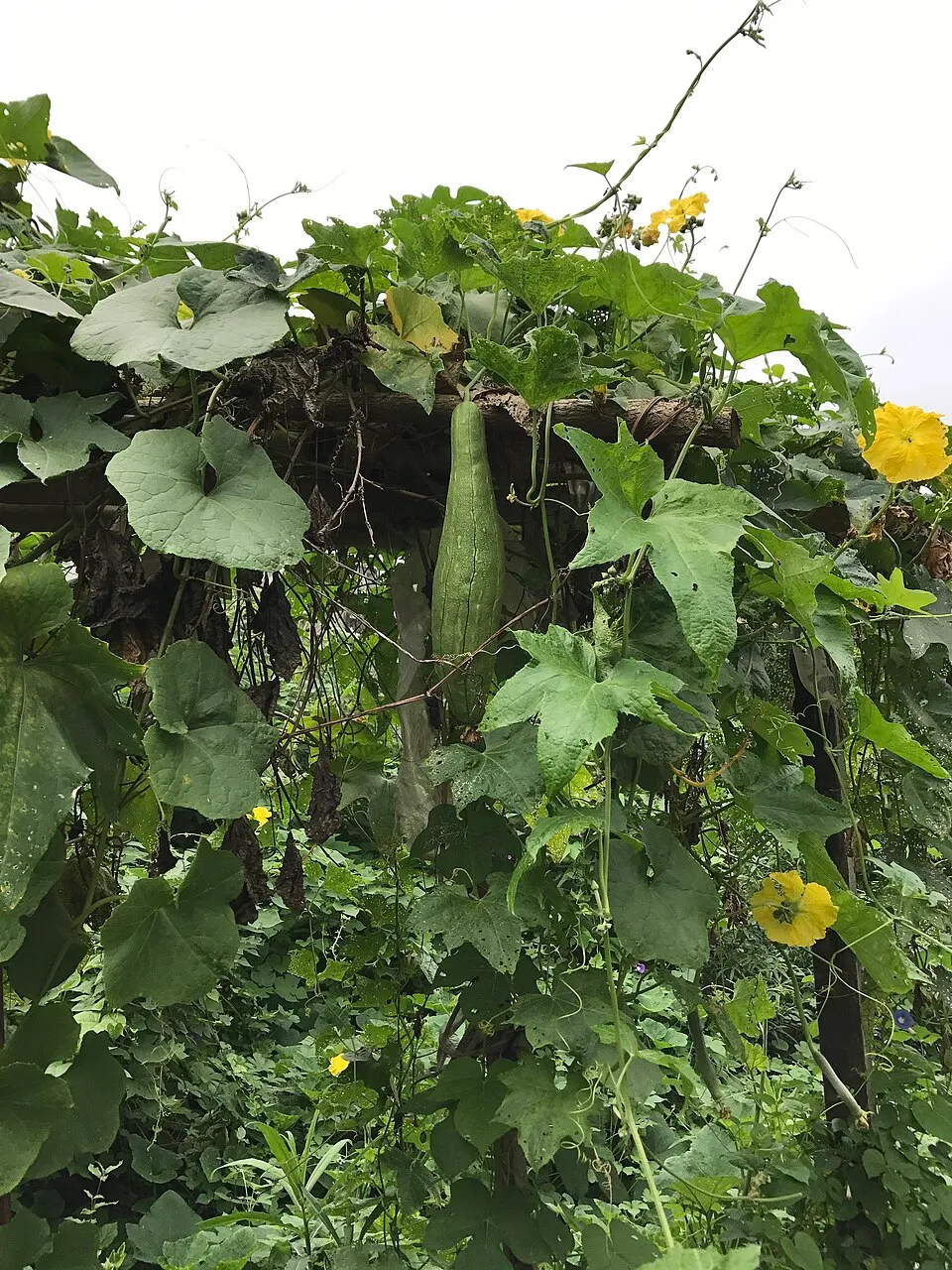
Luffa Med, scientifically known as Luffa cylindrica (often considered synonymous with Luffa aegyptiaca), is a vigorous annual climbing vine belonging to the Cucurbitaceae family, which also includes cucumbers and melons. This plant typically ascends to heights of 2-4 meters, though some vines can reach up to 10 meters in length, utilizing axillary tendrils for support. Its foliage consists of broad, alternate, palmate, and lobed leaves, measuring approximately 10-20 cm in length, with distinctive serrated margins and cordiform bases. The leaves are typically scabrid (rough to the touch) and feature 5 to 7 prominent veins. Luffa cylindrica produces striking yellow to pale yellow hermaphroditic flowers, each about 4-5 cm in diameter, which bloom during daylight hours. Male flowers are often found in raceme formations, while female flowers are solitary.
Following successful pollination, the plant develops elongated, cylindrical fruits that can grow from 25 to 50 cm, and sometimes up to 45 cm in length. Initially, these fruits are smooth and green, resembling a large cucumber, and are commonly consumed as a vegetable. As they mature, the fruits transform, developing a tough, fibrous mesocarp that eventually dries to form the well-known sponge-like texture used for scrubbing. The pericarp of the mature fruit becomes crustose and dehisces by apical pores, revealing numerous elliptical, black, smooth seeds, typically 10-13 mm long. The stem of the young plant is greenish and somewhat rough, maturing into a brownish, subcylindrical or angular, ribbed, and usually glabrous or puberulous vine. Luffa cylindrica is native to Asia, particularly thriving in tropical and subtropical climates, with a significant presence in South Asia, including India and Bangladesh.
It prefers well-drained sandy loam soils and requires full sun exposure to flourish. Historically, Luffa has been cultivated for centuries, with its presence in Egypt noted as early as 1638, where it was described as the 'Egyptian cucumber.' Beyond its culinary use, the plant has a rich history in traditional medicine systems across various cultures, valued for both its edible young fruits and the medicinal properties derived from its leaves, seeds, and mature fibrous fruits. The dried fibrous network of the mature fruit is globally recognized as the natural luffa sponge, a testament to its unique botanical structure. Trusted Scientific References Authoritative external sources for Luffa cylindrica : Wikipedi ...[CURRENT TEXT EXISTS: 2639 chars]
1.1.Luffa — Distinguishing Points
- ✓Botanical Classification — Member of the Cucurbitaceae family, related to cucumbers and melons.
- ✓Growth Habit — Annual climbing vine, reaching up to 10 meters with tendril support.
- ✓Leaf Morphology — Broad, palmate, lobed leaves with serrated margins.
- ✓Flower Characteristics — Hermaphroditic, striking yellow to pale yellow, 4-5 cm diameter.
- ✓Fruit Development — Elongated, cylindrical fruits, initially green and edible, maturing to fibrous sponge.
- ✓Seed Description — Numerous elliptical, black, smooth seeds, 10-13 mm long.
- ✓Habitat & Distribution — Native to tropical/subtropical Asia, thrives in full sun and well-drained soil.
- ✓Traditional Culinary Use — Young fruits cooked as a vegetable in various Asian cuisines.
- ✓Non — Food Use — Mature fibrous fruit used as a natural exfoliating sponge.
- ✓Ayurvedic Uses — Employed for respiratory infections, asthma, bronchitis, and diuretic purposes.
- ✓TCM Applications — Valued for digestive support, reducing water retention, and anthelmintic effects.
- ✓Phytochemical Richness — Contains flavonoids, saponins, phenolic compounds, and fatty acids.
- ✓Antioxidant Power — Demonstrates significant free radical scavenging and anti-inflammatory activity.
- ✓Medicinal Potential — Investigated for antidiabetic, antimicrobial, and hypolipidemic effects.
- ✓Safety Precaution — Avoid during pregnancy due to potential abortifacient properties.
1.2.Luffa — Quick Summary
- ✓Luffa cylindrica is a versatile climbing vine known as sponge gourd or smooth luffa.
- ✓Young fruits are edible vegetables; mature fruits yield natural scrubbing sponges.
- ✓Traditionally used in Ayurveda and TCM for respiratory, digestive, and urinary health.
- ✓Rich in antioxidants, anti-inflammatory compounds, and potentially antidiabetic agents.
- ✓Preclinical studies suggest antimicrobial, hypolipidemic, and anxiolytic properties.
- ✓Key chemical constituents include flavonoids, saponins, and phenolic compounds.
- ✓Contraindicated in pregnancy due to abortifacient activity in some Luffa species.
- ✓Generally safe as a food, but medicinal dosing lacks sufficient clinical data.
2.Luffa — Nomenclature & Classification
3.Luffa — Key Data
4.Luffa — Physical Description
5.Luffa — Ecological Habitat
6.Luffa — Folk Medicine Applications
7.Luffa — Phytochemistry
- ✓Flavonoids — Key compounds include diosmetin-7-O-beta-D-glucuronide methyl ester, apigenin-7-O-beta-D-glucuronide methyl ester, and luteolin-7-O-beta-D-glucuronide methyl ester, known for their potent antioxidant and anti-inflammatory activities.
- ✓Saponins — These glycosides contribute to the plant's adaptogenic and immune-modulating properties, and are often associated with hypolipidemic effects.
- ✓Phenolic Compounds — Including p-coumaric acid, 1-O-feruloyl-beta-D-glucose, 1-O-p-coumaroyl-beta-D-glucose, and 1-O-caffeoyl-beta-D-glucose, which are strong antioxidants and free radical scavengers.
- ✓Mucilage — A complex carbohydrate that provides soothing and demulcent properties, beneficial for digestive and respiratory tract irritation.
- ✓Reducing Sugars — Provide energy and play a role in the plant's metabolic processes, also found in the edible fruit.
- ✓Resins — Contribute to the plant's protective mechanisms and may possess some medicinal properties, often found in plant exudates.
- ✓Alkaloids — Nitrogen-containing organic compounds that can exhibit diverse pharmacological activities, though specific Luffa alkaloids are less extensively characterized.
- ✓Organic Acids — Such as malic and citric acids, contributing to flavor profile in the edible fruit and potentially involved in metabolic regulation.
- ✓Tannins — Astringent compounds that can have antimicrobial, antioxidant, and anti-inflammatory effects.
- ✓Proteins — Including ribosome-inactivating peptides like Luffacylin, which exhibit specific antimicrobial and cytotoxic activities.
- ✓Fatty Acids — Contains monounsaturated and saturated fatty acids, contributing to its nutritional value and potential hypolipidemic effects.
- ✓Niacin (Vitamin B3) — An essential vitamin involved in energy metabolism and known for its role in cholesterol management.
- ✓Ascorbic Acid (Vitamin C) — A powerful antioxidant and immune-boosting vitamin, present in varying amounts in the fruit.
- ✓Hydrocarbons — Identified as n-tricosane, n-tetracosane, n-hexacosane, n-heptacosane, and n-octacosane, these are common plant waxes and structural components.
8.Luffa — Pharmacological Findings
- ✓Antioxidant Activity — Luffa cylindrica extracts, particularly from seeds and gourd peels, exhibit significant antioxidant properties, inhibiting nitric oxide generation and neutralizing free radicals, which helps protect cells from oxidative stress and damage.
- ✓Anti-inflammatory Effects — Preclinical studies have shown that Luffa cylindrica decoctions can reduce carrageenan-induced plantar edema in rats, suggesting a potential to mitigate inflammatory responses in the body.
- ✓Hypolipidemic Action — Certain chemical constituents in Luffa cylindrica, such as monounsaturated fatty acids, saturated fatty acids, and niacin, contribute to its ability to lower cholesterol levels, supporting cardiovascular health.
- ✓Antidiabetic Potential — Ethanolic extracts of Luffa aegyptiaca seeds have demonstrated the capacity to reduce blood glucose levels in diabetic rats, with potency comparable to metformin, suggesting its role in managing blood sugar.
- ✓Antimicrobial Properties — Extracts from Luffa operculata and ribosome-inactivating peptides like Luffacylin show antibacterial activity against respiratory pathogens and antifungal effects against plant fungi, indicating broad-spectrum antimicrobial potential.
- ✓Anxiolytic Effects — A lyophilized aqueous extract of Luffa operculata fruit has been reported to possess anxiolytic (anxiety-reducing) effects in rat studies, suggesting potential for calming the nervous system.
- ✓Bone Formation Support — The unique fibrous structure of Luffa cylindrica fruit fiber has been explored as a nanofiber scaffold for bone regenerative applications, highlighting its potential in tissue engineering.
- ✓Anticancer Activity — In vitro studies have reported apoptotic and cytotoxic effects of Luffa cylindrica extracts on various cancer cell lines, suggesting its potential in inhibiting cancer cell growth and promoting cell death.
- ✓Diuretic Properties — In traditional medicine systems like Ayurveda, the seeds of Luffa cylindrica are utilized for their diuretic action, aiding in the promotion of kidney health and management of urinary disorders by increasing urine output.
- ✓Expectorant Action — Ayurvedic practices specifically leverage Luffa cylindrica for its expectorant qualities, helping to clear mucus and phlegm from the respiratory tract, thereby alleviating symptoms of asthma, bronchitis, and cough.
- ✓Digestive Aid — Traditional Chinese Medicine (TCM) values Luffa for its ability to enhance digestive functions, particularly in reducing water retention and promoting detoxification, which can support overall gut health.
- ✓Anthelmintic Use — In traditional Chinese medicine, the seeds and sponge of mature Luffa fruits are employed for their anthelmintic properties, used to expel parasitic worms from the body.
- ✓Antipyretic Benefits — Both TCM and Ayurvedic traditions recognize Luffa cylindrica for its antipyretic qualities, using it to help reduce fever and cool the body during febrile conditions.
- ✓Hepatoprotective Effects — Some traditional uses and preliminary studies suggest Luffa may possess hepatoprotective properties, supporting liver health and protecting against liver damage.
- ✓Antihypertensive Potential — Luffa has been traditionally used for its potential to help manage high blood pressure, contributing to its overall cardiovascular benefits.
- ✓Respiratory Health Support — Beyond expectorant action, Luffa is traditionally used to address nasal swelling and sinus problems, and is an ingredient in some over-the-counter nasal products for respiratory comfort.
- ✓Urinary Tract Health — The diuretic action of Luffa, especially from its seeds, is beneficial in supporting kidney function and managing various urinary disorders, promoting a healthy urinary system.
- ✓Skin Health (External Use) — The mature fibrous fruit is widely used as a natural scrubbing sponge, providing gentle exfoliation that helps remove dead skin cells, improve circulation, and promote smoother, healthier skin.
8.1.Luffa — Therapeutic Indications
9.Luffa — Cautions & Contraindications
9.1.Luffa — Possible Adverse Reactions
- ✓Nasal Irritation — Extracts of certain Luffa species (e.g., L. operculata) used intranasally can cause severe nasal irritation, burning, and even bleeding.
- ✓Abortifacient Activity — Specific Luffa species, particularly L. operculata and L. acutangula, have been associated with abortifacient properties and should be avoided during pregnancy.
- ✓Reduced Fetal Weight — Animal studies have reported reduced fetal weight in pregnant rats administered L. acutangula fruit tea, indicating potential risks during gestation.
- ✓Allergic Reactions — As with any plant material, individuals may experience allergic reactions, such as skin rash, itching, or respiratory symptoms, though these are rare.
- ✓Gastrointestinal Upset — Consumption of Luffa in very large quantities or in individuals with sensitivities might lead to mild gastrointestinal discomfort.
- ✓Lack of High-Dose Data — Information regarding adverse reactions with Luffa at doses higher than those typically consumed as food is largely lacking, warranting caution with concentrated extracts.
- ✓Potential for Drug Interactions — While none are well-documented, theoretical interactions with medications, especially diuretics or blood sugar-lowering drugs, cannot be entirely ruled out.
9.2.Luffa — Safety Overview
- ✓Pregnancy — Luffa should be STRICTLY avoided during pregnancy due to documented abortifacient activity in some species and reported reduced fetal weight in animal studies.
- ✓Lactation — Insufficient reliable information is available regarding Luffa's safety during breastfeeding; therefore, use is best avoided.
- ✓Children — Luffa fruit is generally safe when consumed as food, but medicinal doses or concentrated extracts should be avoided in children due to lack of safety data.
- ✓Food Use — Luffa fruit is commonly consumed as a vegetable and is generally considered safe when used as food.
- ✓Dosage — Information is insufficient to determine an appropriate dosing range for medicinal Luffa preparations; caution is advised with non-food uses.
- ✓Species Specificity — Be aware that different Luffa species (e.g., L. operculata, L. acutangula) may have varying safety profiles and contraindications; ensure correct identification.
- ✓Intranasal Use — Intranasal application of Luffa extracts, especially L. operculata, should be approached with extreme caution due to potential for severe irritation and bleeding.
- ✓Pre-existing Conditions — Individuals with kidney disorders, diabetes, or other chronic conditions should consult a healthcare professional before using Luffa medicinally.
10.Luffa — Preparations & Uses
- ✓Culinary Use (Young Fruit) — Young Luffa cylindrica fruits are peeled, sliced, and cooked as a vegetable, often stir-fried, curried, or added to soups.
- ✓Raw Salad (Young Fruit) — Tender, immature Luffa fruits can be thinly sliced and consumed raw in salads, offering a mild, refreshing taste.
- ✓Decoction (Leaves/Fruit) — Leaves or dried fruit slices can be boiled in water to create a medicinal decoction for respiratory ailments or as a general tonic.
- ✓Powdered Form (Seeds/Fruit) — Dried seeds or mature fruit fibers can be ground into a powder for use in traditional formulations or encapsulated as supplements.
- ✓Topical Application (Pulp/Juice) — Fresh fruit pulp or juice may be applied topically in some traditional practices for skin conditions or inflammation.
- ✓Nasal Preparations (Specific Species) — Extracts, particularly from Luffa operculata, are used in some over-the-counter nasal products for sinus issues, though caution is advised due to potential irritation.
- ✓Seed Oil Extraction — Oil can be extracted from Luffa seeds, which may be used for its nutritional properties or in cosmetic applications.
- ✓Herbal Infusion (Leaves) — Fresh or dried leaves can be steeped in hot water to make an herbal infusion, often used for its expectorant properties.
- ✓Poultice (Leaves) — Crushed fresh leaves can be prepared as a poultice and applied externally for localized relief in some traditional systems.
- ✓Sponge Production (Mature Fruit) — The mature, dried, and deseeded fibrous fruit is used as a natural exfoliating sponge for bathing and cleaning purposes.
- ✓Traditional Ayurvedic Formulations — Incorporated into complex polyherbal remedies for conditions like asthma, bronchitis, and urinary disorders.
- ✓Traditional Chinese Medicine (TCM) Preparations — Used in various forms, including decoctions and powders, for digestive issues, fever, and anthelmintic purposes.
11.Luffa — Garden Cultivation
- ✓Climate — Thrives in tropical to subtropical climates, requiring warm temperatures and a long growing season.
- ✓Sun Exposure — Prefers full sun, needing at least 6-8 hours of direct sunlight daily for optimal growth and fruiting.
- ✓Soil Requirements — Grows best in well-drained, fertile sandy loam soils with a pH between 6.0 and 7.0.
- ✓Propagation — Primarily propagated from seeds, which should be soaked overnight before planting to aid germination.
- ✓Planting Time — Seeds are typically sown directly outdoors after the last frost when soil temperatures are consistently above 20°C (68°F).
- ✓Spacing — Plant seeds about 1-2 inches deep and 3-4 feet apart, allowing ample space for vine spread.
- ✓Support Structure — Requires sturdy trellises, arbors, or fences for its climbing vines to support the heavy fruits and ensure good air circulation.
- ✓Watering — Needs consistent and ample watering, especially during flowering and fruit development; avoid waterlogging.
- ✓Fertilization — Benefits from regular feeding with a balanced fertilizer, particularly one higher in phosphorus and potassium during fruiting.
- ✓Pest and Disease Control — Monitor for common cucurbit pests like squash bugs and powdery mildew; practice good sanitation and crop rotation.
- ✓Harvesting for Food — Young, tender fruits are harvested when 15-25 cm long, typically 60-70 days after planting, before they become fibrous.
- ✓Harvesting for Sponge — Mature fruits are left on the vine until they turn yellow/brown and dry, then peeled and seeds removed to extract the fibrous sponge.
Reviewed by the Flora Medical Global Botanical Review Panel
Multi-disciplinary editorial group · Botany · Ethnobotany · Herbal-medicine literature
Who reviewed this: This page was checked by the Flora Medical Global Botanical Review Panel — an in-house editorial group of botany graduates, ethnobotany researchers, and horticulture practitioners who collectively maintain our 7,000+ plant encyclopedia. Meet the team.
Our 4-step verification process
1. Taxonomic verification
Scientific names and synonyms cross-checked against Kew POWO, World Flora Online, and The Plant List.
2. Phytochemical & medicinal cross-reference
Active compounds, traditional uses, and reported activities are cross-referenced with PubMed, USDA Dr. Duke's database, and peer-reviewed ethnobotanical literature.
3. Conservation & distribution check
Distribution, ecology, and conservation status confirmed against GBIF occurrence records and the IUCN Red List.
4. Editorial & safety review
Every entry passes an editorial pass for clarity, originality, and safety notices (toxicity, contraindications, dosage caveats) before publication.
Last reviewed:
Important medical disclaimer: This content is for educational and research purposes only. It is not medical advice and is not a substitute for consultation with a licensed healthcare provider. Do not use any herb to self-treat a medical condition without professional guidance.
Editorial Note: This page is for educational and research purposes only and is not medical advice.
Written by: Flora Medical Global Editorial Team
Reviewed by: Flora Medical Global Botanical Review Panel
Last Updated: June 16, 2026





Luffa — Comments & Community Reviews
Rate this plant