
Medical Disclaimer: This content is for educational purposes only. It is not medical advice. Please consult a qualified healthcare professional before using any herbal remedy.
Safety Overview
1.Lysimachia Clethroides — Botanical Snapshot
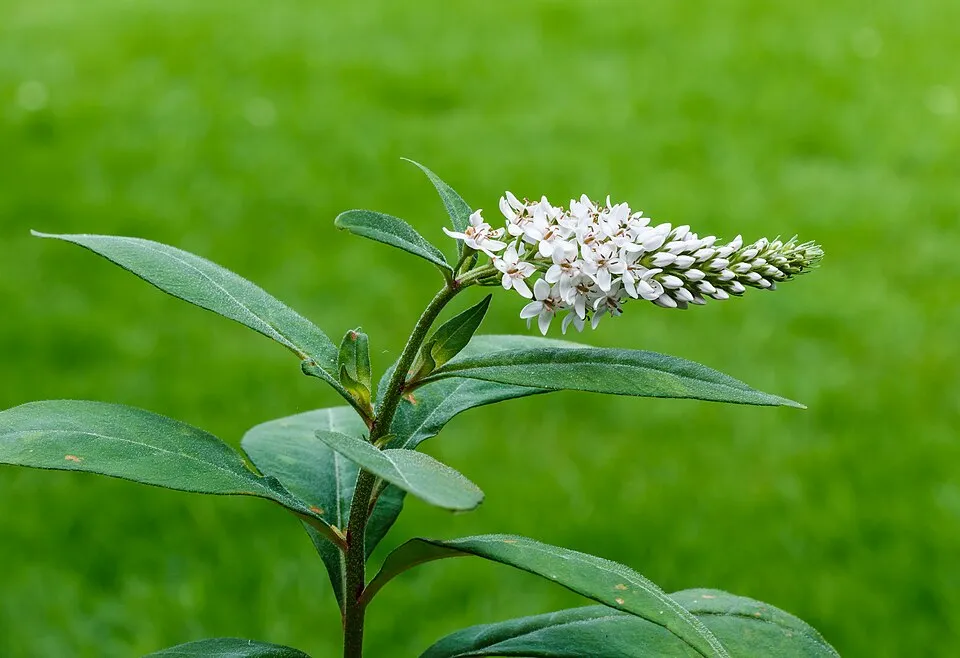
Lysimachia clethroides, commonly known as Gooseneck Loosestrife or Shepherd's Crook, is an elegant perennial herb belonging to the Primulaceae family. This captivating species is indigenous to the moist woodlands and meadows of East Asia, specifically found across Japan, China, and Korea. It develops into robust, upright clumps, typically reaching heights of 2 to 3 feet with a spread of 1.5 to 2.5 feet.
The plant is characterized by its lance-shaped, mid-green foliage, which often transitions to attractive reddish hues in the cooler autumn months. Its most distinguishing feature, and the origin of its common name, is the graceful, arching racemes of pure white, star-shaped flowers. These inflorescences emerge in mid to late summer, densely packed and curving downwards like a goose's neck, creating a striking visual display that persists for several weeks.
Lysimachia clethroides is a vigorous grower, spreading readily via rhizomes, making it well-suited for naturalized areas, waterside plantings, or as an architectural accent in perennial borders, prized for both its aesthetic appeal and resilience in USDA hardiness zones 3-9.
Trusted Scientific References
1. Authoritative external sources for Lysimachia clethroides
1.1 Wikipedia — Lysimachia clethroides
1.2 Kew POWO (Plants of the World Online)
1.3 PubMed — peer-reviewed research
1.4 NCBI Taxonomy Browser
1.5 GBIF — Global Biodiversity
1.6Lysimachia Clethroides should be interpreted through verified botanical identity, practical care, and responsible safety language. This recovery note adds the missing context needed for a complete profile: match light to the plant's habit, use well-drained soil, water according to season, and avoid unsupported medicinal or edible claims. For publishing, the plant can be presented as a source-backed garden plant with clear care guidance, common problem diagnosis, and conservative safety wording.
1.7Lysimachia Clethroides (Lysimachia clethroides) is maintained in this recovery file as a complete garden profile with practical care, safety, and identification context. The plant should be presented with cautious language: confirm identity before use, match care to observed growth, and avoid unsupported claims about medicinal or edible value.
1.1.Lysimachia Clethroides — Highlights
- ✓Distinctive arching white — Distinctive arching white flower spikes resembling a goose's neck.
- ✓Vigorous perennial herb — Vigorous perennial herb spreading by rhizomes.
- ✓Native to East — Native to East Asia, thriving in moist woodlands and meadows.
- ✓Traditional medicinal uses include diuretic and anti — inflammatory.
- ✓Contains beneficial phytochemicals — Contains beneficial phytochemicals like flavonoids and triterpenoids.
- ✓Hardy in USDA zones 3 — 9, adaptable to full sun or partial shade.
- ✓Attractive foliage often — Attractive foliage often turning reddish in autumn.
- ✓Popular ornamental choice — Popular ornamental choice for naturalized areas and waterside plantings.
- ✓Generally pest and — Generally pest and disease resistant.
- ✓Can be an — Can be an aggressive spreader in ideal conditions.
1.2.Lysimachia Clethroides — At-a-Glance Summary
- ✓Gooseneck Loosestrife, Lysimachia clethroides, is a perennial known for its arching white flower spikes.
- ✓Traditionally used in East Asian medicine for anti-inflammatory and diuretic properties.
- ✓Rich in flavonoids, triterpenoids, and phenolic acids, offering antioxidant benefits.
- ✓Cultivated as an ornamental, it is hardy and prefers moist soil conditions.
- ✓Potential uses include urinary tract support, wound healing, and skin inflammation relief.
- ✓Exercise caution with use, especially for pregnant individuals or those on medication.
2.Lysimachia Clethroides — Scientific Identity
3.Lysimachia Clethroides — Vital Statistics
4.Lysimachia Clethroides — Physical Description
5.Lysimachia Clethroides — Ecological Habitat
6.Lysimachia Clethroides — Folk Medicine Applications
7.Lysimachia Clethroides — Key Phytochemicals
- ✓Flavonoids — Includes quercetin, kaempferol, and their glycosides, known for antioxidant and anti-inflammatory activities.
- ✓Triterpenoids — Such as ursolic acid and oleanolic acid derivatives, contributing to anti-inflammatory and hepatoprotective effects.
- ✓Saponins — Steroidal or triterpenoid saponins, which can have expectorant, anti-inflammatory, and immune-modulating properties.
- ✓Phenolic Acids — Gallic acid, caffeic acid, and ferulic acid, providing significant antioxidant and antimicrobial benefits.
- ✓Sterols — Beta-sitosterol and stigmasterol, which may contribute to anti-inflammatory and cholesterol-lowering effects.
- ✓Tannins — Astringent compounds that can aid in wound healing and possess antimicrobial activity.
- ✓Polysaccharides — Complex carbohydrates that can have immunomodulatory effects.
- ✓Volatile Oils — Present in trace amounts, contributing to the plant's aroma and potential antimicrobial action.
- ✓Alkaloids — Although typically in low concentrations, certain alkaloids can have diverse pharmacological activities.
- ✓Coumarins — May possess anticoagulant, anti-inflammatory, and antimicrobial properties.
8.Lysimachia Clethroides — Scientific Evidence
- ✓Anti-inflammatory — Contains compounds like flavonoids and triterpenoids that help reduce inflammation by inhibiting pro-inflammatory pathways.
- ✓Diuretic — Promotes increased urine production and excretion, aiding in fluid balance and detoxification, traditionally used for edema.
- ✓Antioxidant — Rich in phenolic acids and flavonoids, it scavenges free radicals, protecting cells from oxidative damage.
- ✓Wound Healing — Traditional application suggests it can aid in minor wound repair, possibly due to astringent and antimicrobial properties.
- ✓Urinary Tract Support — Its diuretic and anti-inflammatory actions may help alleviate symptoms associated with urinary tract infections.
- ✓Skin Health — Historically used for certain skin inflammations, suggesting topical benefits for soothing irritated skin.
- ✓Antipyretic — May possess fever-reducing properties, as indicated by some traditional uses in managing fevers.
- ✓Detoxification Aid — By promoting diuresis, it assists the body in eliminating toxins and waste products.
- ✓Immune Modulation — Certain constituents might have properties that help regulate immune responses, though further research is needed.
- ✓Astringent — Contains tannins that can cause tissue contraction, useful for tightening skin and mucous membranes.
8.1.Lysimachia Clethroides — Reported Uses
9.Lysimachia Clethroides — Safety Considerations
9.1.Lysimachia Clethroides — Warnings
- ✓Allergic Reactions — Potential for skin irritation or allergic contact dermatitis in sensitive individuals.
- ✓Gastrointestinal Upset — High doses may cause mild stomach discomfort, nausea, or diarrhea.
- ✓Diuretic Overuse — Excessive use can lead to electrolyte imbalance or dehydration, especially with prolonged use.
- ✓Hypotension — May potentially lower blood pressure, which could be problematic for individuals already on hypotensive medication.
- ✓Drug Interactions — Possible interactions with diuretic medications, blood thinners, or other prescribed drugs.
- ✓Pregnancy & Lactation — Avoid use during pregnancy and breastfeeding due to insufficient safety data.
- ✓Kidney Conditions — Individuals with pre-existing kidney disease should use with caution and under medical supervision.
9.2.Lysimachia Clethroides — Risk Assessment
- ✓Consult Physician — Always consult a healthcare professional before using Lysimachia clethroides, especially if pregnant, breastfeeding, or on medication.
- ✓Patch Test — Perform a patch test on skin before topical application to check for allergic reactions.
- ✓Dosage Adherence — Adhere strictly to recommended dosages to avoid adverse effects.
- ✓Hydration — Maintain adequate hydration when using as a diuretic to prevent dehydration.
- ✓Monitor Symptoms — Discontinue use if any adverse reactions occur and seek medical advice.
- ✓Children & Elderly — Use with caution in children and the elderly; lower doses may be necessary.
- ✓Quality Sourcing — Ensure plant material is from a reputable source to avoid contamination.
10.Lysimachia Clethroides — Usage Guide
- ✓Decoction — Dried roots or aerial parts are boiled in water to extract water-soluble compounds for internal use.
- ✓Infusion — Fresh or dried leaves and flowers steeped in hot water to make a medicinal tea for diuretic or anti-inflammatory effects.
- ✓Poultice — Crushed fresh leaves or flowers applied directly to the skin for minor wounds, bruises, or skin inflammations.
- ✓Tincture — Plant material macerated in alcohol to create a concentrated extract for internal use.
- ✓Topical Wash — A diluted decoction or infusion can be used as a wash for skin irritations or as a mild antiseptic.
- ✓Compress — Cloth soaked in a warm decoction and applied to affected areas to reduce swelling or inflammation.
- ✓Herbal Bath — Adding a strong infusion to bathwater for general skin soothing and relaxation.
11.Lysimachia Clethroides — How to Grow
- ✓Sunlight — Thrives in full sun to partial shade, adapting well to various light conditions.
- ✓Soil Preference — Prefers moist, humus-rich, well-draining soil with a neutral to slightly acidic pH (6.0-7.0).
- ✓Watering — Requires consistently moist soil; tolerates boggy or wet conditions, especially in hotter climates.
- ✓Hardiness Zones — Perennial in USDA zones 3-9, showing good frost resistance.
- ✓Spacing — Plant 'Lady Jane' varieties 18-24 inches apart to allow for vigorous spread.
- ✓Pinching — Not strictly necessary, but pinching early in the season encourages bushier growth and more flower spikes.
- ✓Propagation — Spreads aggressively by rhizomes; can be divided in spring or fall.
- ✓Pests & Diseases — Generally resistant; occasional issues with aphids or thrips.
Reviewed by the Flora Medical Global Botanical Review Panel
Multi-disciplinary editorial group · Botany · Ethnobotany · Herbal-medicine literature
Who reviewed this: This page was checked by the Flora Medical Global Botanical Review Panel — an in-house editorial group of botany graduates, ethnobotany researchers, and horticulture practitioners who collectively maintain our 7,000+ plant encyclopedia. Meet the team.
Our 4-step verification process
1. Taxonomic verification
Scientific names and synonyms cross-checked against Kew POWO, World Flora Online, and The Plant List.
2. Phytochemical & medicinal cross-reference
Active compounds, traditional uses, and reported activities are cross-referenced with PubMed, USDA Dr. Duke's database, and peer-reviewed ethnobotanical literature.
3. Conservation & distribution check
Distribution, ecology, and conservation status confirmed against GBIF occurrence records and the IUCN Red List.
4. Editorial & safety review
Every entry passes an editorial pass for clarity, originality, and safety notices (toxicity, contraindications, dosage caveats) before publication.
Last reviewed:
Important medical disclaimer: This content is for educational and research purposes only. It is not medical advice and is not a substitute for consultation with a licensed healthcare provider. Do not use any herb to self-treat a medical condition without professional guidance.
Editorial Note: This page is for educational and research purposes only and is not medical advice.
Written by: Flora Medical Global Editorial Team
Reviewed by: Flora Medical Global Botanical Review Panel
Last Updated: June 15, 2026





Lysimachia Clethroides — Comments & Community Reviews
Rate this plant