


Medical Disclaimer: This content is for educational purposes only. It is not medical advice. Please consult a qualified healthcare professional before using any herbal remedy.
Safety Overview
1.Manjistha (Indian Madder) — At a Glance
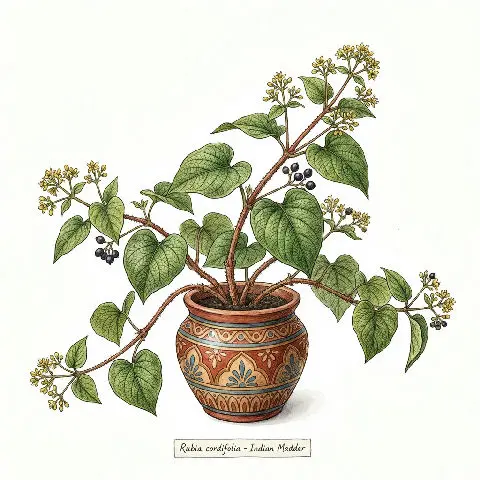
Manjistha, scientifically known as Rubia cordifolia, is a robust perennial herbaceous plant belonging to the Rubiaceae family, renowned for its significant medicinal and dyeing properties. This climbing vine can typically ascend to heights of 1.5 to 3 meters, often utilizing surrounding vegetation for support. Its slender, quadrangular stems are distinctly purplish, measuring approximately 3-5 mm in width, and are often armed with small, backward-pointing prickles, giving them a rough texture. The leaves are simple, cordate (heart-shaped) at the base, and acuminate at the apex, measuring about 8-12 cm in length and 6-10 cm in width. They are typically arranged in whorls of four to six along the stem, with entire margins, and the upper surface can appear glossy, while the underside and margins may also bear small prickles, contributing to a somewhat coarse feel.
The plant produces small, inconspicuous tubular flowers that range in color from greenish-yellow to pale white. These flowers are clustered in terminal or axillary cymose panicles, blooming primarily from June to September. The fruits are small, fleshy, globular berries, initially green, which mature into a distinctive purplish-black hue, each containing 2-3 seeds. The most defining characteristic of Rubia cordifolia lies beneath the soil: its extensive rhizomatous roots are thick, cylindrical, and boast a brilliant red to reddish-brown color due to the concentration of anthraquinone compounds, making them historically prized for their natural dye capabilities. Rubia cordifolia thrives predominantly in the temperate and subtropical regions of the Himalayas, found at altitudes ranging from 1,000 to 3,000 meters.
Its natural habitat includes moist, shaded forests, forest edges, and rocky slopes across countries like India, Nepal, China, Japan, and Southeast Asia. Taxonomically, it is classified within the subclass Asteridae and the order Rubiales, sharing its family, Rubiaceae, with other well-known genera such as Galium, which includes bedstraws, and Coffea, the source of coffee. Historically, Manjistha has been a cornerstone of traditional medicine systems, particularly Ayurveda and Traditional Chinese Medicine (TCM), where its roots have been utilized for millennia as a potent 'blood purifier' and for addressing a wide spectrum of health concerns, especially those related to skin and detoxification. Trusted Scientific References Authoritative external sources for Rubia cordifolia : Wikipedia — Rubi ...[CURRENT TEXT EXISTS: 2631 chars]
1.1.Manjistha (Indian Madder) — Notable Characteristics
- ✓Botanical Name — Rubia cordifolia
- ✓Common Name — Manjistha, Indian Madder
- ✓Family — Rubiaceae
- ✓Key Part Used — Roots (rhizomes)
- ✓Primary Ayurvedic Action — Rakta Shodhana (blood purification)
- ✓Characteristic Color — Bright red roots, used as a natural dye
- ✓Growth Habit — Perennial climbing vine
- ✓Native Region — Himalayan regions, East Asia, Southeast Asia
- ✓Traditional Systems — Ayurveda, Traditional Chinese Medicine (TCM)
- ✓Key Chemical Constituents — Anthraquinones (e.g., Purpurin, Manjisthin)
- ✓Skin Benefits — Improves complexion, treats acne, eczema, hyperpigmentation
- ✓Lymphatic Support — Promotes lymphatic drainage and detoxification
- ✓Anti — inflammatory — Reduces systemic and localized inflammation
- ✓Antioxidant — Protects cells from oxidative stress and damage
- ✓Gynecological Support — Used for irregular periods and uterine health
1.2.Manjistha (Indian Madder) — Quick Summary
- ✓Revered Ayurvedic herb known as a potent 'blood purifier'.
- ✓Primarily used for enhancing skin health and complexion.
- ✓Key active compounds are anthraquinones, responsible for red color and therapeutic effects.
- ✓Exhibits significant anti-inflammatory and antioxidant properties.
- ✓Traditionally supports the lymphatic system and aids detoxification.
- ✓Caution advised during pregnancy, lactation, and for those on blood thinners.
- ✓Historically valued as a natural red dye source from its roots.
2.Manjistha (Indian Madder) — Botanical Identity
3.Manjistha (Indian Madder) — Key Data
4.Manjistha (Indian Madder) — Botanical Description
5.Manjistha (Indian Madder) — Origin & Spread
6.Manjistha (Indian Madder) — Folk Medicine Applications
7.Manjistha (Indian Madder) — Chemical Profile
- ✓Anthraquinones — The most prominent class of compounds, responsible for the plant's red pigment and many of its pharmacological actions. Key examples include Purpurin, Manjisthin, Rubiadin, Pseudopurpurin, Munjistin, and Xanthopurpurin. These compounds contribute to laxative, antimicrobial, anti-inflammatory, and antioxidant effects.
- ✓Bicyclic Peptides — Recent phytochemical studies have identified various bicyclic peptides in Manjistha. While their specific pharmacological actions are still under investigation, peptides often exhibit diverse biological activities, including antimicrobial and immunomodulatory properties.
- ✓Terpenes — A diverse group of organic compounds found in the plant, contributing to its aroma and therapeutic effects. Terpenes are known for their anti-inflammatory, antioxidant, and potentially antimicrobial activities, supporting the plant's overall medicinal profile.
- ✓Polysaccharides — Complex carbohydrates present in Manjistha, which are typically associated with immunomodulatory and prebiotic effects. They can help enhance immune responses and support gut health indirectly.
- ✓Flavonoids — These are potent plant pigments with strong antioxidant and anti-inflammatory properties. Flavonoids found in Manjistha contribute to its ability to scavenge free radicals and protect cells from oxidative damage.
- ✓Iridoid Glycosides — A group of secondary metabolites often found in medicinal plants, known for various biological activities including anti-inflammatory, antimicrobial, and hepatoprotective effects.
- ✓Tannins — Astringent compounds that can help tighten tissues, reduce inflammation, and exhibit antiseptic properties. Tannins contribute to Manjistha's wound healing and skin-toning benefits.
- ✓Saponins — These compounds produce a frothing effect in water and are known for their expectorant, anti-inflammatory, and cholesterol-lowering properties. Their presence can contribute to the plant's diverse therapeutic actions.
- ✓Trace Elements — The plant accumulates various essential trace elements from the soil, which are vital for numerous physiological processes in the human body, although their direct therapeutic contribution is often secondary to other active compounds.
- ✓Coumarins — A class of organic compounds known for their anticoagulant, anti-inflammatory, and antimicrobial properties. They can contribute to Manjistha's blood-modulating effects.
- ✓Steroids — Plant steroids (phytosterols) can have anti-inflammatory and hormone-modulating effects, potentially contributing to Manjistha's broad therapeutic spectrum.
- ✓Phenolic Acids — Simple phenolic compounds with strong antioxidant capabilities, further enhancing Manjistha's protective effects against oxidative stress.
8.Manjistha (Indian Madder) — Evidence-Based Benefits
- ✓Blood Purification — Manjistha is revered in Ayurveda as a supreme 'Rakta Shodhana' or blood purifier. It helps cleanse the blood by supporting the liver and lymphatic system, facilitating the removal of toxins and metabolic waste products from the circulatory system.
- ✓Skin Health Enhancement — This herb is widely used to improve overall skin complexion and treat various dermatological conditions. Its detoxifying, anti-inflammatory, and antioxidant properties help reduce acne, eczema, psoriasis, vitiligo, and hyperpigmentation, promoting a clearer and more even skin tone.
- ✓Lymphatic System Support — Manjistha acts as a powerful lymphatic tonic, stimulating lymphatic drainage and reducing stagnation within the lymphatic system. This action is crucial for eliminating cellular waste, supporting immune function, and reducing swelling.
- ✓Anti-inflammatory Properties — Research indicates that Rubia cordifolia possesses significant anti-inflammatory activity, attributed to its anthraquinone content. It helps alleviate inflammation in various parts of the body, making it beneficial for conditions like arthritis and other inflammatory disorders.
- ✓Antioxidant Activity — The rich array of compounds, including anthraquinones and flavonoids, provides potent antioxidant effects. These antioxidants protect cells from oxidative stress and damage caused by free radicals, contributing to anti-aging and disease prevention.
- ✓Antimicrobial and Antibacterial Effects — Manjistha exhibits antimicrobial and antibacterial properties, which are beneficial in fighting off various infections. It can be used topically for wound healing and internally to support the body's defense against pathogenic microorganisms.
- ✓Wound Healing — Due to its antiseptic and anti-inflammatory actions, Manjistha aids in the accelerated healing of wounds, cuts, and ulcers. It helps prevent infection and promotes tissue regeneration.
- ✓Hepatoprotective Action — Manjistha supports liver function, assisting in the detoxification processes of the body. Its ability to cleanse the blood is directly linked to its beneficial effects on liver health, helping the liver process toxins more efficiently.
- ✓Diuretic Properties — The herb possesses mild diuretic qualities, supporting kidney function and promoting healthy urination. This can aid in flushing out toxins through the urinary tract and may be beneficial for urinary tract health.
- ✓Immunomodulatory Effects — Manjistha may help modulate the immune system, balancing its response and enhancing the body's natural defense mechanisms. This contributes to overall resilience against illness.
- ✓Gynecological Support — In traditional medicine, Manjistha is used to address various gynecological issues, including irregular menstruation, dysmenorrhea (painful periods), and abnormal uterine bleeding. It is believed to regulate uterine function and improve blood circulation in the pelvic region.
- ✓Antidiabetic Potential — Preliminary studies suggest that Manjistha may have hypoglycemic effects, potentially aiding in blood sugar regulation. This makes it a promising adjunctive therapy for managing diabetes.
- ✓Anti-tumor and Anticancer Activity — Preclinical research has explored the anti-tumor potential of Manjistha and its isolated compounds. Some anthraquinones have shown cytotoxic effects against various cancer cell lines, indicating a potential role in cancer prevention or therapy.
- ✓Cardioprotective Benefits — Manjistha may contribute to cardiovascular health by improving blood circulation, reducing inflammation, and exhibiting anti-platelet aggregation effects. These actions can help maintain healthy blood flow and prevent clot formation.
- ✓Anti-platelet Aggregation — Certain constituents of Rubia cordifolia have been observed to inhibit platelet aggregation, which could be beneficial in preventing the formation of blood clots and supporting cardiovascular health.
8.1.Manjistha (Indian Madder) — Reported Uses
9.Manjistha (Indian Madder) — Safety & Side Effects
9.1.Manjistha (Indian Madder) — Caution Notes
- ✓Urine Discoloration — A common and harmless side effect is the temporary reddish-brown discoloration of urine due to the excretion of its natural pigments, anthraquinones.
- ✓Skin Discoloration — Prolonged or high-dose topical application may temporarily stain the skin a reddish hue, which is usually benign and fades over time.
- ✓Gastrointestinal Upset — In rare cases, high doses may lead to mild gastrointestinal discomfort, such as nausea, stomach upset, or loose stools.
- ✓Allergic Reactions — Although uncommon, some individuals may experience allergic reactions, including skin rashes, itching, or hives. Discontinue use if such symptoms occur.
- ✓Liver Toxicity Concerns — While generally considered safe at recommended doses, preclinical studies suggest potential liver toxicity with very high, prolonged doses. Caution is advised for individuals with pre-existing liver conditions.
- ✓Drug Interactions — May potentially interact with anticoagulant medications (blood thinners) due to its reported anti-platelet aggregation effects, increasing the risk of bleeding.
- ✓Pregnancy and Lactation — Manjistha is generally contraindicated during pregnancy and breastfeeding due to insufficient safety data and potential uterine stimulating effects.
- ✓Children — Use in children is not recommended due to a lack of comprehensive safety studies in pediatric populations.
- ✓Blood Pressure Effects — Individuals with very low blood pressure should use Manjistha with caution, as it may potentially have a mild hypotensive effect.
9.2.Manjistha (Indian Madder) — Clinical Safety Notes
- ✓Professional Consultation — Always consult a qualified healthcare practitioner or medical herbalist before using Manjistha, especially if you have existing health conditions or are on other medications.
- ✓Dosage Adherence — Strictly adhere to recommended dosages. Excessive or prolonged use beyond expert guidance may increase the risk of adverse effects.
- ✓Pregnancy and Lactation — Manjistha is generally contraindicated during pregnancy and breastfeeding due to insufficient safety data and potential uterine stimulating effects. Avoid use.
- ✓Children — Not recommended for use in children due to limited safety research in pediatric populations.
- ✓Liver Conditions — Individuals with pre-existing liver diseases should use Manjistha with extreme caution and under medical supervision, as high doses might potentially impact liver function.
- ✓Kidney Conditions — Use with caution in individuals with kidney disorders; consult a doctor before use.
- ✓Anticoagulant Medications — Avoid concurrent use with blood-thinning medications (anticoagulants, antiplatelets) due to potential interactions that could increase the risk of bleeding.
- ✓Prior to Surgery — Discontinue Manjistha at least two weeks before any scheduled surgery to minimize potential bleeding risks.
- ✓Allergic Reactions — Discontinue use immediately if any signs of allergic reaction, such as rash, itching, or swelling, occur.
- ✓Quality Sourcing — Ensure Manjistha products are sourced from reputable suppliers to guarantee purity, potency, and absence of contaminants like heavy metals or pesticides.
- ✓Characteristic Urine Color — Be aware that Manjistha may cause urine to turn reddish-brown; this is a harmless effect due to its natural pigments and not a cause for concern.
10.Manjistha (Indian Madder) — Preparation Methods
- ✓Decoction — The dried roots are boiled in water to create a decoction, a traditional method for internal use in Ayurveda to purify blood and treat skin conditions.
- ✓Powder (Churna) — Dried Manjistha root is ground into a fine powder (churna), which can be consumed orally mixed with warm water, honey, ghee, or milk.
- ✓Topical Paste — For external skin applications, Manjistha powder is mixed with water, rose water, milk, or honey to form a paste, applied directly to affected skin areas.
- ✓Medicated Oil (Taila) — Manjistha root is infused into a carrier oil (like sesame or coconut oil) through a slow heating process, used topically for skin issues, massage, or joint pain.
- ✓Ghee (Ghrita) — Manjistha is often processed into medicated ghee, which is consumed internally to leverage its fat-soluble compounds for systemic benefits.
- ✓Capsules and Tablets — Standardized extracts or dried root powder are available in capsule or tablet form for convenient and precise dosing.
- ✓Herbal Tea — A milder infusion can be made by steeping dried Manjistha root pieces in hot water, consumed as a warming herbal tea.
- ✓Tincture — An alcoholic extract of Manjistha roots, providing a concentrated form that can be taken in drops diluted in water.
- ✓Ayurvedic Formulations — Manjistha is a key ingredient in numerous polyherbal Ayurvedic preparations, such as Manjisthadi Kwath or Mahamanjisthadi Kwath, designed for specific therapeutic outcomes.
- ✓External Cleansing — The decoction or infused water can be used for washing wounds, skin lesions, or as a facial toner to improve complexion.
- ✓Professional Guidance — Always consult a qualified medical herbalist or Ayurvedic practitioner for appropriate dosage and duration of use, especially for chronic conditions.
11.Manjistha (Indian Madder) — Cultivation & Care
- ✓Propagation — Manjistha can be propagated effectively from seeds, root cuttings, or stem cuttings.
- ✓Soil Requirements — Prefers well-drained, fertile, loamy soil with a slightly acidic to neutral pH (6.0-7.0).
- ✓Climate and Temperature — Thrives in subtropical to temperate climates, preferring moderate temperatures and high humidity.
- ✓Sunlight Exposure — Grows best in partial shade, especially in hotter climates, but can tolerate full sun in cooler, moist environments.
- ✓Watering — Requires consistent moisture; keep the soil evenly damp but avoid waterlogging, which can lead to root rot.
- ✓Fertilization — Benefits from the incorporation of organic compost or well-rotted manure into the soil. A balanced liquid fertilizer can be applied during the active growing season.
- ✓Support Structure — As a climbing vine, Manjistha needs a trellis, stakes, or other support structures to grow vertically and maximize yield.
- ✓Pest and Disease Management — Generally resistant to major pests and diseases, but monitor for common garden issues like aphids or fungal infections in overly wet conditions.
- ✓Harvesting — The roots, which are the primary medicinal part, are typically harvested after 2-3 years of growth, usually in autumn, when the concentration of active compounds is highest.
- ✓Post-Harvest Processing — Harvested roots should be thoroughly cleaned, cut into smaller pieces, and dried in a well-ventilated, shaded area to preserve their vibrant red color and active medicinal constituents.
- ✓Weed Control — Regular weeding is important, especially during the early growth stages, to prevent competition for nutrients and moisture.
- ✓Mulching — Applying a layer of organic mulch around the base of the plant helps retain soil moisture, suppress weeds, and regulate soil temperature.
Reviewed by the Flora Medical Global Botanical Review Panel
Multi-disciplinary editorial group · Botany · Ethnobotany · Herbal-medicine literature
Who reviewed this: This page was checked by the Flora Medical Global Botanical Review Panel — an in-house editorial group of botany graduates, ethnobotany researchers, and horticulture practitioners who collectively maintain our 7,000+ plant encyclopedia. Meet the team.
Our 4-step verification process
1. Taxonomic verification
Scientific names and synonyms cross-checked against Kew POWO, World Flora Online, and The Plant List.
2. Phytochemical & medicinal cross-reference
Active compounds, traditional uses, and reported activities are cross-referenced with PubMed, USDA Dr. Duke's database, and peer-reviewed ethnobotanical literature.
3. Conservation & distribution check
Distribution, ecology, and conservation status confirmed against GBIF occurrence records and the IUCN Red List.
4. Editorial & safety review
Every entry passes an editorial pass for clarity, originality, and safety notices (toxicity, contraindications, dosage caveats) before publication.
Last reviewed:
Important medical disclaimer: This content is for educational and research purposes only. It is not medical advice and is not a substitute for consultation with a licensed healthcare provider. Do not use any herb to self-treat a medical condition without professional guidance.
Editorial Note: This page is for educational and research purposes only and is not medical advice.
Written by: Flora Medical Global Editorial Team
Reviewed by: Flora Medical Global Botanical Review Panel
Last Updated: June 16, 2026





Manjistha (Indian Madder) — Comments & Community Reviews
Rate this plant