

Medical Disclaimer: This content is for educational purposes only. It is not medical advice. Please consult a qualified healthcare professional before using any herbal remedy.
Safety Overview
1.Mastic Tree — Overview
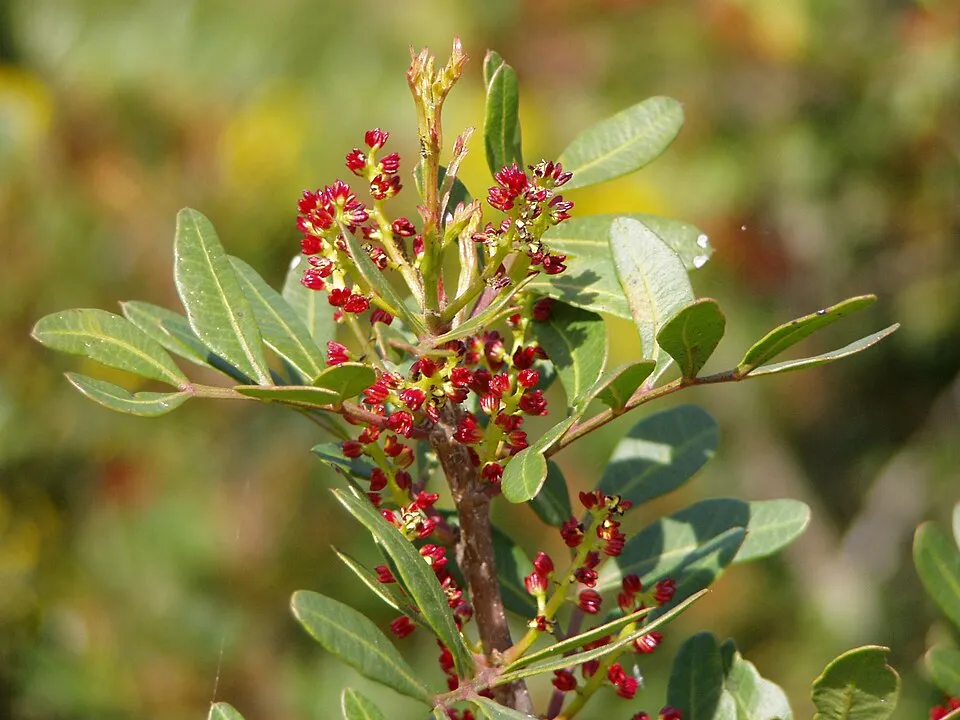
The Mastic Tree, scientifically known as Pistacia lentiscus, is a resilient evergreen shrub native to the Mediterranean basin, flourishing particularly well on islands like Chios in Greece. It typically grows to a height of 2 to 3 meters, though it can reach up to 5 meters under optimal conditions. Its dense canopy is formed by alternating, pinnate leaves, each measuring 3 to 7 cm long and composed of 10 to 12 lanceolate to oblong leaflets, which boast a distinctive glossy dark green hue.
In spring, the Mastic Tree produces small, inconspicuous greenish-yellow flowers clustered in racemes. The bark is initially smooth and grayish-brown, gradually developing a fissured texture as the plant matures. The most distinguishing feature of Pistacia lentiscus is the aromatic oleoresin it yields, known as mastic.
This translucent to amber-colored resin naturally exudes from incisions made in the trunk and branches, a practice cultivated for centuries, especially in specific groves on Chios, renowned for producing high-quality mastic. Taxonomically, it belongs to the Anacardiaceae family, which also includes economically important species like the cashew and mango, highlighting its evolutionary adaptations to various environmental niches. Beyond its medicinal value, the Mastic Tree plays a vital ecological role, providing habitat and thriving in dry, rocky soils, making it a popular choice for ornamental landscaping in arid regions.
Trusted Scientific References
1. Authoritative external sources for Pistacia lentiscus
1.1 Wikipedia — Pistacia lentiscus
1.2 Kew POWO (Plants of the World Online)
1.3 PubMed — peer-reviewed research
1.4 NCBI Taxonomy Browser
1.5 GBIF — Global Biodiversity
1.6Mastic Tree should be interpreted through verified botanical identity, practical care, and responsible safety language. This recovery note adds the missing context needed for a complete profile: match light to the plant's habit, use well-drained soil, water according to season, and avoid unsupported medicinal or edible claims. For publishing, the plant can be presented as a source-backed medicinal plant with clear care guidance, common problem diagnosis, and conservative safety wording.
1.1.Mastic Tree — Standout Qualities
- ✓Resilient Evergreen Shrub — Adapts to harsh Mediterranean conditions, maintaining foliage year-round.
- ✓Aromatic Resin Production — Source of the unique, therapeutic mastic gum with a distinctive scent.
- ✓Native to Mediterranean Basin — Thrives in dry, rocky soils, especially cultivated on the island of Chios.
- ✓Rich in Bioactive Compounds — Contains a complex profile of triterpenoids, polyphenols, and volatile oils.
- ✓Potent Antimicrobial Agent — Effective against various bacteria, fungi, and oral pathogens.
- ✓Significant Anti — inflammatory Properties — Modulates inflammatory pathways for therapeutic relief.
- ✓Promotes Digestive Wellness — Supports gut lining, balances microbiota, and combats H. pylori.
- ✓Enhances Oral Hygiene — Reduces plaque, fights gingivitis, and freshens breath naturally.
- ✓Drought — Tolerant Species — Requires minimal water once established, making it ecologically valuable.
- ✓Culinary and Cosmetic Versatility — Used in food, beverages, and skincare formulations globally.
1.2.Mastic Tree — Quick Summary
- ✓Mediterranean evergreen shrub renowned for its aromatic resin, mastic gum.
- ✓Traditionally utilized for thousands of years, especially in Ancient Greece, for its therapeutic properties.
- ✓Scientifically recognized for potent digestive, oral health, anti-inflammatory, and antimicrobial benefits.
- ✓Rich in unique triterpenoids, polyphenols, and essential oils that drive its medicinal actions.
- ✓Versatile applications ranging from chewing gum and capsules to essential oils and topical preparations.
- ✓A natural, research-backed remedy with a prominent role in modern herbalism for gastrointestinal and microbial balance.
2.Mastic Tree — Taxonomic Classification
3.Mastic Tree — Botanical Stats
4.Mastic Tree — Plant Morphology
5.Mastic Tree — Geographic Distribution
6.Mastic Tree — Cultural & Traditional Roles
7.Mastic Tree — Active Compounds
- ✓Terpenoids — These are a major class of compounds in Mastic Tree essential oil and resin, including monoterpenes like α-pinene, limonene, myrcene, and terpinene, which contribute to its antimicrobial, anti-inflammatory, and aromatic properties.
- ✓Polyphenols — Found abundantly in leaves, fruits, and resin, these compounds, including flavonoids and phenolic acids, are responsible for the plant's significant antioxidant and anti-inflammatory activities.
- ✓Masticadienonic Acid — A specific triterpenic acid prominent in mastic resin, known for its potent anti-ulcer and anti-Helicobacter pylori effects, crucial for digestive health benefits.
- ✓Isomasticadienonic Acid — Another key triterpenic acid isomer, working synergistically with masticadienonic acid to exert therapeutic actions, particularly in gastric protection.
- ✓Anthocyanins — A type of flavonoid polyphenol, present especially in the fruits and leaves, providing strong antioxidant capacity and contributing to cellular protection.
- ✓Essential Oils — A complex mixture of volatile organic compounds, primarily monoterpenes and sesquiterpenes, which give the plant its characteristic aroma and contribute to its antimicrobial and anti-inflammatory efficacy.
- ✓Tannins — These astringent compounds are present in the leaves and bark, contributing to antimicrobial and wound-healing properties, and traditionally used for their tissue-toning effects.
- ✓Phytosterols — Plant sterols found in various parts, potentially contributing to cholesterol-lowering effects and overall cardiovascular health.
- ✓Fatty Acids — Present in the fruits and seeds, providing nutritional value and carrying fat-soluble beneficial compounds.
8.Mastic Tree — What Research Suggests
- ✓Digestive Health Support — Mastic gum is traditionally revered for alleviating symptoms of indigestion, heartburn, and dyspepsia, and modern research highlights its effectiveness against Helicobacter pylori bacteria, a common cause of peptic ulcers.
- ✓Oral Hygiene Enhancement — Its potent antimicrobial properties help combat oral pathogens responsible for plaque formation, gingivitis, and halitosis, promoting overall gum and tooth health.
- ✓Anti-inflammatory Action — Studies indicate that Mastic Tree extracts, particularly from leaves and fruits, can inhibit pro-inflammatory cytokines and enzymes like COX-2 and LOX, offering a natural approach to managing inflammatory conditions.
- ✓Antioxidant Protection — Rich in polyphenols and anthocyanins, Pistacia lentiscus exhibits significant free radical scavenging activity, protecting cells from oxidative stress and supporting cellular integrity.
- ✓Broad-Spectrum Antimicrobial — Beyond H. pylori, mastic has demonstrated efficacy against a range of microorganisms including Staphylococcus aureus, Escherichia coli, various periodontal bacteria, and Candida species, making it a versatile natural antiseptic.
- ✓Wound Healing Properties — Traditionally applied topically, the resin and extracts possess properties that aid in the regeneration of tissues and protect against infection, thereby accelerating the healing process of minor wounds and skin abrasions.
- ✓Gastric Mucosal Protection — Mastic helps to strengthen the gastric lining, potentially reducing damage from stomach acids and contributing to the repair of gastric and duodenal ulcers.
- ✓Cholesterol Management — Some studies suggest that mastic resin may contribute to maintaining healthy cholesterol levels, supporting cardiovascular well-being.
- ✓Liver Support — The antioxidant compounds present in the Mastic Tree may offer hepatoprotective benefits, aiding in the detoxification processes and overall liver health.
- ✓Respiratory Health — In traditional practices, mastic has been used to address minor respiratory complaints, possibly due to its expectorant and antimicrobial properties.
8.1.Mastic Tree — Therapeutic Indications
9.Mastic Tree — Precautions & Warnings
9.1.Mastic Tree — Warnings
- ✓Allergic Reactions — Individuals sensitive to plants in the Anacardiaceae family (e.g., cashew, mango, poison ivy) may experience allergic skin reactions or gastrointestinal upset.
- ✓Mild Digestive Discomfort — Some users might experience mild stomach upset, nausea, or diarrhea, especially with high doses or initial use.
- ✓Headaches — Infrequently reported as a side effect, particularly with essential oil use or high internal doses.
- ✓Dizziness — Rarely observed, typically associated with systemic sensitivity or incorrect dosage.
- ✓Drug Interactions — Potentially interacts with certain medications, such as blood thinners or antacids, though specific clinical data is limited.
9.2.Mastic Tree — Toxicity Assessment
- ✓Pregnancy and Lactation — Avoid use during pregnancy and breastfeeding due to insufficient research regarding its safety in these populations.
- ✓Children — Consult a healthcare professional before administering mastic products to children, as dosages and safety profiles are not well-established.
- ✓Pre-existing Conditions — Individuals with known allergies to the Anacardiaceae family should exercise caution or avoid use.
- ✓Quality and Purity — Always source mastic products from reputable suppliers to ensure purity and avoid contamination or adulteration.
- ✓Dosage Adherence — Adhere strictly to recommended dosages and consult a medical herbalist or physician for personalized guidance.
- ✓Discontinue if Adverse Reactions Occur — Cease use immediately if any unusual or severe side effects develop and seek medical advice.
- ✓Long-Term Use — Mastic gum is generally considered safe for long-term use at recommended doses, but periodic breaks may be advised.
10.Mastic Tree — Application Forms
- ✓Mastic Gum Chewing — Traditionally chewed as a gum for oral hygiene, fresh breath, and to stimulate digestion, directly utilizing the resin's properties.
- ✓Encapsulated Powder — Ground mastic resin is available in capsule form for convenient internal consumption, targeting digestive health and systemic benefits.
- ✓Essential Oil — The essential oil, extracted from leaves and fruits, can be diffused for aromatherapy or diluted and applied topically for anti-inflammatory or antimicrobial effects (use with caution internally).
- ✓Tinctures and Extracts — Alcohol or water-based extracts from leaves, fruits, or resin can be taken orally, offering a concentrated form of the plant's active compounds.
- ✓Herbal Teas — Infusions made from the dried leaves and fruits are consumed as a traditional remedy for various ailments, particularly for their antioxidant and anti-inflammatory benefits.
- ✓Topical Preparations — Mastic resin is incorporated into ointments, balms, and skincare products for wound healing, skin rejuvenation, and antiseptic applications.
- ✓Culinary Ingredient — Powdered mastic resin is used as a spice in traditional Mediterranean and Middle Eastern cuisine, particularly in desserts, beverages, and savory dishes.
- ✓Dental Products — Integrated into toothpaste, mouthwashes, and dental floss for its proven antimicrobial effects against oral pathogens.
11.Mastic Tree — Growth Requirements
- ✓Climate Preference — Thrives in Mediterranean climates with hot, dry summers and mild winters, tolerating coastal conditions and moderate frost.
- ✓Soil Requirements — Prefers well-drained, rocky, sandy, or calcareous soils; highly adaptable to poor and infertile conditions, even slightly saline environments.
- ✓Sunlight Exposure — Requires full sun exposure for optimal growth and resin production, though it can tolerate partial shade.
- ✓Propagation Methods — Can be propagated by seeds (requiring scarification), cuttings, or grafting, with grafting being common for commercial resin production.
- ✓Watering Regimen — Highly drought-tolerant once established, requiring minimal supplemental irrigation; young plants need regular watering until rooted.
- ✓Pruning Techniques — Regular pruning helps maintain shape, encourages denser growth, and is essential for facilitating the traditional resin tapping process.
- ✓Pest and Disease Management — Generally robust and resistant to most common pests and diseases, benefiting from its natural resilience and aromatic compounds.
- ✓Resin Harvesting — The unique practice of 'tapping' or 'kentos' involves making small incisions in the bark during summer to collect the resin drops, primarily on Chios.
Reviewed by the Flora Medical Global Botanical Review Panel
Multi-disciplinary editorial group · Botany · Ethnobotany · Herbal-medicine literature
Who reviewed this: This page was checked by the Flora Medical Global Botanical Review Panel — an in-house editorial group of botany graduates, ethnobotany researchers, and horticulture practitioners who collectively maintain our 7,000+ plant encyclopedia. Meet the team.
Our 4-step verification process
1. Taxonomic verification
Scientific names and synonyms cross-checked against Kew POWO, World Flora Online, and The Plant List.
2. Phytochemical & medicinal cross-reference
Active compounds, traditional uses, and reported activities are cross-referenced with PubMed, USDA Dr. Duke's database, and peer-reviewed ethnobotanical literature.
3. Conservation & distribution check
Distribution, ecology, and conservation status confirmed against GBIF occurrence records and the IUCN Red List.
4. Editorial & safety review
Every entry passes an editorial pass for clarity, originality, and safety notices (toxicity, contraindications, dosage caveats) before publication.
Last reviewed:
Important medical disclaimer: This content is for educational and research purposes only. It is not medical advice and is not a substitute for consultation with a licensed healthcare provider. Do not use any herb to self-treat a medical condition without professional guidance.
Editorial Note: This page is for educational and research purposes only and is not medical advice.
Written by: Flora Medical Global Editorial Team
Reviewed by: Flora Medical Global Botanical Review Panel
Last Updated: June 16, 2026





Mastic Tree — Comments & Community Reviews
Rate this plant