
Medical Disclaimer: This content is for educational purposes only. It is not medical advice. Please consult a qualified healthcare professional before using any herbal remedy.
Safety Overview
1.Mullein — At a Glance
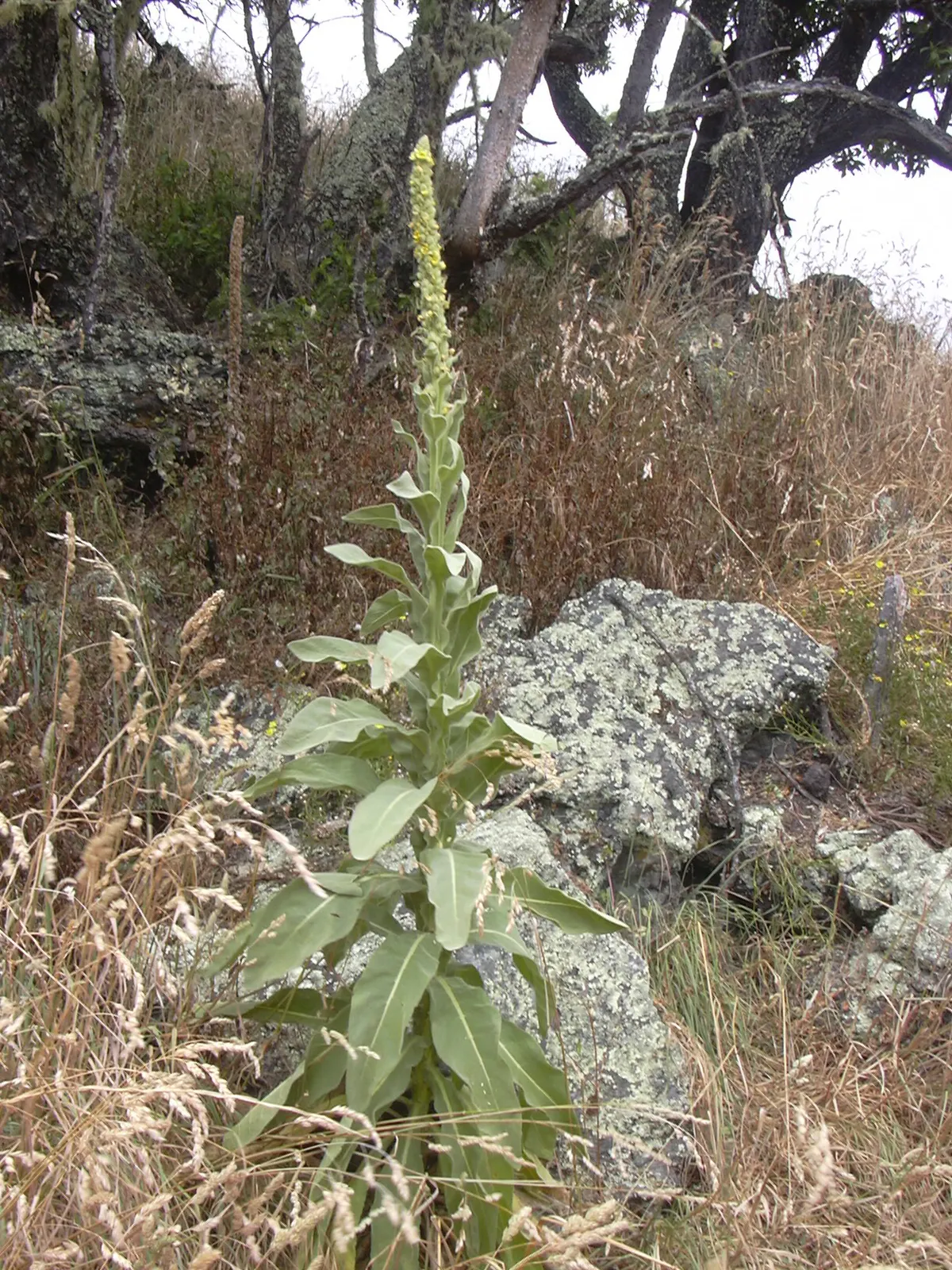
Mullein, scientifically known as Verbascum thapsus, is a distinguished biennial herbaceous plant belonging to the Scrophulariaceae family, often reaching impressive heights of 1 to 2 meters. In its first year, it forms a striking basal rosette of large, soft, felt-like leaves, typically grey-green in color and measuring up to 30 cm long and 10 cm wide. These leaves are densely covered in fine, woolly hairs, giving them a distinctive texture.
During its second year, a robust, stout, and hairy central stem emerges, culminating in a tall, cylindrical spike adorned with numerous bright yellow, five-petaled flowers, each about 2-4 cm in diameter. These flowers bloom sequentially from the bottom up, usually from June to September. Native to Europe, North Africa, and parts of Asia, Verbascum thapsus has successfully naturalized across temperate regions of North America.
It thrives in disturbed environments, such as roadsides, clearings, meadows, and neglected fields, preferring full sun and well-drained, often poor, soil. Mullein's historical significance in herbal medicine dates back to ancient civilizations, where it was highly valued for its notable soothing properties, particularly for the respiratory system, establishing its enduring role as a prominent therapeutic herb.
Trusted Scientific References
1. Authoritative external sources for Verbascum thapsus
1.1 Wikipedia — Verbascum thapsus
1.2 Kew POWO (Plants of the World Online)
1.3 PubMed — peer-reviewed research
1.4 NCBI Taxonomy Browser
1.5 GBIF — Global Biodiversity
1.6Mullein should be interpreted through verified botanical identity, practical care, and responsible safety language. This recovery note adds the missing context needed for a complete profile: match light to the plant's habit, use well-drained soil, water according to season, and avoid unsupported medicinal or edible claims. For publishing, the plant can be presented as a source-backed medicinal plant with clear care guidance, common problem diagnosis, and conservative safety wording.
1.1.Mullein — Notable Characteristics
- ✓Distinctive Appearance — Features a tall, fuzzy stalk with bright yellow flowers and large, woolly, grey-green basal leaves.
- ✓Respiratory Demulcent — Its high mucilage content soothes irritated respiratory passages, making it excellent for coughs and bronchitis.
- ✓Natural Expectorant — Saponins help to loosen and expel mucus from the lungs.
- ✓Anti — inflammatory Powerhouse — Contains flavonoids and phenylethanoid glycosides, offering broad anti-inflammatory benefits.
- ✓Traditional Ear Remedy — Mullein flower oil is a well-known folk remedy for ear infections and pain.
- ✓Biennial Growth Habit — Completes its life cycle over two years, forming a rosette in the first and flowering in the second.
- ✓Adaptable and Hardy — Thrives in disturbed, sunny areas with poor soil, making it easy to cultivate.
- ✓Rich Phytochemistry — A diverse array of active compounds contributes to its wide range of medicinal uses.
- ✓Historical Significance — Valued in traditional medicine across Europe, Asia, and North America for centuries.
- ✓Low Maintenance — Generally resistant to pests and diseases, requiring minimal care once established.
1.2.Mullein — In Brief
- ✓Mullein (Verbascum thapsus) is a biennial herb known for its tall flower spikes and fuzzy leaves.
- ✓Traditionally used for respiratory ailments, ear infections, and anti-inflammatory support.
- ✓Rich in mucilage, saponins, and anti-inflammatory flavonoids like quercetin and verbascoside.
- ✓Cultivated easily in full sun and poor soil, it readily self-seeds.
- ✓Preparations include teas, tinctures, ear oil, and poultices, requiring careful filtration.
- ✓Generally safe, but proper preparation and consultation with a healthcare provider are advised.
2.Mullein — Nomenclature & Classification
3.Mullein — Fact Sheet
4.Mullein — Botanical Description
5.Mullein — Native Range & Habitat
6.Mullein — Heritage Uses
7.Mullein — Key Phytochemicals
- ✓Mucilage — Primarily composed of polysaccharides, mucilage is responsible for Mullein's demulcent and emollient properties, soothing irritated mucous membranes in the respiratory and digestive tracts.
- ✓Saponins — Triterpenoid saponins are key for Mullein's expectorant action, helping to break up and expel mucus from the lungs, and may also contribute to its mild diuretic effects.
- ✓Flavonoids — Compounds such as quercetin and luteolin are potent antioxidants and anti-inflammatory agents, protecting cells from oxidative stress and mitigating inflammatory responses throughout the body.
- ✓Phenylethanoid Glycosides — Verbascoside (also known as acteoside) is a prominent compound with significant anti-inflammatory, antioxidant, and mild analgesic activities, supporting Mullein's traditional uses for pain and inflammation.
- ✓Iridoid Glycosides — Aucubin and similar compounds contribute to Mullein's anti-inflammatory and potentially hepatoprotective qualities, influencing various biological pathways.
- ✓Tannins — These compounds provide mild astringent properties, which can help to tone tissues and reduce secretions, useful for minor skin irritations or digestive complaints.
- ✓Volatile Oils — Present in the flowers, these oils contribute to the plant's aroma and may possess mild antimicrobial properties, particularly relevant in Mullein ear oil preparations.
- ✓Plant Sterols — Beta-sitosterol and other phytosterols are present, known for their potential to support cardiovascular health and modulate immune responses.
- ✓Carotenoids — Found in the yellow flowers, these pigments act as antioxidants and precursors to Vitamin A, contributing to overall cellular health.
8.Mullein — Scientific Evidence
- ✓Respiratory Support — Mullein's rich mucilage content provides a soothing, demulcent effect on irritated mucous membranes of the respiratory tract, helping to calm coughs and alleviate inflammation associated with conditions like bronchitis, asthma, and common colds.
- ✓Expectorant Action — The saponins present in Mullein act as natural expectorants, helping to loosen tenacious phlegm and mucus in the lungs and airways, making it easier to expel and promoting clearer breathing.
- ✓Anti-inflammatory Properties — Flavonoids like quercetin and phenylethanoid glycosides such as verbascoside contribute to Mullein's significant anti-inflammatory effects, which can benefit conditions ranging from joint pain (arthrosis, rheumatism) to systemic inflammation.
- ✓Ear Infection Relief — Mullein flower oil, often combined with garlic, is a traditional remedy for otitis and earaches, believed to reduce inflammation and pain within the ear canal due to its anti-inflammatory and mild antimicrobial compounds.
- ✓Antiviral Activity — Research suggests that certain compounds in Mullein may exhibit antiviral properties, potentially aiding the body in fighting off viral infections, particularly those affecting the respiratory system.
- ✓Wound Healing — Topically, Mullein leaves can be used as a poultice to soothe skin irritations, minor burns, and wounds, leveraging its demulcent and anti-inflammatory actions to promote healing and reduce discomfort.
- ✓Digestive Aid — The mucilage can also soothe irritated digestive tracts, offering relief from mild stomach upset or intestinal inflammation, acting as a protective barrier.
- ✓Mild Diuretic — Some constituents may possess mild diuretic effects, supporting kidney function and aiding in the elimination of excess fluids from the body.
- ✓Pain Relief — Its anti-inflammatory and anodyne properties may offer mild pain relief, particularly for inflammatory conditions affecting muscles and joints.
- ✓Astringent Qualities — Mullein can act as a mild astringent, helping to tone tissues and reduce excessive secretions, beneficial for conditions like diarrhea or weeping wounds.
8.1.Mullein — Therapeutic Indications
9.Mullein — Safety Considerations
9.1.Mullein — Possible Adverse Reactions
- ✓Skin Irritation — The fine hairs on Mullein leaves can cause skin irritation or allergic reactions in sensitive individuals.
- ✓Throat Irritation — Ingesting unfiltered Mullein tea may cause throat irritation due to the fine trichomes; always strain thoroughly.
- ✓Allergic Reactions — Rare allergic reactions, including rash or itching, may occur in susceptible individuals.
- ✓Digestive Upset — High doses may occasionally lead to mild gastrointestinal discomfort, such as nausea or diarrhea.
- ✓Ear Canal Irritation — While rare, some individuals may experience irritation when using Mullein oil in the ear, especially if an allergy exists.
9.2.Mullein — Risk Assessment
- ✓Pregnancy and Lactation — Mullein is generally considered safe, but pregnant and breastfeeding individuals should consult a healthcare professional before use due to insufficient research.
- ✓Children — Mullein tea (properly filtered) and ear oil are often used for children, but medical supervision is recommended, especially for infants.
- ✓Drug Interactions — While generally mild, Mullein's diuretic or demulcent properties might theoretically interact with certain medications; consult a doctor if on prescription drugs.
- ✓External Use — Perform a patch test before applying Mullein topically to check for skin sensitivity or allergic reactions.
- ✓Proper Filtration — Always thoroughly filter Mullein infusions to remove the irritating fine hairs (trichomes) before internal consumption.
- ✓Professional Advice — Always seek advice from a qualified healthcare practitioner or medical herbalist before using Mullein for specific health conditions, especially if underlying health issues exist.
10.Mullein — Preparation Methods
- ✓Herbal Tea (Infusion) — Dried leaves or flowers can be steeped in hot water for 10-15 minutes to create a soothing tea, particularly effective for respiratory ailments. Ensure proper straining to remove fine hairs.
- ✓Tincture — Mullein leaves and flowers can be macerated in alcohol to create a potent tincture, offering a concentrated form for internal use, typically dosed in drops.
- ✓Mullein Flower Oil — Fresh Mullein flowers are infused in a carrier oil (like olive oil) over several weeks, traditionally used as an ear oil for discomfort and infections.
- ✓Poultice — Fresh or dried leaves, rehydrated and crushed, can be applied directly to the skin as a poultice for minor wounds, burns, or skin irritations.
- ✓Smoking Blend — Dried Mullein leaves are sometimes used in herbal smoking blends, especially by those seeking to support respiratory health, though this method requires caution.
- ✓Gargle — A strong infusion of Mullein leaves can be used as a gargle to soothe sore throats and reduce inflammation in the oral cavity.
- ✓Syrup — Mullein tea can be combined with honey or other sweeteners to create a soothing syrup for coughs and colds, particularly beneficial for children (over 1 year old).
11.Mullein — How to Grow
- ✓Seed Propagation — Mullein is best propagated from seed; sow directly outdoors in late spring or early summer, or start indoors in early spring for transplanting.
- ✓Soil Preference — It thrives in poor to moderately fertile, well-drained soils, tolerating sandy or gravelly conditions; avoid rich, heavy, or waterlogged soils.
- ✓Sun Exposure — Requires full sun exposure (at least 6-8 hours daily) to achieve its full height and robust flowering potential.
- ✓Watering Regimen — Once established, Mullein is highly drought-tolerant and requires minimal watering; overwatering can lead to root rot.
- ✓Biennial Cycle — Remember it's a biennial; a rosette forms in the first year, and the flower stalk appears in the second year, after which the plant dies, but it readily self-seeds.
- ✓Pest and Disease Resistance — Generally highly resistant to most pests and diseases, making it a low-maintenance plant for naturalized settings.
- ✓Harvesting — Leaves are best harvested in the first year before the flower stalk appears; flowers are collected during the second year as they open, typically in summer.
Reviewed by the Flora Medical Global Botanical Review Panel
Multi-disciplinary editorial group · Botany · Ethnobotany · Herbal-medicine literature
Who reviewed this: This page was checked by the Flora Medical Global Botanical Review Panel — an in-house editorial group of botany graduates, ethnobotany researchers, and horticulture practitioners who collectively maintain our 7,000+ plant encyclopedia. Meet the team.
Our 4-step verification process
1. Taxonomic verification
Scientific names and synonyms cross-checked against Kew POWO, World Flora Online, and The Plant List.
2. Phytochemical & medicinal cross-reference
Active compounds, traditional uses, and reported activities are cross-referenced with PubMed, USDA Dr. Duke's database, and peer-reviewed ethnobotanical literature.
3. Conservation & distribution check
Distribution, ecology, and conservation status confirmed against GBIF occurrence records and the IUCN Red List.
4. Editorial & safety review
Every entry passes an editorial pass for clarity, originality, and safety notices (toxicity, contraindications, dosage caveats) before publication.
Last reviewed:
Important medical disclaimer: This content is for educational and research purposes only. It is not medical advice and is not a substitute for consultation with a licensed healthcare provider. Do not use any herb to self-treat a medical condition without professional guidance.
Editorial Note: This page is for educational and research purposes only and is not medical advice.
Written by: Flora Medical Global Editorial Team
Reviewed by: Flora Medical Global Botanical Review Panel
Last Updated: June 16, 2026





Mullein — Comments & Community Reviews
Rate this plant