


Medical Disclaimer: This content is for educational purposes only. It is not medical advice. Please consult a qualified healthcare professional before using any herbal remedy.
Safety Overview
1.Mundi — Plant Snapshot
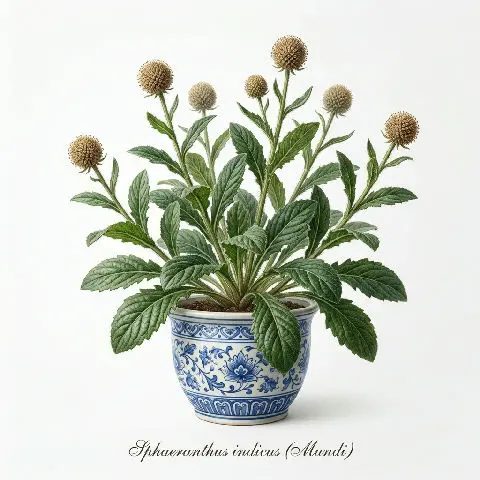
Sphaeranthus indicus, commonly known as Mundi, is a distinctive annual herb belonging to the Asteraceae family, typically growing to a height of 30-60 cm. This multi-branched, bushy plant is characterized by its deep green, ovate to obovate leaves, which are alternately arranged and measure approximately 5-10 cm in length and 2-5 cm in width, often featuring a slightly serrated margin. The stems are slender, often hairy, and tend to become light brown with maturity.
Its most striking feature is the production of unique, spherical flower heads, usually 2-3 cm in diameter, composed of numerous small, purple to lavender florets clustered at the stem tips. These inflorescences are subtended by thorny bracts, giving them a characteristic appearance. Mundi thrives in moist, marshy environments, frequently found in wetlands, rice fields, and disturbed areas across India, Sri Lanka, and Australia.
Taxonomically, it is placed within the Asteroideae subfamily, sharing lineage with well-known medicinal plants like chamomile and echinacea. The plant is typically harvested during its peak flowering period to ensure optimal concentrations of its therapeutic phytochemicals, which are renowned for their wide array of medicinal properties.
Trusted Scientific References
1. Authoritative external sources for Sphaeranthus indicus
1.1 Wikipedia — Sphaeranthus indicus
1.2 Kew POWO (Plants of the World Online)
1.3 PubMed — peer-reviewed research
1.4 NCBI Taxonomy Browser
1.5 GBIF — Global Biodiversity
1.6Mundi should be interpreted through verified botanical identity, practical care, and responsible safety language. This recovery note adds the missing context needed for a complete profile: match light to the plant's habit, use well-drained soil, water according to season, and avoid unsupported medicinal or edible claims. For publishing, the plant can be presented as a source-backed medicinal plant with clear care guidance, common problem diagnosis, and conservative safety wording.
1.1.Mundi — Defining Traits
- ✓Botanical Name — Sphaeranthus indicus Linn.
- ✓Common Names — Mundi, Gorakhmundi, Koṭṭaikkarantai, Surmuriya.
- ✓Plant Family — Asteraceae (Daisy family).
- ✓Distinctive Flowers — Spherical, purple-lavender flower heads.
- ✓Primary Habit — Annual, bushy, multi-branched herb, 30-60 cm tall.
- ✓Key Phytochemicals — Sesquiterpene lactones (e.g., 7-hydroxy eudesmanolide), flavonoids, alkaloids (sphaeranthine).
- ✓Traditional Medicine Systems — Widely used in Ayurveda and Siddha medicine.
- ✓Pharmacological Actions — Anti-inflammatory, analgesic, antimicrobial, hepatoprotective, anxiolytic, immunomodulatory.
- ✓Habitat — Thrives in wet, marshy areas and disturbed lands across tropical regions.
- ✓Medicinal Parts Used — Whole plant, leaves, stems, flowers, roots, and seeds.
1.2.Mundi — Concise Overview
- ✓Sphaeranthus indicus, or Mundi, is a potent Ayurvedic and Siddha herb from the Asteraceae family.
- ✓Known for its distinctive spherical purple flower heads and bushy growth habit.
- ✓Rich in sesquiterpene lactones, flavonoids, and alkaloids like sphaeranthine.
- ✓Offers anti-inflammatory, analgesic, hepatoprotective, and immunomodulatory benefits.
- ✓Traditionally used for skin diseases, fevers, respiratory issues, and nervous disorders.
- ✓Cultivated in moist, sunny conditions, primarily propagated by seeds or cuttings.
2.Mundi — Scientific Profile
3.Mundi — Quick Facts
4.Mundi — Plant Morphology
5.Mundi — Habitat & Distribution
6.Mundi — Historical Applications
7.Mundi — Active Compounds
- ✓Sesquiterpene Lactones — Key compounds like 7-hydroxy eudesmanolide and sphaeranthanolide are responsible for significant anti-inflammatory and cytotoxic activities.
- ✓Flavonoids — Including flavone glycosides and isoflavone glycosides, these compounds contribute to Mundi's antioxidant, anti-inflammatory, and hepatoprotective properties.
- ✓Alkaloids — Sphaeranthine is a notable alkaloid with a molecular formula C13H19O5, contributing to various pharmacological actions, including potential analgesic effects.
- ✓Essential Oils — Comprising monoterpene and sesquiterpene hydrocarbons and their oxygenated derivatives, these oils provide antimicrobial and aromatic properties.
- ✓Glycosides — Various glycosides are present, enhancing the bioavailability and therapeutic effects of other active constituents within the plant.
- ✓Sterols and Sterol Glycosides — These compounds play a role in membrane integrity and have been linked to anti-inflammatory and immune-modulating effects.
- ✓Peptide Alkaloids — A unique class of compounds found in Mundi, contributing to its diverse pharmacological spectrum.
- ✓Amino Acids and Sugars — Basic building blocks and energy sources, these support plant metabolism and may have minor physiological roles when consumed.
8.Mundi — Research Insights
- ✓Anti-inflammatory — Mundi exhibits potent anti-inflammatory effects by modulating inflammatory pathways, making it beneficial for various inflammatory conditions.
- ✓Analgesic — It helps alleviate pain by acting on central and peripheral pain perception mechanisms, offering relief from discomfort.
- ✓Antimicrobial — Extracts of Sphaeranthus indicus demonstrate activity against a range of bacteria and fungi, supporting its use in combating infections.
- ✓Hepatoprotective — Mundi protects liver cells from damage and aids in their regeneration, crucial for maintaining liver health and function.
- ✓Anxiolytic and Neuroleptic — The plant has calming properties, reducing anxiety and exhibiting neuroleptic effects that may help manage nervous system disorders.
- ✓Anthelmintic — Traditionally used to expel parasitic worms from the body, its compounds disrupt the parasites' life cycles and vitality.
- ✓Immunomodulatory — Sphaeranthus indicus helps regulate the immune system, enhancing its response to pathogens or dampening overactive immune reactions.
- ✓Anti-diabetic and Antihyperlipidemic — It can help lower blood glucose levels and manage lipid profiles, offering potential benefits for metabolic disorders.
- ✓Wound Healing — Applied topically or consumed, Mundi promotes faster healing of wounds by stimulating tissue repair and reducing inflammation.
- ✓Antioxidant — Rich in antioxidant compounds, it combats oxidative stress by neutralizing free radicals, protecting cells from damage and supporting overall health.
8.1.Mundi — Indications & Uses
9.Mundi — Precautions & Warnings
9.1.Mundi — Reported Side Effects
- ✓Gastrointestinal Upset — Some individuals may experience mild digestive disturbances, such as nausea or stomach discomfort, especially with high doses.
- ✓Allergic Reactions — As with any plant, hypersensitivity reactions like skin rashes or itching are possible in susceptible individuals.
- ✓Sedation — Due to its anxiolytic and neuroleptic properties, it may cause drowsiness, particularly when combined with other sedatives.
- ✓Hypotension — Mundi may have a mild hypotensive effect; caution is advised for individuals with low blood pressure or those on anti-hypertensive medication.
- ✓Drug Interactions — Potential interactions with certain medications, including sedatives, anticoagulants, and anti-diabetic drugs, warrant professional consultation.
- ✓Pregnancy and Lactation — Lack of sufficient safety data advises against its use during pregnancy and breastfeeding.
9.2.Mundi — Safety Overview
- ✓Professional Consultation — Always consult a qualified healthcare practitioner or medical herbalist before using Mundi, especially for chronic conditions or if on other medications.
- ✓Dosage Adherence — Strictly follow recommended dosages to minimize the risk of adverse effects and ensure therapeutic efficacy.
- ✓Pregnancy and Breastfeeding — Avoid use during pregnancy and lactation due to insufficient clinical safety data.
- ✓Children — Use in children should be approached with caution and under strict medical supervision, as safety data is limited.
- ✓Pre-existing Conditions — Individuals with liver, kidney, or cardiovascular conditions should exercise caution and seek medical advice prior to use.
- ✓Allergic Sensitivity — Discontinue use if any signs of allergic reaction, such as skin rash or respiratory distress, occur.
- ✓Driving and Operating Machinery — Due to potential sedative effects, caution is advised when driving or operating heavy machinery after consumption.
10.Mundi — Preparation & Dosage
- ✓Decoction — The whole plant, especially the leaves and stems, can be boiled in water to create a decoction, traditionally used for fevers, coughs, and respiratory issues.
- ✓Powder (Churna) — Dried Mundi plant parts, particularly the flowers and leaves, are ground into a fine powder, often mixed with honey or ghee for internal consumption to treat various ailments.
- ✓Fresh Leaf Juice — The juice extracted from fresh leaves is traditionally consumed to alleviate coughs, clear congestion, and support liver function.
- ✓Poultice — Crushed fresh leaves or a paste made from dried powder can be applied topically as a poultice for skin diseases, wounds, and glandular swellings.
- ✓Medicated Oil (Taila) — Mundi is an ingredient in traditional medicated oils like 'Veezhi Ennai' in Siddha medicine, used for external application to soothe inflammatory conditions and skin problems.
- ✓Infusion — Dried flowers or leaves can be steeped in hot water to prepare an herbal infusion, which is milder and often used for its calming and digestive benefits.
- ✓Ayurvedic Formulations — It is a key ingredient in numerous Ayurvedic preparations such as Munditika churna and Guduchyadi taila, used for a wide range of therapeutic purposes.
- ✓Internal Dose — The typical traditional dose for powdered drug preparations ranges from 3-6 grams, usually administered once or twice daily.
11.Mundi — Propagation & Care
- ✓Propagation — Mundi can be effectively propagated from both seeds and stem cuttings, with seeds being the most common method.
- ✓Soil Requirements — It thrives in moist, fertile, well-drained soil, ideally a loamy or clayey soil rich in organic matter.
- ✓Water Needs — Requires consistent moisture and prefers wet, marshy conditions, reflecting its natural habitat; regular irrigation is crucial, especially during dry spells.
- ✓Sunlight — Prefers full sun exposure to partial shade, requiring at least 4-6 hours of direct sunlight daily for optimal growth and flowering.
- ✓Climate — Best suited for tropical and subtropical climates, where temperatures remain warm year-round, as it is sensitive to frost.
- ✓Spacing — When planting, maintain adequate spacing (e.g., 20-30 cm apart) to allow for bushy growth and air circulation, preventing fungal issues.
- ✓Fertilization — Benefits from periodic application of organic fertilizers or well-rotted compost to enrich the soil and support vigorous growth.
- ✓Pest and Disease Management — Generally robust, but monitor for common garden pests and ensure good drainage to prevent root rot in overly wet conditions.
Reviewed by the Flora Medical Global Botanical Review Panel
Multi-disciplinary editorial group · Botany · Ethnobotany · Herbal-medicine literature
Who reviewed this: This page was checked by the Flora Medical Global Botanical Review Panel — an in-house editorial group of botany graduates, ethnobotany researchers, and horticulture practitioners who collectively maintain our 7,000+ plant encyclopedia. Meet the team.
Our 4-step verification process
1. Taxonomic verification
Scientific names and synonyms cross-checked against Kew POWO, World Flora Online, and The Plant List.
2. Phytochemical & medicinal cross-reference
Active compounds, traditional uses, and reported activities are cross-referenced with PubMed, USDA Dr. Duke's database, and peer-reviewed ethnobotanical literature.
3. Conservation & distribution check
Distribution, ecology, and conservation status confirmed against GBIF occurrence records and the IUCN Red List.
4. Editorial & safety review
Every entry passes an editorial pass for clarity, originality, and safety notices (toxicity, contraindications, dosage caveats) before publication.
Last reviewed:
Important medical disclaimer: This content is for educational and research purposes only. It is not medical advice and is not a substitute for consultation with a licensed healthcare provider. Do not use any herb to self-treat a medical condition without professional guidance.
Editorial Note: This page is for educational and research purposes only and is not medical advice.
Written by: Flora Medical Global Editorial Team
Reviewed by: Flora Medical Global Botanical Review Panel
Last Updated: June 16, 2026





Mundi — Comments & Community Reviews
Rate this plant