

Medical Disclaimer: This content is for educational purposes only. It is not medical advice. Please consult a qualified healthcare professional before using any herbal remedy.
Safety Overview
1.Mustard — Overview
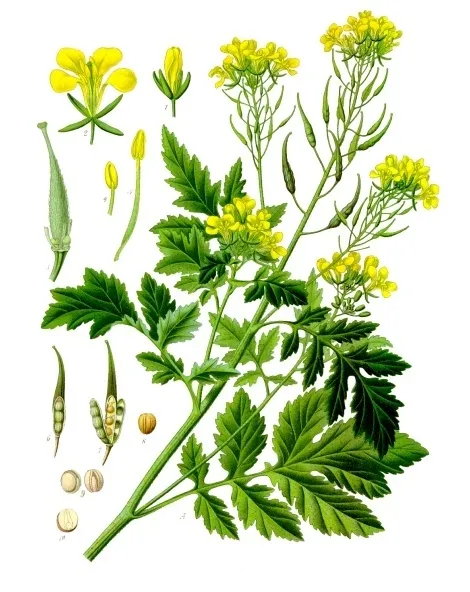
Mustard, scientifically known as Sinapis alba, is an annual herbaceous plant belonging to the diverse Brassicaceae family, which also includes broccoli and cabbage. This resilient species typically grows to a height of 20 to 100 centimeters, featuring a robust taproot system. Its leaves are pinnately lobed, often covered with fine hairs, and arranged alternately along the stem.
The plant produces vibrant yellow, four-petaled flowers clustered in racemes, characteristic of the mustard family. Following flowering, it develops distinctive hairy pods, or siliques, which contain small, pale yellow to yellowish-brown seeds. These seeds are the primary source of its culinary and medicinal value.
Native to the Mediterranean region, Sinapis alba has been cultivated and naturalized across temperate zones of Europe, Asia, and North America for centuries. It thrives in well-drained, fertile soil and prefers full sunlight, often found growing wild in disturbed areas, fields, and along roadsides.
Its rapid growth cycle makes it an excellent cover crop and a significant agricultural commodity. Beyond its widespread culinary use as a spice and oilseed, white mustard holds a profound historical legacy in various traditional medicine systems, where its seeds and derived preparations have been esteemed for their therapeutic properties.
Trusted Scientific References
1. Authoritative external sources for Sinapis alba
1.1 Wikipedia — Sinapis alba
1.2 Kew POWO (Plants of the World Online)
1.3 PubMed — peer-reviewed research
1.4 NCBI Taxonomy Browser
1.5 GBIF — Global Biodiversity
1.6Mustard should be interpreted through verified botanical identity, practical care, and responsible safety language. This recovery note adds the missing context needed for a complete profile: match light to the plant's habit, use well-drained soil, water according to season, and avoid unsupported medicinal or edible claims. For publishing, the plant can be presented as a source-backed medicinal plant with clear care guidance, common problem diagnosis, and conservative safety wording.
1.1.Mustard — Standout Qualities
- ✓Botanical Name — Sinapis alba, commonly known as White Mustard.
- ✓Active Compounds — Contains glucosinolates (sinalbin) and their pungent isothiocyanate derivatives.
- ✓Medicinal Actions — Exhibits anti-inflammatory, antimicrobial, antioxidant, and rubefacient effects.
- ✓Traditional Uses — Valued in Ayurveda, TCM, and folk medicine for pain relief, digestion, and respiratory support.
- ✓Oral Health Potential — Demonstrated efficacy in reducing plaque and oral bacteria in clinical trials.
- ✓Culinary Staple — Widely used as a spice, condiment, and oilseed globally.
- ✓Fast — Growing Crop — Utilized as a cover crop and for soil improvement.
- ✓Allergenic Potential — Contains proteins (Sin a 1, Sin a 2) that can trigger allergic reactions.
- ✓Brassicaceae Family — Shares characteristics with other cruciferous vegetables like broccoli and cabbage.
- ✓Versatile Application — Employed both internally (in controlled doses) and externally (poultices, liniments).
1.2.Mustard — Concise Overview
- ✓Sinapis alba is White Mustard, an annual herb in the Brassicaceae family.
- ✓Rich in glucosinolates (sinalbin, sinigrin) which convert to potent isothiocyanates.
- ✓Known for strong anti-inflammatory, antimicrobial, and antioxidant properties.
- ✓Traditionally used as a rubefacient, digestive aid, and for respiratory issues.
- ✓Emerging research highlights its benefits for oral health and fighting pathogens.
- ✓Requires careful use, especially topically, due to potential skin irritation and allergic reactions.
2.Mustard — Scientific Profile
3.Mustard — Quick Facts
4.Mustard — Structural Profile
5.Mustard — Geographic Distribution
6.Mustard — Ethnobotanical Uses
7.Mustard — Bioactive Constituents
- ✓Glucosinolates — Primarily sinalbin (p-hydroxybenzyl glucosinolate) and to a lesser extent sinigrin, which are precursors to potent isothiocyanates upon enzymatic hydrolysis.
- ✓Isothiocyanates — Formed from glucosinolates by myrosinase enzyme; p-hydroxybenzyl isothiocyanate and allyl isothiocyanate are key active compounds responsible for pungent flavor and medicinal actions like anti-inflammatory and antimicrobial effects.
- ✓Flavonoids — A diverse group of polyphenolic compounds such as quercetin and kaempferol derivatives, contributing significantly to the plant's antioxidant capacity and anti-inflammatory properties.
- ✓Tocopherols — Including various forms of Vitamin E, these lipid-soluble antioxidants protect cell membranes from oxidative damage.
- ✓Phenolic Compounds — Beyond flavonoids, other phenolic acids contribute to the overall antioxidant and anti-inflammatory profile.
- ✓Fatty Acids — Seeds are rich in fixed oils, containing erucic acid (in varying concentrations depending on cultivar), oleic acid, linoleic acid, and linolenic acid.
- ✓Alkaloids — Present in smaller quantities, contributing to the plant's complex pharmacology.
- ✓Saponins — Glycosides that can have foam-forming properties and various biological activities, including potential immune-modulating effects.
- ✓Tannins — Astringent compounds that may contribute to antimicrobial and anti-inflammatory actions.
- ✓Proteins — Including allergenic 2S-albumins like Sin a 1 and Sin a 2, which are important considerations for allergic reactions.
8.Mustard — What Research Suggests
- ✓Anti-inflammatory Support — Mustard-derived compounds, particularly isothiocyanates, help to modulate inflammatory pathways by suppressing pro-inflammatory cytokines like TNF-α, offering relief from systemic and localized inflammation.
- ✓Potent Antimicrobial Action — Isothiocyanates exhibit broad-spectrum activity against various pathogens, including bacteria, fungi, and certain yeasts, making white mustard effective against infections.
- ✓Antioxidant Protection — Rich in tocopherols and flavonoids, Sinapis alba seeds scavenge free radicals, reducing oxidative stress and protecting cellular integrity from damage.
- ✓Oral Health Enhancement — Clinical studies indicate that mustard extracts can reduce plaque formation, gum bleeding, and inhibit the growth of oral pathogens such as Streptococcus mutans and Porphyromonas gingivalis.
- ✓Digestive Aid — Traditionally, mustard has been used to stimulate digestion and improve appetite, likely due to its pungent compounds that encourage gastric secretions.
- ✓Rubefacient and Counterirritant — Applied topically as a poultice, mustard seeds create a warming sensation, increasing blood flow to the area and alleviating muscle aches, joint pain, and congestion.
- ✓Immune System Modulation — Bioactive compounds in white mustard may help regulate immune responses, contributing to overall immune resilience.
- ✓Potential Anticancer Properties — Preliminary research suggests that glucosinolate metabolites may possess chemopreventive effects by influencing cellular detoxification pathways and inhibiting cancer cell proliferation.
- ✓Respiratory Comfort — In traditional medicine, mustard plasters are applied to the chest to help relieve congestion associated with colds and bronchitis.
- ✓Pain Relief — Its counterirritant and anti-inflammatory properties contribute to its traditional use in alleviating various forms of localized pain.
8.1.Mustard — Indications & Uses
9.Mustard — Precautions & Warnings
9.1.Mustard — Warnings
- ✓Skin Irritation/Burns — Prolonged topical application of mustard poultices can cause severe skin irritation, blistering, or chemical burns due to its rubefacient properties.
- ✓Allergic Reactions — Individuals sensitive to mustard or other Brassicaceae plants may experience allergic symptoms, including hives, swelling, difficulty breathing, or anaphylaxis, primarily due to seed proteins (Sin a 1, Sin a 2).
- ✓Gastrointestinal Upset — Ingesting large quantities of mustard can lead to stomach irritation, heartburn, or indigestion.
- ✓Mucous Membrane Irritation — Inhalation of mustard powder or fumes can irritate the respiratory passages, eyes, and nasal membranes.
- ✓Contact Dermatitis — Direct skin contact with mustard oil or extracts can cause localized dermatitis in sensitive individuals.
- ✓Thyroid Dysfunction — Very high, prolonged consumption of raw mustard may theoretically interfere with thyroid function due to goitrogenic compounds, though this is rare with typical use.
9.2.Mustard — Safety Overview
- ✓Patch Testing — Always perform a small patch test on the skin before extensive topical application to assess for sensitivity or allergic reactions.
- ✓Avoid Broken Skin — Do not apply mustard preparations to broken, irritated, or sensitive skin areas to prevent severe irritation.
- ✓Pregnancy and Lactation — Pregnant or breastfeeding individuals should avoid internal use of medicinal quantities of mustard and exercise caution with topical applications due to lack of sufficient safety data.
- ✓Children — Use with extreme caution in children, especially topically, as their skin is more sensitive to irritation.
- ✓Internal Consumption — Consume medicinal preparations under professional guidance; culinary amounts are generally safe.
- ✓Allergy Awareness — Individuals with known allergies to mustard or other plants in the Brassicaceae family should avoid its use.
- ✓Medication Interactions — Consult a healthcare professional if taking medications, especially blood thinners, as some compounds might theoretically interact.
10.Mustard — How to Use
- ✓Poultice Application — Crushed mustard seeds mixed with water create a paste, applied topically as a rubefacient to relieve muscle pain, arthritis, and chest congestion.
- ✓Essential Oil — Steam distillation of seeds yields mustard essential oil, potent in allyl isothiocyanate, used sparingly in aromatherapy or diluted for topical pain relief.
- ✓Culinary Spice — Whole or ground seeds are a staple in cooking, adding pungent flavor to dishes, sauces, and pickles.
- ✓Digestive Stimulant — Ingested in small quantities, often as part of a meal, to stimulate appetite and aid digestion.
- ✓Herbal Infusion/Tea — Infusions of the leaves or seeds are sometimes used traditionally for their mild therapeutic effects, though less common due to pungency.
- ✓Tinctures and Extracts — Alcohol-based extracts are prepared for internal use, allowing for controlled dosing of active compounds.
- ✓Oral Rinses/Toothpastes — Experimental formulations containing mustard extracts are being researched for their efficacy in improving oral hygiene and combating periodontal pathogens.
- ✓Warming Liniments — Infused oils or commercial liniments containing mustard extract are used for topical application to soothe sore muscles and joints.
11.Mustard — Growing Guide
- ✓Soil Preference — Thrives in well-drained, fertile loamy or sandy soils with a pH between 6.0 and 7.5.
- ✓Sunlight Requirement — Requires full sun exposure for optimal growth and seed production, at least 6-8 hours daily.
- ✓Sowing — Propagated primarily by direct sowing seeds in early spring or late summer, about 1-2 cm deep, with rows spaced 30-45 cm apart.
- ✓Watering — Needs consistent moisture, especially during germination and flowering; however, it is relatively drought-tolerant once established.
- ✓Fertilization — Benefits from moderate nitrogen fertilization, particularly if grown as a cover crop or for seed production.
- ✓Pest and Disease Management — Generally robust but can be susceptible to common Brassicaceae pests like flea beetles and diseases such as white rust; crop rotation is crucial.
- ✓Harvesting — Seeds are typically harvested when pods turn yellow and start to dry, usually 80-90 days after planting, before they shatter.
- ✓Climate — Best suited for temperate climates, tolerating mild frosts but sensitive to prolonged freezing temperatures.
Reviewed by the Flora Medical Global Botanical Review Panel
Multi-disciplinary editorial group · Botany · Ethnobotany · Herbal-medicine literature
Who reviewed this: This page was checked by the Flora Medical Global Botanical Review Panel — an in-house editorial group of botany graduates, ethnobotany researchers, and horticulture practitioners who collectively maintain our 7,000+ plant encyclopedia. Meet the team.
Our 4-step verification process
1. Taxonomic verification
Scientific names and synonyms cross-checked against Kew POWO, World Flora Online, and The Plant List.
2. Phytochemical & medicinal cross-reference
Active compounds, traditional uses, and reported activities are cross-referenced with PubMed, USDA Dr. Duke's database, and peer-reviewed ethnobotanical literature.
3. Conservation & distribution check
Distribution, ecology, and conservation status confirmed against GBIF occurrence records and the IUCN Red List.
4. Editorial & safety review
Every entry passes an editorial pass for clarity, originality, and safety notices (toxicity, contraindications, dosage caveats) before publication.
Last reviewed:
Important medical disclaimer: This content is for educational and research purposes only. It is not medical advice and is not a substitute for consultation with a licensed healthcare provider. Do not use any herb to self-treat a medical condition without professional guidance.
Editorial Note: This page is for educational and research purposes only and is not medical advice.
Written by: Flora Medical Global Editorial Team
Reviewed by: Flora Medical Global Botanical Review Panel
Last Updated: June 16, 2026





Mustard — Comments & Community Reviews
Rate this plant