


Medical Disclaimer: This content is for educational purposes only. It is not medical advice. Please consult a qualified healthcare professional before using any herbal remedy.
Safety Overview
1.Nagadamani — At a Glance
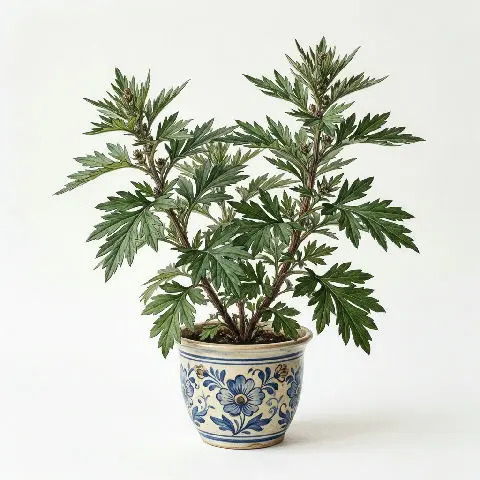
Artemisia vulgaris, universally recognized as mugwort or Nagadamani, is a resilient perennial herb belonging to the expansive Asteraceae family. This robust plant typically attains a height of 1 to 2 meters (3 to 6 feet), though some specimens may exceed this. Its distinctive foliage features deeply lobed, aromatic leaves, usually measuring 10 to 20 cm (4 to 8 inches) in length. The upper surface of these leaves is a rich dark green, contrasting sharply with their striking white, woolly undersides, a characteristic that aids in identification.
The stem of Artemisia vulgaris is generally slender, exhibiting a slightly hairy texture and varying in color from reddish to greenish hues. During its flowering season, which extends from late summer into autumn, mugwort produces numerous small, inconspicuous yellowish-green flowers. These flowers are densely clustered into panicle-like inflorescences, often 10 to 20 cm (4 to 8 inches) long, that contribute to its overall bushy appearance. Native to vast regions of Eurasia and North Africa, Artemisia vulgaris has successfully naturalized across North America and other temperate zones.
It thrives in disturbed soils, making it a common sight along roadsides, in open fields, and neglected areas, highlighting its adaptability and widespread distribution. Beyond its visual attributes and a faint, sometimes camphoraceous or lemongrass-like aroma, mugwort's historical and contemporary significance in culinary, cosmetic, and traditional medicinal practices across diverse cultures underscores its enduring importance in herbalism.
Trusted Scientific References
1. Authoritative external sources for Artemisia vulgaris
1.1 Wikipedia — Artemisia vulgaris
1.2 Kew POWO (Plants of the World Online)
1.3 PubMed — peer-reviewed research
1.4 NCBI Taxonomy Browser
1.5 GBIF — Global Biodiversity
1.6Nagadamani should be interpreted through verified botanical identity, practical care, and responsible safety language. This recovery note adds the missing context needed for a complete profile: match light to the plant's habit, use well-drained soil, water according to season, and avoid unsupported medicinal or edible claims. For publishing, the plant can be presented as a source-backed medicinal plant with clear care guidance, common problem diagnosis, and conservative safety wording.
1.1.Nagadamani — Highlights
- ✓Perennial, aromatic herb reaching 1 — 2 meters in height.
- ✓Distinctive deeply lobed — Distinctive deeply lobed leaves with dark green upper and white, woolly undersides.
- ✓Produces small, yellowish — green flowers in dense panicles during late summer/autumn.
- ✓Native to Eurasia — Native to Eurasia and North Africa, now naturalized globally in disturbed habitats.
- ✓Traditionally revered for — Traditionally revered for its digestive, gynecological, and nerve-calming properties.
- ✓Modern research supports its antioxidant, anti — inflammatory, and antimicrobial actions.
- ✓Rich in essential — Rich in essential oils (thujone, camphor), flavonoids, and sesquiterpene lactones.
- ✓Known historically as — Known historically as the "mother of herbs" for its wide range of applications.
- ✓Utilized in traditional — Utilized in traditional systems like Ayurveda, TCM, and European herbalism.
- ✓Versatile applications including — Versatile applications including medicinal, culinary, cosmetic, and spiritual practices.
1.2.Nagadamani — In Brief
- ✓Versatile traditional herb with a rich history in global herbal medicine.
- ✓Renowned for its benefits in digestive health and women's menstrual regulation.
- ✓Contains potent compounds like essential oils (thujone, camphor), flavonoids, and sesquiterpene lactones.
- ✓Exhibits anti-inflammatory, antimicrobial, antioxidant, and antispasmodic properties.
- ✓Requires caution due to potential allergic reactions and thujone toxicity, especially for pregnant individuals and those with specific health conditions.
- ✓Used in teas, tinctures, essential oils, and as a culinary spice, with applications ranging from internal remedies to moxibustion.
2.Nagadamani — Nomenclature & Classification
3.Nagadamani — Key Data
4.Nagadamani — Botanical Description
5.Nagadamani — Origin & Spread
6.Nagadamani — Traditional Uses
7.Nagadamani — Key Phytochemicals
- ✓Essential Oils — Primarily composed of monoterpenes and sesquiterpenes, including thujone (alpha- and beta-thujone), camphor, cineole (eucalyptol), borneol, and pinene, which contribute to its aroma and medicinal properties like antimicrobial and anti-inflammatory effects.
- ✓Flavonoids — Key compounds include quercetin, rutin, kaempferol, and their glycosides, known for their significant antioxidant, anti-inflammatory, and hepatoprotective activities.
- ✓Sesquiterpene Lactones — Such as vulgarin, vulgarol, and artemisinolides, which are responsible for bitter taste and exhibit cytotoxic, anti-inflammatory, and antimalarial properties (though A. vulgaris is not the primary source for artemisinin).
- ✓Phenolic Acids — Including caffeic acid, chlorogenic acid, and ferulic acid, these compounds are potent antioxidants and contribute to the plant's overall protective effects.
- ✓Coumarins — Such as scopoletin and umbelliferone, which possess anti-inflammatory, antimicrobial, and antispasmodic actions.
- ✓Polysaccharides — Contribute to immunomodulatory effects and overall plant health benefits.
- ✓Triterpenes and Sterols — Compounds like beta-sitosterol and stigmasterol, which may have anti-inflammatory and cholesterol-lowering properties.
- ✓Tannins — Provide astringent properties, beneficial for digestive complaints and wound healing.
- ✓Carotenoids — Such as beta-carotene, offering antioxidant benefits and contributing to overall plant health.
8.Nagadamani — Scientific Evidence
- ✓Digestive Support — Artemisia vulgaris has long been valued for its ability to alleviate various digestive complaints, including bloating, indigestion, and loss of appetite, by stimulating bile production and gastric secretions.
- ✓Menstrual Health Regulation — As an emmenagogue, mugwort is traditionally used to promote and regulate menstrual cycles, helping to alleviate amenorrhea and dysmenorrhea (menstrual pain) by encouraging uterine contractions.
- ✓Anti-inflammatory Action — Research indicates that compounds within Artemisia vulgaris possess anti-inflammatory properties, which may help reduce pain and swelling associated with various conditions.
- ✓Antimicrobial Properties — The essential oil of mugwort, rich in compounds like thujone and camphor, exhibits notable antimicrobial and antibacterial activities against a range of pathogens.
- ✓Antifungal Effects — Studies suggest that Artemisia vulgaris extracts and essential oil can inhibit the growth of various fungi, offering potential as a natural antifungal agent.
- ✓Antioxidant Activity — Flavonoids and phenolic acids present in mugwort contribute to its antioxidant capacity, helping to neutralize free radicals and protect cells from oxidative damage.
- ✓Hepatoprotective Potential — Some traditional uses and preliminary studies point to mugwort's potential to support liver health and offer protective effects against liver damage.
- ✓Antispasmodic Relief — Mugwort is traditionally used to relieve muscle spasms, particularly those affecting the gastrointestinal tract, contributing to its efficacy in digestive disorders.
- ✓Analgesic (Antinociceptive) Effects — The plant has been recognized in traditional medicine for its pain-relieving properties, which modern research is beginning to explore.
- ✓Estrogenic Activity — Certain constituents of mugwort may exhibit mild estrogenic effects, contributing to its traditional use in women's health and hormonal balance.
- ✓Bronchodilatory Action — Traditional applications suggest mugwort can help relax bronchial muscles, potentially aiding in respiratory conditions, though more research is needed.
- ✓Hypotensive Effects — Some studies have explored the hypotensive potential of mugwort extracts, indicating a possible role in managing blood pressure.
8.1.Nagadamani — Therapeutic Indications
9.Nagadamani — Cautions & Contraindications
9.1.Nagadamani — Warnings
- ✓Allergic Reactions — Individuals sensitive to plants in the Asteraceae family (e.g., ragweed, daisies, chrysanthemums) may experience allergic reactions, including skin rashes, asthma, or anaphylaxis.
- ✓Thujone Toxicity — High doses of mugwort essential oil, especially if ingested, can lead to neurotoxic effects due to thujone, causing seizures, convulsions, or kidney damage.
- ✓Uterine Contractions — Its emmenagogue properties can stimulate uterine contractions, posing a risk of miscarriage in pregnant individuals.
- ✓Gastrointestinal Upset — Excessive consumption may cause stomach upset, nausea, or diarrhea in some sensitive individuals.
- ✓Photosensitivity — Some users may experience increased sensitivity to sunlight, leading to sunburn or skin irritation.
- ✓Drug Interactions — May interact with sedatives, anticoagulants, or drugs metabolized by the liver, potentially altering their effects.
9.2.Nagadamani — Safety Profile
- ✓Pregnancy and Breastfeeding — Strictly contraindicated during pregnancy due to emmenagogue effects; consult a healthcare professional before use while breastfeeding.
- ✓Allergic Sensitivities — Individuals with known allergies to ragweed or other Asteraceae plants should avoid mugwort due to potential cross-reactivity.
- ✓Children and Infants — Not recommended for use in young children or infants due to insufficient safety data and potential for adverse effects.
- ✓Pre-existing Conditions — Individuals with epilepsy, kidney disease, or liver conditions should exercise extreme caution and consult a physician before use, especially with essential oil.
- ✓Dose-Dependent Toxicity — The essential oil contains thujone, which is neurotoxic in high doses; internal use of the essential oil is generally discouraged.
- ✓Professional Guidance — Always consult a qualified healthcare practitioner before using mugwort, particularly for medicinal purposes or if taking other medications.
- ✓Topical Application — Perform a patch test before extensive topical application to check for skin sensitivity or allergic reactions.
10.Nagadamani — Preparations & Uses
- ✓Herbal Tea or Infusion — Dried leaves and flowering tops are commonly steeped in hot water to create a tea, often used for digestive issues or menstrual support.
- ✓Tincture — A concentrated liquid extract made by soaking fresh or dried mugwort in alcohol, offering a potent form for internal use.
- ✓Essential Oil — Extracted through steam distillation, the essential oil is primarily used externally in diluted form for aromatherapy, topical pain relief, or insect repellent.
- ✓Poultice or Compress — Crushed fresh leaves or a strong tea applied topically can soothe skin irritations, bruises, or muscle aches.
- ✓Culinary Spice — Young leaves can be used sparingly as a bitter, aromatic spice, particularly in fatty meats or stuffings, aiding digestion.
- ✓Moxibustion (TCM) — Dried and compressed mugwort (moxa) is burned near acupuncture points to warm and stimulate energy flow, widely used in Traditional Chinese Medicine.
- ✓Topical Salves and Creams — Infused oils or extracts incorporated into balms and creams can be applied to the skin for anti-inflammatory or analgesic effects.
11.Nagadamani — Cultivation & Care
- ✓Soil Preference — Thrives in well-drained, average to poor fertility soils; highly tolerant of various soil types including sandy, loamy, and clay.
- ✓Sunlight Requirements — Prefers full sun to partial shade, with more sun leading to denser growth and potentially higher essential oil content.
- ✓Watering Regimen — Requires moderate watering initially to establish, becoming drought-tolerant once mature; avoid waterlogging.
- ✓Propagation Techniques — Easily propagated by seeds sown in spring, root division in spring or autumn, or stem cuttings.
- ✓Pest and Disease Resistance — Generally robust and resistant to most common pests and diseases, making it a low-maintenance herb.
- ✓Harvesting Practices — Leaves are best harvested before flowering for optimal potency; roots can be harvested in autumn after the growing season.
- ✓Climate Adaptability — Well-suited for temperate zones (USDA Zones 3-9), capable of tolerating a wide range of temperatures.
Reviewed by the Flora Medical Global Botanical Review Panel
Multi-disciplinary editorial group · Botany · Ethnobotany · Herbal-medicine literature
Who reviewed this: This page was checked by the Flora Medical Global Botanical Review Panel — an in-house editorial group of botany graduates, ethnobotany researchers, and horticulture practitioners who collectively maintain our 7,000+ plant encyclopedia. Meet the team.
Our 4-step verification process
1. Taxonomic verification
Scientific names and synonyms cross-checked against Kew POWO, World Flora Online, and The Plant List.
2. Phytochemical & medicinal cross-reference
Active compounds, traditional uses, and reported activities are cross-referenced with PubMed, USDA Dr. Duke's database, and peer-reviewed ethnobotanical literature.
3. Conservation & distribution check
Distribution, ecology, and conservation status confirmed against GBIF occurrence records and the IUCN Red List.
4. Editorial & safety review
Every entry passes an editorial pass for clarity, originality, and safety notices (toxicity, contraindications, dosage caveats) before publication.
Last reviewed:
Important medical disclaimer: This content is for educational and research purposes only. It is not medical advice and is not a substitute for consultation with a licensed healthcare provider. Do not use any herb to self-treat a medical condition without professional guidance.
Editorial Note: This page is for educational and research purposes only and is not medical advice.
Written by: Flora Medical Global Editorial Team
Reviewed by: Flora Medical Global Botanical Review Panel
Last Updated: June 16, 2026





Nagadamani — Comments & Community Reviews
Rate this plant