


Medical Disclaimer: This content is for educational purposes only. It is not medical advice. Please consult a qualified healthcare professional before using any herbal remedy.
Safety Overview
1.Nagkesar (Indian Rose Chestnut) — Overview
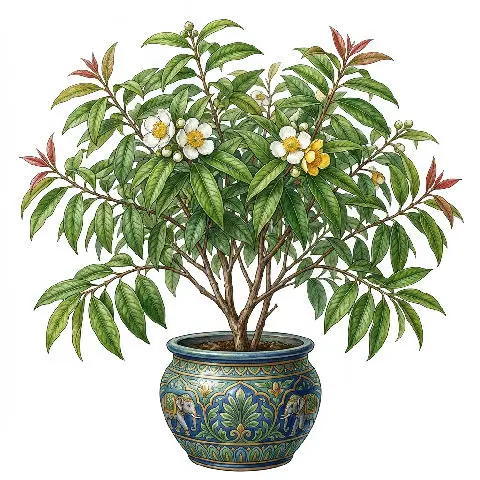
Mesua ferrea, widely recognized as Nagkesar or Indian Rose Chestnut, is a magnificent evergreen tree native to the humid tropical and subtropical regions spanning India, Sri Lanka, and Southeast Asia. This robust species typically attains a height of 20 to 30 meters, characterized by a straight, often buttressed trunk and a dense, symmetrical crown. Its bark is distinctively rough, brownish-grey, and deeply fissured, providing a textural contrast to its vibrant foliage. The leaves are simple, opposite, and oblong-lanceolate, measuring approximately 8 to 12 centimeters in length and 4 to 6 centimeters in width.
They exhibit a glossy, dark green upper surface, often with a reddish tint when young, and inconspicuous venation. Nagkesar is celebrated for its striking, fragrant flowers, which bloom profusely during the pre-monsoon season. These showy blossoms are 5 to 7 centimeters in diameter, featuring four to five pristine white, obovate petals gracefully surrounding a dense cluster of bright golden-yellow stamens, which are the primary medicinal part. The fruit is an ovoid, woody capsule containing 1 to 4 angular, smooth brown seeds.
Ecologically, Mesua ferrea thrives in well-drained, fertile soils, often found in mixed evergreen forests, along riverbanks, or in shaded ravines. Taxonomically, it belongs to the family Calophyllaceae, closely related to other species valued for their timber and ornamental qualities. Its exceptionally hard and durable timber, often called 'Ironwood,' is highly prized for heavy construction, railway sleepers, and fine furniture, underscoring its significant economic and ecological role in its native ecosystems.
Trusted Scientific References
1. Authoritative external sources for Mesua ferrea
1.1 Wikipedia — Mesua ferrea
1.2 Kew POWO (Plants of the World Online)
1.3 PubMed — peer-reviewed research
1.4 NCBI Taxonomy Browser
1.5 GBIF — Global Biodiversity
1.6Nagkesar (Indian Rose Chestnut) should be interpreted through verified botanical identity, practical care, and responsible safety language. This recovery note adds the missing context needed for a complete profile: match light to the plant's habit, use well-drained soil, water according to season, and avoid unsupported medicinal or edible claims. For publishing, the plant can be presented as a source-backed medicinal plant with clear care guidance, common problem diagnosis, and conservative safety wording.
1.1.Nagkesar (Indian Rose Chestnut) — Standout Qualities
- ✓Evergreen tropical tree — Evergreen tropical tree known for its durable timber.
- ✓Striking fragrant white flowers with prominent golden — yellow stamens.
- ✓Stamens are the — Stamens are the primary medicinal part, highly valued in Ayurveda.
- ✓Possesses strong hemostatic (styptic) and anti — inflammatory properties.
- ✓Rich in unique — Rich in unique coumarins (Mesuol) and xanthones (Mesuaferrone).
- ✓Traditionally used for — Traditionally used for menorrhagia, hemorrhoids, and digestive issues.
- ✓Exhibits significant antioxidant — Exhibits significant antioxidant and antimicrobial activities.
- ✓Employed in skin — Employed in skin care for complexion enhancement and wound healing.
- ✓Native to tropical — Native to tropical regions of India, Sri Lanka, and Southeast Asia.
- ✓Considered a 'blood — Considered a 'blood purifier' and cardiac tonic in traditional systems.
1.2.Nagkesar (Indian Rose Chestnut) — Snapshot Summary
- ✓Nagkesar (Mesua ferrea) is a revered evergreen tree in traditional medicine, particularly Ayurveda.
- ✓Its golden-yellow stamens are primarily used for their potent hemostatic, anti-inflammatory, and antioxidant properties.
- ✓Traditionally employed for bleeding disorders, digestive complaints, skin issues, and respiratory support.
- ✓Rich in bioactive compounds like coumarins and xanthones, conferring diverse pharmacological actions.
- ✓Available in various forms, including powder, decoctions, and topical oils, for internal and external application.
- ✓Requires careful dosage and professional consultation, especially for pregnant women, children, and those on blood thinners.
2.Nagkesar (Indian Rose Chestnut) — Taxonomic Classification
3.Nagkesar (Indian Rose Chestnut) — Reference Facts
4.Nagkesar (Indian Rose Chestnut) — Plant Morphology
5.Nagkesar (Indian Rose Chestnut) — Where It Grows
6.Nagkesar (Indian Rose Chestnut) — Historical Applications
7.Nagkesar (Indian Rose Chestnut) — Secondary Metabolites
- ✓Coumarins — Key compounds include Mesuol, Mesuagin, and Mammeisin, which are responsible for anti-inflammatory, anticoagulant, and antimicrobial activities.
- ✓Xanthones — Prominent examples are Mesuaferrone A and B, Euxanthone, Mesuaxanthone A and B, and Mesuabixanthone A and B, contributing to antioxidant, anti-inflammatory, and cytotoxic effects.
- ✓Flavonoids — A diverse group of compounds such as quercetin and kaempferol derivatives, offering potent antioxidant and anti-inflammatory benefits.
- ✓Triterpenoids — Including compounds like friedelin and β-amyrin, which contribute to the plant's anti-inflammatory and hepatoprotective properties.
- ✓Phenolic Acids — Such as gallic acid and caffeic acid, known for their strong antioxidant and free radical scavenging capabilities.
- ✓Fatty Acids — The seed oil is rich in oleic acid, linoleic acid, and palmitic acid, providing emollient and skin-healing properties for topical applications.
- ✓Alkaloids — While less prominent than other classes, certain alkaloidal compounds may contribute to its diverse pharmacological spectrum.
- ✓Steroids — Phytosterols found in the plant may play a role in its anti-inflammatory and hormone-modulating effects.
8.Nagkesar (Indian Rose Chestnut) — Modern Studies
- ✓Hemostatic Action — Nagkesar stamens are renowned for their powerful styptic properties, effectively controlling various bleeding disorders such as menorrhagia, epistaxis, and hemorrhoids by promoting coagulation and vascular constriction.
- ✓Anti-inflammatory Support — Rich in xanthones and coumarins, Mesua ferrea exhibits significant anti-inflammatory activity, helping to alleviate pain and swelling associated with conditions like arthritis and general inflammatory responses.
- ✓Antimicrobial Properties — Extracts from Nagkesar have demonstrated broad-spectrum antimicrobial effects against bacteria and fungi, making it useful in treating infections and promoting wound healing.
- ✓Antioxidant Powerhouse — The plant is a rich source of antioxidants, including flavonoids and phenolic compounds, which combat oxidative stress, protect cells from free radical damage, and support overall cellular health.
- ✓Digestive Aid — Traditionally used to soothe digestive complaints, Nagkesar helps manage symptoms like diarrhea, dysentery, and indigestion due to its astringent and carminative qualities.
- ✓Respiratory Health — It is employed in traditional medicine to address respiratory issues, including coughs, colds, and asthma, by reducing inflammation and clearing congestion.
- ✓Skin Rejuvenation — Applied topically, Nagkesar seed oil and flower paste are used to enhance skin complexion, heal wounds, reduce acne, alleviate itching, and manage skin infections due to its antiseptic and healing properties.
- ✓Analgesic Effects — Beyond inflammation, Mesua ferrea also offers analgesic benefits, helping to reduce pain, particularly in conditions involving musculoskeletal discomfort and headaches.
- ✓Cardiotonic Activity — In Ayurveda, it is considered a cardiac tonic, believed to support heart health and improve circulation, potentially through its antioxidant and anti-inflammatory mechanisms.
- ✓Antipyretic Properties — Nagkesar can help reduce fever, acting as a natural antipyretic agent, especially when associated with inflammatory conditions.
- ✓Genitourinary Support — It is traditionally utilized in urinary tract disorders and to help cleanse the uterus post-delivery or abortion, owing to its cleansing and astringent actions.
- ✓Anti-emetic Action — The herb is known to relieve nausea and vomiting, making it beneficial for various forms of gastric discomfort.
8.1.Nagkesar (Indian Rose Chestnut) — Indications & Uses
9.Nagkesar (Indian Rose Chestnut) — Risk Profile
9.1.Nagkesar (Indian Rose Chestnut) — Warnings
- ✓Digestive Discomfort — High doses of Nagkesar may lead to mild digestive upset, including constipation or a feeling of heaviness.
- ✓Allergic Reactions — Sensitive individuals might experience allergic skin reactions, such as rashes, itching, or hives, especially with topical application.
- ✓Drug Interactions — Its potential effects on blood coagulation warrant caution when used concurrently with anticoagulant medications, as it may theoretically alter their efficacy.
- ✓Pregnancy and Lactation — Due to insufficient safety data, it is generally advised to avoid Nagkesar during pregnancy and breastfeeding.
- ✓Children — The use of Nagkesar in young children should be approached with caution and under professional guidance, given the lack of specific pediatric studies.
- ✓Bleeding Disorder Paradox — While primarily styptic, improper use or very high doses in certain bleeding conditions might theoretically exacerbate symptoms, requiring careful clinical assessment.
- ✓Liver and Kidney — Prolonged use of very high doses might theoretically impact liver or kidney function, though this is not commonly reported with standard therapeutic use.
9.2.Nagkesar (Indian Rose Chestnut) — Toxicity Assessment
- ✓Professional Consultation — Always consult a qualified healthcare practitioner or medical herbalist before using Nagkesar, especially for internal use or pre-existing conditions.
- ✓Pregnancy and Breastfeeding — Avoid use during pregnancy and lactation due to limited safety data and potential effects on uterine function.
- ✓Pediatric Use — Not recommended for infants and young children without expert medical supervision.
- ✓Allergic Sensitivity — Perform a patch test before topical application to check for any skin hypersensitivity or allergic reactions.
- ✓Bleeding Disorders — Individuals on anticoagulant therapy or with severe bleeding disorders should use Nagkesar with extreme caution and under medical guidance.
- ✓Dosage Adherence — Strictly adhere to recommended dosages, as excessive intake may lead to adverse effects.
- ✓Quality Sourcing — Ensure the use of high-quality, unadulterated plant material from reputable suppliers to guarantee safety and efficacy.
10.Nagkesar (Indian Rose Chestnut) — How to Use
- ✓Powdered Stamens — The dried stamens are finely powdered (1-3 grams, 1-2 times daily) and commonly used internally for bleeding disorders, digestive issues, and fevers.
- ✓Decoction — A decoction made from the bark or flowers can be prepared by boiling the plant material in water, then strained and consumed for respiratory or systemic inflammatory conditions.
- ✓Topical Paste — A paste made from Nagkesar stamens, often mixed with water or rosewater, is applied externally to the skin for acne, blemishes, itching, and to promote healing of minor wounds.
- ✓Seed Oil Application — The expressed seed oil, sometimes diluted with carrier oils like coconut oil, is massaged onto affected areas to relieve pain, inflammation, and to aid in the healing of burns and ulcers.
- ✓Ayurvedic Formulations — Nagkesar is a vital ingredient in numerous classical Ayurvedic preparations, including Chyawanprash, Puga Khanda, and various oils and lehyas, targeting a wide range of ailments.
- ✓Infusion — A mild infusion of the flowers can be used as a refreshing and mildly medicinal beverage, particularly for its digestive and antioxidant benefits.
- ✓Oral Consumption with Ghee — For hemorrhoids, Nagkesar powder is traditionally mixed with ghee and consumed internally or applied topically to the anal region to stop bleeding and reduce discomfort.
- ✓Uterine Cleansing Blend — A powder or decoction of Nagkesar stamens combined with Shatapushpa (fennel) seeds is used post-delivery or abortion to help cleanse and tone the uterus.
11.Nagkesar (Indian Rose Chestnut) — Growth Requirements
- ✓Propagation — Primarily propagated by seeds, though vegetative propagation via cuttings can also be successful for specific cultivars.
- ✓Seed Treatment — Seeds often require pre-soaking in water for 24-48 hours to improve germination rates, which can otherwise be slow and irregular.
- ✓Climate Requirements — Thrives in warm, humid tropical and subtropical climates, ideally with consistent rainfall and high ambient humidity.
- ✓Soil Preference — Prefers well-drained, fertile loamy or sandy-loam soils rich in organic matter, with a slightly acidic to neutral pH (5.5-7.0).
- ✓Sunlight Exposure — Requires full sun exposure for optimal growth and flowering, though young saplings can tolerate partial shade.
- ✓Watering Regimen — Needs regular watering, especially during dry periods and its establishment phase, but avoids waterlogging.
- ✓Spacing — Plant saplings at appropriate distances (e.g., 8-10 meters apart) to allow for mature tree development and canopy spread.
- ✓Pest and Disease Management — Generally robust, but monitor for common tropical tree pests and fungal diseases, addressing them with organic or appropriate treatments.
Reviewed by the Flora Medical Global Botanical Review Panel
Multi-disciplinary editorial group · Botany · Ethnobotany · Herbal-medicine literature
Who reviewed this: This page was checked by the Flora Medical Global Botanical Review Panel — an in-house editorial group of botany graduates, ethnobotany researchers, and horticulture practitioners who collectively maintain our 7,000+ plant encyclopedia. Meet the team.
Our 4-step verification process
1. Taxonomic verification
Scientific names and synonyms cross-checked against Kew POWO, World Flora Online, and The Plant List.
2. Phytochemical & medicinal cross-reference
Active compounds, traditional uses, and reported activities are cross-referenced with PubMed, USDA Dr. Duke's database, and peer-reviewed ethnobotanical literature.
3. Conservation & distribution check
Distribution, ecology, and conservation status confirmed against GBIF occurrence records and the IUCN Red List.
4. Editorial & safety review
Every entry passes an editorial pass for clarity, originality, and safety notices (toxicity, contraindications, dosage caveats) before publication.
Last reviewed:
Important medical disclaimer: This content is for educational and research purposes only. It is not medical advice and is not a substitute for consultation with a licensed healthcare provider. Do not use any herb to self-treat a medical condition without professional guidance.
Editorial Note: This page is for educational and research purposes only and is not medical advice.
Written by: Flora Medical Global Editorial Team
Reviewed by: Flora Medical Global Botanical Review Panel
Last Updated: June 16, 2026





Nagkesar (Indian Rose Chestnut) — Comments & Community Reviews
Rate this plant