
Medical Disclaimer: This content is for educational purposes only. It is not medical advice. Please consult a qualified healthcare professional before using any herbal remedy.
Safety Overview
1.Narikela — At a Glance
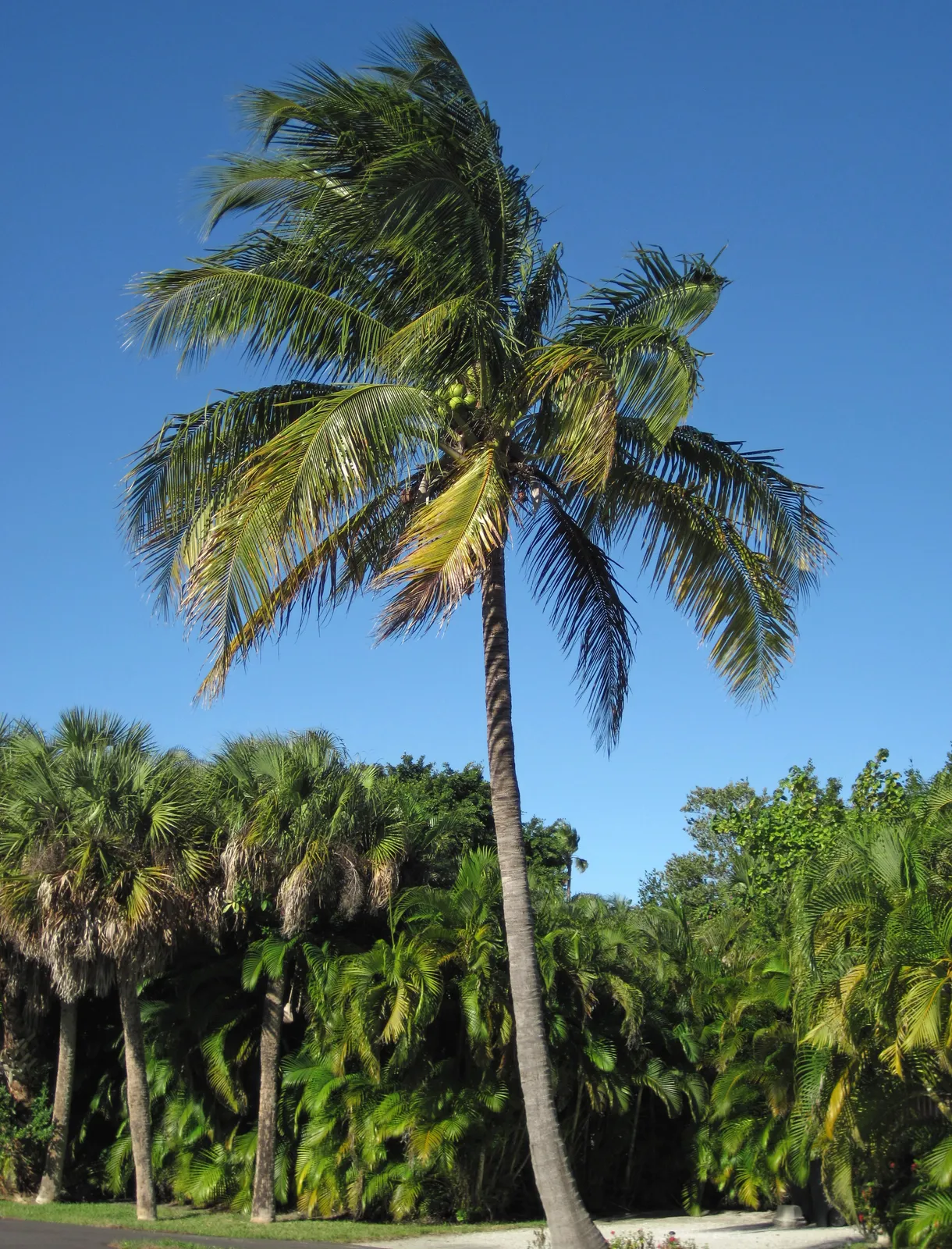
Cocos nucifera, universally recognized as Narikela or the Coconut tree, is an iconic arborescent monocotyledonous palm thriving in tropical and subtropical coastal regions globally. This majestic plant can reach impressive heights of up to 30 meters, characterized by a slender, often greyish-brown trunk marked with distinct leaf scars, which may develop a smooth texture with age. Its crown is adorned with large, arching pinnate leaves, each extending 4-6 meters in length, composed of numerous long, narrow leaflets.
The tree produces a profusion of small, cream-colored flowers, which are monoecious, meaning both male and female reproductive organs are present on the same plant, emerging from an inflorescence nestled at the leaf bases. These flowers mature into the distinctive, large, spherical drupes known as coconuts, typically weighing 1-2.5 kg. The fruit's structure is complex, featuring a hard, woody exocarp (outer skin), a thick, fibrous mesocarp (husk), and a rigid endocarp (shell).
Encased within the endocarp is the nourishing endosperm, comprising both refreshing liquid (coconut water) and solid, oily meat (coconut flesh). Adaptable to diverse environments, Cocos nucifera flourishes in well-drained, sandy soils, demonstrating significant ecological resilience across Southeast Asia, the Pacific Islands, India, and the coastal regions of Africa and the Americas. Taxonomically, it is a prominent member of the Arecaceae family and the Cocoideae subfamily, a classification that underscores its unique botanical characteristics and widespread utility.
Trusted Scientific References
1. Authoritative external sources for Cocos nucifera
1.1 Wikipedia — Cocos nucifera
1.2 Kew POWO (Plants of the World Online)
1.3 PubMed — peer-reviewed research
1.4 NCBI Taxonomy Browser
1.5 GBIF — Global Biodiversity
1.6Narikela should be interpreted through verified botanical identity, practical care, and responsible safety language. This recovery note adds the missing context needed for a complete profile: match light to the plant's habit, use well-drained soil, water according to season, and avoid unsupported medicinal or edible claims. For publishing, the plant can be presented as a source-backed medicinal plant with clear care guidance, common problem diagnosis, and conservative safety wording.
1.1.Narikela — Notable Characteristics
- ✓Source of Hydrating Coconut Water — Rich in electrolytes for natural rehydration.
- ✓Abundant in Medium — Chain Triglycerides (MCTs) — Especially lauric acid, known for quick energy and antimicrobial benefits.
- ✓Rich in Antioxidants — Contains phenolic compounds and flavonoids combating oxidative stress.
- ✓Supports Digestive Health — High fiber content in coconut flesh aids gut function.
- ✓Versatile Culinary Ingredient — Used globally in a wide array of dishes, beverages, and desserts.
- ✓Natural Skin and Hair Moisturizer — Coconut oil is a popular topical application for beauty and wellness.
- ✓Significant Cultural and Economic Importance — A staple crop and resource in tropical regions worldwide.
- ✓Traditional Medicinal Plant — Valued across Ayurveda, TCM, and other indigenous healing practices.
- ✓Eco — Friendly Crop — Known for its resilience and ability to grow in challenging coastal environments.
- ✓Source of Gluten — Free Flour — Coconut flour offers a healthy alternative for baking.
1.2.Narikela — At-a-Glance Summary
- ✓Cocos nucifera, or Narikela, is a versatile tropical palm providing nutrient-rich products.
- ✓Known for its hydrating coconut water, healthy fats in coconut oil, and fibrous flesh.
- ✓Possesses significant anti-inflammatory, antimicrobial, and antioxidant properties.
- ✓Widely utilized in traditional medicine systems globally for various ailments.
- ✓Generally safe for consumption in moderation, but caution is advised for specific health conditions.
2.Narikela — Botanical Identity
3.Narikela — Fact Sheet
4.Narikela — Botanical Description
5.Narikela — Native Range & Habitat
6.Narikela — Traditional Uses
7.Narikela — Key Phytochemicals
- ✓Medium-Chain Triglycerides (MCTs) — Predominantly lauric acid (C12), myristic acid (C14), and capric acid (C10), these fatty acids are easily digested and absorbed, providing quick energy and exhibiting potent antimicrobial properties, particularly monolaurin.
- ✓Phenolic Compounds — Including gallic acid, caffeic acid, ferulic acid, and p-coumaric acid, these act as powerful antioxidants, protecting cells from oxidative damage and contributing to anti-inflammatory effects.
- ✓Flavonoids — Such as quercetin and kaempferol, found in various parts like the husk and water, contributing to the plant's antioxidant and anti-inflammatory activities.
- ✓Electrolytes — Coconut water is notably rich in potassium, magnesium, sodium, and calcium, essential for hydration, nerve function, and muscle contraction, making it a natural isotonic beverage.
- ✓Vitamins — Contains B-complex vitamins (e.g., riboflavin, niacin, thiamine, pyridoxine, folate) and trace amounts of Vitamin C and E, supporting metabolic processes and antioxidant defense.
- ✓Minerals — Besides electrolytes, it provides phosphorus, iron, zinc, and selenium, crucial for bone health, oxygen transport, immune function, and thyroid regulation.
- ✓Proteins and Amino Acids — Present in coconut flesh, contributing to muscle repair, enzyme function, and overall bodily maintenance.
- ✓Dietary Fiber — Abundant in coconut flesh and desiccated coconut, promoting digestive health, regulating blood sugar, and contributing to satiety.
- ✓Cytokinins — Hormones like zeatin and kinetin are found in coconut water, known for their cell growth-promoting and anti-aging properties.
- ✓Sterols — Compounds like beta-sitosterol, which can help in cholesterol management.
- ✓Volatile Organic Compounds — Contribute to the characteristic aroma and flavor, and may possess minor biological activities.
8.Narikela — Evidence-Based Benefits
- ✓Anti-inflammatory — Coconut components, particularly from the water and oil, have demonstrated a capacity to reduce inflammatory markers and alleviate swelling, offering relief in conditions like arthritis.
- ✓Antimicrobial and Antifungal — The high concentration of lauric acid in coconut oil converts to monolaurin, a potent compound effective against various bacteria, viruses, and fungi, supporting immune defense.
- ✓Antioxidant — Rich in phenolic compounds, coconut water and flesh help neutralize free radicals, protecting cells from oxidative stress and potentially reducing the risk of chronic diseases.
- ✓Analgesic and Antinociceptive — Traditional applications and some studies suggest pain-relieving effects, potentially by modulating pain pathways and reducing inflammatory responses.
- ✓Antidiarrheal — Coconut water's electrolyte content helps replenish fluids and minerals lost during diarrhea, while certain compounds may have a soothing effect on the digestive tract.
- ✓Hypoglycemic — Some research indicates that parts of the coconut, especially the oil and fiber, may help regulate blood sugar levels, making it beneficial for diabetes management.
- ✓Cardioprotective — Despite debates on saturated fats, virgin coconut oil has been shown to improve lipid profiles in some studies, potentially reducing cardiovascular disease risk by increasing HDL ('good') cholesterol.
- ✓Hepatoprotective — Extracts from coconut have exhibited protective effects on the liver, helping to mitigate damage from toxins and supporting liver function.
- ✓Nephroprotective — Similar to its liver-protective qualities, certain constituents may offer protection against kidney damage, supporting renal health.
- ✓Anti-osteoporosis — Coconut components may play a role in bone health by improving calcium and magnesium absorption, potentially aiding in the prevention of bone density loss.
- ✓Antitumor/Cytotoxicity — Preliminary studies have explored the potential of certain coconut extracts to inhibit the growth of cancer cells, though more research is needed.
- ✓Antihelminthic — Traditionally, various parts of the coconut tree have been used to expel intestinal worms, an effect supported by some pharmacological investigations.
8.1.Narikela — Reported Uses
9.Narikela — Safety & Side Effects
9.1.Narikela — Reported Side Effects
- ✓Allergic Reactions — Although rare, individuals may experience allergic responses to coconut products, manifesting as skin rashes, swelling, or digestive upset.
- ✓High Calorie/Fat Intake — Excessive consumption of coconut flesh or oil can contribute to high calorie intake and potential weight gain due to their rich fat content.
- ✓Digestive Upset — High fiber content in coconut flesh can cause bloating, gas, or diarrhea in sensitive individuals if consumed in large quantities.
- ✓Increased Cholesterol — While virgin coconut oil may improve cholesterol profiles in some, its high saturated fat content can raise LDL ('bad') cholesterol in susceptible individuals, warrant with caution.
- ✓Drug Interactions — Coconut water, due to its high potassium content, may interact with blood pressure medications (e.g., ACE inhibitors) or diuretics, potentially leading to hyperkalemia.
- ✓Blood Sugar Fluctuations — While beneficial for regulation, individuals with diabetes should monitor blood sugar when consuming coconut products, especially those with added sugars.
- ✓Laxative Effect — Large amounts of coconut oil or milk can have a mild laxative effect due to their fatty acid composition.
9.2.Narikela — Risk Assessment
- ✓Generally Recognized As Safe (GRAS) — Coconut products are widely considered safe for consumption by most healthy individuals in moderate dietary amounts.
- ✓Moderation is Key — Due to its caloric density and fat content, consuming coconut products in moderation is advised to avoid adverse effects like weight gain or digestive issues.
- ✓Pregnancy and Lactation — Coconut water and flesh are generally considered safe during pregnancy and lactation as food, but medicinal doses or supplements should be discussed with a healthcare provider.
- ✓Diabetes Management — Individuals with diabetes should monitor blood glucose levels when incorporating coconut products, especially those with natural sugars like coconut water.
- ✓Allergy Awareness — While uncommon, those with known tree nut allergies or sensitivities should exercise caution and consult a physician before consuming coconut.
- ✓Quality of Products — Opt for high-quality, virgin, and organic coconut oils and fresh coconut water to ensure purity and avoid additives or contaminants.
- ✓Storage — Store coconut oil in a cool, dark place; refrigerate coconut water and milk after opening to prevent spoilage and maintain freshness.
10.Narikela — Preparations & Uses
- ✓Coconut Water — Consumed fresh as a hydrating, electrolyte-rich beverage, often used to replenish fluids during illness or exercise, and as a base for smoothies.
- ✓Coconut Oil — Extracted from the dried kernel (copra) or fresh coconut meat, used in cooking, baking, as a dietary supplement, and topically for skin and hair care, known for its moisturizing and antimicrobial properties.
- ✓Coconut Milk — Produced by grating the flesh and mixing it with water, then straining, used extensively in culinary applications, particularly in curries, soups, and desserts, and as a dairy-free alternative.
- ✓Coconut Flesh (Meat) — Eaten fresh, shredded, or dried (desiccated coconut); used in various dishes, desserts, and snacks, providing fiber, healthy fats, and minerals.
- ✓Coconut Flour — A gluten-free flour alternative made from dried, defatted coconut meat, used in baking to add fiber and a unique flavor.
- ✓Coconut Vinegar — Fermented from coconut water or sap, used as a culinary condiment and dressing, offering potential probiotic benefits.
- ✓Root Decoctions — Traditionally prepared from coconut roots for their purported diuretic, anti-inflammatory, and antidiarrheal properties.
- ✓Husk and Shell Products — While primarily industrial (coir, activated charcoal), traditional medicine sometimes utilizes husk extracts for their phenolic content and potential anti-inflammatory effects.
11.Narikela — Garden Cultivation
- ✓Climate — Requires a warm, humid, tropical to subtropical climate with ample sunshine and consistent rainfall, ideally between 20-32°C (68-90°F).
- ✓Soil — Thrives in well-drained, sandy loamy soils, particularly along coastlines, with a pH range of 5.0 to 8.0. Saline tolerance is a key feature.
- ✓Watering — Young plants need regular and abundant watering. Mature trees are relatively drought-tolerant but benefit from consistent moisture, especially during dry spells.
- ✓Sunlight — Demands full sun exposure for optimal growth and fruit production, requiring at least 6-8 hours of direct sunlight daily.
- ✓Propagation — Primarily propagated from mature, healthy 'seed nuts' that are allowed to germinate naturally or with minimal assistance.
- ✓Spacing — Proper spacing (e.g., 7.5-9 meters apart) is crucial for adequate light penetration and nutrient uptake, preventing overcrowding.
- ✓Fertilization — Benefits from balanced fertilization, including nitrogen, phosphorus, potassium, and micronutrients like boron and magnesium, especially in nutrient-poor sandy soils.
- ✓Pest and Disease Management — Regular monitoring and integrated pest management practices are necessary to combat common pests like rhinoceros beetles and diseases such as lethal yellowing.
Reviewed by the Flora Medical Global Botanical Review Panel
Multi-disciplinary editorial group · Botany · Ethnobotany · Herbal-medicine literature
Who reviewed this: This page was checked by the Flora Medical Global Botanical Review Panel — an in-house editorial group of botany graduates, ethnobotany researchers, and horticulture practitioners who collectively maintain our 7,000+ plant encyclopedia. Meet the team.
Our 4-step verification process
1. Taxonomic verification
Scientific names and synonyms cross-checked against Kew POWO, World Flora Online, and The Plant List.
2. Phytochemical & medicinal cross-reference
Active compounds, traditional uses, and reported activities are cross-referenced with PubMed, USDA Dr. Duke's database, and peer-reviewed ethnobotanical literature.
3. Conservation & distribution check
Distribution, ecology, and conservation status confirmed against GBIF occurrence records and the IUCN Red List.
4. Editorial & safety review
Every entry passes an editorial pass for clarity, originality, and safety notices (toxicity, contraindications, dosage caveats) before publication.
Last reviewed:
Important medical disclaimer: This content is for educational and research purposes only. It is not medical advice and is not a substitute for consultation with a licensed healthcare provider. Do not use any herb to self-treat a medical condition without professional guidance.
Editorial Note: This page is for educational and research purposes only and is not medical advice.
Written by: Flora Medical Global Editorial Team
Reviewed by: Flora Medical Global Botanical Review Panel
Last Updated: June 16, 2026





Narikela — Comments & Community Reviews
Rate this plant