

Medical Disclaimer: This content is for educational purposes only. It is not medical advice. Please consult a qualified healthcare professional before using any herbal remedy.
Safety Overview
1.Osmanthus — Overview
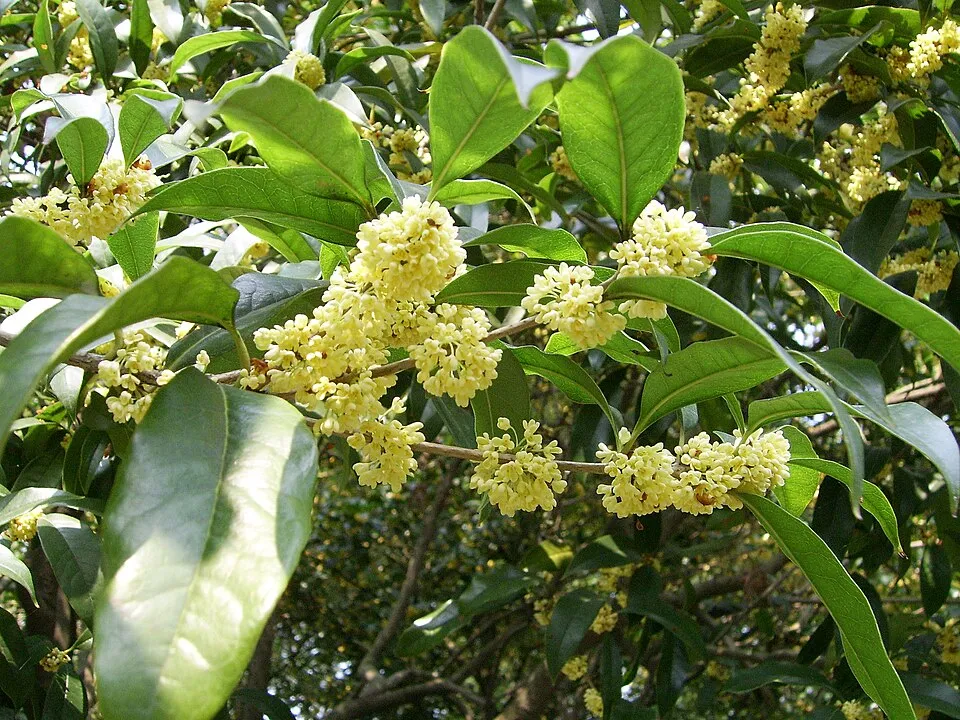
Osmanthus fragrans, commonly known as sweet osmanthus or fragrant olive, is a captivating evergreen shrub or small tree belonging to the Oleaceae family, which also includes the olive and jasmine. This resilient plant typically reaches heights of up to 6 meters (20 feet) in cultivation, though some specimens can grow taller. Its foliage consists of dark green, leathery, and distinctly oval-shaped leaves, measuring between 3 to 10 centimeters in length, often exhibiting finely serrated margins.
The shrub's most distinguishing feature is its prolific production of small, exquisitely fragrant, tubular flowers. These blooms, usually white to pale yellow, emerge in dense clusters from late summer through early autumn, filling the air with a sweet, apricot-like aroma. The bark presents as grayish-brown, smooth and unblemished in its youthful stages, gradually developing a rougher, flaky texture with age.
Native to the temperate and subtropical regions of Asia, particularly thriving across a wide expanse of China, Osmanthus fragrans prefers well-drained, fertile soils and moderate climates. Its natural habitat includes woodland margins and slopes, where it benefits from consistent moisture but avoids waterlogging.
Beyond its native range, it is extensively cultivated globally, primarily for its exceptional ornamental value and its highly prized fragrance, which is utilized in perfumery and culinary applications. Taxonomically, its placement within the Oleaceae family highlights its evolutionary kinship with other important medicinal and ornamental species.
Trusted Scientific References
1. Authoritative external sources for Osmanthus fragrans
1.1 Wikipedia — Osmanthus fragrans
1.2 Kew POWO (Plants of the World Online)
1.3 PubMed — peer-reviewed research
1.4 NCBI Taxonomy Browser
1.5 GBIF — Global Biodiversity
1.6Osmanthus should be interpreted through verified botanical identity, practical care, and responsible safety language. This recovery note adds the missing context needed for a complete profile: match light to the plant's habit, use well-drained soil, water according to season, and avoid unsupported medicinal or edible claims. For publishing, the plant can be presented as a source-backed medicinal plant with clear care guidance, common problem diagnosis, and conservative safety wording.
1.1.Osmanthus — Defining Traits
- ✓Highly Fragrant Flowers — Emits a distinct, sweet, apricot-like aroma, making it popular in gardens and perfumery.
- ✓Ornamental Value — Evergreen foliage and profuse, beautiful blooms make it a cherished landscape plant.
- ✓Traditional Chinese Medicine Staple — Holds significant historical and ongoing therapeutic importance in Asian traditional medicine.
- ✓Culinary Versatility — Flowers are used to flavor teas, desserts, jams, and various savory dishes.
- ✓Rich Phytochemistry — Contains a broad spectrum of bioactive secondary metabolites, including terpenes, flavonoids, and phenolic acids.
- ✓Antioxidant Powerhouse — Exhibits strong antioxidant activity, protecting cells from free radical damage.
- ✓Anti — inflammatory Agent — Possesses compounds that help to mitigate inflammation throughout the body.
- ✓Respiratory Support — Known for its soothing and antitussive properties, particularly for coughs and throat irritation.
- ✓Calming Effects — Its aromatic profile contributes to anxiolytic and mild sedative effects, promoting relaxation.
- ✓Adaptable Cultivation — Relatively easy to grow in appropriate climates and soil conditions, making it accessible for home gardeners.
1.2.Osmanthus — Quick Summary
- ✓Sweet Osmanthus (Osmanthus fragrans) is a highly fragrant evergreen shrub native to Asia, prized for its ornamental and culinary uses.
- ✓It possesses a rich history in Traditional Chinese Medicine (TCM) for addressing respiratory, digestive, and skin ailments, as well as promoting relaxation.
- ✓Phytochemically, it is abundant in terpenes, flavonoids, and phenolic acids, contributing to its potent antioxidant, anti-inflammatory, and antitussive properties.
- ✓Commonly enjoyed as a fragrant tea, a unique culinary ingredient, and a source for essential oils in perfumery and aromatherapy.
- ✓Generally safe when consumed in moderation, but caution is advised for specific populations, including pregnant women and those on certain medications.
- ✓Its versatile applications range from enhancing sensory experiences to providing tangible health benefits, making it a valuable botanical.
2.Osmanthus — Taxonomic Classification
3.Osmanthus — Botanical Stats
4.Osmanthus — Morphological Account
5.Osmanthus — Habitat & Distribution
6.Osmanthus — Historical Applications
7.Osmanthus — Secondary Metabolites
- ✓Terpenes — Key volatile compounds like linalool, ionones (e.g., β-ionone, dihydro-β-ionone), and their derivatives are responsible for the plant's characteristic fragrance and contribute to its sedative and anti-inflammatory actions.
- ✓Flavonoids — A diverse group including quercetin, kaempferol, and their glycosides, known for potent antioxidant, anti-inflammatory, and potential anticancer activities, protecting against cellular damage.
- ✓Phenolic Acids — Such as caffeic acid, ferulic acid, and chlorogenic acid, these compounds exhibit strong antioxidant properties, contributing to the plant's protective effects against oxidative stress and inflammation.
- ✓Volatile Oils — A complex mixture of compounds including various aldehydes (e.g., (E)-β-damascenone), esters, and aromatic alcohols (e.g., phenylethanol), which impart the distinctive sweet aroma and possess antimicrobial properties.
- ✓Carotenoids — Primarily β-carotene and lutein, these pigments are precursors to the ionones and contribute to the plant's color, while also offering antioxidant benefits.
- ✓Glycosides — Various phenolic and terpenoid glycosides are present, influencing the bioavailability and stability of active compounds within the plant.
- ✓Sterols — Including β-sitosterol, these plant sterols contribute to the overall pharmacological profile, potentially offering anti-inflammatory and cholesterol-modulating effects.
- ✓Alkaloids — While less prominent than other classes, minor alkaloid compounds may be present, contributing to the complex synergy of the plant's bioactivity, though their specific roles are still under investigation.
8.Osmanthus — Research Insights
- ✓Antioxidant Properties — Rich in flavonoids and phenolic acids, Osmanthus fragrans actively scavenges free radicals, protecting cells from oxidative stress and supporting overall cellular health.
- ✓Anti-inflammatory Effects — Its bioactive compounds help to modulate inflammatory pathways, making it beneficial for soothing internal and external inflammatory conditions, including skin irritations.
- ✓Antitussive Action — Traditionally used to alleviate coughs, particularly those associated with dry throats, due to the presence of essential oils like linalool that soothe the respiratory tract.
- ✓Digestive Support — In Traditional Chinese Medicine (TCM), it's employed to expel excess heat from the body, thereby improving digestive function and alleviating symptoms like bloating and discomfort.
- ✓Anxiolytic and Sedative Qualities — The aromatic essential oils contribute to its calming effects, promoting relaxation and potentially aiding in the reduction of anxiety and mild insomnia.
- ✓Skin Health Benefits — Applied topically or consumed, its anti-inflammatory and flavonoid content supports skin health, helping to soothe rashes, reduce redness, and mitigate irritations.
- ✓Anticancer Potential — Preliminary research indicates that certain secondary metabolites within Osmanthus fragrans may possess properties that inhibit the proliferation of various cancer cells.
- ✓Cardiovascular Health — Studies suggest that some constituents may contribute to maintaining cardiovascular well-being by influencing factors like lipid metabolism and oxidative stress.
- ✓Neuroprotective Effects — Bioactive compounds are being investigated for their potential to protect neuronal cells, suggesting benefits for cognitive function and neurological health.
- ✓Antibacterial Activity — Extracts of Osmanthus fragrans have demonstrated inhibitory effects against a range of pathogenic bacteria, contributing to its traditional use in combating infections.
8.1.Osmanthus — Therapeutic Indications
9.Osmanthus — Adverse Effects
9.1.Osmanthus — Possible Adverse Reactions
- ✓Allergic Reactions — Rare, but individuals sensitive to plants in the Oleaceae family may experience mild skin irritation or respiratory symptoms upon exposure.
- ✓Digestive Upset — Ingesting very large quantities of concentrated extracts might potentially lead to mild stomach discomfort or nausea in sensitive individuals.
- ✓Hypotension Risk — Theoretical potential for very high doses to slightly lower blood pressure, though not commonly reported with typical usage.
- ✓Sedation — While often a desired effect, excessive consumption could potentially lead to increased drowsiness or impaired alertness, especially if combined with other sedatives.
- ✓Drug Interactions — Caution is advised for individuals on sedative medications or blood pressure-lowering drugs, as Osmanthus may theoretically potentiate their effects.
- ✓Pregnancy and Lactation — Due to a lack of comprehensive safety data, medicinal use during pregnancy or breastfeeding is generally not recommended.
- ✓Children — Limited research on pediatric use suggests avoiding medicinal preparations in young children unless under strict professional supervision.
9.2.Osmanthus — Risk Assessment
- ✓Moderate Consumption — Osmanthus fragrans is generally considered safe when consumed in typical food and beverage quantities, such as in teas or desserts.
- ✓Purity of Product — Ensure all Osmanthus products are sourced from reputable suppliers to guarantee purity and prevent contamination with pesticides or other harmful substances.
- ✓Dosage Adherence — For medicinal applications, strictly follow recommended dosages provided by qualified herbalists or healthcare professionals.
- ✓Professional Consultation — Individuals with pre-existing medical conditions, those taking medications, or pregnant/nursing women should consult a healthcare provider before using Osmanthus medicinally.
- ✓Patch Test for Topical Use — Before applying Osmanthus-infused products extensively to the skin, perform a small patch test to check for any allergic reactions or sensitivities.
- ✓Avoid In Specific Populations — Due to insufficient safety data, medicinal use is not recommended for pregnant or breastfeeding individuals and young children.
- ✓Quality Control — Prioritize products that have undergone third-party testing for identity, purity, potency, and absence of heavy metals or microbial contaminants.
10.Osmanthus — Preparation & Dosage
- ✓Herbal Tea Infusion — Dried Osmanthus flowers are steeped in hot water for 5-10 minutes to create a fragrant, soothing tea, often consumed for respiratory comfort or relaxation.
- ✓Culinary Flavoring — Fresh or dried flowers are widely used to impart their unique sweet, apricot-like aroma to desserts, jams, jellies, rice dishes, wines, and confections.
- ✓Essential Oil Extraction — The flowers are steam-distilled to produce a highly prized essential oil, utilized in high-end perfumery, aromatherapy for stress relief, and cosmetic formulations.
- ✓Tincture Preparation — Flowers and sometimes leaves can be macerated in alcohol to create a concentrated liquid extract for internal medicinal use, following expert guidance on dosage.
- ✓Topical Application — Infused oils or creams containing Osmanthus extract can be applied to the skin to soothe irritations, reduce inflammation, and promote a healthy complexion.
- ✓Aromatic Sachets and Potpourri — Dried flowers are commonly used in sachets to naturally scent linens, drawers, and rooms, or as a component in decorative potpourri.
- ✓Traditional Decoctions — In TCM, various parts of the plant, especially the flowers, are prepared as decoctions, often combined with other herbs for specific therapeutic indications like coughs or digestive issues.
- ✓Syrup or Honey Infusion — Flowers can be infused into honey or simple syrup, which can then be used as a sweetener, a culinary ingredient, or a soothing remedy for sore throats.
11.Osmanthus — Growing Guide
- ✓Climate Preference — Thrives in USDA Hardiness Zones 7-9, preferring temperate to subtropical climates with mild winters and warm summers.
- ✓Soil Requirements — Requires well-drained, fertile, slightly acidic to neutral soil (pH 5.5-7.5) rich in organic matter to prevent root rot.
- ✓Sunlight Exposure — Performs best in full sun to partial shade; full sun encourages more abundant flowering, while partial shade protects from intense afternoon heat.
- ✓Watering — Needs consistent moisture, especially during dry periods and while establishing; established plants show good drought tolerance.
- ✓Propagation — Can be propagated from semi-hardwood cuttings taken in summer, air layering, or occasionally from seed, though seed germination can be slow.
- ✓Pruning — Generally requires minimal pruning; best done after flowering to maintain shape, remove dead or crossing branches, or control size.
- ✓Fertilization — Benefits from a balanced, slow-release granular fertilizer applied in early spring to support vigorous growth and prolific blooming.
- ✓Pest and Disease Management — Relatively resistant to most common pests and diseases, but monitor for scale insects and fungal issues in overly humid or poorly drained conditions.
Reviewed by the Flora Medical Global Botanical Review Panel
Multi-disciplinary editorial group · Botany · Ethnobotany · Herbal-medicine literature
Who reviewed this: This page was checked by the Flora Medical Global Botanical Review Panel — an in-house editorial group of botany graduates, ethnobotany researchers, and horticulture practitioners who collectively maintain our 7,000+ plant encyclopedia. Meet the team.
Our 4-step verification process
1. Taxonomic verification
Scientific names and synonyms cross-checked against Kew POWO, World Flora Online, and The Plant List.
2. Phytochemical & medicinal cross-reference
Active compounds, traditional uses, and reported activities are cross-referenced with PubMed, USDA Dr. Duke's database, and peer-reviewed ethnobotanical literature.
3. Conservation & distribution check
Distribution, ecology, and conservation status confirmed against GBIF occurrence records and the IUCN Red List.
4. Editorial & safety review
Every entry passes an editorial pass for clarity, originality, and safety notices (toxicity, contraindications, dosage caveats) before publication.
Last reviewed:
Important medical disclaimer: This content is for educational and research purposes only. It is not medical advice and is not a substitute for consultation with a licensed healthcare provider. Do not use any herb to self-treat a medical condition without professional guidance.
Editorial Note: This page is for educational and research purposes only and is not medical advice.
Written by: Flora Medical Global Editorial Team
Reviewed by: Flora Medical Global Botanical Review Panel
Last Updated: June 16, 2026





Osmanthus — Comments & Community Reviews
Rate this plant