

Medical Disclaimer: This content is for educational purposes only. It is not medical advice. Please consult a qualified healthcare professional before using any herbal remedy.
Safety Overview
1.Padmaka — At a Glance
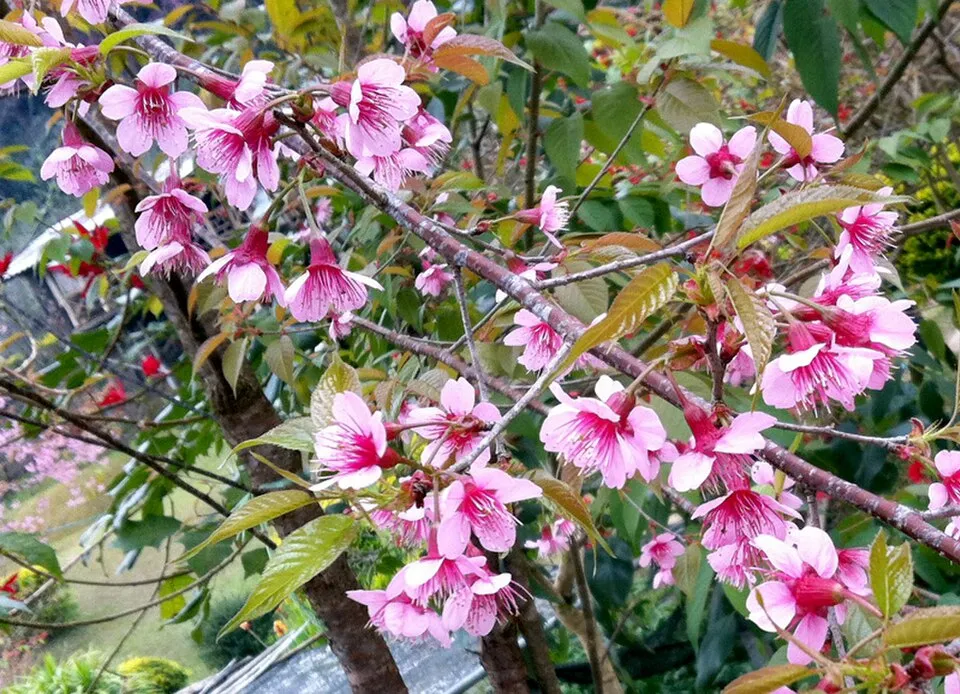
Prunus cerasoides, commonly known as Padmaka or the Wild Himalayan Cherry, is an elegant deciduous tree belonging to the Rosaceae family. This species typically attains a height of 5 to 15 meters, occasionally reaching up to 30 meters, characterized by a distinctive pale reddish trunk that often exhibits nodules and emits a subtle, lotus-like aroma when freshly cut. Its foliage consists of simple, alternate leaves, elliptic to ovate in shape, measuring approximately 8-12 centimeters in length. The leaf margins are finely serrated, and the petioles often bear one or more glands.
In spring, Padmaka bursts into a spectacular display of white to pale pink flowers, borne in attractive clusters. Each flower features five delicate petals and numerous stamens, exuding a sweet fragrance that draws a variety of pollinators. These blooms later give way to small, ovoid or globose drupes, typically yellow or red, enclosing an ovoid seed. Padmaka is indigenous to the temperate zones of the Himalayas, flourishing at elevations between 1,200 to 2,400 meters, though it can be found from 5000-8000 feet in some regions.
Its natural distribution spans across India, Nepal, Bhutan, and parts of Myanmar, where it thrives in moist, well-drained soils within mixed deciduous forests, preferring ample sunlight. Beyond its ecological significance, its ornamental value makes it a cherished addition to various landscapes.
Trusted Scientific References
1. Authoritative external sources for Prunus cerasoides
1.1 Wikipedia — Prunus cerasoides
1.2 Kew POWO (Plants of the World Online)
1.3 PubMed — peer-reviewed research
1.4 NCBI Taxonomy Browser
1.5 GBIF — Global Biodiversity
1.6Padmaka should be interpreted through verified botanical identity, practical care, and responsible safety language. This recovery note adds the missing context needed for a complete profile: match light to the plant's habit, use well-drained soil, water according to season, and avoid unsupported medicinal or edible claims. For publishing, the plant can be presented as a source-backed medicinal plant with clear care guidance, common problem diagnosis, and conservative safety wording.
1.1.Padmaka — Notable Characteristics
- ✓Botanical Name — Prunus cerasoides (Padmaka)
- ✓Family — Rosaceae (Rose Family)
- ✓Habitat — Temperate Himalayas, 1,200-2,400m elevation
- ✓Key Traditional Use — Ayurvedic skin and uterine tonic
- ✓Prominent Constituents — Flavonoids, triterpenoids, phenolic compounds
- ✓Pharmacological Actions — Antioxidant, anti-inflammatory, astringent
- ✓Distinctive Feature — Pale reddish trunk with lotus-like aroma
- ✓Flowering — White to pale pink, fragrant clusters in spring
- ✓Fruit — Small, ovoid, yellow or red drupes
- ✓Traditional Systems — Primarily Ayurveda, also recognized in other regional folk medicines
1.2.Padmaka — Concise Overview
- ✓Prunus cerasoides (Padmaka) is a Himalayan cherry tree.
- ✓Valued in Ayurveda for skin, uterine, and digestive health.
- ✓Rich in flavonoids, triterpenoids, and phenolic compounds.
- ✓Traditionally used for wound healing, fever, and detoxification.
- ✓Exhibits antioxidant, anti-inflammatory, and astringent properties.
- ✓Requires careful dosage due to cyanogenic glycosides in some parts.
2.Padmaka — Nomenclature & Classification
3.Padmaka — Key Data
4.Padmaka — Physical Description
5.Padmaka — Ecological Habitat
6.Padmaka — Folk Medicine Applications
7.Padmaka — Phytochemistry
- ✓Flavonoids — Includes compounds like puddumin-A, glucogenkwanin, and neosakuranin, primarily found in seeds and bark, contributing to antioxidant and anti-inflammatory actions.
- ✓Triterpenoids — Ursolic acid is present in the root bark, known for its anti-inflammatory, hepatoprotective, and potential anticancer properties.
- ✓Sterols — Beta-sitosterol and stigmasterol are found in the root bark, recognized for their cholesterol-lowering and anti-inflammatory effects.
- ✓Phenolic Compounds — General phenolic acids and tannins are abundant, providing significant antioxidant capacity and astringent properties, beneficial for skin health and wound healing.
- ✓Cyanogenic Glycosides — Present in leaves, twigs, bark, and kernels, these compounds release hydrogen cyanide upon hydrolysis, which in small doses can have therapeutic effects but requires careful handling.
- ✓Coumarins — Certain Prunus species contain coumarins, which may contribute to anti-inflammatory and anticoagulant properties, though specific coumarins for P. cerasoides need further detailed study.
- ✓Saponins — These compounds may be present, contributing to expectorant and immune-modulating activities, though their specific role in Padmaka requires more research.
- ✓Tannins — Impart astringent properties, useful in traditional medicine for reducing inflammation, promoting wound healing, and acting as an antidiarrheal agent.
8.Padmaka — Pharmacological Findings
- ✓Skin Health Enhancement — Padmaka bark and fruit are traditionally lauded in Ayurveda for improving skin complexion, treating blemishes, acne, and conditions like psoriasis due to its antioxidant and anti-inflammatory properties.
- ✓Anti-inflammatory Action — The plant contains compounds like flavonoids and triterpenoids that contribute to its anti-inflammatory effects, beneficial for various inflammatory conditions including skin irritations.
- ✓Antioxidant Support — Rich in phenolic compounds and flavonoids, Prunus cerasoides offers significant antioxidant activity, helping to neutralize free radicals and protect cells from oxidative damage.
- ✓Blood Purifying Properties — Traditional systems utilize Padmaka to address blood disorders (Asra), suggesting its role in detoxification and maintaining healthy blood circulation.
- ✓Wound Healing — Research indicates that topical preparations from Prunus cerasoides possess wound healing capabilities, promoting tissue regeneration and faster recovery.
- ✓Uterine Tonic and Pregnancy Support — In Ayurvedic practice, Padmaka is valued as a Garbhasthapana herb, meaning it helps to strengthen the uterus and supports healthy conception and pregnancy maintenance.
- ✓Fever Reduction — Decoctions made from the bark or heartwood are traditionally given to alleviate fever (Jwara) and reduce associated burning sensations and excessive sweating.
- ✓Digestive Aid — The heartwood is used to manage digestive issues such as vomiting (Chardi), nausea, and gastritis, attributed to its astringent and cooling properties.
- ✓Diuretic Action — The seeds of Padmaka are traditionally used for their diuretic effects, particularly indicated in the treatment of renal stones or urinary calculi.
- ✓Pain Relief — Classified under Vedanasthapana mahakashaya in Charaka Samhita, Padmaka is traditionally used for its pain-relieving properties, especially in conditions related to the nervous system.
- ✓Cooling Effect — Infusions from leaves and flowers are employed to cool the body, beneficial for conditions involving excess heat or burning sensations (Daha).
- ✓Anti-toxic Properties — Padmaka is traditionally considered beneficial in toxic conditions (Visha), suggesting a role in neutralizing toxins or supporting the body's detoxification pathways.
8.1.Padmaka — Conditions Traditionally Used For
9.Padmaka — Safety Considerations
9.1.Padmaka — Possible Adverse Reactions
- ✓Allergic Reactions — Sensitive individuals may experience skin rashes, itching, or respiratory issues upon contact or ingestion of Padmaka.
- ✓Gastrointestinal Upset — High doses or prolonged use might lead to mild stomach discomfort, nausea, or diarrhea in some individuals.
- ✓Cyanogenic Glycoside Toxicity — Due to the presence of cyanogenic glycosides, especially in raw seeds and bark, excessive consumption could potentially lead to cyanide toxicity, though rare in traditional preparations.
- ✓Interactions with Medications — May interact with certain medications, particularly blood thinners or sedatives, given its potential pharmacological activities.
- ✓Photosensitivity — Some plant constituents might increase sensitivity to sunlight, especially with topical application, leading to phototoxic reactions.
- ✓Hepatic or Renal Strain — In individuals with pre-existing liver or kidney conditions, high doses might theoretically exacerbate these issues, warranting caution.
9.2.Padmaka — Toxicity Assessment
- ✓Pregnancy and Lactation — While traditionally used as a uterine tonic, professional medical advice is crucial before use during pregnancy or lactation due to varying individual responses and constituent profiles.
- ✓Children — Not recommended for unsupervised use in children; consult a qualified healthcare practitioner for appropriate dosing and safety.
- ✓Pre-existing Conditions — Individuals with chronic health conditions, especially liver or kidney disorders, should consult a doctor before incorporating Padmaka into their regimen.
- ✓Medication Interactions — Exercise caution if taking prescription medications, particularly anticoagulants, sedatives, or drugs metabolized by the liver, due to potential interactions.
- ✓Dosage Adherence — Strict adherence to recommended dosages is essential, as excessive intake, particularly of raw plant parts containing cyanogenic glycosides, could be harmful.
- ✓Allergic History — Individuals with known allergies to plants in the Rosaceae family should avoid Padmaka to prevent hypersensitivity reactions.
- ✓Quality Sourcing — Ensure the use of high-quality, properly identified plant material from reputable sources to avoid contamination or misidentification.
10.Padmaka — Usage Guide
- ✓Bark Powder for Skin — Dried and powdered bark is mixed with water or rosewater to form a paste, applied topically for improving complexion, treating acne, blemishes, and herpes.
- ✓Heartwood Decoction for Digestion — A decoction prepared from the heartwood is consumed in doses of 40-50 ml per day, divided, to alleviate vomiting, nausea, and gastritis.
- ✓Seed Powder for Renal Stones — Dried seed powder is administered orally in dosages of 3-5 grams to support the treatment of renal calculi and promote diuretic action.
- ✓Uterine Strengthening Decoction — A decoction of Padmaka is traditionally used in daily divided doses of 40-50 ml to strengthen the uterus and support pregnancy.
- ✓Infusion for Fever and Cooling — Bark or heartwood is steeped in boiling water; the cooled infusion is drunk to reduce fever, excessive sweating, and burning sensations.
- ✓Medicinal Oils — Padmaka is an ingredient in various Ayurvedic oils like Chandanadi Taila and Jatyadi Oil, used for external application to treat skin conditions, headaches, or wounds.
- ✓Internal Powder Dosage — For general therapeutic use, powdered forms of the plant are typically given in doses ranging from 1-3 grams, or as directed by an Ayurvedic practitioner.
11.Padmaka — Cultivation & Care
- ✓Site Selection — Padmaka thrives in full sun exposure, requiring at least 6 hours of direct sunlight daily for optimal growth and flowering.
- ✓Soil Requirements — Prefers moist, well-drained loamy or sandy-loam soils with a slightly acidic to neutral pH (6.0-7.0).
- ✓Water Management — Requires consistent moisture, especially during dry periods and establishment. Ensure good drainage to prevent waterlogging.
- ✓Propagation — Can be propagated from seeds, which may require cold stratification for germination, or by grafting and cuttings for quicker establishment.
- ✓Elevation — Naturally grows at higher altitudes (1,200 to 2,400 meters), mimicking these conditions can improve success in cultivation.
- ✓Climate — Best suited for temperate regions, as it is native to the Himalayan belt and can tolerate cold temperatures.
- ✓Pests and Diseases — Monitor for common cherry tree pests like aphids and borers, and diseases such as powdery mildew or leaf spot, applying organic treatments as needed.
Reviewed by the Flora Medical Global Botanical Review Panel
Multi-disciplinary editorial group · Botany · Ethnobotany · Herbal-medicine literature
Who reviewed this: This page was checked by the Flora Medical Global Botanical Review Panel — an in-house editorial group of botany graduates, ethnobotany researchers, and horticulture practitioners who collectively maintain our 7,000+ plant encyclopedia. Meet the team.
Our 4-step verification process
1. Taxonomic verification
Scientific names and synonyms cross-checked against Kew POWO, World Flora Online, and The Plant List.
2. Phytochemical & medicinal cross-reference
Active compounds, traditional uses, and reported activities are cross-referenced with PubMed, USDA Dr. Duke's database, and peer-reviewed ethnobotanical literature.
3. Conservation & distribution check
Distribution, ecology, and conservation status confirmed against GBIF occurrence records and the IUCN Red List.
4. Editorial & safety review
Every entry passes an editorial pass for clarity, originality, and safety notices (toxicity, contraindications, dosage caveats) before publication.
Last reviewed:
Important medical disclaimer: This content is for educational and research purposes only. It is not medical advice and is not a substitute for consultation with a licensed healthcare provider. Do not use any herb to self-treat a medical condition without professional guidance.
Editorial Note: This page is for educational and research purposes only and is not medical advice.
Written by: Flora Medical Global Editorial Team
Reviewed by: Flora Medical Global Botanical Review Panel
Last Updated: June 16, 2026





Padmaka — Comments & Community Reviews
Rate this plant