


Medical Disclaimer: This content is for educational purposes only. It is not medical advice. Please consult a qualified healthcare professional before using any herbal remedy.
Safety Overview
1.Patala — Plant Snapshot
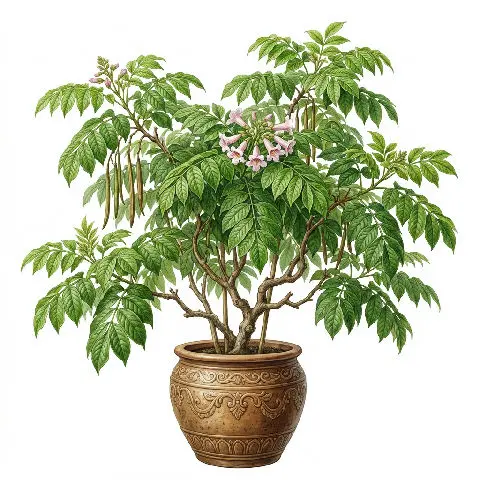
Stereospermum chelonoides, commonly known as Patala or the Yellow Trumpet Tree, is a prominent deciduous tree belonging to the Bignoniaceae family. Native to the Indian subcontinent, including India, Nepal, and Sri Lanka, its geographical range extends to parts of Myanmar and Bangladesh.
This species thrives in diverse environments, from riverine areas to dry deciduous forests, preferring well-drained, loamy soil and moderate rainfall. The tree can reach impressive heights of up to 20 meters, characterized by a straight trunk and smooth bark that transitions from a yellowish tinge in young shoots to a brownish-grey hue with maturity.
Its distinctive morphology includes opposite, pinnate leaves, typically comprising 5 to 9 lanceolate leaflets, each measuring 8-15 cm long. In spring, Patala presents a spectacular display of pale yellow, funnel-shaped flowers, approximately 5 cm in diameter, which are quite showy and trumpet-like.
These blossoms are followed by long, slender fruits. Historically, various parts of the plant, notably the bark, roots, and leaves, have been highly valued in traditional medicine systems, particularly Ayurveda, for their wide spectrum of therapeutic properties.
Trusted Scientific References
1. Authoritative external sources for Stereospermum chelonoides
1.1 Wikipedia — Stereospermum chelonoides
1.2 Kew POWO (Plants of the World Online)
1.3 PubMed — peer-reviewed research
1.4 NCBI Taxonomy Browser
1.5 GBIF — Global Biodiversity
1.6Patala should be interpreted through verified botanical identity, practical care, and responsible safety language. This recovery note adds the missing context needed for a complete profile: match light to the plant's habit, use well-drained soil, water according to season, and avoid unsupported medicinal or edible claims. For publishing, the plant can be presented as a source-backed medicinal plant with clear care guidance, common problem diagnosis, and conservative safety wording.
1.1.Patala — Standout Qualities
- ✓Deciduous tree native — Deciduous tree native to the Indian subcontinent.
- ✓Belongs to the Bignoniaceae family, known for trumpet — shaped flowers.
- ✓A potent 'Tridosha — hara' in Ayurvedic medicine, balancing Vata, Pitta, Kapha.
- ✓Exhibits strong anti — inflammatory, antioxidant, and analgesic properties.
- ✓Traditionally used for — Traditionally used for respiratory ailments, skin disorders, and digestive issues.
- ✓Contains key phytochemicals — Contains key phytochemicals including iridoids (Catalpol), flavonoids, and tannins.
- ✓Valued for its — Valued for its Rasayana (rejuvenative) and cardiotonic effects.
- ✓Employed in various forms — Churna (powder), Kwath (decoction), Taila (oil).
- ✓Adaptable to riverine — Adaptable to riverine and dry deciduous forest habitats.
- ✓Sustainable harvesting practices — Sustainable harvesting practices are crucial for its bark collection.
1.2.Patala — Concise Overview
- ✓Patala (Stereospermum chelonoides) is a revered Ayurvedic deciduous tree.
- ✓Known as a 'Tridosha-hara,' balancing Vata, Pitta, and Kapha.
- ✓Offers significant anti-inflammatory, respiratory, and skin-healing benefits.
- ✓Rich in iridoids, flavonoids, and tannins, contributing to its efficacy.
- ✓Utilized in traditional forms like powders, decoctions, and topical oils.
- ✓Requires careful dosage and professional consultation due to potential side effects and interactions.
2.Patala — Scientific Profile
3.Patala — Reference Facts
4.Patala — Morphological Account
5.Patala — Habitat & Distribution
6.Patala — Cultural & Traditional Roles
7.Patala — Active Compounds
- ✓Iridoid Glycosides — Key compounds include Catalpol, Verbascoside, Echinacoside, and Plantainoside, known for their potent anti-inflammatory, antioxidant, and immunomodulatory activities.
- ✓Flavonoids — Such as Quercetin and Kaempferol, these compounds act as mast cell stabilizers, antioxidants, and possess anti-allergic properties, contributing to respiratory and anti-inflammatory benefits.
- ✓Tannins — Abundant in the bark, tannins provide astringent properties, making Patala effective in digestive support and wound healing due to their ability to bind proteins.
- ✓Triterpenes — These compounds exhibit a diverse range of pharmacological activities, including anti-inflammatory, hepatoprotective, and adaptogenic effects.
- ✓Saponins — Present in various parts, saponins contribute to expectorant actions, aiding in the clearance of bronchial passages, and may also possess mild haemolytic properties.
- ✓Glycosides — A broad class of compounds, including cardiac glycosides, which can exert various therapeutic actions, influencing heart function and systemic processes.
- ✓Sterols — Plant sterols may play a role in modulating lipid profiles and supporting cardiovascular health, though further research is needed to fully elucidate their specific actions in Patala.
- ✓Lignans — These phytochemicals are recognized for their antioxidant, anti-cancer, and estrogenic activities, adding to the plant's overall therapeutic potential.
8.Patala — Modern Studies
- ✓Tridosha Balancer — Patala is revered in Ayurveda as a 'Tridosha-hara,' effectively balancing all three fundamental energies: Vata, Pitta, and Kapha, promoting overall physiological harmony.
- ✓Anti-inflammatory Action — Its rich phytochemical profile, including iridoids like Catalpol, contributes to significant anti-inflammatory effects by modulating inflammatory pathways and reducing cytokine production.
- ✓Respiratory Health Support — Decoctions of Patala are traditionally used to alleviate symptoms of chronic bronchitis, asthma, and persistent coughs, acting as a mast cell stabilizer and expectorant.
- ✓Skin Rejuvenation and Healing — Topical applications of Patala bark powder promote the accelerated healing of minor burns, eczema, and skin rashes, calming inflammation and supporting tissue repair.
- ✓Digestive System Aid — The presence of tannins provides a mild astringent effect, which is beneficial in managing conditions like diarrhea and dysentery by toning mucous membranes.
- ✓Analgesic Properties — Patala exhibits natural pain-relieving qualities, making it useful in traditional formulations for reducing discomfort associated with various inflammatory conditions.
- ✓Antipyretic Effects — It is traditionally employed as a febrifuge to help reduce fever and associated symptoms, contributing to its broad therapeutic utility.
- ✓Cardiovascular Well-being — In Ayurvedic practices, Patala is considered cardiotonic, offering protective and supportive benefits for heart health.
- ✓Immunity Enhancement — As a Rasayana herb, Patala is believed to enhance natural killer cell activity and bolster the body's innate immune response, improving overall resistance to illness.
- ✓Diuretic Activity — It promotes increased urine output, which can assist in detoxification and managing conditions related to fluid retention.
8.1.Patala — Conditions Traditionally Used For
9.Patala — Adverse Effects
9.1.Patala — Caution Notes
- ✓Dryness — Overuse, particularly in high doses, may aggravate Vata dosha, potentially leading to increased dryness, thirst, or constipation.
- ✓Hypersensitivity Reactions — Rare instances of allergic dermatitis have been reported when Patala is used as a topical paste; a patch test is recommended.
- ✓Gastrointestinal Discomfort — High doses of Patala powder might cause mild digestive upset, stomach irritation, or nausea in sensitive individuals.
- ✓Medication Interactions — The tannin content could theoretically reduce the absorption of certain medications (e.g., levothyroxine); it's advisable to space out administration by 2-3 hours.
- ✓Blood Thinning Potential — While not extensively studied, some compounds could theoretically influence blood clotting, warranting caution for individuals on anticoagulant therapy.
- ✓Diuretic Overactivity — Excessive intake might lead to undue fluid loss and electrolyte imbalance due to its diuretic properties.
9.2.Patala — Safety Profile
- ✓General Safety — Patala is generally considered safe when used within recommended dosages and under the guidance of a qualified practitioner.
- ✓Pregnancy and Lactation — Due to insufficient scientific data on its safety during pregnancy and breastfeeding, high doses should be avoided, and professional consultation is imperative.
- ✓Pediatric Use — For children, low doses under adult supervision are generally considered safe, but close monitoring for digestive upset is advised.
- ✓Chronic Conditions and Medications — Individuals with chronic health conditions or those on long-term medications should consult a healthcare professional to avoid potential interactions.
- ✓Topical Application Precaution — Always perform a patch test on a small skin area before widespread topical application to check for any hypersensitivity or allergic reactions.
- ✓Quality Sourcing — Ensure that Patala products are sourced from reputable suppliers to guarantee purity, potency, and freedom from contaminants like pesticides or heavy metals.
- ✓Avoid Self-Medication — For serious or chronic health issues, Patala should not be used as a substitute for conventional medical treatment without professional advice.
10.Patala — How to Use
- ✓Bark Powder (Churna) — Consume 1-3 grams of dried bark powder twice daily, mixed with warm water or honey, particularly for coughs and mild inflammation.
- ✓Decoction (Kwath) — Prepare by boiling 10-20 grams of bark in 4 cups of water until reduced to 1-2 cups; strain and drink 1/4 to 1/2 cup twice daily for respiratory issues.
- ✓Topical Paste — For skin conditions like eczema or minor burns, create a paste by mixing bark powder with water and apply directly to the affected area.
- ✓Medicated Oil (Taila) — Utilize Patala-infused oils (10-20 mL) for external application, gently massaging into the skin to alleviate rashes or aid postpartum recovery.
- ✓Fermented Extracts (Arishtam) — Follow specific label instructions for fermented formulations that combine Patala with other herbs, often for comprehensive systemic support.
- ✓Children's Dosage — For children aged 6-12 years, typically administer half the adult decoction dose (e.g., 1/4 cup), always under professional guidance.
- ✓Professional Consultation — Always consult a qualified Ayurvedic practitioner or healthcare professional before initiating use, especially for specific health conditions or during pregnancy.
11.Patala — Propagation & Care
- ✓Climate Preference — Thrives in tropical and subtropical regions, adapting to both humid and drier conditions.
- ✓Soil Requirements — Prefers well-drained, loamy soils with moderate fertility; can tolerate a range of soil types.
- ✓Sunlight Exposure — Requires full sun to partial shade for optimal growth and flowering.
- ✓Water Management — Needs moderate and consistent watering, especially during dry periods and in its early growth stages.
- ✓Propagation — Can be propagated through seeds, which germinate well, or via stem cuttings for faster establishment.
- ✓Harvesting Practices — Bark is typically harvested during dry months (January-March) to minimize sap loss and ensure quality, with sustainable methods employed to protect the cambium layer.
- ✓Pest and Disease Resistance — Generally robust, but monitoring for common tropical plant pests and fungal diseases is advisable to maintain plant health.
Reviewed by the Flora Medical Global Botanical Review Panel
Multi-disciplinary editorial group · Botany · Ethnobotany · Herbal-medicine literature
Who reviewed this: This page was checked by the Flora Medical Global Botanical Review Panel — an in-house editorial group of botany graduates, ethnobotany researchers, and horticulture practitioners who collectively maintain our 7,000+ plant encyclopedia. Meet the team.
Our 4-step verification process
1. Taxonomic verification
Scientific names and synonyms cross-checked against Kew POWO, World Flora Online, and The Plant List.
2. Phytochemical & medicinal cross-reference
Active compounds, traditional uses, and reported activities are cross-referenced with PubMed, USDA Dr. Duke's database, and peer-reviewed ethnobotanical literature.
3. Conservation & distribution check
Distribution, ecology, and conservation status confirmed against GBIF occurrence records and the IUCN Red List.
4. Editorial & safety review
Every entry passes an editorial pass for clarity, originality, and safety notices (toxicity, contraindications, dosage caveats) before publication.
Last reviewed:
Important medical disclaimer: This content is for educational and research purposes only. It is not medical advice and is not a substitute for consultation with a licensed healthcare provider. Do not use any herb to self-treat a medical condition without professional guidance.
Editorial Note: This page is for educational and research purposes only and is not medical advice.
Written by: Flora Medical Global Editorial Team
Reviewed by: Flora Medical Global Botanical Review Panel
Last Updated: June 16, 2026





Patala — Comments & Community Reviews
Rate this plant