


Medical Disclaimer: This content is for educational purposes only. It is not medical advice. Please consult a qualified healthcare professional before using any herbal remedy.
Safety Overview
1.Peace Lily — Overview
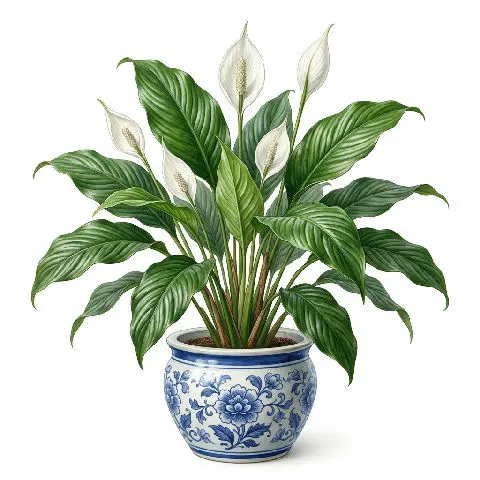
The Peace Lily, scientifically known as Spathiphyllum wallisii, is an iconic perennial herbaceous plant belonging to the Araceae family, native to the tropical rainforests of Central and South America, particularly regions of Colombia and Venezuela. This species is celebrated for its striking aesthetic, featuring lush, dark green, lance-shaped leaves that can reach lengths of 12 to 15 inches, exhibiting a characteristic glossy texture. Its most distinguishing feature is its 'flower,' which is botanically a modified leaf structure called a spathe, typically pure white to light green, elegantly surrounding a central, elongated spadix.
Under optimal conditions, Spathiphyllum wallisii can grow to an indoor height of 24 to 36 inches, making it a popular choice for interior landscaping. It thrives in low to medium indirect light, tolerating fluorescent light well, but its prolific blooming is often spurred by brighter, yet filtered, light exposure. The plant's natural habitat dictates its preference for high humidity and consistent moisture, conditions that contribute to its robust photosynthesis and vibrant foliage.
The smooth, dark green leaves provide a beautiful contrast to the white spathes, which are not true flowers but bracts designed to attract pollinators in their native environment. Its taxonomic classification within the Araceae family highlights its unique floral structure and shared characteristics with other aroids, many of which also contain calcium oxalate crystals.
Trusted Scientific References
1. Authoritative external sources for Spathiphyllum wallisii
1.1 Wikipedia — Spathiphyllum wallisii
1.2 Kew POWO (Plants of the World Online)
1.3 PubMed — peer-reviewed research
1.4 NCBI Taxonomy Browser
1.5 GBIF — Global Biodiversity
1.6Peace Lily should be interpreted through verified botanical identity, practical care, and responsible safety language. This recovery note adds the missing context needed for a complete profile: match light to the plant's habit, use well-drained soil, water according to season, and avoid unsupported medicinal or edible claims. For publishing, the plant can be presented as a source-backed indoor plant with clear care guidance, common problem diagnosis, and conservative safety wording.
1.1.Peace Lily — Key Features
- ✓Striking White Spathes — The iconic white, leaf-like bracts that surround the true flower spadix.
- ✓Glossy Dark Green Leaves — Lance-shaped foliage that adds a lush, tropical aesthetic.
- ✓Air Purification Champion — Renowned for its ability to filter indoor air pollutants like formaldehyde and benzene.
- ✓Low Light Tolerance — Adapts well to various indoor light conditions, making it versatile for home or office.
- ✓Humidity Lover — Thrives in high humidity, mimicking its native rainforest environment.
- ✓Easy Care — Generally considered a low-maintenance houseplant suitable for beginners.
- ✓Evergreen Perennial — Maintains its foliage year-round, providing continuous greenery.
- ✓Moderate Size — Typically grows 1-4 feet tall indoors, fitting well in most spaces.
- ✓Tropical Origin — Native to the warm, humid regions of Central and South America.
- ✓Calcium Oxalate Content — Contains irritating crystals, necessitating careful placement away from children and pets.
1.2.Peace Lily — At-a-Glance Summary
- ✓Popular indoor plant known for elegant white spathes and dark green foliage.
- ✓Highly effective at purifying indoor air by removing common toxins.
- ✓Contains calcium oxalate crystals, making it mildly toxic if ingested by humans or pets.
- ✓Thrives in indirect light, high humidity, and consistent warmth.
- ✓Requires well-draining soil and prefers to be slightly underwatered.
- ✓Symbolizes peace, hope, and healing, often given as a thoughtful gift.
2.Peace Lily — Systematic Position
3.Peace Lily — Botanical Stats
4.Peace Lily — Plant Morphology
5.Peace Lily — Geographic Distribution
6.Peace Lily — Historical Applications
7.Peace Lily — Active Compounds
- ✓Calcium Oxalate Crystals — These microscopic, needle-shaped crystals (raphides) are a primary defense mechanism, causing irritation upon ingestion due to their mechanical damage and release of inflammatory compounds.
- ✓Flavonoids — Includes quercetin, vitexin, and isovitexin, which are potent antioxidants and possess anti-inflammatory properties, contributing to the plant's natural defense against oxidative stress.
- ✓Phenolic Acids — Chlorogenic acid is a notable example, known for its strong antioxidant and anti-inflammatory activities, playing a role in the plant's physiological responses and potential health benefits when consumed in other plants.
- ✓Phytosterols — Compounds like sitosterol and campesterol are plant sterols that mimic cholesterol, found in cell membranes, and are associated with anti-inflammatory and cholesterol-lowering effects in dietary contexts.
- ✓Terpenoids — Linalool, limonene, and germacrene D are volatile organic compounds contributing to the plant's fragrance and acting as natural pesticides or signaling molecules within the plant ecosystem.
- ✓Alkaloids — While not extensively studied or primary constituents, some plants in the Araceae family may contain trace amounts of nitrogenous compounds with varying pharmacological activities.
- ✓Saponins — These glycosides can form a soapy lather in water and are involved in plant defense, potentially having hemolytic or anti-fungal properties.
- ✓Glycosides — Various sugar-bound compounds that play roles in storage, transport, and defense, contributing to the plant's biochemical complexity.
- ✓Proteins and Enzymes — Essential for all metabolic processes, including photosynthesis, detoxification, and growth, forming the structural and functional basis of the plant.
- ✓Carbohydrates — Sugars and starches providing energy storage and structural support for the plant's tissues.
- ✓Lipids — Fats and oils crucial for energy storage, cell membrane structure, and as precursors for other important biochemicals.
- ✓Volatile Organic Compounds (VOCs) — Beyond specific terpenoids, the plant may release other VOCs that interact with its environment, contributing to its air-purifying capabilities and defense mechanisms.
8.Peace Lily — Modern Studies
- ✓Indoor Air Purification — Spathiphyllum wallisii is highly effective at removing common indoor air pollutants such as formaldehyde, benzene, trichloroethylene, xylene, and ammonia, as highlighted by NASA's Clean Air Study.
- ✓Humidity Enhancement — Through its natural transpiration process, the Peace Lily releases moisture into the air, helping to increase indoor humidity levels, which can be beneficial for respiratory health and dry skin.
- ✓Stress Reduction — The presence of living plants like the Peace Lily in indoor environments contributes to biophilic design principles, fostering a sense of calm and reducing psychological stress.
- ✓Environmental Detoxification — Its roots and associated microorganisms actively absorb and metabolize various volatile organic compounds (VOCs) from the air, contributing to a healthier living space.
- ✓Aesthetic and Mood Upliftment — The elegant appearance and vibrant greenery of the Peace Lily can significantly improve the visual appeal of a room, positively influencing mood and overall well-being.
- ✓Antioxidant Support (Indirect) — While not for direct consumption, the plant contains compounds like quercetin and vitexin, which possess antioxidant properties that generally support cellular health and reduce oxidative stress within the plant itself.
- ✓Anti-inflammatory Potential (Indirect) — Chlorogenic acid, present in the plant, is known for its anti-inflammatory effects in other botanical contexts, suggesting an indirect contribution to a healthy environment.
- ✓Improved Sleep Quality — By purifying the air and contributing to a more serene environment, Peace Lilies can indirectly support better sleep patterns and overall restfulness.
- ✓Allergen Reduction — The broad leaves can help trap dust particles from the air, preventing them from circulating and potentially reducing exposure to airborne allergens.
- ✓Cognitive Function Support — A cleaner, more oxygenated indoor environment, facilitated by plants like the Peace Lily, can contribute to improved concentration and mental clarity.
- ✓Natural Sound Dampening — While minor, the foliage of indoor plants can slightly absorb sound, contributing to a quieter and more peaceful indoor atmosphere.
- ✓Support for Respiratory Health — By actively removing airborne toxins and increasing humidity, the Peace Lily creates a more favorable environment for individuals with respiratory sensitivities.
8.1.Peace Lily — Therapeutic Indications
9.Peace Lily — Adverse Effects
9.1.Peace Lily — Reported Side Effects
- ✓Oral Irritation — Ingestion of any part of the Peace Lily can cause immediate burning and irritation of the mouth, tongue, and throat due to calcium oxalate crystals.
- ✓Swelling — Swelling of the lips, tongue, and throat is common after ingestion, potentially leading to difficulty speaking or swallowing.
- ✓Nausea and Vomiting — Stomach upset, including nausea and vomiting, may occur if a significant amount of plant material is ingested.
- ✓Skin Irritation — Contact with the sap can cause mild skin irritation or dermatitis in sensitive individuals, characterized by redness and itching.
- ✓Pet Toxicity — Highly toxic to cats and dogs, causing similar oral irritation, excessive drooling, vomiting, and difficulty swallowing if ingested.
- ✓Respiratory Distress — In severe cases of ingestion, especially in pets or small children, swelling of the airways could potentially lead to respiratory distress.
- ✓Eye Irritation — Accidental contact of sap with eyes can cause irritation, redness, and discomfort.
9.2.Peace Lily — Risk Assessment
- ✓Keep Out of Reach — Always place Peace Lilies in locations inaccessible to small children and pets to prevent accidental ingestion.
- ✓Wear Gloves — When handling or repotting, especially if you have sensitive skin, wear gloves to avoid contact with the irritating sap.
- ✓Educate Household Members — Inform all household members, particularly children, about the plant's toxicity and the importance of not ingesting any part of it.
- ✓Monitor Pets — Closely supervise pets around Peace Lilies; if ingestion is suspected, seek veterinary attention immediately.
- ✓First Aid for Ingestion — In case of ingestion, rinse the mouth thoroughly with water; for severe symptoms, seek medical advice promptly.
- ✓Skin Contact — If sap comes into contact with skin, wash the affected area immediately with soap and water.
- ✓Eye Contact — If sap gets into eyes, flush thoroughly with plenty of water and seek medical attention if irritation persists.
- ✓Not for Internal Use — Emphasize that Peace Lily is strictly an ornamental plant and should never be consumed or used for internal medicinal purposes.
10.Peace Lily — How to Use
- ✓Indoor Air Quality Improvement — Place Peace Lilies strategically in living spaces, offices, or bedrooms to maximize their air-purifying capabilities, especially near sources of potential pollutants.
- ✓Ornamental Houseplant — Utilize its elegant foliage and distinctive white spathes as a decorative element to enhance interior aesthetics and create a calming atmosphere.
- ✓Humidity Enhancement — Group several Peace Lilies or place them near other humidity-loving plants to create a microclimate that benefits all plants and contributes to indoor humidity.
- ✓Gifting — Present Peace Lilies as thoughtful gifts, symbolizing peace, sympathy, and healing, especially during times of loss or for housewarmings.
- ✓Biophilic Design Integration — Incorporate Peace Lilies into interior design schemes to connect occupants with nature, promoting well-being and reducing stress.
- ✓Educational Display — Use the plant in educational settings to demonstrate phytoremediation and the benefits of indoor plants on air quality.
- ✓Therapeutic Gardening — Engage in the care of Peace Lilies as a form of therapeutic horticulture, benefiting mental health through nurturing living organisms.
- ✓Home Staging — Employ Peace Lilies to add a touch of natural elegance and freshness to homes being prepared for sale, enhancing their appeal.
11.Peace Lily — Growing Guide
- ✓Light — Prefers bright, indirect light; an east-facing window is ideal, avoiding direct sun which can scorch leaves.
- ✓Soil — Requires a rich, loose, well-draining potting mix high in organic matter, mimicking its tropical forest floor habitat.
- ✓Watering — Allow the top inch of soil to dry out between waterings; prefers being slightly underwatered to overwatered, which can lead to root rot.
- ✓Temperature — Thrives in warm, consistent temperatures between 65-80°F (18-27°C); protect from cold drafts and temperatures below 55°F (13°C).
- ✓Humidity — Prefers high humidity; mist leaves regularly, especially during dry periods, or place on a moist gravel tray.
- ✓Fertilization — Feed monthly during the growing season (spring and summer) with a balanced liquid fertilizer diluted to half strength; reduce or cease feeding in winter.
- ✓Repotting — Repot annually in spring when roots have filled the pot, moving to a slightly larger container with fresh potting mix.
- ✓Deadheading — Remove faded flowers (spathes) at their base to encourage new blooms and maintain plant vigor.
Reviewed by the Flora Medical Global Botanical Review Panel
Multi-disciplinary editorial group · Botany · Ethnobotany · Herbal-medicine literature
Who reviewed this: This page was checked by the Flora Medical Global Botanical Review Panel — an in-house editorial group of botany graduates, ethnobotany researchers, and horticulture practitioners who collectively maintain our 7,000+ plant encyclopedia. Meet the team.
Our 4-step verification process
1. Taxonomic verification
Scientific names and synonyms cross-checked against Kew POWO, World Flora Online, and The Plant List.
2. Phytochemical & medicinal cross-reference
Active compounds, traditional uses, and reported activities are cross-referenced with PubMed, USDA Dr. Duke's database, and peer-reviewed ethnobotanical literature.
3. Conservation & distribution check
Distribution, ecology, and conservation status confirmed against GBIF occurrence records and the IUCN Red List.
4. Editorial & safety review
Every entry passes an editorial pass for clarity, originality, and safety notices (toxicity, contraindications, dosage caveats) before publication.
Last reviewed:
Important medical disclaimer: This content is for educational and research purposes only. It is not medical advice and is not a substitute for consultation with a licensed healthcare provider. Do not use any herb to self-treat a medical condition without professional guidance.
Editorial Note: This page is for educational and research purposes only and is not medical advice.
Written by: Flora Medical Global Editorial Team
Reviewed by: Flora Medical Global Botanical Review Panel
Last Updated: June 15, 2026





Peace Lily — Comments & Community Reviews
Rate this plant