


Medical Disclaimer: This content is for educational purposes only. It is not medical advice. Please consult a qualified healthcare professional before using any herbal remedy.
Safety Overview
1.Prishniparni — Overview
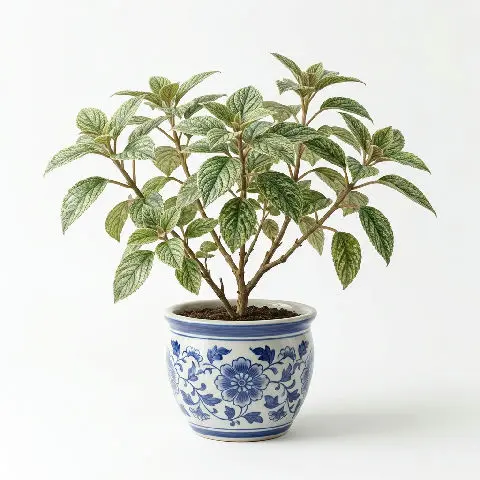
Uraria picta, commonly known as Prishniparni, is a distinctive perennial herb belonging to the Fabaceae family, typically growing to a height of 30 to 60 cm. Its morphology is characterized by slender yet sturdy stems that often exhibit a slightly hairy texture, allowing the plant to scandently cling to surrounding vegetation.
A prominent feature is its trifoliate leaves, composed of ovate to lanceolate leaflets, each measuring approximately 5 to 10 cm in length and 2 to 5 cm in width. The leaf surfaces are smooth with a subtle sheen, and their edges are frequently serrated, sometimes speckled with purple, giving rise to its traditional name 'Shringaravalli' or 'vine of adornment'.
During the rainy season, Prishniparni produces clusters of small, purplish to violet flowers arranged in dense, axillary racemes. Each flower possesses a tubular structure with five petals, spanning about 1.5 to 2 cm across, adding vibrant bursts of color to its environment. This robust plant thrives in tropical to subtropical climates, preferring well-drained soils and adequate sunlight.
It is widely distributed across Asia, including India, Bangladesh, and Sri Lanka, as well as parts of Africa, commonly found in open fields, grasslands, and disturbed sites where it integrates into diverse ecosystems. Taxonomically, Uraria picta falls within the Leguminosae family, a vast group known for its ecological and economic importance, and is particularly valued in traditional medicinal practices like Ayurveda for its adaptogenic and therapeutic properties.
Trusted Scientific References
1. Authoritative external sources for Uraria picta
1.1 Wikipedia — Uraria picta
1.2 Kew POWO (Plants of the World Online)
1.3 PubMed — peer-reviewed research
1.4 NCBI Taxonomy Browser
1.5 GBIF — Global Biodiversity
1.6Prishniparni should be interpreted through verified botanical identity, practical care, and responsible safety language. This recovery note adds the missing context needed for a complete profile: match light to the plant's habit, use well-drained soil, water according to season, and avoid unsupported medicinal or edible claims. For publishing, the plant can be presented as a source-backed medicinal plant with clear care guidance, common problem diagnosis, and conservative safety wording.
1.1.Prishniparni — Key Features
- ✓Distinctive trifoliate leaves with ovate — lanceolate leaflets, often speckled purple.
- ✓Produces small, purplish — Produces small, purplish to violet flowers in dense racemes during the rainy season.
- ✓Recognized in Ayurveda — Recognized in Ayurveda as 'Shringaravalli' (vine of adornment) for skin benefits.
- ✓Exhibits adaptogenic properties, — Exhibits adaptogenic properties, aiding the body's resilience to stress.
- ✓Rich phytochemical profile — Rich phytochemical profile including triterpenoid acids, flavonoids, and tannins.
- ✓Supports skin health, — Supports skin health, wound healing, and possesses significant anti-inflammatory actions.
- ✓Traditionally used as — Traditionally used as an analgesic, antipyretic, cardiotonic, and nervine tonic.
- ✓Thrives in tropical — Thrives in tropical to subtropical environments, found across Asia and parts of Africa.
- ✓Utilized in traditional — Utilized in traditional medicine for respiratory infections, fever, diarrhea, and rheumatic conditions.
- ✓Subject to ongoing — Subject to ongoing modern scientific research validating many of its traditional uses.
1.2.Prishniparni — Concise Overview
- ✓Prishniparni (Uraria picta) is an important Ayurvedic herb from the Fabaceae family.
- ✓Renowned for its anti-inflammatory, antioxidant, and wound-healing properties.
- ✓Key bioactive compounds include Urariac acids and flavonoid glycosides like Kaempferol.
- ✓Traditionally used for skin rejuvenation, joint pain, fevers, and gastrointestinal comfort.
- ✓Possesses a 'Shita' (cooling) potency, balancing aggravated Pitta and Kapha doshas.
- ✓Internal use requires caution, especially for vulnerable populations, and professional guidance is recommended.
2.Prishniparni — Scientific Profile
3.Prishniparni — Botanical Stats
4.Prishniparni — Structural Profile
5.Prishniparni — Geographic Distribution
6.Prishniparni — Ethnobotanical Uses
7.Prishniparni — Secondary Metabolites
- ✓Triterpenoid Acids — Key compounds like urariac acid A and B are thought to inhibit pro-inflammatory pathways, contributing significantly to the plant's anti-inflammatory effects.
- ✓Flavonoid Glycosides — Kaempferol-3-O-glucoside is a notable flavonoid with potent antioxidant potential, effectively scavenging free radicals and protecting cellular integrity.
- ✓Quercetin Derivatives — These compounds provide additional anti-inflammatory and vasoprotective actions, enhancing the plant's therapeutic profile.
- ✓Tannins — Present in minor amounts, tannins contribute astringent properties, which are beneficial in topical applications for tightening pores and in internal uses for gastrointestinal soothing.
- ✓Alkaloids — Various alkaloids are found in Uraria picta, contributing to its diverse pharmacological activities, though specific actions are still under investigation.
- ✓Glycosides — A range of glycosides are present, playing roles in various biological processes and potentially contributing to the plant's overall medicinal effects.
- ✓Steroids — Steroidal compounds contribute to the plant's structural and functional integrity, and may also exhibit hormonal or anti-inflammatory properties.
- ✓Terpenoids — A broad class of compounds, terpenoids contribute to the plant's aroma, flavor, and medicinal properties, often possessing anti-inflammatory and antimicrobial actions.
- ✓Phenolic Compounds — Beyond flavonoids, other phenolic compounds are present, collectively contributing to the plant's antioxidant capacity and protective effects against oxidative damage.
- ✓Saponins — While not always extensively quantified, saponins may be present, potentially contributing to immunomodulatory or expectorant activities.
8.Prishniparni — Modern Studies
- ✓Anti-inflammatory Action — Uraria picta contains urariac acids and flavonoids that are thought to hinder pro-inflammatory pathways, effectively reducing redness, swelling, and pain in various conditions.
- ✓Antioxidant Support — The flavonoid complex, including kaempferol and quercetin derivatives, actively scavenges reactive oxygen species (ROS), protecting cells from oxidative stress and potentially slowing cellular aging.
- ✓Wound Healing Acceleration — Traditional applications and preliminary lab assays indicate that Prishniparni enhances fibroblast activity, suggesting faster tissue repair and improved clotting in minor wounds.
- ✓Skin Rejuvenation — Topical formulations show promise in improving skin texture and tone by reducing blemishes and supporting overall epidermal health, aligning with its historical use for complexion.
- ✓Mild Antipyretic Effect — Folk medicine traditions utilize decoctions of Prishniparni to help reduce fever symptoms, with animal models hinting at its ability to lower induced body temperatures.
- ✓Analgesic Properties — The plant is traditionally used to alleviate pain, particularly associated with rheumatic conditions and joint aches, attributed to its anti-inflammatory compounds.
- ✓Cardiotonic Activity — Historically, Prishniparni has been revered for its potential to support heart health, acting as a tonic to strengthen cardiac function.
- ✓Diuretic Effect — It is believed to possess diuretic properties, aiding in the excretion of excess fluids from the body, which can support kidney function and reduce edema.
- ✓Nervine Tonic — In traditional systems, it is considered a nervine tonic, promoting relaxation and supporting nervous system health, contributing to its adaptogenic profile.
- ✓Antimicrobial Action — Extracts of Prishniparni have shown antimicrobial potential against various pathogens, supporting its use in treating minor infections.
- ✓Adaptogenic Properties — Revered in Ayurveda, Prishniparni helps the body adapt to stress, enhancing resilience and promoting overall physiological balance.
- ✓Gastrointestinal Comfort — Its cooling and astringent nature is traditionally credited with soothing minor gastrointestinal discomforts and supporting digestive health.
8.1.Prishniparni — Indications & Uses
9.Prishniparni — Adverse Effects
9.1.Prishniparni — Warnings
- ✓Gastric Upset — High internal doses (above 5 g/day) may occasionally lead to mild gastric upset or diarrhea in some individuals.
- ✓Contact Dermatitis — Rare instances of contact dermatitis have been reported in sensitive individuals when using fresh leaf paste topically.
- ✓Hypotensive Effect — Due to potential mild blood pressure-lowering effects, caution is advised for individuals on blood pressure medications.
- ✓Allergic Reactions — As with any plant, sensitive individuals may experience allergic reactions such as itching, hives, or severe irritation; discontinue use if these occur.
- ✓Immunomodulatory Interference — Its cooling and immune-modulating properties could potentially interfere with immunotherapies for autoimmune disorders.
- ✓Blood-Thinning Action — There is a mild suggestion of blood-thinning action, necessitating caution and professional oversight for those with bleeding disorders or on anticoagulants.
- ✓Liver/Kidney Strain — Individuals with pre-existing liver or kidney impairment should use Prishniparni only under strict professional guidance, as phytochemical metabolism may vary.
9.2.Prishniparni — Clinical Safety Notes
- ✓Pregnancy and Nursing — Internal use should be strictly avoided by pregnant or nursing women due to insufficient safety data; consult a healthcare professional.
- ✓Children Under 12 — Topical applications are generally considered safer for children under 12, but a patch test should always be performed first; internal use is not recommended.
- ✓Bleeding Disorders — Individuals with bleeding disorders or those on anticoagulant medications should avoid internal use without professional oversight due to potential mild blood-thinning effects.
- ✓Autoimmune Disorders — Caution is advised for those with autoimmune conditions or undergoing immunotherapies, as its immune-modulating properties could interfere.
- ✓Liver and Kidney Impairment — Patients with pre-existing liver or kidney conditions should only use Prishniparni under the direct supervision of a qualified healthcare provider.
- ✓Topical Patch Test — Always perform a patch test on a small skin area before widespread topical application to check for any allergic reactions or sensitivities.
- ✓Professional Consultation — For any internal use, especially for chronic conditions or alongside other medications, consultation with an Ayurvedic professional or physician is highly recommended.
- ✓Quality Sourcing — Always ensure to source high-quality, contamination-free Prishniparni products, preferably with certificates of analysis for purity.
10.Prishniparni — How to Use
- ✓Dried Leaf Powder — For internal use, 1–3 grams of dried leaf powder can be mixed in warm water or honey and consumed twice daily as a gentle tonic or for skin support.
- ✓Aerial Part Decoction — Boil 10–15 grams of dried herb in 300 mL of water until reduced by half; drink 1/4 cup thrice daily for mild inflammatory conditions or fever reduction.
- ✓Topical Paste — Fresh leaves can be ground with water or cow’s milk to form a thin paste, applied to affected skin areas for 20–30 minutes to aid in wound healing or reduce blemishes.
- ✓Alcoholic Extract (Tincture) — A 1:5 ratio in 40% ethanol, with 20–30 drops taken twice daily, can be used for deeper tissue support, but should be used sparingly and under professional guidance.
- ✓Infusion — A milder preparation than decoction, an infusion can be made by steeping dried Prishniparni in hot water for 10-15 minutes, suitable for general well-being.
- ✓Poultices — Traditional poultices for joint aches involve crushing fresh leaves and applying them directly to the affected area, often secured with a cloth.
- ✓Dietary Addition — In some traditional practices, small amounts of Prishniparni are added to rice gruel to help soothe fever symptoms and provide general nourishment.
- ✓Oil Infusion — Dried plant material can be infused into a carrier oil (e.g., sesame oil) over low heat for topical application, creating a potent anti-inflammatory and skin-nourishing oil.
11.Prishniparni — Growing Guide
- ✓Climate Preference — Thrives best in warm, humid tropical to subtropical regions, mirroring its native habitats in Southern India, Sri Lanka, and parts of Myanmar.
- ✓Soil Requirements — Prefers well-drained soils, adapting to various soil types but performing optimally in rich, loamy conditions with adequate moisture.
- ✓Light Exposure — Requires ample sunlight for robust growth, flourishing in open fields and areas with direct sun exposure rather than deep shade.
- ✓Propagation Method — Can be propagated through seeds or stem cuttings, with seeds typically sown during the onset of the monsoon season for optimal germination.
- ✓Harvesting Practices — Aerial parts are traditionally collected in the morning during the early monsoon, when active compounds are believed to be at peak potency.
- ✓Drying Process — Harvested plant material should be shade-dried on bamboo racks to preserve its color, phytochemical integrity, and prevent degradation of sensitive compounds like flavonoids.
- ✓Quality Sourcing — For medicinal use, opt for organic, wildcrafted varieties as cultivated plants may sometimes lack the same bioactive potency due to environmental differences.
- ✓Pest and Disease Management — Generally robust, but monitoring for common herb pests and ensuring good air circulation can prevent fungal issues in humid conditions.
Reviewed by the Flora Medical Global Botanical Review Panel
Multi-disciplinary editorial group · Botany · Ethnobotany · Herbal-medicine literature
Who reviewed this: This page was checked by the Flora Medical Global Botanical Review Panel — an in-house editorial group of botany graduates, ethnobotany researchers, and horticulture practitioners who collectively maintain our 7,000+ plant encyclopedia. Meet the team.
Our 4-step verification process
1. Taxonomic verification
Scientific names and synonyms cross-checked against Kew POWO, World Flora Online, and The Plant List.
2. Phytochemical & medicinal cross-reference
Active compounds, traditional uses, and reported activities are cross-referenced with PubMed, USDA Dr. Duke's database, and peer-reviewed ethnobotanical literature.
3. Conservation & distribution check
Distribution, ecology, and conservation status confirmed against GBIF occurrence records and the IUCN Red List.
4. Editorial & safety review
Every entry passes an editorial pass for clarity, originality, and safety notices (toxicity, contraindications, dosage caveats) before publication.
Last reviewed:
Important medical disclaimer: This content is for educational and research purposes only. It is not medical advice and is not a substitute for consultation with a licensed healthcare provider. Do not use any herb to self-treat a medical condition without professional guidance.
Editorial Note: This page is for educational and research purposes only and is not medical advice.
Written by: Flora Medical Global Editorial Team
Reviewed by: Flora Medical Global Botanical Review Panel
Last Updated: June 16, 2026





Prishniparni — Comments & Community Reviews
Rate this plant