


Medical Disclaimer: This content is for educational purposes only. It is not medical advice. Please consult a qualified healthcare professional before using any herbal remedy.
Safety Overview
1.Rauvolfia — At a Glance
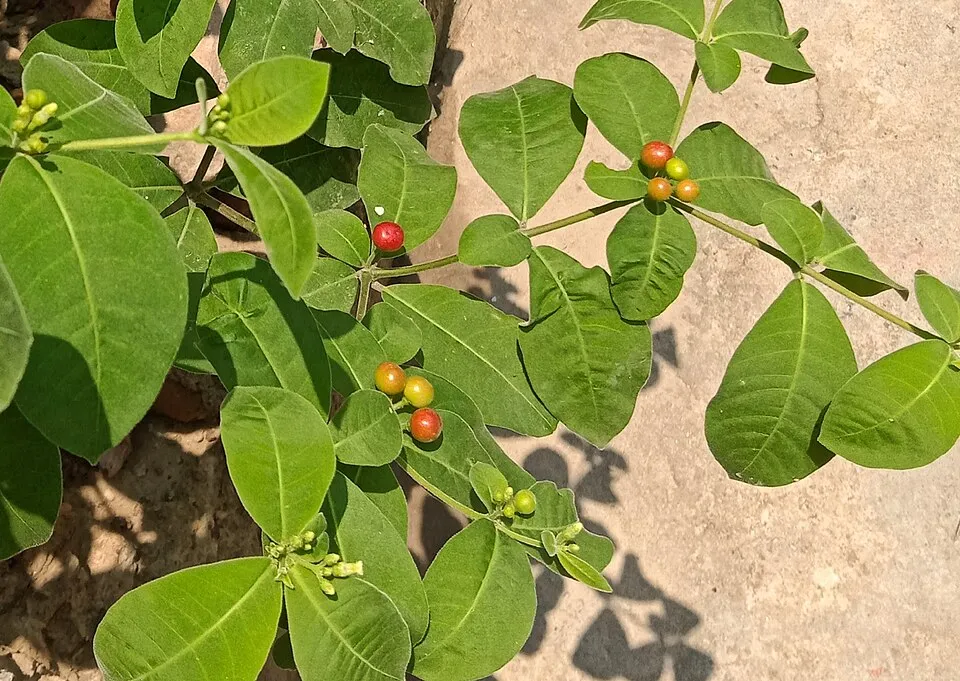
Rauvolfia tetraphylla, commonly known as four-leafed rauvolfia or devil's pepper, is a robust perennial shrub belonging to the diverse Apocynaceae family. Typically reaching heights of 1 to 4 meters, it is characterized by its distinctive foliage arranged in whorls of four, with individual leaves growing up to 20 cm long. These ovate leaves present a smooth, glossy texture and a vibrant green hue.
The plant produces delicate, fragrant, tubular flowers, ranging from white to pale yellow, which are often clustered, adding to its aesthetic appeal. Its bark is grayish-brown, developing a rougher texture with age. A notable botanical feature is the copious white latex that exudes from the plant when injured.
Native to tropical and subtropical regions across South America, the Caribbean, Central America, and Mexico, Rauvolfia tetraphylla thrives in various well-draining soils, from sandy coastal areas to wet, marshy grasslands, and is often found in forest understories, disturbed grounds, and along roadsides, demonstrating significant ecological adaptability. It has been widely introduced and cultivated in Asia, including India, China, and Vietnam, often as a substitute for its more famous relative, Rauvolfia serpentina, for its valuable alkaloidal content.
Trusted Scientific References
1. Authoritative external sources for Rauvolfia tetraphylla
1.1 Wikipedia — Rauvolfia tetraphylla
1.2 Kew POWO (Plants of the World Online)
1.3 PubMed — peer-reviewed research
1.4 NCBI Taxonomy Browser
1.5 GBIF — Global Biodiversity
1.6Rauvolfia should be interpreted through verified botanical identity, practical care, and responsible safety language. This recovery note adds the missing context needed for a complete profile: match light to the plant's habit, use well-drained soil, water according to season, and avoid unsupported medicinal or edible claims. For publishing, the plant can be presented as a source-backed medicinal plant with clear care guidance, common problem diagnosis, and conservative safety wording.
1.1.Rauvolfia — Notable Characteristics
- ✓Botanical Classification — Member of the Apocynaceae family, known for alkaloid-rich plants.
- ✓Distinctive Foliage — Leaves arranged in whorls of four, giving rise to its common name.
- ✓Medicinal Alkaloids — Contains powerful indole alkaloids such as reserpine, ajmaline, and serpentinine.
- ✓Adaptable Growth — Thrives in various tropical and subtropical habitats, from sun to partial shade.
- ✓Traditional Medicine Staple — Used across South America, India, and other regions for diverse ailments.
- ✓White Latex — A characteristic feature, containing active compounds and used traditionally.
- ✓Ornamental Value — Fragrant white or pale yellow flowers contribute to its aesthetic appeal.
- ✓Substitute for Rauvolfia serpentina — Often cultivated where R. serpentina is unavailable or less abundant.
- ✓Commercial Source — Cultivated for reserpine, a key allopathic medicine ingredient.
- ✓Perennial Shrub — Long-lived plant with robust growth habits.
1.2.Rauvolfia — Snapshot Summary
- ✓Potent Antihypertensive Properties — Primarily due to indole alkaloids like reserpine.
- ✓Traditional Uses — Employed for immune support, inflammation, dropsy, and as an emetic/cathartic.
- ✓Contains White Latex — Exudes copiously, traditionally used for various medicinal purposes.
- ✓Global Distribution — Native to Americas, widely cultivated in Asia for medicinal value.
- ✓Significant Alkaloid Content — Member of Apocynaceae family, rich in diverse indole alkaloids.
- ✓Caution Advised — Potent effects necessitate careful use and medical consultation.
2.Rauvolfia — Scientific Identity
3.Rauvolfia — Fact Sheet
4.Rauvolfia — Physical Description
5.Rauvolfia — Native Range & Habitat
6.Rauvolfia — Folk Medicine Applications
7.Rauvolfia — Phytochemistry
- ✓Indole Alkaloids — Reserpine is a primary active alkaloid, known for its potent antihypertensive and tranquilizing effects by depleting catecholamines from nerve endings. Other significant indole alkaloids include ajmaline, ajmalicine (raubasine), serpentinine, and yohimbine, which contribute to its cardiovascular and neuropharmacological profile.
- ✓Flavonoids — These are plant secondary metabolites with antioxidant and anti-inflammatory properties, potentially contributing to the plant's overall therapeutic effects and cellular protection.
- ✓Saponins — Found in various plant parts, saponins can exhibit expectorant, anti-inflammatory, and immune-stimulating activities, and may also influence cholesterol metabolism.
- ✓Glycosides — These compounds, often linked to sugar molecules, can have diverse pharmacological actions, including cardiac effects and antioxidant properties.
- ✓Tannins — Present in the bark and leaves, tannins are known for their astringent properties, contributing to antimicrobial and anti-inflammatory actions.
- ✓Phenolic Acids — These compounds possess strong antioxidant capabilities, protecting cells from oxidative damage and supporting overall plant health and defense mechanisms.
- ✓Steroids — Plant steroids, or phytosterols, may contribute to anti-inflammatory and hormone-modulating effects, though their specific roles in R. tetraphylla are less defined compared to alkaloids.
- ✓Resins — The plant contains various resins which can have mild laxative or protective properties, often contributing to the overall bulk of the extract and its traditional applications.
8.Rauvolfia — Pharmacological Findings
- ✓Antihypertensive Support — Contains alkaloids like reserpine which act on the central nervous system to reduce sympathetic activity, leading to vasodilation and lower blood pressure.
- ✓Anti-inflammatory Action — Certain compounds within Rauvolfia tetraphylla exhibit properties that may modulate inflammatory pathways, potentially alleviating symptoms of various inflammatory conditions.
- ✓Immunomodulatory Effects — Traditional uses suggest the plant can help regulate the immune response, offering support for general wellness and resilience against pathogens.
- ✓Diuretic Properties — The plant's latex and other extracts have been historically used to promote increased urine production, which can aid in conditions like dropsy by reducing fluid retention.
- ✓Emetic Effects — Traditionally, parts of the plant, particularly the latex, have been employed to induce vomiting, useful in cases of poisoning or to expel unwanted substances from the stomach.
- ✓Cathartic Action — Rauvolfia tetraphylla is known to possess strong purgative effects, facilitating bowel movements and cleansing the digestive system.
- ✓Sedative and Tranquilizing Effects — Alkaloids like reserpine are well-documented for their ability to calm the nervous system, making the plant useful in traditional remedies for anxiety and sleeplessness.
- ✓Antipyretic Potential — In some traditional medicine systems, preparations from this plant have been used to help reduce fever.
- ✓Antimicrobial Activity — Preliminary research suggests that extracts may exhibit inhibitory effects against certain bacteria and fungi, contributing to its traditional use in various infections.
- ✓Pain Management — Through its anti-inflammatory and potentially neuro-modulatory effects, Rauvolfia tetraphylla may offer some analgesic properties for mild to moderate pain relief.
8.1.Rauvolfia — Conditions Traditionally Used For
9.Rauvolfia — Safety Considerations
9.1.Rauvolfia — Reported Side Effects
- ✓Hypotension — Due to its potent antihypertensive alkaloids, excessive intake can lead to dangerously low blood pressure.
- ✓Bradycardia — May cause a slowed heart rate, particularly in individuals with pre-existing cardiac conditions.
- ✓Central Nervous System Depression — Can induce drowsiness, lethargy, and in high doses, significant CNS depression.
- ✓Gastrointestinal Distress — Nausea, vomiting, diarrhea, and abdominal cramps are possible, especially with the latex or high doses of root extracts.
- ✓Nasal Congestion — A common side effect associated with reserpine, due to its effect on adrenergic nerve endings.
- ✓Depression and Psychiatric Symptoms — Long-term use or high doses of reserpine can exacerbate or induce symptoms of depression, nightmares, and anxiety.
- ✓Teratogenicity — Should be avoided during pregnancy due to potential adverse effects on fetal development.
9.2.Rauvolfia — Safety Overview
- ✓Pregnancy and Lactation — Contraindicated during pregnancy and breastfeeding due to potential harm to the fetus or infant.
- ✓Cardiovascular Conditions — Use with extreme caution in individuals with bradycardia, hypotension, or cardiac arrhythmias; close medical supervision is essential.
- ✓Mental Health Disorders — Patients with a history of depression, anxiety, or other psychiatric conditions should avoid use due to potential exacerbation of symptoms.
- ✓Gastrointestinal Issues — Individuals with ulcers, colitis, or other GI disorders should exercise caution, as it can irritate the digestive tract.
- ✓Drug Interactions — Potentially interacts with antihypertensive medications, CNS depressants, MAO inhibitors, and cardiac glycosides, leading to additive or adverse effects.
- ✓Children — Not recommended for use in children due to lack of safety data and potent alkaloid content.
- ✓Dosage — Adhere strictly to expert-recommended dosages; self-medication is strongly discouraged given its potent pharmacological activity.
10.Rauvolfia — Preparations & Uses
- ✓Root Decoction — Roots are boiled in water to extract medicinal compounds, traditionally used for hypertension and nervous disorders.
- ✓Leaf Poultice — Crushed fresh leaves are applied topically to reduce inflammation or address skin ailments in traditional practices.
- ✓Latex Application — The plant's white latex is sometimes applied externally for granulated eyelids or used internally as an emetic or cathartic.
- ✓Bark Infusion — Dried bark can be steeped in hot water to create an infusion, utilized for its general wellness properties.
- ✓Powdered Form — Dried roots or other plant parts are ground into a fine powder for encapsulation or mixing with other ingredients for internal use.
- ✓Tincture Preparation — Plant material is macerated in alcohol to create a concentrated liquid extract, allowing for easier dosing and preservation.
- ✓Traditional Syrups — In some cultures, extracts are combined with sweeteners to create palatable syrups for conditions like coughs or fevers.
11.Rauvolfia — Cultivation & Care
- ✓Soil Preference — Thrives in rich, well-drained soils, showing adaptability to both sandy coastal areas and wet, marshy grasslands.
- ✓Light Requirement — Prefers full sun to partial shade, allowing for flexibility in planting locations.
- ✓Water Needs — Requires consistent moisture, especially in drier climates, but good drainage is crucial to prevent root rot.
- ✓Climate Adaptability — Flourishes in tropical and subtropical conditions, tolerating a range of elevations up to 2,000 meters.
- ✓Propagation — Can be propagated effectively from seeds, with flowering often commencing in its first year.
- ✓Flowering/Fruiting — Exhibits continuous flowering and fruiting cycles almost year-round under favorable conditions.
- ✓Growth Habit — Typically grows as a much-branched shrub up to 1 meter, but can become a small tree reaching 4 meters.
Reviewed by the Flora Medical Global Botanical Review Panel
Multi-disciplinary editorial group · Botany · Ethnobotany · Herbal-medicine literature
Who reviewed this: This page was checked by the Flora Medical Global Botanical Review Panel — an in-house editorial group of botany graduates, ethnobotany researchers, and horticulture practitioners who collectively maintain our 7,000+ plant encyclopedia. Meet the team.
Our 4-step verification process
1. Taxonomic verification
Scientific names and synonyms cross-checked against Kew POWO, World Flora Online, and The Plant List.
2. Phytochemical & medicinal cross-reference
Active compounds, traditional uses, and reported activities are cross-referenced with PubMed, USDA Dr. Duke's database, and peer-reviewed ethnobotanical literature.
3. Conservation & distribution check
Distribution, ecology, and conservation status confirmed against GBIF occurrence records and the IUCN Red List.
4. Editorial & safety review
Every entry passes an editorial pass for clarity, originality, and safety notices (toxicity, contraindications, dosage caveats) before publication.
Last reviewed:
Important medical disclaimer: This content is for educational and research purposes only. It is not medical advice and is not a substitute for consultation with a licensed healthcare provider. Do not use any herb to self-treat a medical condition without professional guidance.
Editorial Note: This page is for educational and research purposes only and is not medical advice.
Written by: Flora Medical Global Editorial Team
Reviewed by: Flora Medical Global Botanical Review Panel
Last Updated: June 16, 2026





Rauvolfia — Comments & Community Reviews
Rate this plant