

Medical Disclaimer: This content is for educational purposes only. It is not medical advice. Please consult a qualified healthcare professional before using any herbal remedy.
Safety Overview
1.Red Clover — Plant Snapshot
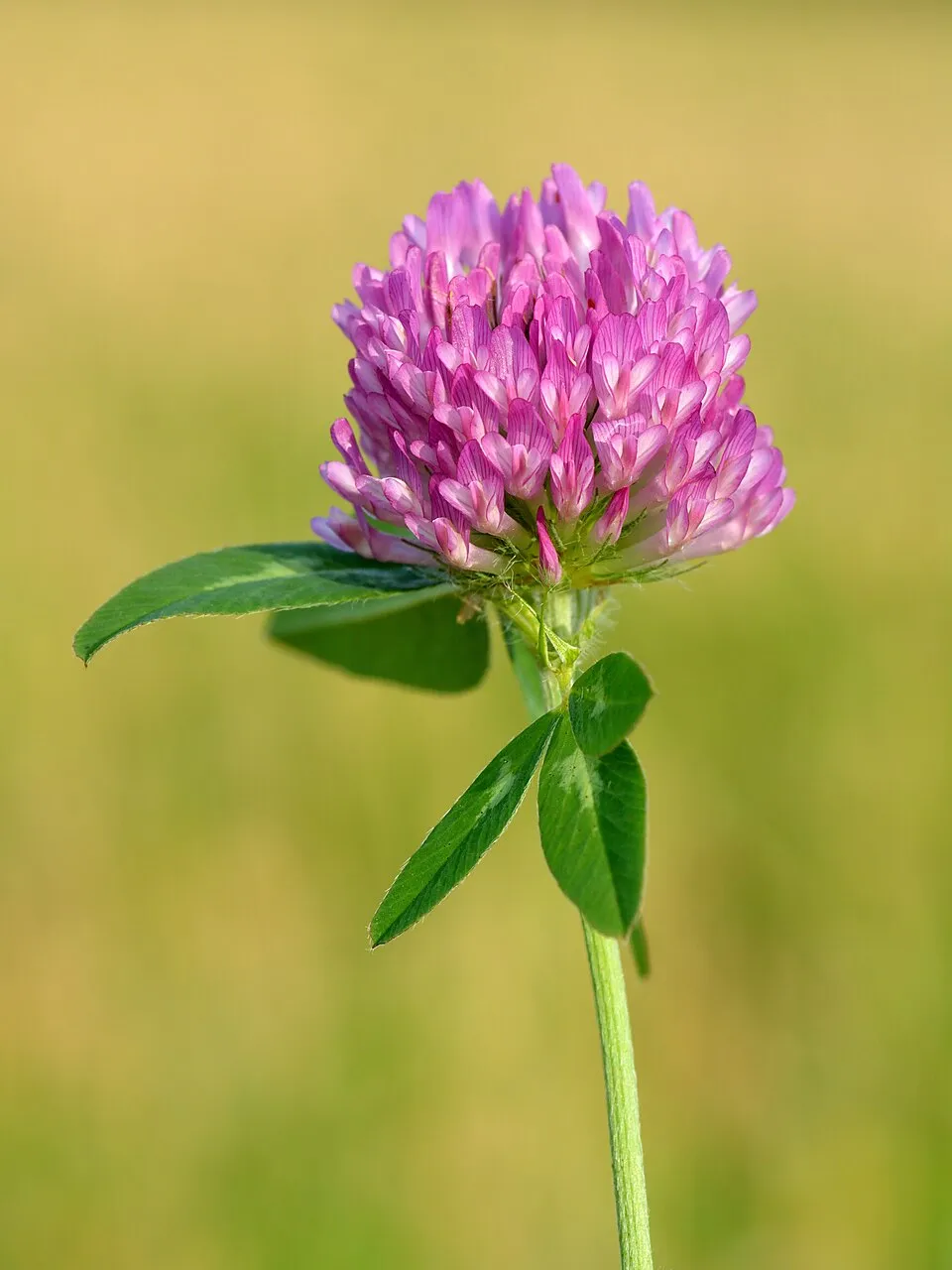
Trifolium pratense, commonly known as Red Clover, is a resilient perennial herbaceous plant belonging to the Fabaceae family, typically growing to a height of 20 to 80 centimeters. Its distinctive foliage consists of trifoliate leaves, where each ovate leaflet measures approximately 3 to 7 centimeters in length and is characterized by a prominent pale crescent mark on its upper surface, serving as a key identification feature. The plant produces dense, globular to ovoid head-like inflorescences, composed of numerous small, tubular flowers. These flowers range in color from vibrant pink to reddish-purple, are about 1 to 2.5 centimeters long, and emit a delicate, sweet fragrance that is highly attractive to a variety of pollinators, particularly bees, making it a vital component of many ecosystems.
The stems are generally erect, often branching, and covered with fine, soft hairs, contributing to the plant's overall texture. Following successful pollination, the flowers develop into small, elongated seed pods, each containing one to three minute seeds, typically 2 to 3 millimeters in diameter. Red Clover demonstrates remarkable adaptability, thriving in a broad spectrum of soils but showing a preference for well-drained, loamy substrates rich in organic matter. It is indigenous to temperate regions across Europe, Asia, and northern Africa, and has become widely naturalized in North America, frequently found flourishing in meadows, pastures, open woodlands, and along roadsides.
Ecologically, its role within the Fabaceae family is crucial due to its symbiotic relationship with nitrogen-fixing bacteria, which enriches soil fertility and supports the growth of surrounding plant communities. This combination of striking morphology, ecological importance, and widespread adaptability underpins its historical and contemporary significance in both agriculture and traditional medicine.
Trusted Scientific References
1. Authoritative external sources for Trifolium pratense
1.1 Wikipedia — Trifolium pratense
1.2 Kew POWO (Plants of the World Online)
1.3 PubMed — peer-reviewed research
1.4 NCBI Taxonomy Browser
1.5 GBIF — Global Biodiversity
1.1.Red Clover — Key Features
- ✓Perennial Herbaceous Plant — A long-lived plant returning year after year.
- ✓Trifoliate Leaves — Characteristic three-leaflet leaves, often with a pale crescent mark.
- ✓Pink — Reddish Purple Flowers — Dense, attractive flower heads that bloom in clusters.
- ✓High Isoflavone Content — Primary active compounds with phytoestrogenic properties.
- ✓Nitrogen — Fixing Legume — Enhances soil fertility through symbiotic bacteria.
- ✓Attracts Pollinators — Essential for biodiversity, especially bees.
- ✓Adaptable Growth — Thrives in various temperate climates and soil types.
- ✓Traditional Medicinal Use — Long history in herbalism for women's health and other conditions.
- ✓Edible Young Leaves and Flowers — Can be consumed in moderation.
- ✓Widely Distributed — Native to Europe and Asia, naturalized globally.
1.2.Red Clover — Concise Overview
- ✓Phytoestrogen Powerhouse — Rich in isoflavones that mimic estrogen, supporting hormonal balance.
- ✓Menopausal Relief — Widely used to alleviate hot flashes and night sweats.
- ✓Cardiovascular Support — May improve heart health by influencing arterial compliance and cholesterol levels.
- ✓Nitrogen Fixer — Ecologically vital legume, enriching soil fertility.
- ✓Traditional Remedy — Valued in folk medicine for various ailments, including skin and respiratory issues.
- ✓Widespread Adaptability — Thrives in temperate regions across diverse habitats.
2.Red Clover — Systematic Position
3.Red Clover — Quick Facts
4.Red Clover — Structural Profile
5.Red Clover — Where It Grows
6.Red Clover — Ethnobotanical Uses
7.Red Clover — Secondary Metabolites
- ✓Isoflavones — Red Clover is notably rich in phytoestrogenic isoflavones such as biochanin A, formononetin, genistein, and daidzein, which are responsible for its hormone-balancing effects and antioxidant activities.
- ✓Flavonoids — The plant contains various flavonoids including quercetin, kaempferol, and myricetin, contributing to its antioxidant, anti-inflammatory, and cardioprotective properties.
- ✓Coumarins — Certain coumarin derivatives are present, which may contribute to the plant's traditional uses and provide mild anticoagulant and anti-inflammatory actions.
- ✓Phenolic Acids — Compounds like caffeic acid and p-coumaric acid contribute to the plant's antioxidant capacity and overall health benefits.
- ✓Saponins — Triterpenoid saponins are found in Red Clover, which may have expectorant, anti-inflammatory, and cholesterol-lowering effects.
- ✓Essential Oils — While in minor quantities, volatile essential oils contribute to the plant's characteristic aroma and may possess antimicrobial properties.
- ✓Minerals — Red Clover is a source of essential minerals including calcium, magnesium, chromium, niacin, phosphorus, potassium, and thiamine, vital for various bodily functions.
- ✓Vitamins — It also provides certain vitamins, notably Vitamin C, which is a powerful antioxidant, and some B vitamins.
- ✓Proteins and Carbohydrates — As a legume, Red Clover contains a significant amount of protein and complex carbohydrates, contributing to its nutritional value as a forage crop.
- ✓Fatty Acids — Small amounts of beneficial fatty acids are also present within the plant's composition.
8.Red Clover — What Research Suggests
- ✓Menopausal Symptom Relief — Red Clover is widely recognized for its efficacy in alleviating menopausal symptoms, such as hot flashes and night sweats, due to its rich content of isoflavones that act as phytoestrogens, mimicking the body's natural estrogen.
- ✓Bone Density Support — The phytoestrogenic compounds present in Red Clover may contribute to maintaining bone mineral density, offering a natural approach to support bone health in postmenopausal women.
- ✓Cardiovascular Health Enhancement — Isoflavones in Red Clover have been studied for their potential to improve arterial compliance and positively influence lipid profiles, contributing to overall cardiovascular wellness by supporting healthy blood vessels and cholesterol levels.
- ✓Blood Circulation Improvement — By potentially impacting blood vessel elasticity and reducing LDL cholesterol, Red Clover may aid in enhancing blood circulation throughout the body.
- ✓Skin Health Support — Traditionally, Red Clover has been applied topically in poultices and washes for various skin conditions, including eczema, psoriasis, and other inflammatory dermatoses, owing to its anti-inflammatory properties.
- ✓Respiratory System Aid — In traditional herbalism, Red Clover infusions were often used as an expectorant and antitussive to soothe coughs, bronchitis, and other respiratory discomforts.
- ✓Lymphatic System Cleansing — Red Clover is considered a lymphatic alterative in traditional Western herbal medicine, believed to support the lymphatic system in detoxifying the body and reducing glandular swelling.
- ✓Anti-inflammatory Properties — The presence of various flavonoids and other compounds gives Red Clover mild anti-inflammatory effects, which can be beneficial for various inflammatory conditions.
- ✓Antioxidant Activity — Rich in antioxidants, Red Clover helps to combat oxidative stress and protect cells from damage caused by free radicals, contributing to overall cellular health and longevity.
- ✓Liver Support — Traditional uses suggest Red Clover may support liver function, aiding in the body's natural detoxification processes, though scientific evidence is limited.
- ✓Urinary Tract Health — Historically, Red Clover has been used as a mild diuretic, potentially assisting in flushing the urinary tract and supporting its health.
8.1.Red Clover — Therapeutic Indications
9.Red Clover — Precautions & Warnings
9.1.Red Clover — Caution Notes
- ✓Gastrointestinal Upset — Some individuals may experience mild digestive issues such as nausea, indigestion, or bloating, especially with higher doses.
- ✓Headaches — A small percentage of users have reported experiencing headaches as a side effect when taking Red Clover supplements.
- ✓Muscle Aches — Occasional muscle aches have been noted in sensitive individuals using Red Clover products.
- ✓Vaginal Spotting or Bleeding — Due to its phytoestrogenic activity, Red Clover can, in rare cases, cause vaginal spotting or light bleeding, particularly in women with hormone sensitivity.
- ✓Skin Reactions — When applied topically, Red Clover may cause mild skin irritation or allergic reactions in sensitive individuals.
- ✓Allergic Reactions — Although uncommon, individuals sensitive to plants in the Fabaceae family may experience allergic responses.
- ✓Liver Enzyme Elevation — Very high doses over extended periods might potentially lead to changes in liver enzyme levels, warranting caution.
9.2.Red Clover — Safety Profile
- ✓Pregnancy and Breastfeeding — Red Clover is considered possibly unsafe during pregnancy and breastfeeding due to its estrogen-like effects, which could interfere with hormone balance.
- ✓Hormone-Sensitive Conditions — Contraindicated for individuals with hormone-sensitive cancers (e.g., breast, ovarian, uterine cancer) or conditions like endometriosis and uterine fibroids, as its estrogenic activity could exacerbate these conditions.
- ✓Blood-Clotting Disorders / Anticoagulant Medications — Use with caution by individuals with bleeding disorders or those taking anticoagulant/antiplatelet drugs, as Red Clover may slow blood clotting.
- ✓Estrogen-Containing Medications — Avoid concomitant use with estrogen-containing medications (e.g., birth control pills, hormone replacement therapy) as it may interfere with their efficacy.
- ✓Tamoxifen — Contraindicated for individuals taking Tamoxifen, as Red Clover may decrease its effectiveness by interfering with estrogen receptors.
- ✓Liver Metabolism (CYP450) Interactions — Exercise caution if taking medications metabolized by the liver's cytochrome P450 enzymes, as Red Clover might alter their breakdown rate.
- ✓Children — Not recommended for use in children due to insufficient research on its safety and efficacy in pediatric populations.
10.Red Clover — How to Use
- ✓Herbal Infusion (Tea) — Prepare by steeping 1-2 teaspoons of dried Red Clover flowers in hot water for 10-15 minutes; consumed for general wellness and menopausal symptoms.
- ✓Tincture — A concentrated liquid extract made by macerating Red Clover flowers and leaves in alcohol; typically taken in drops or small doses diluted in water.
- ✓Capsules and Tablets — Standardized Red Clover extracts, often concentrated for isoflavone content, are available in supplement form for precise dosing.
- ✓Topical Applications — Infused oils, salves, or poultices made from Red Clover can be applied directly to the skin to soothe irritations, eczema, or psoriasis.
- ✓Herbal Baths — Adding a strong infusion of Red Clover to bathwater can be used for skin conditions or for a relaxing, therapeutic soak.
- ✓Culinary Use — Young Red Clover leaves and flowers can be added to salads, soups, or smoothies for their nutritional value, though medicinal doses are higher.
- ✓Fluid Extracts — More potent than tinctures, these are concentrated liquid forms used when a stronger effect is desired, usually under professional guidance.
- ✓Decoction — For root or tougher plant parts, a decoction involves simmering the material in water for a longer period to extract constituents, though less common for Red Clover's aerial parts.
11.Red Clover — Propagation & Care
- ✓Climate Preference — Red Clover thrives in temperate climates with moderate rainfall and can tolerate a range of temperatures.
- ✓Soil Requirements — It prefers well-drained, loamy soils with a pH between 6.0 and 7.0, ideally enriched with organic matter; it tolerates slightly acidic to neutral conditions.
- ✓Sunlight Exposure — Full sun is optimal for vigorous growth and flowering, though it can tolerate partial shade, which may reduce flower production.
- ✓Propagation — Primarily propagated by seeds, which can be directly sown in spring after the last frost or in late summer.
- ✓Planting Depth and Spacing — Seeds should be sown shallowly, about 0.5 to 1 cm deep, with plants spaced 15-30 cm apart to allow for spread.
- ✓Watering Needs — Requires moderate and consistent moisture, especially during dry periods, but avoids waterlogging to prevent root rot.
- ✓Pest and Disease Management — Generally resilient, but can be susceptible to root rot in poorly drained soils and occasional pest infestations like slugs or aphids.
- ✓Harvesting — Flowers and leaves are typically harvested when the plant is in full bloom, usually in late spring to early summer, by cutting the aerial parts above the ground.
Reviewed by the Flora Medical Global Botanical Review Panel
Multi-disciplinary editorial group · Botany · Ethnobotany · Herbal-medicine literature
Who reviewed this: This page was checked by the Flora Medical Global Botanical Review Panel — an in-house editorial group of botany graduates, ethnobotany researchers, and horticulture practitioners who collectively maintain our 7,000+ plant encyclopedia. Meet the team.
Our 4-step verification process
1. Taxonomic verification
Scientific names and synonyms cross-checked against Kew POWO, World Flora Online, and The Plant List.
2. Phytochemical & medicinal cross-reference
Active compounds, traditional uses, and reported activities are cross-referenced with PubMed, USDA Dr. Duke's database, and peer-reviewed ethnobotanical literature.
3. Conservation & distribution check
Distribution, ecology, and conservation status confirmed against GBIF occurrence records and the IUCN Red List.
4. Editorial & safety review
Every entry passes an editorial pass for clarity, originality, and safety notices (toxicity, contraindications, dosage caveats) before publication.
Last reviewed:
Important medical disclaimer: This content is for educational and research purposes only. It is not medical advice and is not a substitute for consultation with a licensed healthcare provider. Do not use any herb to self-treat a medical condition without professional guidance.
Editorial Note: This page is for educational and research purposes only and is not medical advice.
Written by: Flora Medical Global Editorial Team
Reviewed by: Flora Medical Global Botanical Review Panel
Last Updated: June 16, 2026





Red Clover — Comments & Community Reviews
Rate this plant